


Laminate vs Hardwood Flooring: The Complete US Homeowner Comparison Guide
Choosing between laminate vs hardwood flooring is one of the most important decisions US homeowners face during a remodel or new build. Both options offer distinct advantages, but they serve very different priorities, budgets, durability, maintenance, and long-term home value. In today’s housing market, rising material and labor costs have pushed many homeowners to reconsider traditional hardwood in favor of more affordable alternatives like laminate.
At the same time, hardwood continues to hold strong appeal due to its natural beauty and high resale value, especially in competitive real estate markets across states like California, Texas, and Florida. This guide breaks down flooring in practical terms, helping you understand cost differences, durability, climate performance, and long-term return on investment so you can choose the right flooring for your home and lifestyle.
Laminate vs Hardwood Flooring – Key Differences Explained
Understanding the core differences in laminate vs hardwood flooring starts with how each material is constructed and how it performs in real US homes. While they can look similar at first glance, their structure, durability, and maintenance requirements are fundamentally different. Laminate flooring is a multi-layer synthetic product designed to mimic the look of real wood. It typically includes a fiberboard core, a photographic wood-look layer, and a protective wear layer on top. This construction makes it highly resistant to scratches and everyday wear, which is ideal for busy households, rental properties, and high-traffic areas.

Hardwood flooring, on the other hand, is made from solid or engineered natural wood. It offers authentic grain patterns, can be refinished multiple times, and delivers a premium feel that many buyers associate with higher-end homes. However, it is more sensitive to moisture, temperature changes, and surface scratches compared to laminate.
Laminate vs Hardwood Flooring Cost Comparison
When comparing laminate vs hardwood flooring, cost is often the deciding factor for most US homeowners. The price gap between the two materials can be significant, especially when factoring in installation, long-term maintenance, and potential refinishing. Laminate flooring is generally the more affordable option, typically ranging from about $2 to $8 per square foot installed in the US market. This makes it attractive for budget-conscious homeowners, rental properties, and large-scale renovations where controlling costs is a priority. Its floating installation system also helps reduce labor expenses in many cases.
Hardwood flooring, by contrast, usually ranges from $8 to $20+ per square foot installed, depending on the wood species and finish quality. Exotic hardwoods can push costs even higher. While expensive upfront, hardwood may offer better long-term value in certain markets due to its durability and strong resale appeal. Overall, the flooring cost difference often reflects a trade-off between upfront affordability and long-term investment value.
Flooring Durability Comparison (Which Lasts Longer?)
When evaluating laminate vs hardwood flooring, durability depends on how each material handles daily wear, moisture, and long-term use in typical US households. Both can last for years, but they perform differently under stress. Laminate flooring is highly resistant to scratches, dents, and surface wear due to its protective top layer. This makes it a strong choice for homes with pets, kids, or heavy foot traffic in areas like hallways and living rooms. However, once the surface layer is damaged, it cannot be refinished, meaning replacement is often the only option.
Hardwood flooring offers a different type of durability advantage. While it is more prone to scratches and moisture damage, it can be sanded and refinished multiple times, significantly extending its lifespan. In well-maintained homes, hardwood can last decades, or even generations. In short, flooring durability comes down to scratch resistance versus long-term renewability.
Laminate Flooring Pros and Cons
When comparing laminate vs hardwood flooring, laminate stands out primarily for its affordability and practical performance in busy US homes. It is widely used in suburban households, rental properties, and renovation projects where budget control and durability matter more than long-term refinishing potential. One of the biggest advantages of laminate flooring is its scratch resistance. The protective wear layer helps it withstand pets, furniture movement, and daily foot traffic, making it a strong fit for living rooms, hallways, and family spaces. It is also easier and faster to install compared to hardwood, often using a click-lock system that reduces labor costs.
However, laminate also has limitations. It cannot be refinished once damaged, meaning deep scratches or water damage usually require full plank replacement. It also tends to have lower resale value compared to hardwood, which can influence long-term home investment decisions. Overall, flooring often favors laminate for affordability and ease, but not for long-term premium value.
Hardwood Flooring Pros and Cons
In the laminate vs hardwood flooring comparison, hardwood is often viewed as the premium long-term investment for US homeowners who prioritize resale value and natural aesthetics. It remains a top choice in higher-end homes across markets like California, New York, and suburban developments where buyers expect authentic wood finishes. One of the biggest advantages of hardwood flooring is its longevity. Unlike laminate, hardwood can be sanded and refinished multiple times, allowing it to maintain or even restore its original appearance over decades of use. This makes it a strong option for homeowners planning to stay long-term or increase property value before selling.
However, hardwood does come with drawbacks. It is more expensive to install, more sensitive to moisture and humidity changes, and more prone to scratches and dents compared to laminate. In high-traffic homes or rental properties, maintenance requirements can be significantly higher. Overall, in flooring, hardwood wins on premium value but requires more care and investment.
Engineered Wood vs Laminate Flooring
When expanding the laminate vs hardwood flooring discussion, many US homeowners also consider engineered wood as a middle-ground option. This comparison, engineered wood vs laminate flooring, helps clarify where each material fits in terms of performance, appearance, and cost. Engineered wood flooring is made from a real hardwood surface layer bonded over multiple plywood layers. This construction improves stability compared to solid hardwood, making it more resistant to warping in humid regions like the Southeast US. It still offers an authentic wood surface, which is a key advantage over laminate.
Laminate flooring, by contrast, uses a synthetic photographic layer to replicate wood. While it does not contain real hardwood, it typically provides better scratch resistance and lower cost, making it a practical choice for families, rental units, and high-traffic areas. In the broader laminate vs hardwood flooring decision, engineered wood often sits between the two, offering more realism than laminate but less affordability and scratch resistance.
Best Flooring Choice by US Climate Region
In the laminate vs hardwood flooring decision, climate plays a major role in how each material performs over time in US homes. Temperature swings, humidity levels, and seasonal moisture changes can all impact durability, expansion, and maintenance needs. In humid regions like Florida, Louisiana, and the Gulf Coast, moisture is the biggest concern. Hardwood flooring can expand, contract, or warp if humidity levels fluctuate significantly, making engineered wood or high-quality laminate a more stable option for many homeowners in these areas. Laminate’s protective wear layer also helps resist everyday spills and surface moisture.
In colder northern states such as Minnesota, Michigan, and the Northeast, dry winters and freeze-thaw cycles can create gaps or movement in natural wood flooring. Hardwood performs best in stable, well-controlled indoor environments, while laminate offers more predictable performance in less humid conditions. In dry western states like Arizona and Nevada, both materials perform well, but laminate often wins for scratch resistance and lower maintenance needs.
Resale Value Flooring – Which Option Wins?
When it comes to laminate vs hardwood flooring, resale value is one of the clearest differentiators for US homeowners planning long-term investments. Buyers in many real estate markets still strongly associate hardwood floors with premium quality, which can influence both listing appeal and final sale price. Hardwood flooring generally leads in resale value flooring comparisons. In competitive housing markets such as California, Colorado, and parts of the Northeast, real estate agents often highlight hardwood floors as a selling feature. Its ability to be refinished also adds perceived long-term durability, which appeals to buyers looking for fewer future renovation costs.
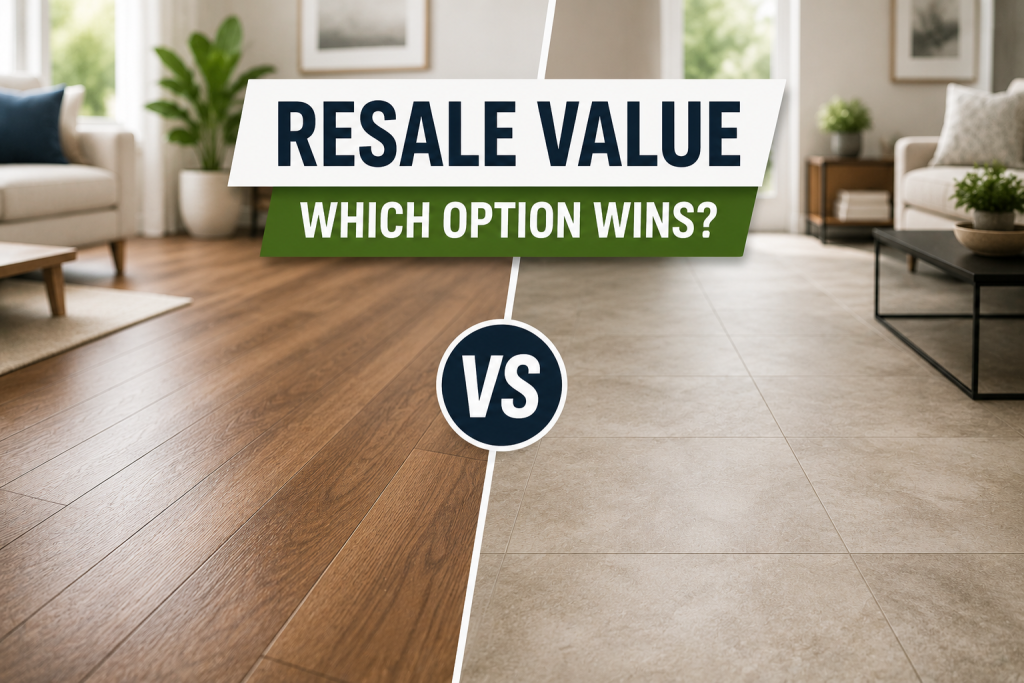
Laminate flooring, while visually appealing and cost-effective, typically does not deliver the same resale premium. However, high-quality modern laminate can still improve overall home presentation, especially when replacing outdated carpet or worn flooring in suburban homes or rental properties. In the laminate vs hardwood flooring decision, hardwood is the stronger resale investment, while laminate offers better short-term affordability and practicality.
Wood-Look Flooring Trends in 2026
Rapid improvements are increasingly influencing the laminate vs. hardwood flooring debate in wood-look flooring technology. In 2026, homeowners have more realistic and high-performance options than ever before, blurring the visual gap between natural hardwood and engineered alternatives. Modern laminate flooring now features advanced embossing techniques, deeper grain textures, and improved color variation that closely mimics real oak, maple, and hickory. These upgrades make laminate a strong choice for homeowners who want a hardwood appearance without the higher cost or maintenance demands.
At the same time, engineered wood continues to grow in popularity as a hybrid solution, offering a real wood surface with improved stability. This makes it especially attractive in US regions with moderate to high humidity, where traditional hardwood may be more vulnerable. In today’s laminate vs hardwood flooring landscape, design realism is no longer the biggest gap; the decision now depends more on budget, durability needs, and long-term ownership plans.
Which Flooring Should You Choose? (Decision Guide)
Choosing between laminate vs hardwood flooring ultimately comes down to how your home is used, your budget, and how long you plan to stay in the property. Both options can work well in US homes, but they serve different priorities. If your goal is affordability and low maintenance, laminate is often the better fit. It performs well in busy households, rental properties, and high-traffic areas like hallways and living rooms. Homeowners who prioritize scratch resistance, easy cleaning, and lower upfront costs tend to lean toward laminate flooring.
Hardwood flooring is better suited for homeowners focused on long-term investment and resale value. It offers unmatched natural beauty and can significantly increase home appeal in competitive real estate markets. However, it requires more maintenance and a higher initial budget. In the end, the flooring decision is less about which is “better” overall and more about which aligns with your lifestyle, budget, and long-term home goals.
Final Verdict
When finalizing the laminate vs hardwood flooring decision, the best choice depends on balancing lifestyle needs, budget, and long-term home goals rather than searching for a single “winner.” Both flooring types serve different purposes in US homes and perform best under different conditions. Laminate flooring is the practical choice for homeowners who prioritize affordability, durability against scratches, and low maintenance. It works especially well in busy family homes, rental properties, and high-traffic areas where daily wear is expected. For many households, it delivers strong visual appeal without the higher cost burden. Hardwood flooring remains the premium option, offering unmatched natural beauty and the highest resale value flooring benefit. It is ideal for homeowners investing in long-term property value, especially in competitive real estate markets where buyers expect authentic wood finishes. In the end, laminate vs hardwood flooring is not about which is superior overall, it is about choosing the material that best fits your home’s usage, climate, and financial priorities.
FAQs
Which is better overall: laminate or hardwood flooring?
Neither is universally better. Laminate is better for affordability and scratch resistance, while hardwood is better for long-term value and premium appearance.
Does hardwood flooring increase home value more than laminate?
Yes. Hardwood flooring typically adds more resale value, especially in competitive US housing markets where buyers expect natural wood finishes.
Is laminate flooring durable enough for families with pets?
Yes. Laminate is highly scratch-resistant, making it a strong choice for homes with dogs, kids, and heavy foot traffic areas like living rooms and hallways.
How long does laminate flooring last compared to hardwood?
Laminate usually lasts 15–25 years, while hardwood can last decades or even over 50 years with proper maintenance and refinishing.
Can laminate look like real hardwood?
Modern laminate can closely replicate wood appearance using advanced texture and printing technology, especially in premium product lines.
Which flooring is easier to maintain?
Laminate is generally easier to maintain since it resists scratches and requires less upkeep than hardwood, which needs refinishing over time.
Is engineered wood a better alternative?
Engineered wood sits between laminate and hardwood, offering a real wood surface with improved stability, making it a balanced option in humid US climates.