


Laminate vs Vinyl Flooring (2026 US Homeowner Guide)
When comparing laminate vs vinyl flooring, homeowners are usually trying to solve a practical problem: which option offers the best balance of cost, durability, and appearance for modern US homes. Both materials are popular affordable flooring options, especially for renovations where budget and style matter equally. Laminate flooring is known for its realistic wood-look flooring appearance and rigid core construction, while vinyl flooring, especially luxury vinyl plank (LVP), is designed with superior moisture resistance and flexibility.
This makes the waterproof flooring comparison between the two one of the most important deciding factors for kitchens, bathrooms, and basements. In today’s market, both options have improved significantly, making the choice less about “good vs bad” and more about lifestyle fit. Homeowners must consider pets, kids, humidity levels, and maintenance expectations before selecting the right flooring for their space.
Material Differences – Laminate vs Vinyl Structure & Build
Understanding laminate vs vinyl flooring starts with how each material is built, because their internal structure directly affects performance, durability, and installation. Laminate flooring is made using a high-density fiberboard (HDF) core, topped with a photographic wood layer and a protective wear layer. This construction gives laminate its rigid feel and realistic wood-look flooring appearance. However, because of the wood-based core, laminate is more sensitive to moisture exposure unless specifically designed as water-resistant.
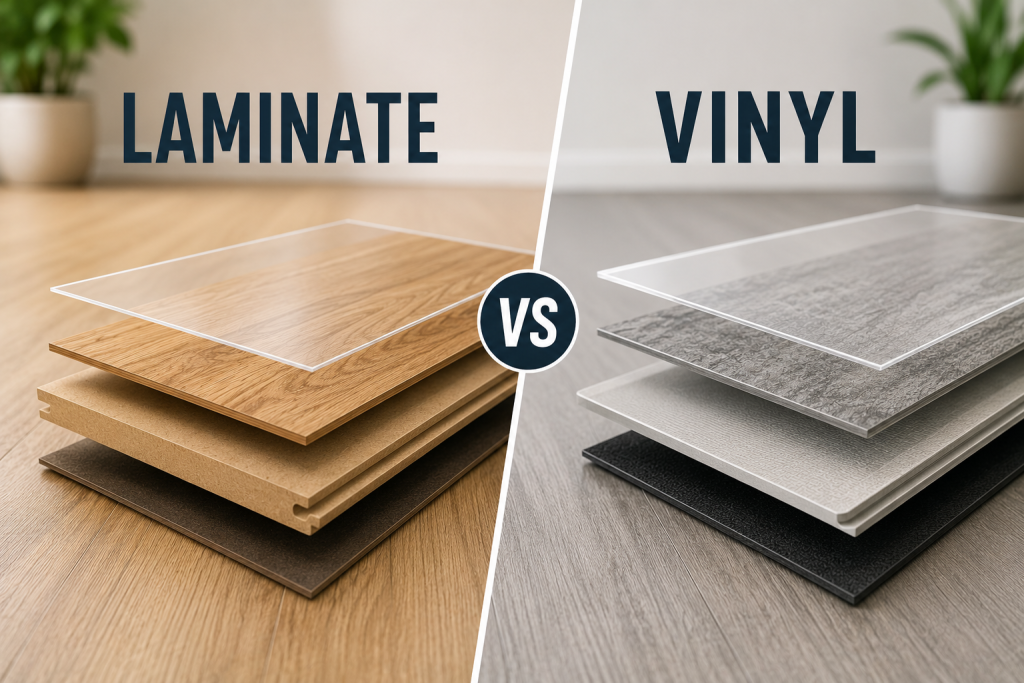
Vinyl flooring, especially luxury vinyl plank vs laminate comparisons, is built differently. It uses a fully synthetic PVC or composite core that is naturally resistant to water. This makes vinyl more flexible and often completely waterproof, depending on the product line. These structural differences are the foundation of the entire flooring durability comparison, influencing where each material performs best, laminate in dry, indoor spaces, and vinyl in moisture-prone areas like kitchens, bathrooms, and basements.
Waterproof Performance – Which Flooring Handles Moisture Better?
When it comes to a laminate vs vinyl flooring decision, moisture resistance is one of the most important factors for US homeowners, especially in kitchens, bathrooms, and basements. This is where the waterproof flooring comparison clearly begins to separate the two materials. Vinyl flooring, particularly luxury vinyl plank (LVP), is generally fully waterproof due to its synthetic core. This makes it highly resistant to spills, humidity, and standing water, which is why it is often recommended for kitchen flooring ideas and high-moisture areas.
Laminate flooring, on the other hand, has improved significantly in recent years, with many products offering water-resistant or “waterproof” coatings. However, because of its fiberboard core, it is still more vulnerable to water damage if moisture seeps into the seams over time. For homeowners prioritizing wet-area performance, vinyl typically has the advantage. But for dry living spaces where appearance and affordability matter more, laminate still remains a strong contender in the affordable flooring options category.
Durability and Scratch Resistance Comparison
When evaluating laminate vs vinyl flooring, durability is a key factor that directly affects long-term performance in busy US homes. Both materials are designed for everyday use, but they handle wear and tear in slightly different ways. Laminate flooring is well known for its strong flooring durability comparison performance when it comes to scratches and surface wear. Its tough wear layer makes it highly resistant to scratches from furniture, pets, and daily foot traffic. This is one reason laminate is often chosen for living rooms and hallways in family homes.
Vinyl flooring, especially luxury vinyl plank (LVP), is also durable but tends to be slightly softer underfoot. While it resists dents and handles moisture better, it may show scratches more easily in high-traffic or pet-heavy environments compared to laminate. Overall, laminate often performs better in scratch resistance, while vinyl offers more balanced protection across moisture, flexibility, and impact resistance. The best choice depends on whether durability or water protection is the top priority.
Cost Comparison – Laminate vs Vinyl Pricing in the US
Cost is often the deciding factor in a laminate vs vinyl flooring choice, especially for homeowners working within renovation budgets. Both materials are considered affordable flooring options, but their pricing structure can vary depending on quality, brand, and installation requirements. Laminate flooring typically ranges from lower to mid-range pricing, making it a strong choice for homeowners who want a realistic wood-look flooring appearance without the higher cost of hardwood. Installation costs can also be lower, particularly with DIY-friendly click-lock systems that reduce labor expenses.
Vinyl flooring, especially luxury vinyl plank (LVP), can range from budget-friendly to premium pricing depending on thickness, wear layer, and waterproof features. While basic vinyl may be cheaper, high-quality waterproof options can sometimes exceed laminate in total project cost. Overall, both materials remain competitive in the affordable flooring options category. The final cost difference often comes down to installation complexity and the specific product tier chosen.
Installation and Maintenance Differences
When comparing laminate vs vinyl flooring, installation and maintenance requirements play a major role in long-term homeowner satisfaction. Both options are considered relatively easy to install compared to traditional hardwood, but there are important differences in handling and upkeep. Laminate flooring often uses a click-lock floating system, making it a popular choice for DIY projects. Its rigid structure requires a smooth, level subfloor, and proper expansion gaps are essential to prevent issues like buckling. Once installed, laminate requires low-maintenance flooring care, regular sweeping and damp mopping, while avoiding excess water.
Vinyl flooring, especially luxury vinyl plank (LVP), is even more flexible during installation. It can handle slightly uneven subfloors better than laminate and is often easier to cut and fit around tight spaces. Maintenance is also simple, with strong resistance to moisture making it ideal for spills and wet cleaning methods. Overall, vinyl offers more installation flexibility, while laminate demands slightly more precision but delivers a solid, stable finish when installed correctly.
Best Rooms for Laminate vs Vinyl Flooring (Kitchen, Bathroom, Living Areas)
Choosing between laminate vs vinyl flooring often comes down to where the flooring will be installed in the home. Different rooms have different demands, especially in US households where moisture, foot traffic, and lifestyle factors vary widely. For kitchens, vinyl flooring, especially luxury vinyl plank, is often preferred due to its superior waterproof performance. It handles spills, humidity, and frequent cleaning better, making it a strong choice for kitchen flooring ideas. Laminate can also work in kitchens, but only if it is water-resistant and spills are cleaned quickly.
In living rooms, bedrooms, and hallways, laminate is a strong option thanks to its realistic wood-look flooring appearance and excellent scratch resistance. It performs well in dry, high-traffic areas where style and durability matter most. Bathrooms and basements typically favor vinyl due to its full moisture resistance. This waterproof flooring comparison clearly shows vinyl’s advantage in wet environments, while laminate excels in dry, design-focused spaces.
Durability and Long-Term Performance Comparison
When evaluating laminate vs vinyl flooring, long-term performance is one of the most important factors for homeowners planning a lasting renovation. Both materials fall into the flooring durability comparison category, but they age differently depending on usage, environment, and maintenance. Laminate flooring is known for strong surface durability, especially its resistance to scratches and everyday wear. This makes it a reliable choice for busy households with pets or children. However, its main limitation is moisture sensitivity, which can reduce lifespan in areas with frequent spills or humidity exposure.

Vinyl flooring, particularly luxury vinyl plank, offers more consistent long-term performance in moisture-prone environments. Its waterproof core prevents swelling or warping, making it more stable in kitchens, bathrooms, and basements. However, it may show surface wear more quickly in extremely high-traffic areas compared to high-quality laminate. Overall, laminate tends to excel in dry, high-traffic living spaces, while vinyl provides more balanced durability across different environments, especially where water exposure is a concern.
Final Verdict
Deciding between laminate vs vinyl flooring ultimately comes down to lifestyle, budget, and where the flooring will be installed. Both options remain strong affordable flooring options, but each excels in different environments within a US home. Laminate flooring is the better choice for homeowners who prioritize a realistic wood-look flooring appearance and strong scratch resistance. It performs especially well in living rooms, bedrooms, and hallways where moisture exposure is minimal. For families focused on style and durability in dry areas, laminate often delivers excellent value. Vinyl flooring, especially luxury vinyl plank, is the stronger option for moisture-prone spaces. Its superior waterproof performance makes it ideal for kitchens, bathrooms, and basements, where spills and humidity are common. This gives vinyl an advantage in the waterproof flooring comparison category. In the end, many homeowners choose a hybrid approach, laminate for dry living spaces and vinyl for wet areas, to maximize both performance and cost efficiency.
FAQs
What is the main difference between laminate vs vinyl flooring?
The main difference is that laminate has a fiberboard core, while vinyl has a synthetic waterproof core, making vinyl more moisture-resistant.
Which is better for kitchens: laminate or vinyl?
For kitchen flooring ideas, vinyl is usually better because it handles spills and moisture more effectively than laminate.
Is laminate or vinyl more durable?
Both are durable, but laminate is often more scratch-resistant, while vinyl performs better in moisture-heavy environments.
Which is cheaper: laminate or vinyl flooring?
Both are affordable flooring options, but pricing depends on quality. Entry-level laminate is often slightly cheaper than waterproof vinyl.
Can laminate flooring be used in bathrooms?
It is not recommended unless specifically water-resistant, as laminate can be damaged by prolonged moisture exposure.
Which flooring is easier to maintain?
Both are low-maintenance flooring options, but vinyl is easier to clean in wet areas due to its waterproof nature.
What is better for pets and kids?
Both work well, but laminate offers better scratch resistance while vinyl offers better waterproof protection for accidents.