


How Does Luxury Home Resale Value Design Impact?
Luxury interior design plays a major role in shaping luxury home resale value, especially in competitive US real estate markets where buyers evaluate both emotional appeal and long-term investment potential. High-end interiors immediately signal quality construction, thoughtful planning, and reduced future maintenance costs, all of which increase buyer confidence. Materials such as natural stone, hardwood flooring, custom cabinetry, and designer lighting elevate the overall perception of a property. These elements create a sense of permanence and refinement that distinguishes a home from standard listings. In luxury markets like California, Florida, and New York, this visual and material consistency can significantly influence offer strength and speed of sale. Beyond aesthetics, luxury design also improves staging performance and listing photography, which are critical in digital-first home searches. Within home resale value, interior design is not just decorative; it directly impacts how buyers emotionally and financially evaluate a property.
High-ROI Upscale Home Upgrades
When improving luxury home resale value, focusing on the right upscale home upgrades is more important than simply spending more. High-ROI improvements are those that enhance daily livability while also strengthening buyer perception of quality and long-term durability. Kitchen renovations consistently deliver strong returns in US luxury markets. Upgrades like natural stone countertops, custom cabinetry, and high-end appliances elevate both function and visual appeal. Bathrooms follow closely, especially spa-inspired layouts featuring frameless glass showers, freestanding tubs, and premium tile finishes. Flooring upgrades also play a major role, with engineered hardwood being a preferred choice for luxury buyers due to its timeless look and durability. Lighting improvements, especially layered and architectural lighting, add depth and sophistication to interiors without major structural changes. In competitive regions like California, Texas, and Florida, even exterior-aligned upgrades such as landscaping and entryway enhancements contribute to stronger resale outcomes. Within home resale value, strategic upgrades create a clear return by aligning design decisions with buyer expectations.
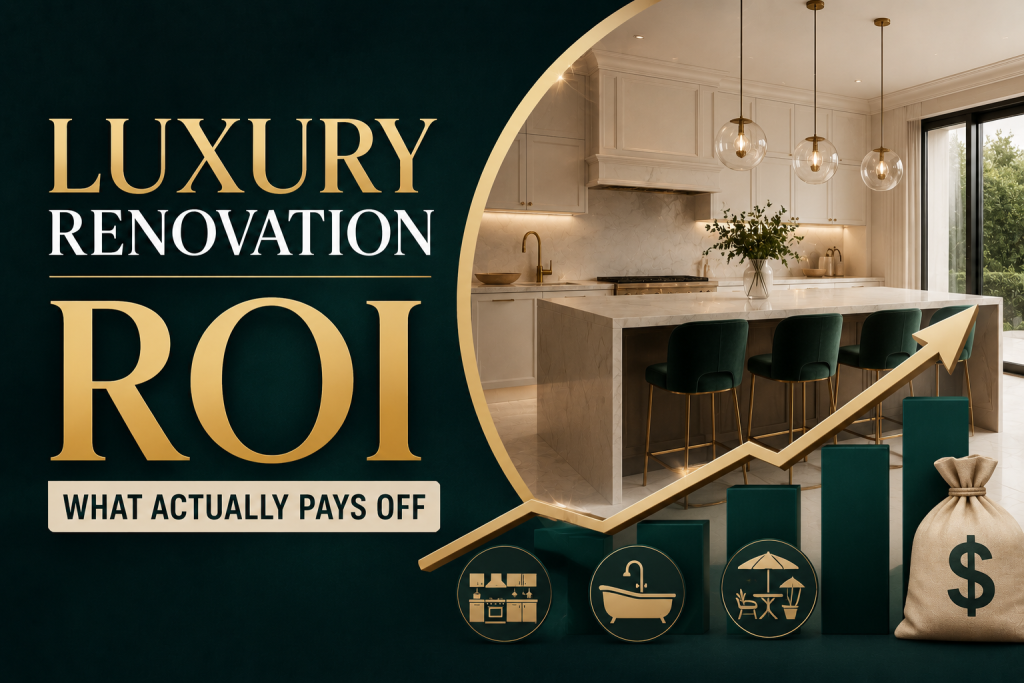
Luxury Renovation ROI: What Actually Pays Off
Understanding luxury renovation ROI is essential for homeowners who want to maximize luxury home resale value without overinvesting in low-impact upgrades. Not all luxury improvements deliver equal returns, and the most successful renovations balance aesthetics with market demand. Kitchen and bathroom remodels consistently rank as the highest-performing investments. Buyers in US luxury markets expect modern, high-functioning spaces with premium finishes, so upgrades in these areas often recover a large portion of their cost during resale.
Open-concept layouts also add value by improving flow and making homes feel larger and more functional. Smart home integrations, such as lighting control, security systems, and climate automation, are increasingly important in high-end properties. These features signal modern living and convenience, which directly influence buyer interest. However, highly personalized design choices can reduce ROI if they limit buyer appeal. In the context of luxury home resale value, the best renovations are those that enhance universality, functionality, and long-term design relevance.
Designer Interiors and Home Value Perception
Designer interiors have a powerful influence on luxury home resale value because they shape how buyers emotionally interpret a property within the first few seconds of viewing it. Even before evaluating square footage or layout, buyers respond to visual coherence, material quality, and overall styling direction. When a home reflects intentional design, such as cohesive color palettes, balanced furniture placement, and premium finishes, it signals care, quality construction, and lower future maintenance concerns. This perception alone can increase willingness to pay a premium price. In US luxury markets, homes with professionally curated interiors often photograph better, perform stronger in listings, and generate higher engagement online. This is especially important in competitive areas like Miami, Los Angeles, and New York, where first impressions are heavily digital. Within home resale value, designer interiors act as a psychological multiplier. They don’t just improve appearance, they elevate perceived worth, which directly influences buyer behavior and final offers.
Luxury Curb Appeal and First Impressions
Luxury curb appeal is one of the most influential factors shaping luxury home resale value, because it determines a buyer’s first emotional reaction before they even enter the property. In high-end US real estate markets, that first impression often sets the tone for perceived value and negotiation strength. Well-designed exterior elements such as manicured landscaping, modern façade updates, premium entry doors, and coordinated exterior materials immediately signal quality and care. Homes in states like California, Texas, and Florida particularly benefit from climate-conscious landscaping that enhances both beauty and durability. Lighting also plays a major role in luxury curb appeal. Architectural exterior lighting can highlight textures, pathways, and structural features, creating a strong evening presence that enhances perceived exclusivity. Within home resale value, curb appeal is not just cosmetic, it functions as a marketing asset. Strong exterior presentation increases showing interest, improves listing performance, and reinforces the premium positioning of the entire property.
Home Staging for Luxury Homes
Home staging plays a critical role in maximizing luxury home resale value, especially in competitive US markets where buyers often decide within minutes of walking through a property. Effective staging transforms a lived-in space into a curated lifestyle experience that highlights scale, flow, and premium finishes. In luxury homes, staging is not about filling rooms, it’s about defining purpose. Each space should feel intentional, whether it’s a formal living area, a private office, or a primary suite. High-end staging typically uses neutral palettes, minimal but high-quality furniture, and carefully selected décor that enhances architectural features without overpowering them. Professional staging also improves listing photography, which is essential for online-first buyer searches. Homes that are staged well tend to attract more showings and generate stronger emotional responses, leading to faster offers. In the context of luxury home resale value, staging acts as a strategic investment. It bridges the gap between design and buyer imagination, helping potential owners see the full lifestyle potential of the property.
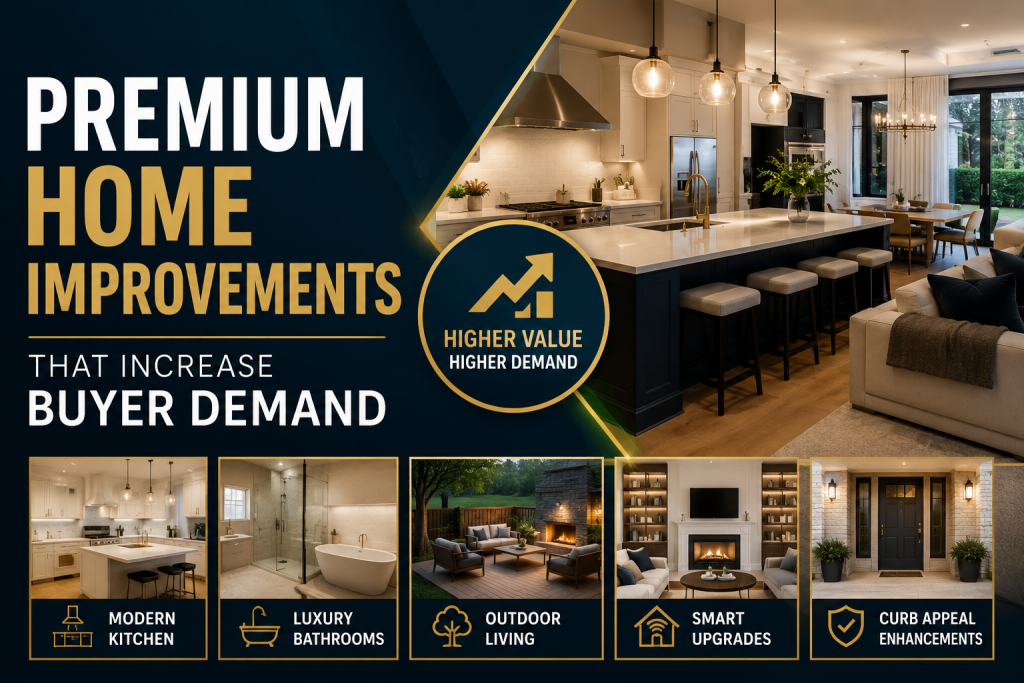
Premium Home Improvements That Increase Buyer Demand
Certain premium home improvements consistently boost luxury home resale value by aligning directly with what high-end US buyers expect in modern properties. These upgrades go beyond surface aesthetics and focus on livability, comfort, and long-term functionality. Open-concept layouts remain highly desirable, especially in luxury homes where space flow enhances both entertaining and everyday living. Buyers also place strong value on upgraded kitchens with professional-grade appliances, custom cabinetry, and durable stone surfaces that combine performance with visual appeal. Spa-inspired bathrooms are another major driver of demand, featuring rainfall showers, soaking tubs, and high-quality materials that create a resort-like experience at home. Smart home systems, including lighting, security, and climate control, are also increasingly expected in premium listings. Energy-efficient upgrades, such as high-performance windows and insulation, further increase buyer interest by reducing long-term utility costs. Within luxury home resale value, these improvements work together to elevate desirability, reduce market time, and strengthen perceived property worth in competitive US housing markets.
High-End Remodeling ROI by US Market
When analyzing luxury home resale value, it’s important to understand that high-end remodeling ROI varies significantly across different US real estate markets. Buyer expectations in Los Angeles are not the same as those in Dallas or Miami, and this directly affects which renovations deliver the strongest returns. In California luxury markets like Beverly Hills or Orange County, design-forward upgrades such as custom architecture, floor-to-ceiling glass, and seamless indoor-outdoor living tend to generate the highest perceived value. In contrast, Texas luxury suburbs often reward larger functional upgrades like expanded kitchens, outdoor entertainment spaces, and energy-efficient systems.
Florida markets place strong emphasis on hurricane-resistant materials, resort-style outdoor areas, and waterfront integration. Meanwhile, New York luxury apartments prioritize interior refinement, smart storage solutions, and high-quality finishes due to limited space. Across all regions, buyers consistently respond to cohesive design, quality materials, and functional upgrades. Within luxury home resale value, regional alignment ensures remodeling investments match local buyer psychology and maximize resale performance.
Common Mistakes That Reduce Luxury Resale Value
Even well-funded renovations can negatively impact luxury home resale value when design decisions are misaligned with buyer expectations. One of the most common mistakes is over-personalization. Highly specific design choices, such as bold color schemes, unconventional layouts, or niche luxury finishes, can limit appeal and make it harder for buyers to envision themselves in the space. Another issue is inconsistent quality. Mixing high-end materials with lower-grade finishes creates visual imbalance and weakens the perception of overall craftsmanship. In luxury markets, buyers expect uniform quality across all rooms, from kitchens to secondary bathrooms. Over-renovating is also a risk. Adding excessive decorative features or overly complex architectural elements can make a home feel busy rather than refined. In many US luxury markets, simplicity paired with premium materials often performs better than visual excess. Finally, neglecting curb appeal can undermine even the best interiors. Within home resale value, cohesion between exterior and interior presentation is essential for maximizing buyer confidence and final sale price.
Conclusion
Improving luxury home resale value is less about how much you spend and more about how strategically you design and renovate. The strongest results come from aligning aesthetics with buyer expectations, using durable premium materials, and focusing on high-impact areas like kitchens, bathrooms, curb appeal, and overall spatial flow. Across US luxury markets, buyers consistently respond to homes that feel cohesive, well-staged, and thoughtfully upgraded. Whether through upscale home upgrades, smart design planning, or targeted luxury renovation ROI improvements, the goal is to enhance both emotional appeal and financial return. Ultimately, luxury design becomes most powerful when it supports livability and long-term value, not just visual impact. A well-balanced approach ensures stronger offers, faster sales, and higher perceived property worth.
FAQ About Luxury Home Resale Value
Does luxury interior design always increase resale value?
Not always. luxury home resale value improves when upgrades align with buyer expectations, use timeless materials, and avoid overly personalized design choices. Poorly planned luxury renovations can sometimes reduce appeal.
What are the best upscale home upgrades for ROI?
High-impact upscale home upgrades include kitchen remodels, bathroom renovations, hardwood flooring, smart home systems, and exterior improvements that enhance curb appeal.
How important is staging in luxury homes?
Home staging for luxury homes is extremely important. It helps buyers visualize lifestyle potential, improves listing photos, and often increases perceived property value.
Which renovations give the highest luxury renovation ROI?
Kitchen and bathroom upgrades consistently deliver the strongest luxury renovation ROI, especially when paired with quality materials and functional layouts.