


Different Types of Luxury Interior Design Styles
Understanding luxury interior design styles is essential for homeowners who want to create cohesive, high-end spaces that reflect both personal taste and architectural intent. Luxury design is not a single aesthetic, it is a collection of distinct styles, each with its own materials, history, and visual language. From ornate traditional spaces to sleek contemporary environments, upscale decorating styles offer a wide range of possibilities for modern homes. These styles often overlap, especially in today’s modern luxury design, where blending influences has become a defining trend. In high-end residential projects across the US, from California estates to New York penthouses, designers frequently draw from multiple styles such as classic luxury interiors, Art Deco interiors, and Mediterranean luxury interiors to create personalized environments. This guide breaks down the most important interior design styles, helping you understand their key characteristics and how they can be applied in real homes.
What Are Luxury Interior Design Styles?
Luxury interior design styles refer to distinct design categories that define how high-end spaces are planned, furnished, and finished. Each style has its own visual language, material palette, and architectural influence, but all share a common focus on quality, craftsmanship, and refined aesthetics. Unlike general decorating approaches, upscale decorating styles are built around intentional design decisions. These include premium materials such as marble, natural stone, hardwood, and bespoke metalwork, as well as carefully curated furniture and lighting.
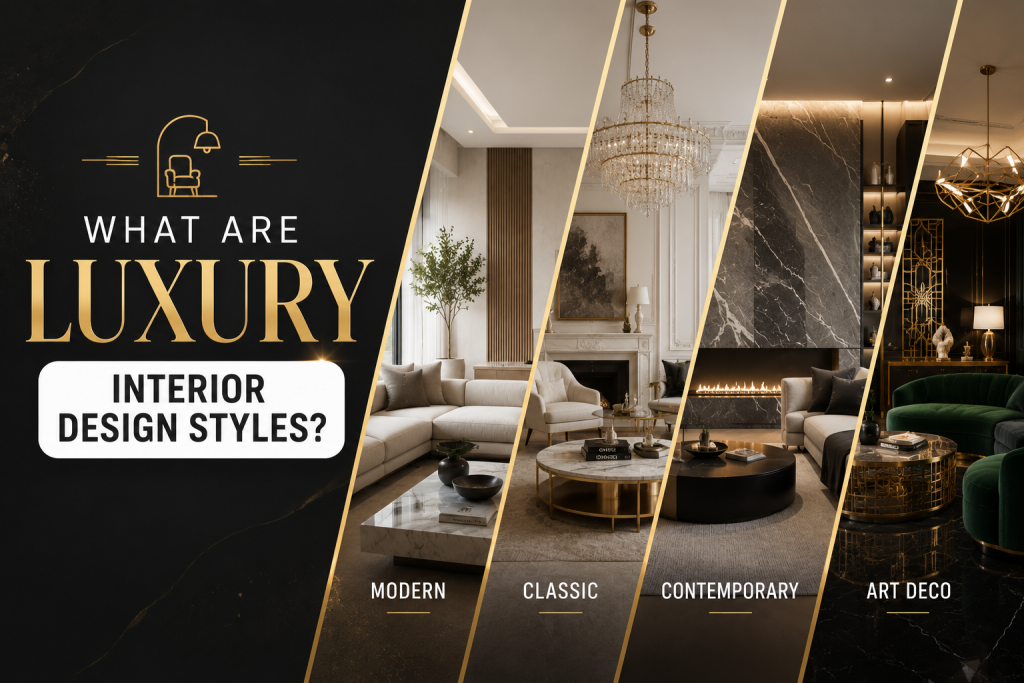
The goal is to create a cohesive environment that feels elevated and timeless. In today’s homes, especially across the US, modern luxury design often blends multiple influences. This means homeowners may combine elements of classic luxury interiors, contemporary luxury decor, and even regional styles like Mediterranean or transitional design to achieve a personalized result. Ultimately, interior design styles are not rigid rules but flexible frameworks that help guide the creation of sophisticated, functional, and visually harmonious living spaces.
Classic Luxury Interiors Explained
Classic luxury interiors represent one of the most timeless luxury interior design styles, rooted in traditional European elegance and architectural symmetry. This style emphasizes grandeur, refinement, and detailed craftsmanship, making it a staple in many estate homes and formal residences across the US. A defining feature of classic luxury interiors is the use of rich materials such as marble, polished wood, silk, velvet, and ornate metal finishes. These elements are often paired with decorative moldings, columns, and intricate ceiling details that enhance the sense of architectural depth. Furniture in this style tends to be formal and structured, often featuring curved silhouettes, carved detailing, and upholstered fabrics in neutral or warm tones. This creates a balanced and sophisticated atmosphere typical of traditional upscale decorating styles. Lighting also plays a key role, with chandeliers and decorative sconces reinforcing the elegant aesthetic. Overall, classic luxury interiors focus on timeless beauty, symmetry, and a sense of permanence that never goes out of style.
Modern Luxury Design Style
Modern luxury design is one of the most popular luxury interior design styles in contemporary US homes, blending clean architectural lines with high-end materials and understated elegance. Unlike more ornate styles, this approach focuses on simplicity, balance, and refined minimalism without sacrificing comfort or sophistication. In modern luxury design, spaces are typically open, airy, and uncluttered. Neutral color palettes dominate, often featuring shades of white, beige, gray, and black, which provide a calm foundation for layered textures and statement pieces. This makes it a key example of evolving upscale decorating styles. Materials play a crucial role, with marble, glass, brushed metal, and natural wood used in subtle but impactful ways. Instead of excessive ornamentation, the emphasis is on craftsmanship and proportion, aligning closely with contemporary luxury decor principles. Furniture is streamlined yet luxurious, often featuring clean silhouettes and premium fabrics. The result is a polished, functional aesthetic that defines many modern luxury design homes today.
Art Deco Interiors in Luxury Homes
Art Deco interiors are one of the most distinctive luxury interior design styles, known for their bold geometry, rich materials, and glamorous visual identity. Originating in the early 20th century, this style continues to influence modern high-end homes, especially in urban luxury residences and historic renovations. In Art Deco interiors, symmetry and strong visual structure are essential. Design elements often include geometric patterns, stepped forms, and symmetrical layouts that create a sense of order and sophistication. This makes the style highly recognizable within broader upscale decorating styles. Materials are a defining feature, with polished marble, lacquered wood, chrome, brass, and glass commonly used to create a luxurious, reflective finish. These elements are often paired with bold color contrasts such as black and gold, emerald green, or deep navy. Furniture in this style is typically elegant and sculptural, often featuring curved edges and decorative detailing. As part of interior design styles, Art Deco remains a powerful choice for homeowners seeking dramatic, statement-driven interiors.
Contemporary Luxury Decor Trends
Contemporary luxury decor represents a refined evolution of traditional luxury interior design styles, blending modern simplicity with elevated materials and curated detailing. This approach is widely used in today’s high-end residential projects, especially in modern luxury design homes across the US. A key characteristic of contemporary luxury decor is restraint. Instead of heavy ornamentation, designers focus on clean lines, open space, and carefully selected statement pieces. This creates interiors that feel sophisticated without appearing overly decorated. Materials remain central to the aesthetic. Natural stone, light oak, brushed metal, and textured fabrics are commonly used to add depth and warmth. These elements help soften the minimal structure often found in upscale decorating styles, creating a balanced and livable environment. Lighting also plays a major role, with sculptural fixtures and layered lighting designs enhancing architectural features. Overall, contemporary luxury decor bridges the gap between minimalism and opulence, making it one of the most adaptable interior design styles today.
Transitional Luxury Homes Style
Transitional luxury homes represent one of the most versatile luxury interior design styles, blending the elegance of classic interiors with the clean simplicity of modern design. This hybrid approach is especially popular in US homes because it creates a balanced, timeless aesthetic that feels both comfortable and refined. In transitional luxury homes, design elements are intentionally balanced between traditional detailing and modern minimalism. You may see crown molding and classic architectural features paired with streamlined furniture and neutral color palettes. This combination allows the space to feel grounded yet updated, making it a strong example of evolving upscale decorating styles. Materials are carefully selected to support this balance. Warm woods, soft textiles, marble accents, and subtle metal finishes are commonly used to create cohesion without overwhelming the design. This ensures the home maintains a sense of continuity across rooms. As part of interior design styles, transitional design is ideal for homeowners who want a timeless look that adapts easily to changing trends while remaining elegant and functional.
Mediterranean Luxury Interiors
Mediterranean luxury interiors are one of the most character-rich luxury interior design styles, inspired by the coastal homes of Spain, Italy, and Greece. This style brings together warmth, texture, and architectural charm, making it especially appealing for large homes in warm US regions like California, Florida, and Arizona. A defining feature of Mediterranean luxury interiors is the use of natural materials and earthy finishes. Stucco walls, terracotta tiles, exposed wood beams, and stone flooring create a grounded and organic feel. These elements give the home a sense of history and authenticity that sets it apart from more modern upscale decorating styles. Color palettes in this style are warm and sun-inspired, often featuring sandy neutrals, warm whites, deep blues, and olive tones. Arched doorways, wrought iron details, and textured surfaces further enhance the architectural depth. As part of broader interior design styles, Mediterranean design emphasizes comfort, craftsmanship, and indoor-outdoor living, making it ideal for spacious estates and coastal-inspired homes.
How to Choose Your Luxury Decorating Style
Selecting from different luxury interior design styles depends on your home’s architecture, lifestyle needs, and personal taste. Since many upscale decorating styles can overlap, the key is identifying which aesthetic best supports how you live on a daily basis. If you prefer timeless elegance and detailed craftsmanship, classic luxury interiors may be the best fit. This style works especially well in traditional estates with formal layouts and architectural detailing. On the other hand, homeowners who value simplicity and clean structure may gravitate toward modern luxury design, which emphasizes open spaces and minimal visual clutter.
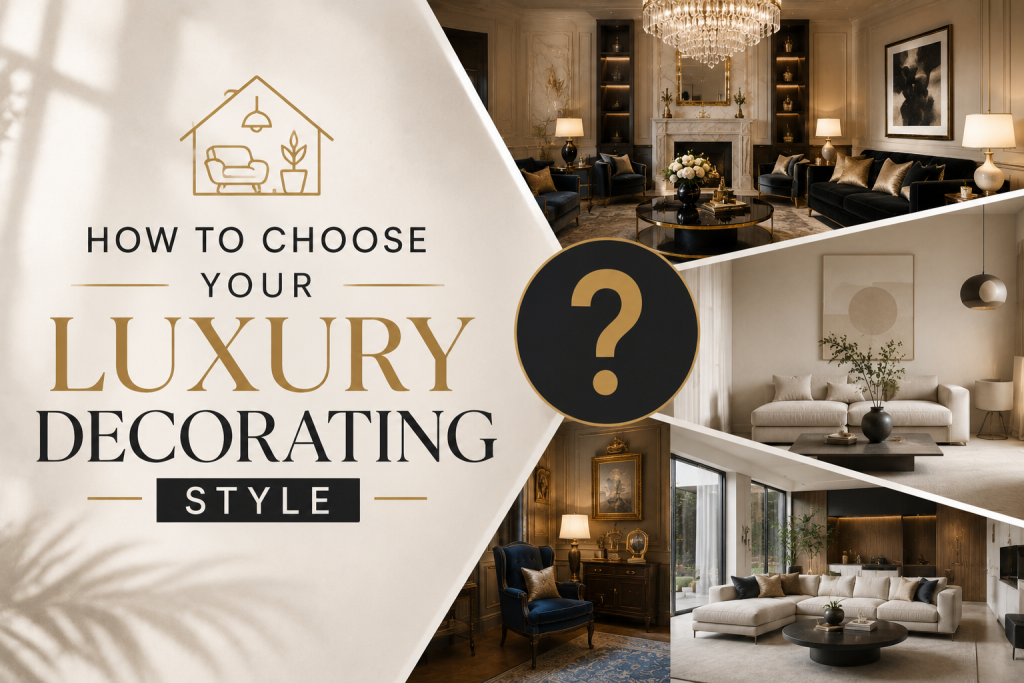
For those seeking balance, transitional luxury homes offer a flexible middle ground by combining traditional warmth with modern simplicity. Meanwhile, expressive homeowners may prefer bold options like Art Deco interiors or the earthy character of Mediterranean luxury interiors. Ultimately, the best choice among interior design styles is the one that aligns with your home’s structure and your long-term comfort and lifestyle goals.
Mixing Luxury Interior Design Styles
One of the defining trends in modern luxury interior design styles is the intentional blending of multiple aesthetics to create a more personalized and livable home. Instead of strictly following a single category, many designers now combine elements from different upscale decorating styles to achieve balance, depth, and individuality. For example, a home may combine the clean lines of modern luxury design with the warmth of transitional luxury homes, or introduce subtle Art Deco interiors accents into an otherwise minimalist space. This layering approach allows homeowners to enjoy visual interest without overwhelming the design. The key to successfully mixing interior design styles is maintaining consistency in materials, color palettes, and scale. Neutral foundations often help unify contrasting elements, while repeating finishes like wood tones, metals, or stone textures create cohesion. When done correctly, blending styles results in a sophisticated, curated environment that reflects both personality and functionality, an approach that defines many contemporary interior design styles today.
Conclusion
Understanding different luxury interior design styles helps homeowners create spaces that reflect both personality and architectural intent. Whether choosing classic luxury interiors, embracing modern luxury design, or blending multiple upscale decorating styles, each approach offers a unique way to elevate a home. Ultimately, the most successful interiors combine aesthetics, functionality, and consistency, resulting in timeless, personalized living spaces.
FAQ About Luxury Interior Design Styles
What are the main luxury interior design styles?
The main luxury interior design styles include classic luxury interiors, modern luxury design, Art Deco interiors, contemporary luxury decor, transitional luxury homes, and Mediterranean luxury interiors.
What is the most popular luxury interior style today?
Modern luxury design and contemporary luxury decor are currently the most popular, especially in US homes that favor clean layouts and refined materials.
Can you mix different luxury interior design styles?
Yes, many homeowners combine multiple upscale decorating styles to create personalized spaces, often blending modern elements with classic or transitional features.
What defines classic luxury interiors?
Classic luxury interiors are defined by ornate details, rich materials like marble and wood, and a focus on symmetry and timeless elegance.
Are Mediterranean luxury interiors still popular?
Yes, Mediterranean luxury interiors remain popular in warmer regions due to their natural materials, warm tones, and indoor-outdoor living focus.