


Why Missing Shingles Should Never Be Ignored
Many homeowners assume a few missing shingles are only a cosmetic issue, especially if there are no obvious leaks inside the house. In reality, even a small gap in your roofing system can expose underlying materials to moisture, sunlight, and changing weather conditions. Once the protective surface layer is gone, water can reach the underlayment and roof decking, increasing the risk of long-term damage. The consequences are often more serious in regions that experience strong storms, heavy rainfall, or seasonal temperature swings.
Homeowners in states such as Florida, Texas, and Colorado frequently deal with weather-related roofing issues that can worsen quickly when damaged areas are left unrepaired. Ignoring missing shingles may also affect curb appeal, property value, and insurance claims. A roof that appears neglected can raise concerns during a home inspection and may lead to more expensive repairs later. Addressing the issue early helps protect your home’s structure and reduces the likelihood of developing larger shingle roof problems in the future.
What Causes Missing Shingles?
Understanding why shingles go missing can help homeowners prevent recurring roof damage and extend the lifespan of their roofing system. While severe weather is one of the most common causes, several factors can contribute to shingle loss over time.
Storm Damage and High Winds
Strong wind gusts can lift and loosen shingles, especially if they are older or were not installed correctly. In coastal areas, hurricane-prone regions, and parts of the Midwest, wind uplift is a leading cause of roofing failures. After severe weather, homeowners often discover storm-damaged shingles scattered around their property or notice exposed sections on the roof. Even a single missing shingle can create a weak point where moisture begins to penetrate the roofing system.
Aging Roofing Materials
Most asphalt roofs have a limited lifespan. As shingles age, they become brittle, lose granules, and are less capable of resisting wind and weather exposure. Manufacturers such as GAF, Owens Corning, and CertainTeed design products for durability, but every roof eventually reaches a point where materials begin to deteriorate.
Poor Installation Practices
Improper nailing patterns, inadequate ventilation, or shortcuts during installation can increase the likelihood of missing shingles. Roofs that were installed without following industry standards may experience premature failures, particularly during storms or seasonal weather changes.
Missing Shingles and Roof Leak Risks
One of the biggest concerns associated with missing shingles is the increased risk of water intrusion. Shingles serve as the roof’s first line of defense against rain, snow, and wind-driven moisture. When they are missing, the underlayment and roof decking become more vulnerable to exposure, particularly during heavy storms. Water does not always enter the home immediately. In many cases, moisture gradually seeps beneath the roofing system, damaging insulation, wood framing, and attic components over time. This hidden damage can lead to mold growth, reduced energy efficiency, and costly structural repairs if left untreated.
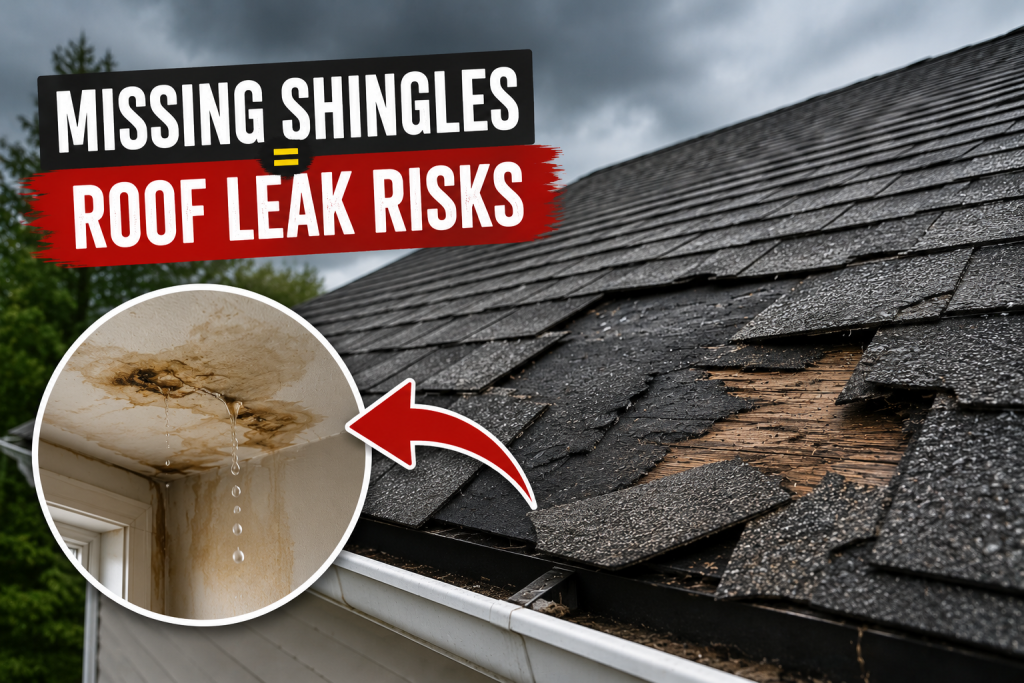
The risk is especially high in regions with frequent rainfall, hurricane activity, or freeze-thaw cycles. Homeowners in states such as Florida, Louisiana, and Minnesota often face weather conditions that can accelerate roofing deterioration once protective materials are compromised. Prompt repairs play a critical role in roof leak prevention. Addressing damaged areas as soon as they are discovered helps preserve the integrity of the roofing system and minimizes the likelihood of larger problems developing in the future.
DIY vs Professional Roof Shingle Repair
Homeowners often wonder whether replacing a few damaged shingles is a manageable DIY project or a task best left to a professional. The answer depends on the extent of the damage, the roof’s condition, and safety considerations.
When a DIY Repair Is Reasonable
A simple repair may be possible when only one or two shingles are damaged and the affected area is easy to access. Homeowners with proper safety equipment and basic roofing knowledge can sometimes complete a minor roof shingle repair without significant difficulty. However, working on a roof always involves fall risks, especially on steep slopes or multi-story homes.
When to Call a Roofing Contractor
Professional assistance is recommended when damage extends beyond a small section of the roof or when there are signs of underlying structural issues. Roofing contractors can inspect for hidden problems involving the underlayment, flashing, and roof decking. They can also identify whether missing shingles are part of a broader roofing failure. For many homeowners, hiring a qualified contractor provides peace of mind and helps ensure repairs meet local building codes and manufacturer requirements.
Step-by-Step Process for Replacing Missing Shingles
Replacing damaged roofing materials requires careful planning, the right tools, and a strong focus on safety. While exact procedures vary by roof design and manufacturer specifications, the general process follows a similar pattern for most residential roofs.
Safety Considerations
Before beginning any work, homeowners should ensure the roof surface is dry and stable. Proper footwear, fall-protection equipment, and a secure ladder are essential. If the roof is steep or the damaged area is difficult to reach, professional assistance is the safer option.
Materials and Tools Needed
Basic materials typically include matching shingles, roofing nails, a pry bar, roofing sealant, and a hammer. Choosing shingles that closely match the existing roof helps maintain a consistent appearance and weather-resistant seal.
Basic Replacement Overview
The process usually involves removing damaged materials, inspecting the exposed area for hidden deterioration, and securing a replacement shingle in place. During an asphalt shingle replacement, it is important to verify that the surrounding shingles remain intact and properly fastened. A final inspection helps confirm that the repaired area is protected against future weather exposure and performs as intended.
How Much Does It Cost to Repair Missing Shingles?
Repair costs can vary significantly depending on the extent of the damage, roof accessibility, labor rates, and local market conditions. In many cases, replacing a few damaged shingles is relatively affordable compared to larger roofing projects. However, costs can increase quickly if moisture has already affected the underlayment or roof decking. For minor repairs, homeowners may only need to pay for labor and replacement materials. More extensive damage often requires additional work, including inspections, decking repairs, flashing replacement, or partial roof restoration. Homes that have experienced severe weather events may also require a more comprehensive assessment to identify hidden issues.
Location can influence pricing as well. Roofing services in major metropolitan areas or regions with high demand may cost more than similar repairs in smaller markets. Homeowners should obtain multiple estimates and verify contractor credentials before authorizing work. Addressing missing shingles promptly is often the most cost-effective approach, helping prevent minor damage from developing into a major roofing expense.
Preventing Future Missing Shingles
Preventive maintenance is one of the most effective ways to extend the life of a roof and reduce the likelihood of future damage. While no roofing system is completely immune to severe weather, regular inspections and timely repairs can significantly improve long-term performance. Homeowners should inspect their roofs at least twice per year and after major storms. Look for loose materials, damaged flashing, clogged gutters, and signs of wear around roof penetrations. Trimming overhanging tree branches can also help reduce the risk of impact damage during high winds.
Following basic roofing maintenance tips can help identify small issues before they become expensive repairs. Routine maintenance is particularly important in regions that experience hurricanes, hailstorms, heavy snowfall, or prolonged periods of intense heat. Professional roof inspections provide an additional layer of protection. Experienced contractors can identify developing issues that may not be visible from the ground and recommend corrective measures before significant damage occurs. A proactive approach helps homeowners protect both their investment and their home’s structural integrity.
When Missing Shingles Signal a Bigger Roofing Problem
In some situations, missing shingles are not an isolated issue but rather a warning sign of broader roofing concerns. Repeated shingle loss can indicate underlying problems that require more than a simple repair.

Hidden Decking Damage
When moisture penetrates beneath the roofing surface, it can weaken the roof decking over time. Soft spots, sagging sections, or recurring leaks may suggest that structural components have been compromised. If these issues are not addressed, repairs can become significantly more expensive and may eventually require partial roof replacement.
Repeated Wind Damage Issues
Roofs that consistently lose shingles during storms may have installation defects, inadequate fastening patterns, or age-related deterioration. In some cases, the original roofing materials may no longer provide the level of wind resistance needed for local weather conditions. A professional inspection can help determine whether targeted repairs or a larger roofing upgrade is the most effective solution.
Roof Age Considerations
Most asphalt roofing systems have a finite lifespan. If an older roof continues to experience damage, replacing individual shingles may only provide a temporary fix. Homeowners should evaluate the overall condition of the roof and consider long-term replacement options when recurring issues become more frequent.
Conclusion
Missing shingles may seem like a minor roofing issue, but they can quickly lead to water intrusion, structural damage, and expensive repairs if left unaddressed. Whether the damage is caused by severe weather, aging materials, or installation problems, taking action early helps protect your home and extend the life of your roof. Regular inspections, prompt repairs, and professional assessments when needed can prevent small issues from becoming major expenses.
Homeowners should pay close attention to signs of roof damage after storms and address missing shingles as soon as they are discovered. By understanding the causes, risks, repair options, and prevention strategies discussed in this guide, you can make informed decisions that protect your investment, maintain curb appeal, and keep your roofing system performing effectively for years to come.
Frequently Asked Questions
Can One Missing Shingle Cause a Leak?
Yes. Although a single damaged area may seem minor, missing shingles can expose the underlayment and roof decking to moisture. The risk depends on weather conditions, roof age, and the location of the damage. During heavy rain or wind-driven storms, even a small opening can allow water to penetrate the roofing system.
How Long Can a Roof Go With Missing Shingles?
A roof should not be left unrepaired for an extended period after shingles are lost. While some roofs may not leak immediately, prolonged exposure to rain, UV rays, and temperature fluctuations can accelerate deterioration. Prompt repairs help prevent additional damage and reduce long-term repair costs.
Will Homeowners Insurance Cover Missing Shingles?
Insurance coverage often depends on the cause of the damage. If shingles were lost due to a covered event such as a windstorm, hailstorm, or severe weather incident, a homeowners insurance policy may help cover repair costs. Damage resulting from age, neglect, or lack of maintenance is less likely to qualify for coverage.
Is Replacing One Shingle Enough?
In some cases, replacing a single damaged shingle is sufficient. However, if nearby shingles are loose, brittle, or showing signs of wear, additional repairs may be necessary. A professional inspection can determine whether the issue is isolated or part of a larger roofing problem.