


Modern vs Contemporary Interior Design: What’s the Difference?
Walk into a newly renovated home in Dallas, Chicago, or Los Angeles, and you may hear the terms modern and contemporary used interchangeably. While they share certain characteristics such as clean lines and uncluttered spaces, they represent two distinct approaches to design. Understanding the difference can help homeowners make better decisions when remodeling, decorating, or planning a new home. The debate around Modern vs contemporary interior design often stems from their visual similarities. Both styles embrace simplicity, functionality, and a polished appearance, yet their origins and design principles are quite different. Modern design follows a specific historical movement rooted in the early twentieth century, while contemporary design evolves with current trends and homeowner preferences. For homeowners seeking a timeless aesthetic, improved resale appeal, or a cohesive renovation strategy, knowing which style aligns with their goals is essential. This guide explores the key distinctions, practical applications, and design characteristics that separate these two popular interior styles.
Modern vs Contemporary Interior Design: Understanding the Basics
Before comparing specific features, it’s important to understand where these styles come from. Many homeowners assume they are the same because both emphasize simplicity and clean aesthetics. However, each style follows a different design philosophy and historical background.
What Is Modern Interior Design?
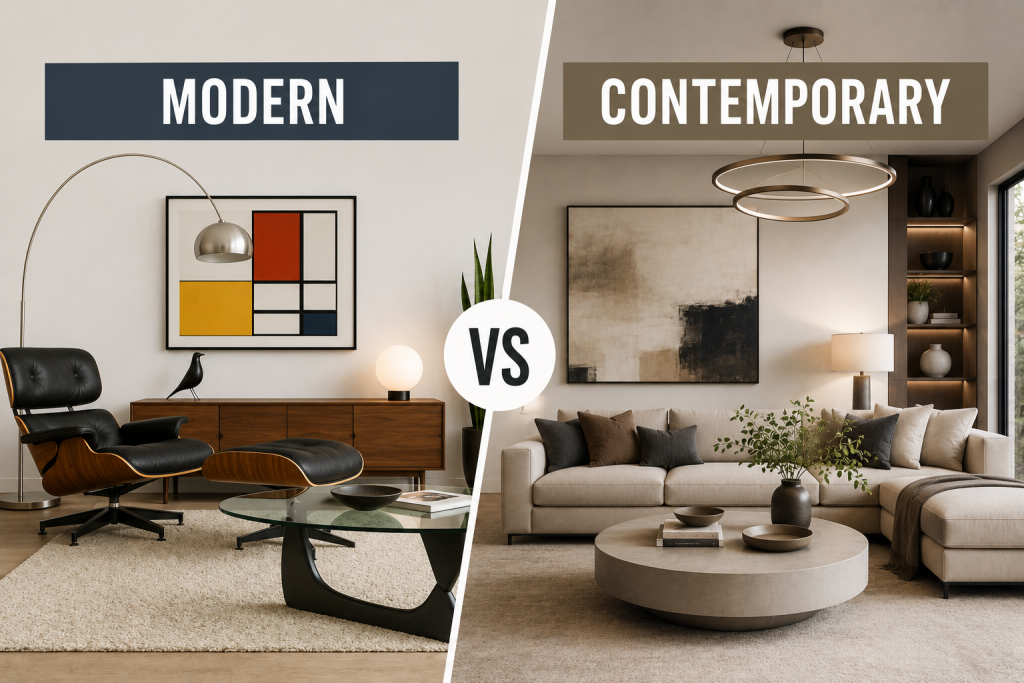
Modern design originated during the early twentieth century and was heavily influenced by the Bauhaus movement, Frank Lloyd Wright, and the rise of Mid-Century Modern architecture. The style emphasizes functionality, balance, and simplicity while avoiding excessive ornamentation. A typical modern interior style incorporates natural materials such as wood, leather, and stone. Furniture often features straight lines, low profiles, and practical forms. Neutral color palettes dominate the space, creating a calm and timeless atmosphere that remains popular in American homes decades after its introduction.
What Is Contemporary Interior Design?
Contemporary design reflects what is current and relevant today rather than following a fixed historical period. Unlike modern design, contemporary interiors evolve as trends change, making the style more flexible and adaptable. A well-designed contemporary interior style often combines clean lines with innovative materials, large windows, open layouts, and subtle statement pieces. Contemporary spaces may incorporate glass, metal, textured finishes, and smart home technology while maintaining a sophisticated appearance. Because it continuously evolves, contemporary design can look different from one decade to the next while still retaining its emphasis on comfort, functionality, and visual simplicity.
Modern vs Contemporary Interior Design: Key Differences Explained
Although these styles share several visual traits, understanding the distinctions can prevent costly decorating mistakes and help homeowners create a more cohesive living environment.
Design Philosophy
The biggest distinction in Modern vs contemporary interior design lies in the underlying philosophy. Modern design follows a specific set of principles established during the early-to-mid twentieth century. Its focus remains on simplicity, functionality, and timeless appeal. Contemporary design, on the other hand, constantly adapts to current preferences, emerging materials, and changing lifestyle needs.
Color Palettes and Materials
When comparing Modern vs contemporary interior design, modern interiors typically feature warm neutral tones, natural wood finishes, and organic textures. Contemporary spaces often embrace a broader range of materials, including glass, polished metal, concrete, and mixed textures. While both styles avoid excessive decoration, contemporary spaces are generally more willing to incorporate bold accents and evolving design trends.
Furniture and Decor Choices
Furniture in modern spaces tends to follow consistent forms inspired by Mid-Century Modern design. Pieces are functional and understated. In contrast, modern home decor often remains rooted in classic design principles, while contemporary spaces may showcase trend-driven artwork, sculptural lighting, and statement furnishings that reflect current tastes.
Layout and Functionality
Both styles favor open layouts, but contemporary homes often place greater emphasis on flexibility. In the discussion of Modern vs contemporary interior design, contemporary spaces typically prioritize multifunctional rooms, integrated technology, and adaptable living areas. These features have become increasingly common as homeowner needs continue to evolve across the United States.
Modern vs Contemporary Interior Design Comparison Table
For homeowners planning a renovation or redesign project, a side-by-side comparison can make the selection process much easier. The table below highlights the most important differences between the two styles.
| Feature | Modern Design | Contemporary Design |
| Origin | Early-to-mid 20th century design movement | Reflects current design trends |
| Design Approach | Fixed and historically defined | Continuously evolving |
| Color Palette | Warm neutrals, earth tones, natural shades | Neutral base with trend-driven accents |
| Materials | Wood, leather, stone, natural fibers | Glass, metal, concrete, mixed textures |
| Furniture Style | Functional, clean-lined, timeless | Flexible, innovative, trend influenced |
| Decorative Elements | Minimal and restrained | Select statement pieces and artwork |
| Layout | Structured and balanced | Open, adaptable, and flexible |
| Technology Integration | Limited emphasis | Often incorporates smart-home features |
| Best For | Homeowners seeking timeless appeal | Homeowners who enjoy evolving trends |
This interior design comparison demonstrates that neither style is inherently better. The ideal choice depends on personal preferences, lifestyle needs, long-term maintenance goals, and how often a homeowner wants to update their space. Understanding these distinctions can help create a home that feels intentional rather than following a trend that may quickly lose relevance.
Which Style Is Better for Your Home?
Choosing between these styles depends on your lifestyle, budget, and long-term design goals. While both approaches can create beautiful interiors, each offers unique advantages for different types of homeowners.
Choose Modern Design If…
Modern design is often the better choice for homeowners who value consistency and timeless appeal. When comparing Modern vs contemporary interior design, modern interiors are ideal for those who prefer spaces that remain visually relevant for decades without frequent updates. Homes inspired by Mid-Century Modern principles often appeal to buyers because of their clean aesthetics and practical layouts. This style also works well for homeowners who appreciate natural materials, balanced proportions, and classic architectural details.
Choose Contemporary Design If…
Contemporary design may be the right fit if you enjoy refreshing your home as trends evolve. A space built around contemporary home decor allows for greater flexibility when introducing new finishes, furnishings, or technology. Contemporary interiors are particularly attractive for newer homes where open-concept layouts, oversized windows, and smart-home features play a major role in everyday living. Ultimately, the difference between modern and contemporary design becomes most important when deciding how much flexibility you want in your home’s appearance over time. Homeowners seeking permanence often prefer modern design, while those who enjoy change may gravitate toward contemporary spaces.
Modern Home Ideas vs Contemporary Design Inspiration
When planning a redesign, homeowners often find it easier to visualize each style through real-world applications. Looking at room-specific examples can clarify which approach best aligns with your personal preferences. In a modern living room, clean-lined furniture, walnut finishes, neutral colors, and minimal accessories create a timeless atmosphere. Kitchens often feature flat-panel cabinetry, natural stone surfaces, and functional layouts inspired by Mid-Century Modern principles. Many modern home ideas focus on simplicity, durability, and visual balance rather than following seasonal trends.
Contemporary spaces take a more flexible approach. In the context of Modern vs contemporary interior design, a contemporary living room may incorporate sculptural lighting, textured accent walls, and mixed materials such as glass and metal. Kitchens often feature sleek finishes, large islands, and integrated smart technology. Bedrooms may include layered textures, oversized artwork, and subtle statement pieces that reflect current design preferences. Many American homeowners successfully blend elements from both styles, combining the timeless structure of modern design with carefully selected contemporary accents. This balanced approach often creates interiors that feel current without becoming overly trend dependent.
Common Misconceptions About Modern and Contemporary Design
One of the most common myths surrounding Modern vs contemporary interior design is that the two styles are identical. While they may appear similar at first glance, they differ significantly in origin, philosophy, and long-term application. This misunderstanding often leads homeowners to choose furniture, finishes, or layouts that do not align with their intended design direction. Another misconception is that all minimalist spaces are modern. In reality, minimalism can influence many design styles, including contemporary, Scandinavian, and transitional interiors.
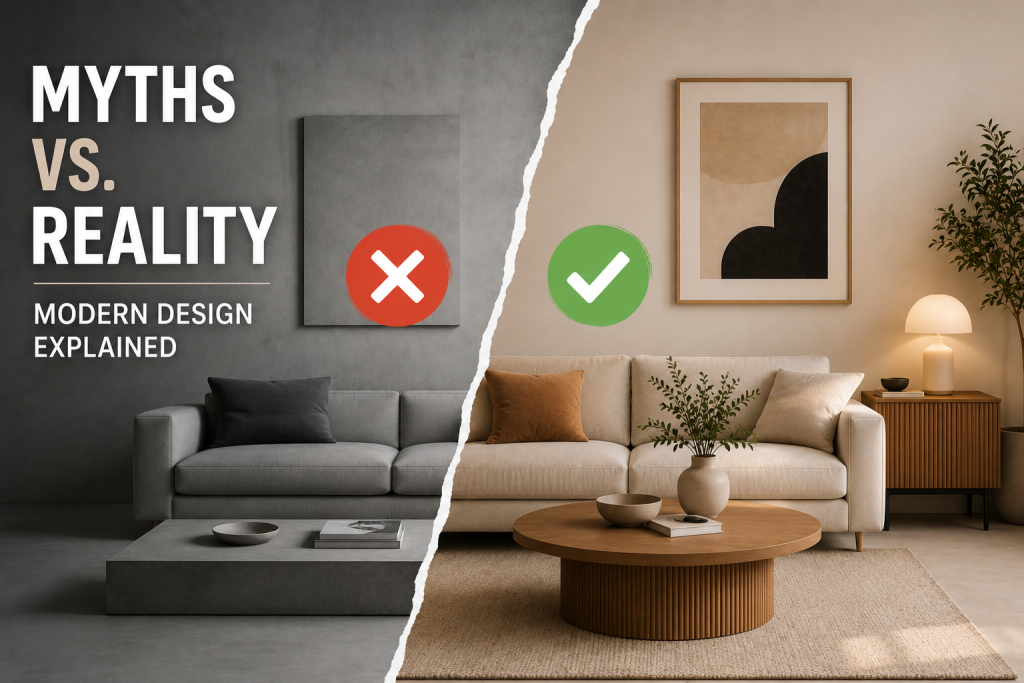
Modern design follows a specific historical framework, whereas contemporary design reflects what is currently popular and relevant. Some homeowners also assume contemporary design automatically means futuristic interiors filled with advanced technology. While contemporary spaces often incorporate innovation, the style is primarily defined by its adaptability rather than a specific aesthetic feature. Understanding these distinctions is essential when evaluating Modern vs contemporary interior design. A clear understanding of each style helps homeowners create cohesive interiors, avoid expensive redesign mistakes, and make more confident decorating decisions that align with their long-term goals.
Conclusion
Choosing between modern and contemporary design ultimately comes down to personal preference, lifestyle needs, and long-term goals for your home. While modern design is rooted in a specific historical movement characterized by clean lines, natural materials, and timeless appeal, contemporary design evolves alongside current trends and changing homeowner expectations. For homeowners planning a renovation, new construction project, or interior refresh, understanding the strengths of each style can lead to more confident design decisions. Modern interiors often provide consistency and lasting value, while contemporary spaces offer flexibility and the freedom to adapt as tastes change over time. When evaluating Modern vs contemporary interior design, there is no universally correct choice. The best option is the one that aligns with how you live, the atmosphere you want to create, and the level of change you’re comfortable making in the future. By understanding the distinctions between these two influential styles, homeowners can create spaces that are functional, attractive, and tailored to their unique vision.
Frequently Asked Questions
Can Modern vs Contemporary Interior Design Styles Be Mixed?
Yes. One of the advantages of Modern vs contemporary interior design is that homeowners can successfully blend elements from both styles. A common approach is to use modern architectural features and furniture as the foundation while incorporating contemporary accents through lighting, artwork, textiles, or decorative accessories.
Is Contemporary Design More Expensive?
Not necessarily. Costs depend more on the materials, furnishings, and finishes selected than on the design style itself. Contemporary interiors may include premium technology or custom features, but homeowners can achieve the look at a wide range of budgets by prioritizing key design elements.
Which Style Adds More Resale Appeal?
Both styles can support resale value when executed properly. Modern interiors often attract buyers looking for timeless aesthetics, while contemporary spaces appeal to those seeking updated features and current trends. Market preferences may vary by location, especially in cities such as New York, Chicago, and Los Angeles.
What Style Works Best for New Construction Homes?
Contemporary design often complements new construction because it easily integrates open floor plans, large windows, and smart-home technology. However, modern design can also work exceptionally well when homeowners prefer a more structured and enduring aesthetic that remains relevant for years to come.