


Most Durable Roofing Materials: Which Roofing Option Lasts the Longest?
A roof is one of the most important investments a homeowner can make. While upfront costs often influence purchasing decisions, durability should be a major consideration when evaluating roofing options. Choosing a roof that can withstand decades of exposure to rain, wind, snow, hail, and intense sunlight can significantly reduce long-term maintenance and replacement expenses. The most durable roofing materials are designed to perform under challenging weather conditions while maintaining their structural integrity and appearance. For homeowners in regions such as Florida, Texas, Colorado, or the Midwest, selecting the right roofing material can also improve storm resistance, energy efficiency, and property value.
Although many roofing systems claim exceptional longevity, not all materials deliver the same level of performance. Some can last more than a century with proper installation and maintenance, while others may require replacement within a few decades. Understanding the factors that influence roof lifespan is the first step toward identifying the longest lasting roofing materials for your home and climate.
What Makes the Most Durable Roofing Materials Last Longer?
The lifespan of a roof depends on far more than the material itself. While the most durable roofing materials are engineered to withstand decades of exposure, their actual performance is influenced by climate, installation quality, ventilation, and ongoing maintenance. Homeowners who understand these factors can make better long-term roofing decisions and avoid premature replacement costs.
Climate and Weather Exposure
Different roofing materials respond differently to environmental conditions. Homes in hurricane-prone states like Florida often require roofing systems that can resist high winds and wind-driven rain. In northern regions such as Minnesota or Michigan, roofs must handle heavy snow loads and repeated freeze-thaw cycles. Areas like Arizona and Nevada expose roofing materials to intense UV radiation and prolonged heat. The most durable roofing materials are typically those that match the specific climate challenges of a region rather than simply offering the longest advertised lifespan.
Installation Quality and Maintenance
Even the highest-quality roofing material can fail early if it is installed incorrectly. Proper underlayment, flashing, ventilation, and fastening methods play a critical role in roof longevity. Organizations such as the National Roofing Contractors Association (NRCA) consistently emphasize professional installation as a key factor in long-term performance. Regular inspections, debris removal, and prompt repairs also help prevent minor issues from becoming costly structural problems.
Most Durable Roofing Materials Ranked by Lifespan
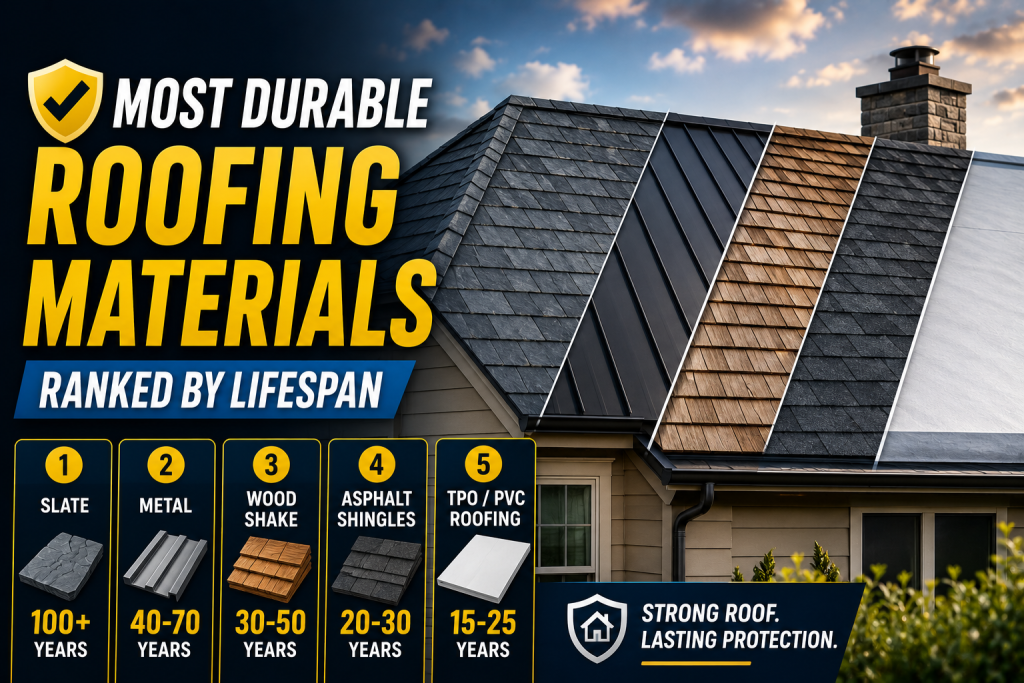
When comparing roofing options, lifespan is often the clearest measure of durability. The most durable roofing materials can protect a home for generations, making them attractive choices for homeowners focused on long-term value rather than the lowest upfront cost.
Slate Roofing
Natural slate is widely considered the benchmark for longevity. Known for exceptional slate roof durability, a properly installed slate roof can last 75 to 150 years or more. Slate performs well in cold climates, resists fire, and adds a premium appearance that can significantly increase curb appeal. However, its weight often requires additional structural support.
Clay Tile Roofing
Clay tiles have been used for centuries and remain a popular option in warm climates such as Florida, California, and the Southwest. A typical tile roofing lifespan ranges from 50 to 100 years when installed correctly. Clay tiles resist heat, UV exposure, and moisture while maintaining their appearance for decades.
Standing Seam Metal Roofing
Modern metal roofs have become one of the fastest-growing roofing categories in the United States. The average metal roofing lifespan ranges from 40 to 70 years, depending on material quality and environmental conditions. Standing seam systems offer excellent wind resistance and perform exceptionally well in areas prone to severe weather.
Concrete Tile Roofing
Concrete tiles provide durability comparable to clay while offering greater design flexibility. Many systems last between 50 and 75 years and perform well in both hot and coastal environments.
Synthetic Composite Roofing
Engineered composite roofing products are designed to mimic slate, wood shake, or tile while reducing weight and maintenance requirements. Many premium products carry warranties of 40 to 50 years and offer impressive impact resistance.
Premium Asphalt Shingles
While asphalt shingles generally do not last as long as slate or tile, high-end architectural shingles remain among the most practical options for many homeowners. Premium products from manufacturers such as GAF, Owens Corning, and CertainTeed can provide 30 to 50 years of reliable performance when professionally installed.
Most Durable Roofing Materials for Different U.S. Climate Zones
Choosing the right roof is not only about lifespan. The most durable roofing materials often vary depending on regional weather patterns, temperature fluctuations, and environmental exposure. Matching a roofing system to your climate can maximize performance and reduce long-term repair costs.
Florida and Coastal Regions
Homes along the Gulf Coast and Atlantic Coast face hurricanes, high humidity, and salt exposure. Metal roofing and concrete tile systems are often considered among the most durable roofing materials for these conditions because they offer strong wind resistance and excellent moisture protection. Many homeowners also prioritize weather-resistant roofing solutions that meet local building codes and insurance requirements.
Texas and Southwest States
In states such as Texas, Arizona, and New Mexico, roofs endure intense sunlight and prolonged heat. Clay tile and metal roofing perform particularly well because they resist UV degradation and help reduce heat transfer into the home.
Midwest Snow Regions
Northern states experience heavy snow loads, ice dams, and repeated freeze-thaw cycles. Slate roofing and standing seam metal systems excel in these environments due to their ability to shed snow efficiently and resist moisture-related damage.
Mountain and High-Wind Areas
Regions with significant elevation changes and strong winds benefit from durable roofing materials that can withstand impact, temperature swings, and harsh weather. Slate, metal, and certain composite roofing systems are often preferred for long-term reliability.
Comparing the Most Durable Roofing Materials
While lifespan is important, homeowners should also evaluate maintenance requirements, installation costs, weather performance, and resale value. The most durable roofing materials often come with higher upfront costs, but they can deliver substantial savings over decades of ownership.
| Roofing Material | Typical Lifespan | Maintenance Level | Weather Performance | Resale Value Impact |
| Slate Roofing | 75–150+ Years | Low | Excellent | Very High |
| Clay Tile Roofing | 50–100 Years | Low | Excellent | High |
| Concrete Tile Roofing | 50–75 Years | Moderate | Very Good | High |
| Standing Seam Metal | 40–70 Years | Low | Excellent | High |
| Synthetic Composite | 40–50 Years | Low | Very Good | Moderate to High |
| Architectural Asphalt Shingles | 30–50 Years | Moderate | Good | Moderate |
The most durable roofing materials generally provide the strongest return for homeowners planning to stay in their homes for decades. However, the best choice depends on local climate conditions, structural requirements, HOA guidelines, and budget considerations. A roof that performs exceptionally well in Florida may not be the ideal option for a snow-heavy region such as Minnesota or Wisconsin.
Which Durable Roofing Material Requires the Least Maintenance?
For many homeowners, durability and maintenance go hand in hand. The most durable roofing materials are often those that require minimal upkeep while continuing to perform reliably year after year. Lower maintenance requirements can reduce ownership costs and help prevent unexpected repairs. Natural slate is one of the strongest contenders for low-maintenance roofing because it resists rot, insects, fire, and moisture damage. When installed correctly, slate roofs may go decades with only occasional inspections. Standing seam metal roofing is another excellent option due to its resistance to cracking, warping, and mildew growth.
Clay and concrete tile roofs also require relatively little maintenance, although individual tiles may need replacement if damaged by impact. Composite roofing products have become increasingly popular because they combine durability with simplified upkeep. By comparison, asphalt shingles generally require more frequent inspections and repairs over time. While modern architectural shingles are significantly more durable than older products, they typically do not match the long-term maintenance advantages offered by slate, tile, or metal roofing systems.
Are Premium Roofing Systems Worth the Investment?
Many homeowners hesitate when comparing standard roofing options to premium roofing systems because of the higher initial cost. However, evaluating roofing materials based solely on installation price can be misleading. Long-term value often comes from durability, maintenance savings, energy efficiency, and reduced replacement frequency. The most durable roofing materials typically cost more upfront because they are engineered to withstand decades of environmental stress. Materials such as slate, clay tile, and standing seam metal roofing can often outlast multiple generations of conventional asphalt shingles. As a result, homeowners may avoid one or even two roof replacements during their ownership period.
Premium roofing systems can also contribute to stronger resale value. Buyers frequently view high-quality roofing as a major advantage because it reduces future maintenance concerns. In some regions, durable roofing materials may also qualify homeowners for insurance discounts due to improved resistance against wind, hail, or fire damage. When viewed as a long-term investment rather than a short-term expense, premium roofing solutions often provide substantial financial and practical benefits.
How to Choose the Most Durable Roofing Materials for Your Home
Selecting among the most durable roofing materials requires balancing lifespan, budget, climate conditions, and long-term ownership goals. While every homeowner wants a roof that lasts, the best choice depends on the specific needs of the property and the environment in which it operates. Start by evaluating your local climate. Homes in hurricane-prone areas may benefit from metal or concrete tile roofing, while properties in northern states often perform well with slate or standing seam metal systems. Next, consider the structural capacity of your home, as heavier materials such as slate and clay tile may require additional support.

Budget is another important factor. Although the most durable roofing materials generally involve higher upfront costs, they can deliver lower lifetime ownership expenses due to reduced maintenance and replacement needs. Homeowners planning to remain in their homes for decades often see greater value from investing in premium materials. Finally, review HOA requirements, resale goals, energy-efficiency objectives, and contractor availability. The most durable roofing materials provide the greatest benefits when they are properly matched to both the home and the region.
Conclusion
Investing in a durable roof is one of the smartest long-term decisions a homeowner can make. While asphalt shingles remain a common choice, materials such as slate, clay tile, concrete tile, and standing seam metal consistently deliver superior longevity and performance. The most durable roofing materials are not necessarily the same for every home. Climate, installation quality, maintenance expectations, and budget all play a role in determining which roofing system offers the best value.
Homeowners in Florida may prioritize wind resistance, while those in colder northern states may focus on snow and ice performance. By carefully evaluating lifespan, maintenance requirements, weather resistance, and resale value, homeowners can select a roofing solution that protects their investment for decades. Choosing the right material today can help reduce future repair costs while improving comfort, efficiency, and long-term property value.
Frequently Asked Questions
What is the longest-lasting roofing material?
Natural slate is generally considered the longest-lasting roofing material available. A properly installed slate roof can last between 75 and 150 years, and in some cases even longer. Its exceptional durability, fire resistance, and ability to withstand harsh weather make it a premium choice for long-term homeowners.
Is metal roofing better than asphalt shingles?
Metal roofing typically offers a longer lifespan, greater wind resistance, and lower maintenance requirements than asphalt shingles. While the upfront cost is higher, many homeowners find that the long-term durability and energy-efficiency benefits justify the investment.
How long does a tile roof last?
The lifespan of a tile roof depends on the material and installation quality. Clay tile roofs often last 50 to 100 years, while concrete tile roofs generally provide 50 to 75 years of service. Regular inspections can help maximize their longevity.
Which of the Most Durable Roofing Materials Is Best for Hurricane-Prone Areas?
Standing seam metal roofing and concrete tile roofing are among the best options for hurricane-prone regions. These materials can provide excellent wind resistance when installed according to local building codes and manufacturer specifications.
What roofing material requires the least maintenance?
Slate and standing seam metal roofing are often considered the lowest-maintenance roofing options. Both materials resist moisture, insects, rot, and fire while requiring only periodic inspections to maintain peak performance.
Do durable roofing materials increase home value?
Yes. High-quality roofing materials can improve curb appeal, reduce future maintenance concerns, and increase buyer confidence. In many markets, a durable roof is viewed as a valuable upgrade that can positively influence resale value.
How often should a roof be inspected?
Most roofing professionals recommend a roof inspection at least once per year and after major storms. Routine inspections help identify minor issues before they become expensive repairs and can extend the life of the roofing system.