


Open Shelving vs Closed Storage Cabinets
Choosing the right storage solution can have a major impact on both the functionality and appearance of a home. Whether you’re remodeling a kitchen, updating a pantry, or improving overall organization, homeowners often face the decision of open shelving vs closed cabinets. Both options offer unique advantages, but the best choice depends on your storage needs, design preferences, and lifestyle.
Open shelving has become increasingly popular in modern homes because it creates a more open, airy appearance while providing easy access to everyday items. Closed cabinets, on the other hand, offer concealed storage that helps reduce visual clutter and maintain a cleaner look. Understanding the differences between these two storage styles can help homeowners make informed decisions that balance aesthetics, organization, and practicality. This guide compares the benefits, drawbacks, and ideal uses of each option to help you determine which solution is right for your home.
Understanding Open Shelving vs Closed Cabinets
The debate over open shelving vs closed cabinets has become increasingly common as homeowners look for storage solutions that balance style and functionality. While both options serve the same basic purpose, storing and organizing household items, they differ significantly in appearance, accessibility, and maintenance requirements. Open shelving consists of exposed shelves that display dishes, décor, cookbooks, and everyday essentials. This approach creates a more open visual feel and can make smaller spaces appear larger. It is often associated with farmhouse, modern, and minimalist design styles.
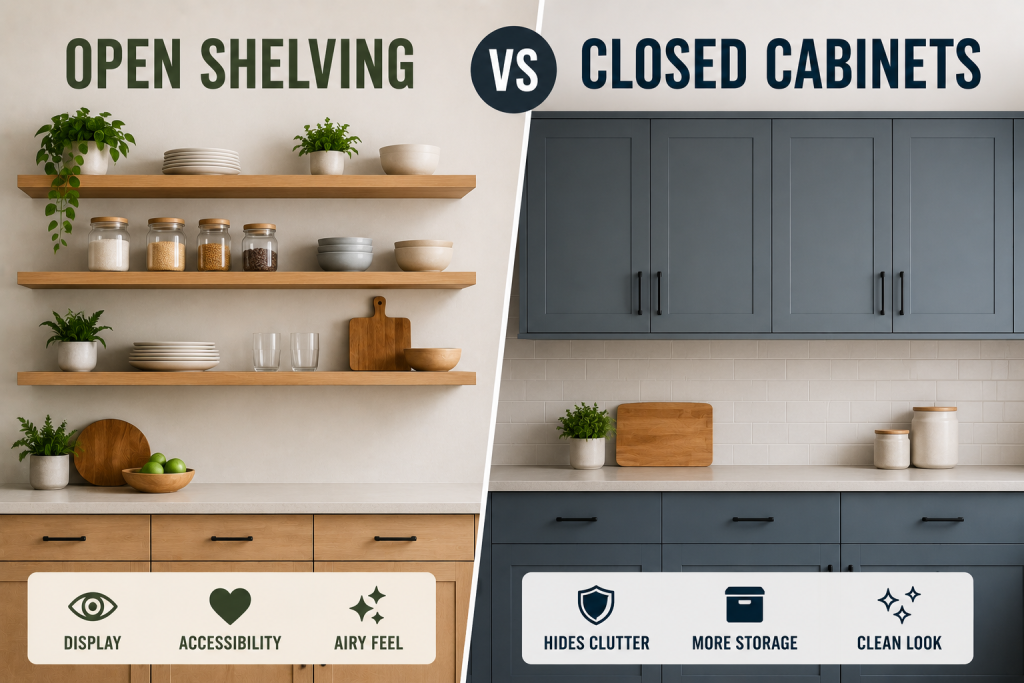
Closed cabinets use doors to conceal stored items, providing a cleaner and more organized appearance. They offer greater protection from dust and help hide clutter, making them a practical choice for busy households. When comparing open shelving and closed cabinets, homeowners should consider storage habits, design preferences, and how much visible organization they are willing to maintain. The right choice depends on both aesthetic goals and everyday functionality.
Benefits of Open Shelving
Open shelving has become a popular feature in many homes because it combines functionality with visual appeal. For homeowners evaluating open shelving vs closed cabinets, understanding the advantages of open shelves can help determine whether this storage style aligns with their needs and design preferences.
Improved Accessibility
One of the biggest benefits of open shelving is easy access to frequently used items. Dishes, glasses, cookware, and decorative pieces can be reached quickly without opening and closing cabinet doors, making everyday tasks more convenient.
Visual Openness
Open shelves create a lighter and more spacious appearance, which can be especially beneficial in smaller kitchens and compact living areas. By eliminating bulky upper cabinets, homeowners can make a room feel larger and less confined.
Modern Design Appeal
Open shelving is often associated with modern storage design and contemporary interiors. It provides an opportunity to display attractive dishware, plants, artwork, and decorative accessories while adding personality to the space. When styled thoughtfully, open shelves can function as both storage and a design feature.
Drawbacks of Open Shelving
While open shelving offers several design advantages, it is not the ideal solution for every homeowner. When evaluating open shelving vs closed cabinets, it is important to consider the practical challenges that come with exposed storage. One of the most common drawbacks is dust accumulation. Because shelves remain uncovered, dishes, glassware, and decorative items require more frequent cleaning than items stored behind cabinet doors. In kitchens, grease and cooking residue can also build up on exposed surfaces over time.
Open shelving also demands a higher level of organization. Since everything is visible, clutter can quickly affect the appearance of the entire room. Homeowners must consistently maintain neat arrangements to preserve the intended design aesthetic. Another limitation is reduced concealed storage. Large appliances, food packaging, cleaning supplies, and miscellaneous household items are often difficult to display attractively on open shelves. For homeowners who prefer a cleaner, less visually busy environment, these challenges can make open shelving less practical than traditional cabinet storage.
Benefits of Closed Storage Cabinets
Closed cabinets remain one of the most popular storage solutions because they offer practicality, organization, and versatility. For homeowners comparing open shelving vs closed cabinets, traditional cabinetry often provides advantages that support both daily functionality and long-term organization.
Better Organization
Closed cabinets make it easier to organize a wide variety of household items without worrying about how they look on display. Dishes, cookware, pantry goods, and small appliances can all be stored neatly behind cabinet doors, helping maintain a more structured storage system.
Hidden Space Solutions
One of the biggest advantages of cabinetry is the ability to create hidden space solutions. Cabinets conceal clutter, protect belongings from dust, and provide space for items that homeowners may not want visible at all times. This feature is especially valuable in busy kitchens and family homes.
Reduced Visual Clutter
Closed cabinets contribute to a cleaner and more streamlined appearance. By hiding everyday items from view, they help create a more organized environment and support a variety of storage cabinet styles and interior design preferences. This makes cabinetry a practical choice for homeowners who prioritize simplicity and functionality.
Drawbacks of Closed Cabinets
Although closed cabinetry offers many organizational benefits, it also comes with certain limitations. When comparing open shelving vs closed cabinets, homeowners should consider how traditional cabinets may affect both functionality and design. One potential drawback is cost. High-quality cabinetry, particularly built-in cabinets, often requires a larger investment than basic shelving systems. Custom designs, premium materials, and professional installation can significantly increase renovation expenses.
Closed cabinets can also create a heavier visual appearance, especially in smaller kitchens or rooms with limited natural light. Large rows of upper cabinets may make a space feel more enclosed compared to the open and airy look associated with shelving. Accessibility is another consideration. Retrieving frequently used items often requires opening and closing cabinet doors, which may be less convenient than open shelving. In addition, items stored at the back of deep cabinets can sometimes be difficult to locate or access. While these drawbacks may not be significant for every homeowner, they are important factors to evaluate when selecting the right storage solution.
Open Shelving vs Closed Cabinets for Kitchens
The kitchen is one of the most common places where homeowners compare open shelving vs closed cabinets because storage plays a critical role in both functionality and design. Each option offers distinct advantages depending on how the kitchen is used and the homeowner’s organizational preferences. Open shelving provides quick access to frequently used dishes, glassware, and cooking essentials. It can also make smaller kitchens feel more spacious by reducing visual bulk. These benefits make open shelving a popular choice for homeowners seeking modern kitchen storage ideas and a more open aesthetic.
Closed cabinets, however, generally offer greater storage capacity and better protection for kitchen items. They conceal clutter, keep supplies organized, and help maintain a cleaner appearance. For busy households, cabinets often provide a more practical solution for storing food, cookware, and small appliances. When evaluating open shelving vs closed cabinets, many homeowners find that a combination of both creates the ideal balance between accessibility, organization, and design appeal.
Storage Capacity Comparison
Storage capacity is one of the most important factors homeowners consider when evaluating open shelving vs closed cabinets. While both options provide valuable storage space, they differ in how efficiently that space can be utilized and organized. In most cases, closed cabinets offer greater overall storage capacity. Cabinet interiors can accommodate a wider range of items, including cookware, small appliances, pantry goods, and cleaning supplies. Adjustable shelves and specialized organizational accessories can further increase efficiency and make better use of available space.
Open shelving, while accessible and visually appealing, often requires more selective storage. Because items remain visible, homeowners tend to limit shelves to dishes, glassware, decorative pieces, and frequently used essentials. This can reduce overall storage flexibility compared to cabinetry. From a practical standpoint, a shelving storage comparison often reveals that cabinets provide more concealed and versatile storage. However, open shelving can still be highly effective when used strategically alongside traditional cabinetry in a balanced storage design.
Trendy Storage Design Trends
Modern homeowners are increasingly moving away from choosing only one storage style and instead combining elements of both shelving and cabinetry. This approach allows them to enjoy the accessibility and visual appeal of open shelves while maintaining the practicality of concealed storage. As a result, mixed-storage layouts have become one of the most popular trends in trendy storage design. Many contemporary kitchens feature a combination of open shelves for displaying decorative items, dishware, or frequently used essentials alongside built-in cabinets that conceal pantry items, small appliances, and household supplies.
This balanced approach helps create a more personalized and functional space. Another growing trend is the use of minimalist shelving ideas paired with clean-lined cabinetry. Homeowners often favor simple storage layouts that reduce visual clutter while maintaining a modern aesthetic. By blending open and closed storage, homeowners can achieve a design that supports both organization and style without compromising functionality.
Which Option Adds More Home Value?
When planning a kitchen or storage renovation, homeowners often consider how different storage choices may affect resale value. While aesthetics are important, most buyers prioritize functionality, organization, and long-term practicality. Both open shelving and cabinetry can contribute to home appeal, but they do so in different ways.
Open Shelving vs Closed Cabinets and Resale Value
When comparing open shelving vs closed cabinets, closed cabinets generally appeal to a wider range of buyers because they offer greater storage capacity and help keep everyday items hidden from view. Many homeowners value organized, clutter-free spaces, making cabinets a desirable feature in kitchens and living areas.
Why Built-In Cabinets Appeal to Buyers?
Quality built-in storage cabinets often enhance a home’s perceived value, and they provide durable, functional storage for a variety of household needs. Buyers frequently view well-designed cabinetry as a long-term investment and an important part of a functional home.
A Balanced Approach Often Delivers the Best Results
For many homes, combining open shelving with traditional cabinets creates the strongest balance between style and practicality. Open shelves add character and visual interest, while cabinets provide concealed storage and organization. This mixed-storage approach tends to have broad appeal and can help maximize both everyday functionality and long-term marketability.
Open Shelving and Closed Cabinets: Which Is Right for You?
The decision between open shelving and closed cabinets ultimately depends on your lifestyle, storage needs, and design preferences. Homeowners who enjoy displaying decorative items, frequently used dishes, or curated collections may appreciate the accessibility and visual appeal of open shelving. This option works particularly well in modern, farmhouse, and minimalist interiors where creating an open and airy atmosphere is a priority. Closed cabinets are often a better choice for households that require substantial storage capacity or prefer a cleaner, less cluttered appearance.
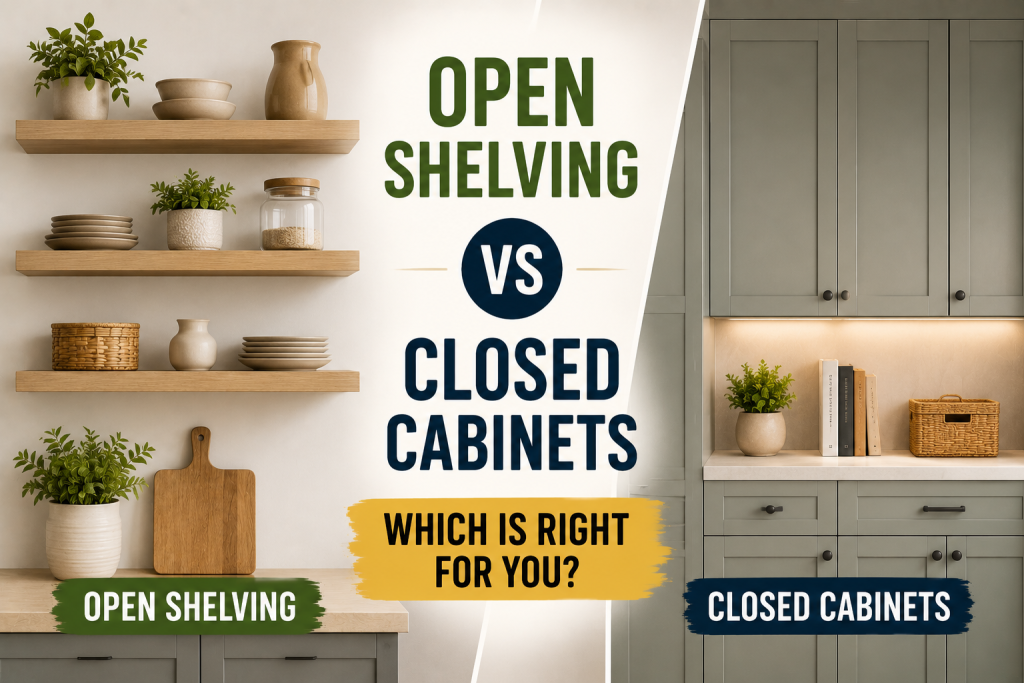
They provide effective hidden space solutions and help keep everyday items out of sight, making them especially practical for busy families. For many homeowners, the ideal solution is not choosing one over the other but both. Integrating open shelves with traditional cabinetry allows you to enjoy decorative display space while maintaining organized and functional storage. This balanced approach offers the best of both worlds and supports a wide range of design styles.
Open Shelving vs Closed Cabinets Checklist
Before deciding between open shelving vs closed cabinets, homeowners should evaluate how they use their space and what type of storage best supports their daily routines. Consider the amount of storage required, the types of items being stored, and how much visible organization you are willing to maintain. Open shelving works best when displayed items remain neat and organized, while closed cabinets offer greater flexibility for concealing everyday household belongings.
It is also important to consider cleaning requirements, accessibility preferences, and long-term maintenance. Homeowners pursuing a modern aesthetic may prefer open shelves, while those prioritizing organization and functionality may benefit more from traditional cabinetry. Budget, remodeling goals, and potential resale considerations should also factor into the decision-making process. By carefully evaluating these factors, homeowners can choose a storage solution that aligns with both their practical needs and design preferences.
Conclusion
Open shelving vs closed cabinets depends on how you balance style, organization, and functionality within your home. Open shelving offers accessibility, visual openness, and modern design appeal, while closed cabinets provide greater storage capacity, cleaner organization, and effective hidden storage solutions. Each option has unique advantages and limitations, making it important to consider your lifestyle, storage needs, and long-term goals. For many homeowners, a combination of shelving and cabinetry delivers the ideal balance of practicality and aesthetics. By carefully evaluating your space and priorities, you can select a storage solution that enhances both the appearance and functionality of your home for years to come.
Frequently Asked Questions
Open shelving vs closed cabinets, which is better?
The answer depends on your storage needs and design preferences. Open shelving provides easier access and a more open appearance, while closed cabinets offer concealed storage and better protection from dust and clutter. The best choice often comes down to how you use the space.
Are open shelves harder to maintain?
Yes, open shelves generally require more maintenance because items remain exposed to dust, grease, and everyday household debris. Homeowners must also keep displayed items organized to maintain an attractive appearance.
Do closed cabinets provide more storage?
In most cases, yes. Closed cabinets typically offer greater storage capacity and flexibility than open shelving. They can accommodate a wider range of items and support more efficient organization, making them a popular choice in many homes.
What is the best option for small kitchens?
For smaller kitchens, a combination of open shelving and cabinetry often works best. Open shelves can make the room feel larger, while cabinets provide essential concealed storage for items that would otherwise create clutter.
Which adds more resale value?
While both options can contribute to home appeal, many buyers prefer the practicality of cabinetry. However, a balanced design that combines open shelving vs closed cabinets often appeals to the widest range of homeowners and potential buyers.