


Outdoor Lighting Problems: Common Issues and Practical Fixes
Outdoor lighting failures are more common than many homeowners expect, especially as fixtures age and remain exposed to changing weather conditions throughout the year. A system that once worked reliably can gradually develop performance issues that affect both appearance and functionality. Many outdoor lighting problems start with small warning signs such as dim output, inconsistent operation, or individual fixtures suddenly turning off. Ignoring those early symptoms can sometimes lead to more extensive repairs later.
The good news is that most lighting issues do not automatically require complete replacement. In many cases, simple inspections, basic maintenance, and targeted repairs can restore performance and extend fixture life. In this guide, we’ll break down common outdoor lighting failures, explain what causes them, and explore practical fixes homeowners can consider before investing in a larger upgrade.
Why Outdoor Lighting Problems Happen
Most lighting failures do not happen suddenly. Outdoor systems operate through heat, rain, humidity, dirt buildup, and seasonal temperature changes, which gradually affect performance over time. One of the most common causes of outdoor lighting problems is exposure to moisture and changing weather conditions. Water intrusion, corroded connections, and aging fixture seals can reduce reliability and shorten system lifespan.
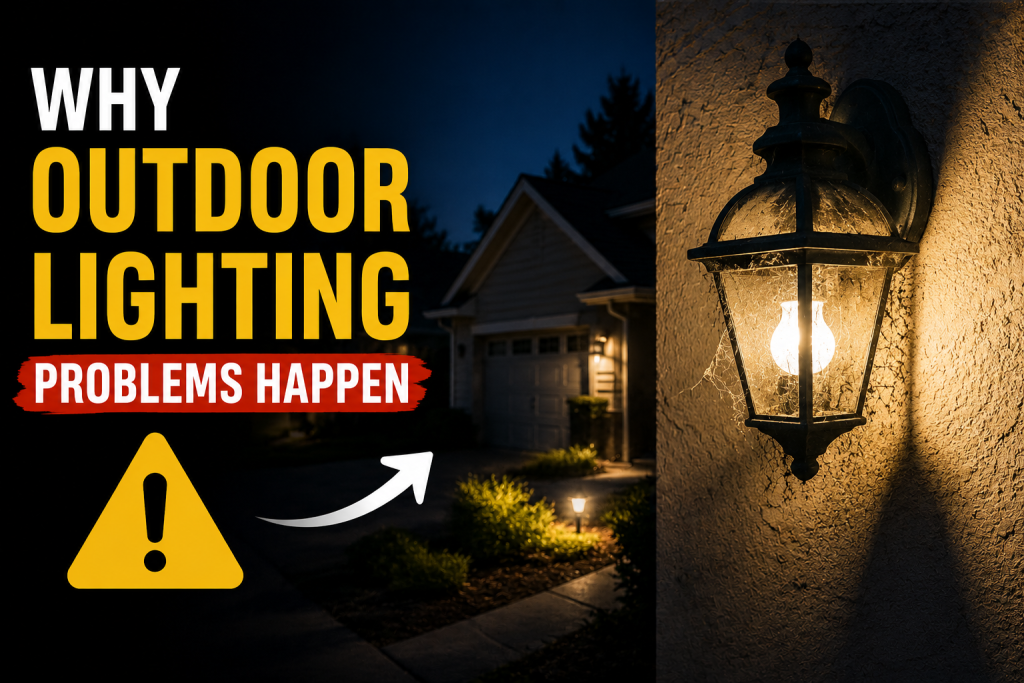
Installation quality also plays a major role. Loose connections, poor cable placement, and overlooked maintenance can create issues that become more noticeable over time. In some cases, homeowners begin performing landscape lighting troubleshooting only after fixtures stop operating consistently. Routine inspections and basic outdoor lighting maintenance often prevent minor problems from becoming more expensive repairs. Cleaning fixtures, checking connections, and replacing worn components can significantly improve long-term performance.
Outdoor Lights That Stop Working
One of the most frustrating issues homeowners encounter is an outdoor light not working when the rest of the system appears normal. In many cases, the cause is simpler than expected and can often be identified through a basic inspection. Start by checking the most obvious possibilities first. Burned-out bulbs, loose fixture connections, tripped breakers, and timer settings are common reasons lights suddenly stop operating. For low-voltage systems, inspecting the transformer and confirming power delivery can also help narrow down the issue.
Some outdoor lighting problems occur because of moisture exposure or damaged components that interrupt electrical flow. Fixtures located near planting beds or irrigation zones may be more vulnerable over time. When homeowners begin landscape lighting troubleshooting early, smaller failures are often easier to resolve before they affect additional fixtures or require larger repairs.
Fixing Flickering Outdoor Lights
Intermittent lighting is one of the easiest issues to overlook because fixtures may appear to work normally at certain times and fail at others. However, inconsistent performance is often an early sign that a system needs attention. Common causes of flickering outdoor lights include loose electrical connections, moisture entering fixtures, aging bulbs, or voltage inconsistencies. Environmental exposure can gradually weaken components and make flickering more noticeable over time. Some outdoor lighting problems also develop when fixtures receive inconsistent power because of aging transformers or connection failures.
Identifying whether the issue affects one fixture or multiple fixtures usually helps narrow down the cause. If flickering continues after replacing bulbs and checking visible connections, homeowners may need to inspect wiring conditions or evaluate whether professional repair is appropriate before performance declines further.
Common Solar Lighting Issues That Cause Outdoor Lighting Problems
Solar lighting is popular because of its simplicity, but performance can decline when charging conditions or internal components change over time. Many homeowners assume a failed solar fixture means replacement, although the cause is often less severe. Some of the most common solar light problems include insufficient sunlight exposure, battery degradation, dirty solar panels, and poor fixture placement. Trees, covered areas, and seasonal weather can reduce charging efficiency and shorten nighttime runtime.
Unlike wired systems, solar fixtures depend heavily on environmental conditions, which means performance may vary throughout the year. These types of outdoor lighting problems often appear gradually rather than all at once. Simple maintenance steps such as cleaning panels, repositioning fixtures, and replacing aging rechargeable batteries can frequently restore performance and extend fixture lifespan before replacement becomes necessary.
Outdoor Wiring and Low Voltage Problems
Wiring issues can be more difficult to identify because many problems develop below the surface or inside connection points. Over time, moisture exposure, shifting soil, and aging materials can reduce system performance. Some outdoor wiring issues appear as inconsistent brightness, sections of lighting turning off, or fixtures operating intermittently. Damaged cable insulation and corroded connectors are common causes, especially in landscapes exposed to irrigation or seasonal weather changes.
For low-voltage systems, voltage drop can become another source of outdoor lighting problems, particularly as layouts expand or additional fixtures are added. Diagnosing whether the issue is isolated or affects multiple lighting zones is an important first step. In certain cases, low voltage lighting repair may involve replacing damaged connectors, correcting cable runs, or updating aging components to restore more reliable operation.
Preventive Maintenance That Extends Fixture Life
Preventive care is one of the easiest ways to reduce unexpected repairs and keep outdoor lighting performing consistently throughout the year. Small maintenance habits often extend fixture lifespan and improve long-term reliability. Regular outdoor lighting maintenance should include cleaning fixture lenses, removing debris around lights, checking for moisture buildup, and inspecting visible connections. Seasonal inspections are especially useful after storms, heavy rain, or temperature changes.
Many recurring outdoor lighting problems begin as minor issues that go unnoticed until performance declines. Catching loose components, worn seals, and early corrosion can prevent larger failures later. For homeowners with low-voltage or landscape systems, creating a simple inspection schedule often reduces downtime and helps preserve appearance, safety, and overall lighting quality over time.
When to Repair vs Replace Outdoor Lighting
Not every lighting issue requires full replacement. In many situations, targeted repairs can restore performance and extend the life of an existing system without the cost of installing new fixtures. Repairs often make sense when problems are isolated to a single fixture, damaged connection, worn component, or minor performance issue. Homeowners dealing with recurring outdoor lighting problems should first determine whether failures are limited to one area or affecting the entire layout.
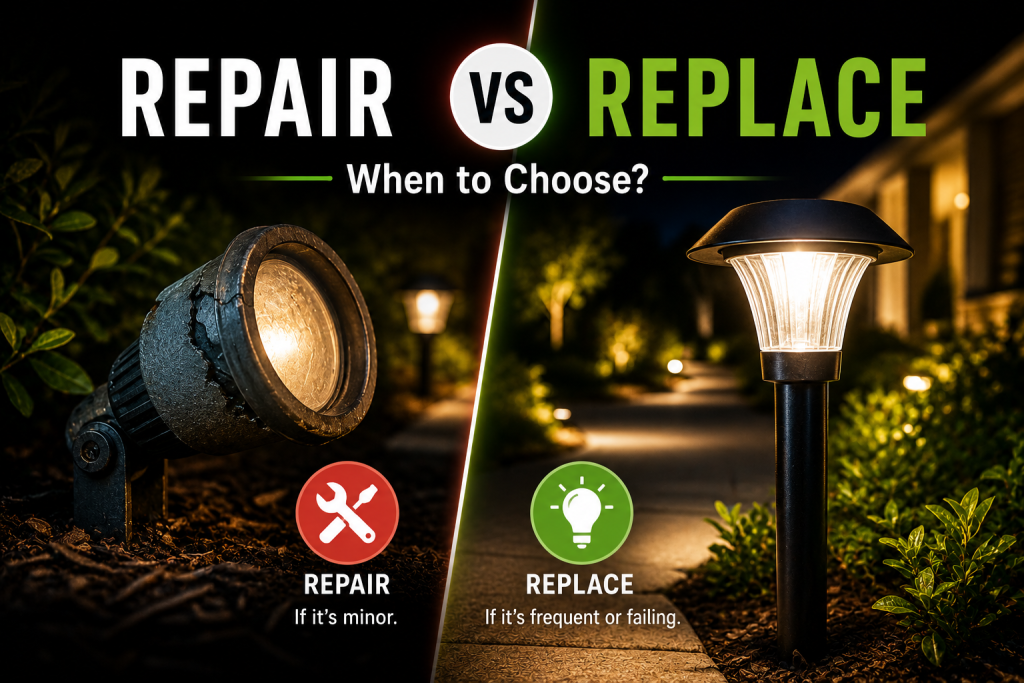
Replacement becomes more practical when systems experience repeated breakdowns, widespread corrosion, outdated components, or declining overall performance. Older systems may also become harder to maintain as replacement parts become less available. In situations involving aging transformers, damaged wiring, or repeated failures across multiple fixtures, low voltage lighting repair and broader upgrades should be evaluated together to determine the most cost-effective long-term solution.
Final Thoughts
Most lighting failures begin with small warning signs that become easier to fix when addressed early. Paying attention to changes in brightness, fixture reliability, and system performance can prevent larger repair costs later. Many outdoor lighting problems can be resolved through inspections, routine upkeep, and targeted repairs rather than complete replacement. Understanding how outdoor systems age helps homeowners make better decisions about maintenance and upgrades. A proactive approach often produces the best long-term results.
Checking fixtures seasonally, replacing worn components, and responding quickly to performance changes can extend system life and improve overall reliability. Whether the issue involves wiring, fixture wear, or environmental exposure, addressing lighting concerns early helps maintain safety, curb appeal, and the usability of outdoor spaces throughout the year.
Frequently Asked Questions
What causes outdoor lighting problems that make outdoor lights stop working?
Many outdoor lighting problems happen because of power interruptions, worn components, loose connections, weather exposure, timer settings, or aging fixtures. When diagnosing outdoor lighting problems, identifying whether the issue affects one fixture or multiple areas can help narrow down the cause and determine whether repair or replacement is needed.
Why do outdoor lights flicker?
Flickering may happen because of moisture exposure, unstable electrical connections, aging bulbs, transformer issues, or inconsistent voltage delivery. Early inspection often prevents larger repairs.
Can outdoor lighting be repaired?
Yes. Many outdoor lighting systems can be repaired through component replacement, fixture servicing, connection repairs, or maintenance rather than complete replacement.
How often should outdoor lights be maintained?
Most homeowners benefit from seasonal inspections and periodic cleaning throughout the year. Areas exposed to heavy weather or moisture may require more frequent attention.
Is low-voltage outdoor lighting reliable?
Low-voltage systems are generally reliable when installed correctly and maintained consistently. Routine inspections and timely repairs can improve long-term performance and fixture lifespan.