


Does Custom Paint Color Matching Cost More?
Understanding paint color matching cost starts with knowing what paint color matching actually is and how it works in modern paint stores. Color matching is a process where a paint retailer recreates a specific shade using digital tools, manual adjustment, or both to achieve a close or exact match. Most professional color matching paint service systems use spectrophotometers, devices that scan a sample (such as a paint chip, fabric, or existing wall) and break it down into color data. This data is then used to formulate a custom mix through precision tinting machines.
In many cases, major brands like Sherwin-Williams color blending systems or Benjamin Moore signature colors platforms allow stores to replicate thousands of shades with high accuracy. The final result is then adjusted by technicians if needed to account for lighting, surface type, and finish. This process is commonly used when homeowners want to repaint a room but maintain an existing color, or when they want to replicate a specific shade seen in décor, furniture, or inspiration images. It forms the foundation for how interior paint personalization works in both DIY and professional painting projects.
Does Paint Color Matching Cost More Than Standard Paint?
When evaluating paint color matching cost, most homeowners want to know whether custom mixing is significantly more expensive than buying standard, pre-formulated colors. In most cases, the answer is: only slightly, if at all. Basic paint store color matching is often included in the price of the paint itself, especially at major retailers. The main cost difference comes from the paint base quality and brand tier, not the act of matching the color. Whether you choose a standard off-the-shelf shade or a matched one, the gallon price is usually similar within the same product line.
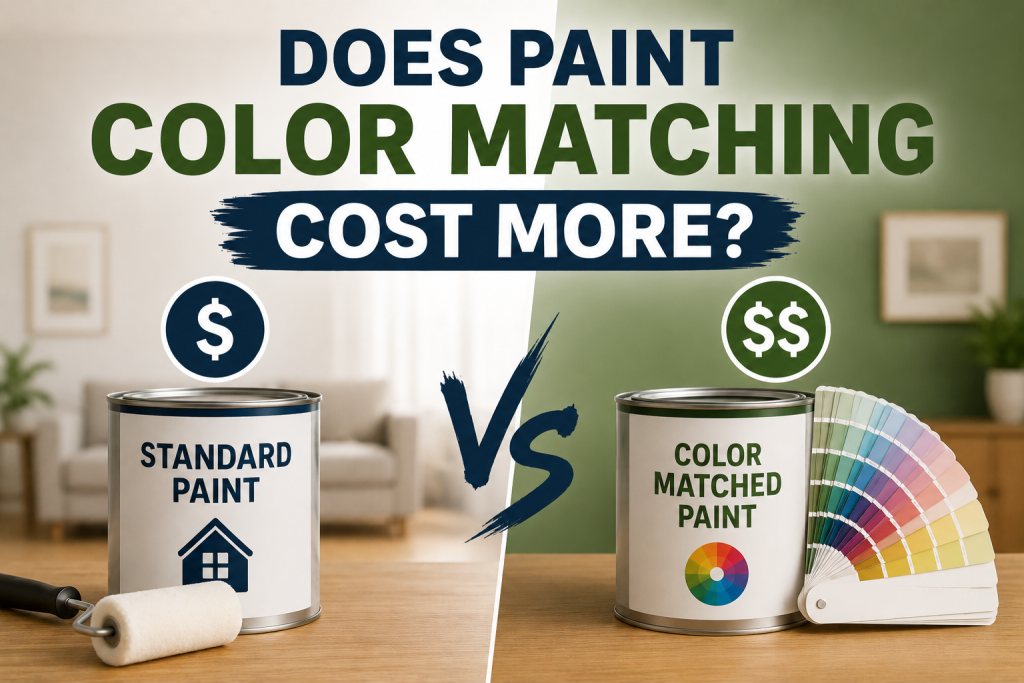
However, costs can increase if you request premium-grade formulas or highly specialized pigments. Some custom paint combination requests may require additional tinting adjustments or multiple sample batches, which can raise material usage slightly. This is especially true when trying to replicate complex or discontinued colors. From a budgeting perspective, most homeowners find that interior paint personalization adds minimal extra expense compared to the overall cost of a painting project, which is usually driven more by labor and surface preparation than color formulation itself.
Custom paint combination
Custom paint combination is the process that allows paint stores to recreate or design a specific color by blending base paints with precise amounts of pigment. This is a key part of how modern paint color matching costs stay relatively accessible, even for highly customized shades. The process begins with a base paint, usually white or neutral, which is then adjusted using tinting machines. These machines add controlled amounts of colorants to achieve the exact shade requested. For most color-matching paint service requests, this process is highly automated, ensuring consistency across gallons and batches.
However, not all custom mixes are identical in complexity. Simple adjustments, like making a color slightly lighter or darker, are quick and inexpensive. More complex requests, such as recreating faded paint or matching textured surfaces, may require multiple iterations and sample testing. This is where interior paint personalization becomes more involved, especially when matching older paint colors or coordinating with fabrics, flooring, or cabinetry. Even small variations in lighting or surface type can influence how the final color appears in a room.
Paint Shop Color Matching Services Breakdown
Most homeowners experience paint shop color matching as a simple in-store service, but the process behind it is more detailed and can influence the overall paint color matching price depending on complexity and accuracy needs. At a typical paint retailer, the process begins when you bring in a sample; this could be a paint chip, a piece of drywall, fabric, or even a photographed reference. The store uses a spectrophotometer to scan the sample and convert it into a digital color formula. This formula is then used to guide the tinting process for your selected paint base.
For standard matches, the service is usually quick and included with purchase. However, more precise color matching paint job requests may require adjustments, especially if the original color has faded, aged, or been affected by lighting conditions. Stores like Sherwin-Williams and other major retailers may also offer test samples before final production. This step helps ensure accuracy before committing to full gallons, reducing the risk of mismatch and unnecessary repainting. Overall, paint shop color matching services are designed to balance convenience and precision, making custom color creation accessible for most homeowners without significantly increasing project costs.
Sherwin-Williams color blending Pricing Overview
When homeowners evaluate paint color matching cost, one of the most common references is Sherwin-Williams color match services because they are widely available and built into their standard retail process. At Sherwin-Williams stores, basic color matching is typically included in the price of the paint itself. This means that if you bring in a sample or select a custom shade, the color-matching paint job does not usually come with a separate labor fee. Instead, the cost is driven by the paint line you choose, such as contractor-grade, mid-tier, or premium interior paints.
Where pricing can change is in the product selection and finish. Higher-end paints with enhanced durability, washability, or moisture resistance will naturally increase overall project cost, even if the color is custom matched. In some cases, multiple sample batches may be created to fine-tune accuracy, but this rarely results in significant additional charges. For most homeowners, interior paint personalization at Sherwin-Williams remains a cost-efficient way to achieve precise colors without paying a premium specifically for the matching process itself.
Benjamin Moore signature colors and Pricing
When looking at paint color matching cost, many homeowners compare options from premium brands like Benjamin Moore custom colors, which are known for their high-quality pigments and consistent color accuracy. In most cases, Benjamin Moore does not charge a separate fee specifically for color matching. Instead, the cost is built into the price of the paint itself. This means that whether you select a standard shade or request a custom match, the main difference in price comes from the product line rather than the color matching paint job.
Benjamin Moore’s advanced tinting systems allow stores to create highly precise matches, which is especially useful for homeowners trying to coordinate existing wall colors, cabinetry, or décor. This level of interior paint personalization is often preferred in design-focused projects where exact color consistency matters. However, premium performance lines such as Aura or Regal Select can increase overall project cost compared to mid-tier paints. While this may raise the total budget slightly, it often delivers better coverage, durability, and long-term color retention. For most homeowners, Benjamin Moore’s custom matching process offers strong accuracy without significantly increasing baseline paint shop color matching expenses.
Paint Sample Costing and Small Batch Prices
Understanding paint color matching cost also requires looking at how paint sample pricing works, especially when homeowners want to test a color before committing to full gallons. Sampling is one of the most practical steps in any color matching paint job, as it reduces the risk of costly mistakes. Most paint brands offer small sample sizes or “test pots” that allow homeowners to try a color on their walls before making a larger purchase. These samples are usually affordable, and in some cases, the cost may be credited toward a full gallon purchase depending on the retailer.
Small batch custom mixing is also common in interior paint personalization, particularly when refining a shade after an initial match. If a color needs slight adjustment for lighting or surface conditions, additional sample batches may be created to improve accuracy. While this process can slightly increase total cost, it is still minimal compared to the expense of repainting an entire room. Sampling helps ensure the final paint shop color matching result performs well in real lighting conditions and across different surfaces. For most homeowners, investing in samples is a cost-effective way to achieve a more accurate and satisfying final result.
Interior paint personalization vs Standard Colors
One of the key decisions in paint color matching cost is whether to choose interior paint personalization or stick with standard, pre-mixed colors. While both options can achieve high-quality results, they differ in flexibility, precision, and overall design control. Standard paint colors are pre-formulated and widely available, making them the most cost-efficient and convenient option. They work well for general paint shop color matching needs when a close enough shade is acceptable, and consistency across rooms is the priority.
In contrast, custom paint mixing allows homeowners to fine-tune colors to match existing décor, lighting conditions, or design preferences. This is especially useful in renovation projects where exact coordination with flooring, cabinetry, or furnishings is required. From a cost perspective, interior paint customization typically does not significantly increase base paint prices, but it may encourage the use of higher-end paint lines that offer better durability and finish quality. Ultimately, the choice depends on whether the homeowner values convenience and simplicity or precision and design accuracy in their overall painting project.
Factors That Actually Influence Paint Color Matching Cost
While paint color matching price is often minimal or included in the paint price, several real-world factors can still affect the overall expense of your project. Understanding these helps homeowners make smarter decisions during interior paint personalization.
Paint color matching cost: Paint Quality and Product Line
The biggest cost driver is not the matching itself, but the paint you choose. Premium lines from brands like Sherwin-Williams or Benjamin Moore cost more due to better coverage, durability, and finish quality, even when using the same color matching paint job.
Number of Sample Adjustments Needed
If the first match isn’t perfect, additional adjustments may be required. Each round of custom paint combination can involve extra samples, which slightly increases material usage and time.
Condition of the Original Color Being Matched
Faded or aged surfaces can make paint shop color matching more complex. Sun exposure, moisture, and wear can distort the original tone, requiring technicians to refine the formula more carefully.
Type of Surface Being Painted
Different surfaces absorb paint differently. Drywall, wood, and previously painted walls can all affect how the final color appears, sometimes requiring slight formula tweaks for accurate results.
Store Services and Technology Used
Advanced spectrophotometer systems used by premium retailers can improve accuracy but may also influence pricing structure indirectly through higher-end paint systems or sample programs.
Project Size and Coverage Area
Larger projects naturally require more gallons, which increases total cost even if the paint color matching cost itself remains unchanged.
When Custom Color Matching Is Worth It
While paint color matching cost is usually modest, the real question for homeowners is when custom paint combination actually adds meaningful value. In many projects, standard colors are sufficient, but there are specific situations where customization becomes the better investment. One of the most common cases is renovation or touch-up work. If a home already has existing wall colors, cabinetry finishes, or accent walls, paint shop color matching helps maintain consistency so new paint blends seamlessly with older surfaces. This is especially important in staged homes or recent remodels where visual continuity affects resale appeal.
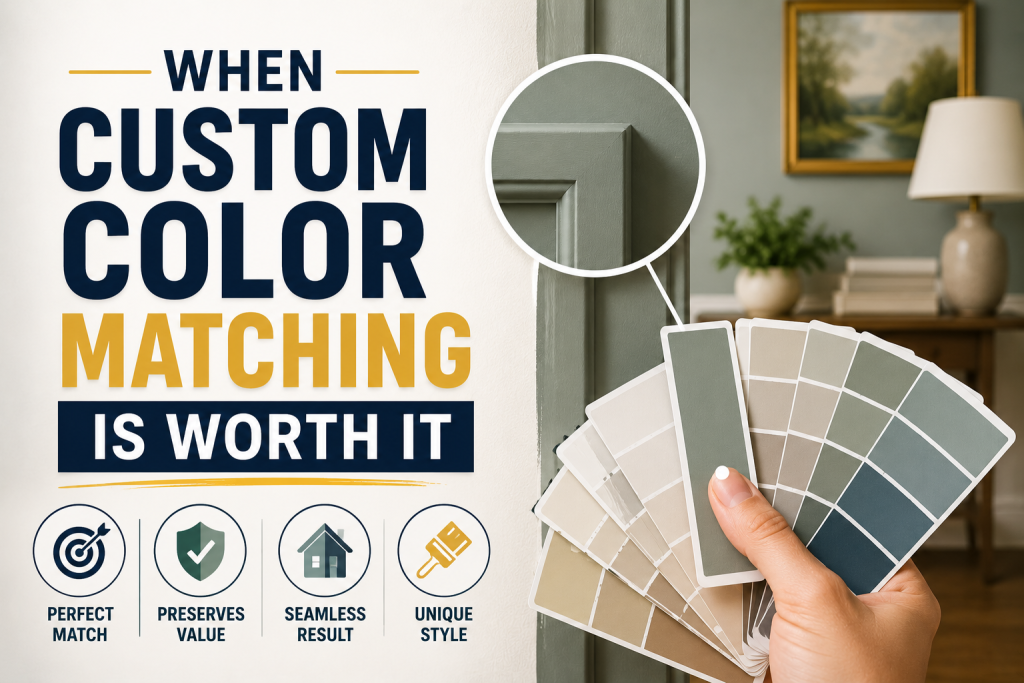
Custom matching is also valuable in design-driven projects. When homeowners are coordinating interior paint personalization with fabrics, flooring, or built-in cabinetry, even small color variations can impact the overall aesthetic. In these cases, precision becomes more important than cost. Additionally, older homes often benefit from custom matching because original paint colors may no longer be available. Matching helps preserve architectural character while updating durability and finish quality. Overall, custom color matching is most worth it when accuracy, continuity, or design coordination is a priority over selecting a standard off-the-shelf shade.
Final Thoughts
For most homeowners, paint color matching cost is less about paying a premium for the service and more about choosing the right level of precision for the project. In many cases, color-matching paint job options at major retailers are included in the price of the paint itself, making customization far more accessible than expected. The real value of custom paint combination lies in accuracy. Whether you’re matching existing walls, coordinating with cabinetry, or aligning finishes across an entire home, interior paint personalization ensures consistency that standard colors may not always provide.
Brands like Sherwin-Williams and Benjamin Moore make paint shop color matching simple and reliable, allowing homeowners to achieve professional-level results without significantly increasing project budgets. While standard colors remain the most cost-efficient option, custom matching becomes especially worthwhile when design continuity, resale presentation, or renovation accuracy matters. In the end, the decision isn’t about higher cost; it’s about achieving the right color outcome with confidence and consistency.
Frequently Asked Questions
Does paint color matching cost more?
In most cases, paint color matching cost does not significantly increase the price of paint. Most retailers include basic color matching paint jobs in the cost of the paint itself, with the main expense driven by the paint quality and finish you choose.
What is custom paint combination?
custom paint combination is the process of blending base paint with pigments to recreate or design a specific shade. It is commonly used in interior paint personalization when homeowners want a precise match to existing colors or design elements.
How much does paint shop color matching cost?
Most paint shop color matching services are free or included with paint purchase. Additional costs may only arise if multiple sample batches or premium paint lines are required.
Is Sherwin-Williams color blending expensive?
Sherwin-Williams color blending services are typically included in the price of their paint products. The overall cost depends more on the selected paint line than the matching process itself.
Are Benjamin Moore signature colors worth it?
Benjamin Moore signature colors are often worth it for homeowners who need precise color accuracy, especially in renovation or design-focused projects where consistency across rooms is important.