


Patio Drainage Problems and Solutions: How to Protect Your Outdoor Living Space
A patio should enhance your outdoor living experience, not become a source of water damage and ongoing maintenance headaches. Unfortunately, many homeowners encounter patio drainage problems after heavy rain, especially when drainage planning was overlooked during installation. Standing water can damage hardscape materials, create slippery surfaces, encourage mold growth, and even threaten nearby foundations.
Whether you have a concrete patio, paver patio, or natural stone surface, proper drainage plays a critical role in protecting your investment. Homes in regions such as Florida, Texas, and the Midwest often face unique challenges due to heavy rainfall, clay soil, hurricanes, or freeze-thaw cycles. Understanding what causes drainage failures and how to address them can help prevent costly repairs while improving safety, curb appeal, and long-term property value. This guide covers the most common causes, warning signs, and effective solutions homeowners should know.
Why Patio Drainage Matters
Proper drainage is one of the most important yet overlooked aspects of patio performance. When rainwater cannot flow away efficiently, it begins to collect on the surface or around the patio’s foundation. Over time, this excess moisture can weaken the base layer, cause shifting or settling, and shorten the lifespan of the entire structure. Many homeowners first notice patio drainage problems as patio water pooling after a storm, but the consequences often extend beyond a few puddles.
Persistent moisture can promote mold, mildew, and algae growth while increasing slip hazards for family members and guests. In colder states such as Colorado, Minnesota, and Michigan, trapped water can freeze and expand, leading to cracks and surface damage. In wetter climates like Florida and the Gulf Coast, excessive runoff may contribute to soil erosion and foundation concerns. Addressing drainage issues early helps preserve your patio, protect surrounding landscaping, and maintain your home’s curb appeal and resale value.
Common Signs of Patio Drainage Issues
Drainage problems rarely appear overnight. In most cases, homeowners notice small warning signs before significant damage develops. Recognizing these symptoms early can help you avoid expensive repairs and protect both your patio and surrounding landscape. One of the most obvious indicators is standing water that remains long after rainfall has stopped. Uneven surfaces, sinking pavers, and cracks in concrete may also signal that moisture is affecting the base beneath the patio. You may notice soil erosion along patio edges, washed-out mulch beds, or water flowing toward your home’s foundation during storms.
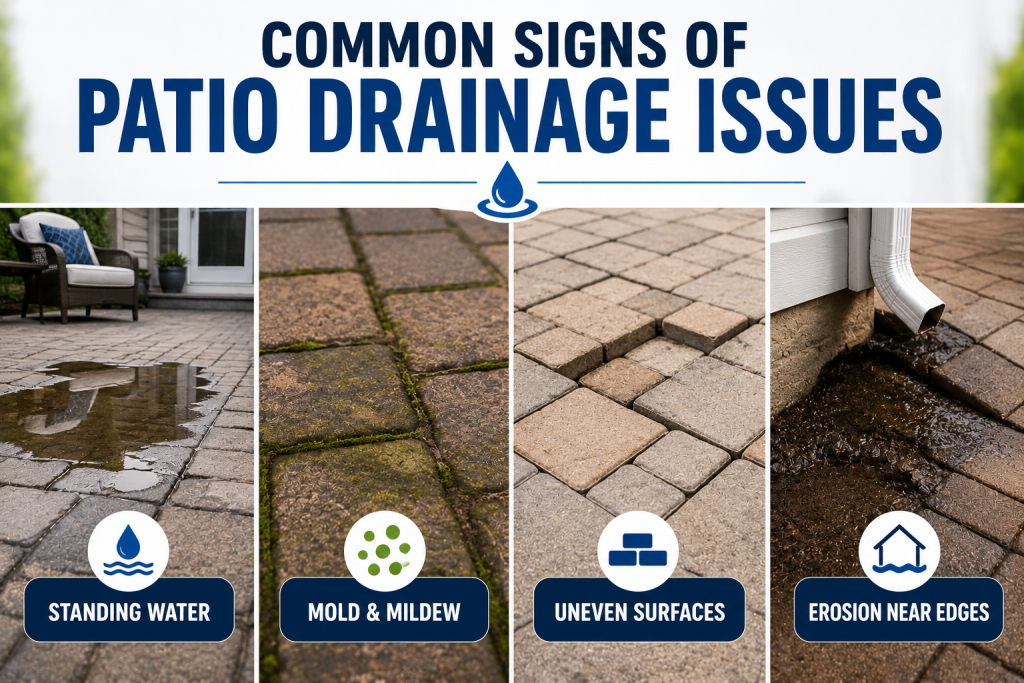
Mold, algae, and mildew growth are additional signs that excess moisture is lingering on the surface. Some homeowners also discover recurring drainage issues when outdoor furniture, grills, or decorative features sit in consistently wet areas. If any of these symptoms are present, investigating the underlying cause promptly can prevent more serious structural and landscaping problems.
What Causes Patio Drainage Problems?
Several factors can contribute to drainage failures, and identifying the root cause is essential before choosing a solution. While some issues develop naturally over time, others are the result of design or installation mistakes that prevent water from moving away from the patio properly.
Improper Grading
Poor grading is one of the leading causes of patio drainage problems. A patio should be built with a slight slope that directs water away from the home. When the surface is too flat or sloped incorrectly, rainwater collects in low areas instead of draining safely. Many homeowners experiencing patio slope issues discover that even a small grading error can create recurring puddles after every storm.
Soil Settlement and Base Failure
Over time, the soil and base materials beneath a patio can shift or settle. This creates uneven areas where water naturally accumulates. Clay-heavy soils, common in parts of Texas and the Midwest, are particularly prone to expansion and contraction, increasing the risk of settlement-related drainage concerns.
Clogged or Inadequate Drains
Existing drains can become blocked by leaves, dirt, mulch, and other debris. When drainage systems cannot handle runoff effectively, water backs up onto the patio surface. In some cases, the original drainage design may simply be too small to manage heavy rainfall events.
Poor Installation Practices
Many drainage issues begin during construction. Insufficient base preparation, improper compaction, and inadequate water management planning can all lead to long-term problems. Patios that were installed without considering local rainfall patterns or site grading often require corrective work later to restore proper drainage performance.
Best Solutions for Patio Drainage Problems
The most effective solution depends on the source of the drainage issue. Some patios require minor adjustments, while others may need a more comprehensive drainage system to manage runoff properly. The goal is always the same: move water away from the patio and your home’s foundation as efficiently as possible.
Regrade the Patio Surface
When improper slope is causing water accumulation, regrading may be the best option. Correcting patio slope issues allows rainwater to flow away naturally instead of collecting in low spots. For severe grading problems, homeowners may need to lift and reinstall sections of the patio.
Install Channel Drains
Channel drains are long, narrow drainage systems installed across areas where water tends to collect. They capture runoff and direct it toward a safe discharge location. These systems are commonly used for concrete patio drainage projects and are often recommended for resolving patio drainage problems, since concrete surfaces do not allow water to penetrate naturally.
Add a French Drain
A French drain consists of a perforated pipe surrounded by gravel that collects and redirects groundwater. It remains one of the most effective backyard drainage solutions for patios affected by recurring runoff or saturated soil conditions. French drains are especially beneficial on properties with poor natural drainage.
Use Catch Basins
Catch basins collect water at low points before moving it through underground piping. They help prevent surface flooding and can be integrated into larger outdoor drainage systems designed to manage stormwater across the entire property, especially in areas prone to patio drainage problems caused by heavy rainfall or poor grading.
Extend Downspouts Away From the Patio
Many drainage problems originate from roof runoff. Extending downspouts several feet away from the patio can significantly reduce water accumulation during storms. This simple upgrade often improves drainage performance while reducing stress on other components of the system.
Drainage Solutions for Different Patio Types
Not all patios handle water the same way. The most effective drainage strategy often depends on the material used and how the patio was originally installed. Understanding the unique requirements of each surface can help homeowners choose the right long-term solution.
Paver Patios
Proper drainage for paver patio installations starts with a well-compacted gravel base and adequate surface grading. Because pavers have joints between individual units, they can allow limited water infiltration when installed correctly. If water begins collecting in certain areas, lifting and resetting low sections may restore proper drainage. Permeable pavers are another option for homeowners seeking improved stormwater management.
Concrete Patios
Addressing concrete patio drainage often requires directing water away from the surface through grading improvements or drain installations. Since concrete is non-porous, even small depressions can create standing water. Channel drains and surface resurfacing are common solutions for correcting patio drainage problems on concrete patios.
Natural Stone Patios
Natural stone patios benefit from proper spacing, stable base materials, and consistent grading. Water that becomes trapped between stones can contribute to shifting, erosion, and weed growth. Regular maintenance and prompt repairs help preserve drainage performance while extending the lifespan of the patio.
How to Fix Patio Flooding After Heavy Rain
Occasional puddles may be a minor inconvenience, but repeated flooding after storms often indicates a larger drainage problem that requires immediate attention. Ignoring the issue can lead to structural damage, soil erosion, and moisture problems around the home’s foundation. Effective patio flooding fixes begin with identifying where the water is coming from and how it moves across the property. In some cases, improving grading around the patio may be enough to redirect runoff. More severe situations may require a combination of French drains, catch basins, swales, or channel drains to manage large volumes of stormwater.
Homeowners should also inspect gutters and downspouts to ensure roof runoff is not overwhelming the patio area. When multiple drainage issues exist, combining several backyard drainage solutions often provides the best long-term results for patio drainage problems. A comprehensive approach helps protect outdoor living spaces while reducing the risk of recurring flooding during heavy rainfall events.
Preventing Future Drainage Problems
Preventive maintenance is often the most cost-effective way to avoid major drainage repairs. Even a well-designed patio can develop water management issues over time if routine inspections and upkeep are neglected. Taking proactive steps helps protect both the patio and the surrounding landscape. Homeowners should inspect their patio at least once a year for signs of settling, erosion, or developing low spots. Cleaning drains, catch basins, and drainage channels regularly helps ensure water can flow freely during storms. It is also important to remove leaves, dirt, and debris that may block drainage pathways.
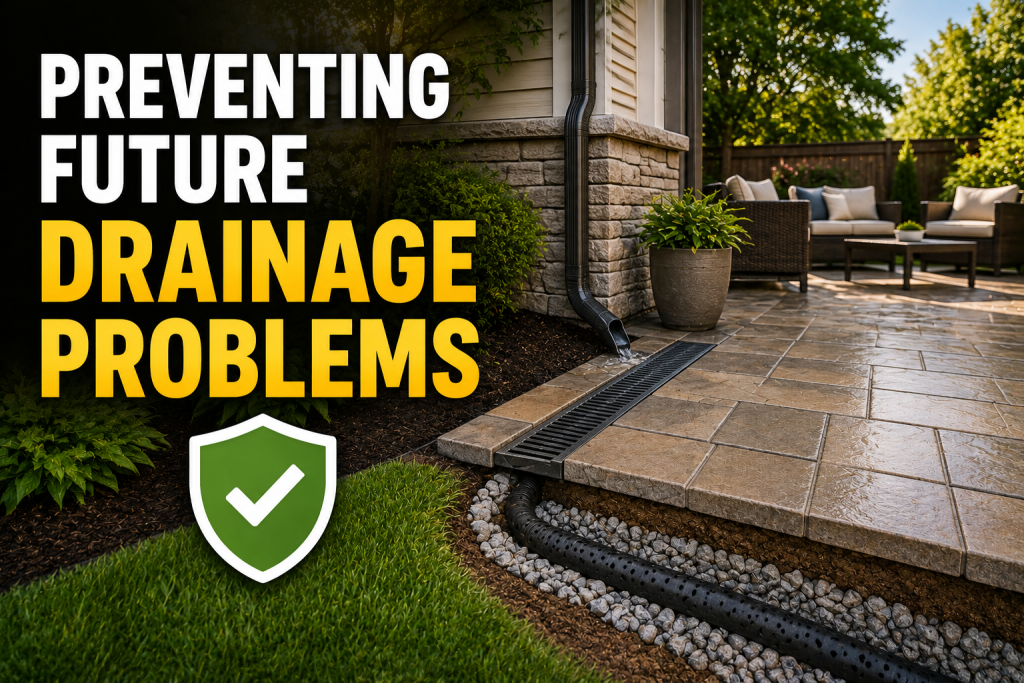
Monitoring runoff patterns after heavy rain can reveal potential concerns before they become serious problems. Properties located in regions with frequent storms, hurricanes, or freeze-thaw cycles should pay particular attention to changing drainage conditions. Maintaining properly functioning outdoor drainage systems can significantly reduce the risk of water damage, extend the lifespan of hardscape surfaces, and preserve long-term property value.
Final Thoughts
Addressing patio drainage problems early is one of the most important steps homeowners can take to protect their outdoor living space and overall property value. What may begin as minor patio water pooling after a storm can quickly escalate into surface damage, foundation concerns, or costly structural repairs if left unresolved. The good news is that most drainage issues have practical, long-term solutions. From improving grading and installing channel drains to implementing French drains and upgrading outdoor drainage systems, homeowners have multiple options depending on the severity of the problem and the layout of their yard.
In many cases, combining solutions delivers the most reliable results. By understanding the causes, recognizing early warning signs, and investing in proper drainage improvements, you can keep your patio functional, safe, and visually appealing for years to come, regardless of your local climate or seasonal weather challenges.
Frequently Asked Questions
Why does my patio have water pooling after every rain?
Recurring patio water pooling is usually caused by improper grading, soil settlement, or clogged drainage pathways. When water cannot flow away from the surface efficiently, it collects in low spots and may remain for hours or even days after rainfall. In some cases, surrounding landscape grading or roof runoff can also contribute to the issue.
What is the best long-term fix for patio drainage problems?
The best solution depends on the root cause. For minor issues, regrading the surface may be enough. For more serious drainage failures, combining patio drainage problems solutions like French drains, catch basins, and channel drains provides a more permanent fix. Homes in heavy rainfall regions often benefit from a full outdoor drainage systems approach rather than a single repair method.
Can poor patio drainage damage my home’s foundation?
Yes. If water consistently flows toward the house, it can increase soil moisture around the foundation and lead to long-term structural concerns. This is especially important in areas with clay soil or heavy seasonal rainfall. Proper drainage helps reduce hydrostatic pressure and protects against moisture intrusion.
Are paver patios better for drainage than concrete patios?
Paver systems can perform better when installed correctly because water can drain through joints and base materials. However, a poorly installed paver patio can still develop drainage issues. Effective drainage for paver patio installations depend on a well-compacted base and proper slope design.
How much does it cost to fix patio drainage issues?
Costs vary widely depending on the solution. Simple fixes like downspout extensions are relatively inexpensive, while installing French drains or regrading a patio can cost significantly more. More extensive drainage systems for large yards or severe flooding issues will require professional evaluation.
When should I call a professional for patio drainage problems?
You should contact a contractor if water consistently pools near your home, if you notice foundation-related moisture issues, or if DIY fixes have not solved the problem. Complex grading corrections and full drainage system installations are best handled by professionals to avoid making the issue worse.