


Porcelain vs Ceramic Tile: Best Choice for Bathrooms (2026 Guide)
When planning a bathroom renovation, one of the most common material decisions homeowners face is porcelain vs ceramic tile. Both options are widely used in modern homes, and both offer strong visual appeal, but they perform differently in terms of durability, moisture resistance, cost, and long-term maintenance. Choosing between these materials is not just a design decision, it directly impacts how well your bathroom performs over time. Since bathrooms are high-moisture environments, selecting the right tile is essential for preventing water damage, reducing maintenance, and ensuring long-lasting results.
A proper bathroom tile comparison helps homeowners understand where each material works best, whether for flooring, shower walls, or decorative features. While porcelain is often considered more dense and water-resistant, ceramic tile remains a popular choice for its affordability and design flexibility. This guide breaks down the real differences between porcelain and ceramic tile so homeowners can confidently choose the best option for their bathroom remodel.
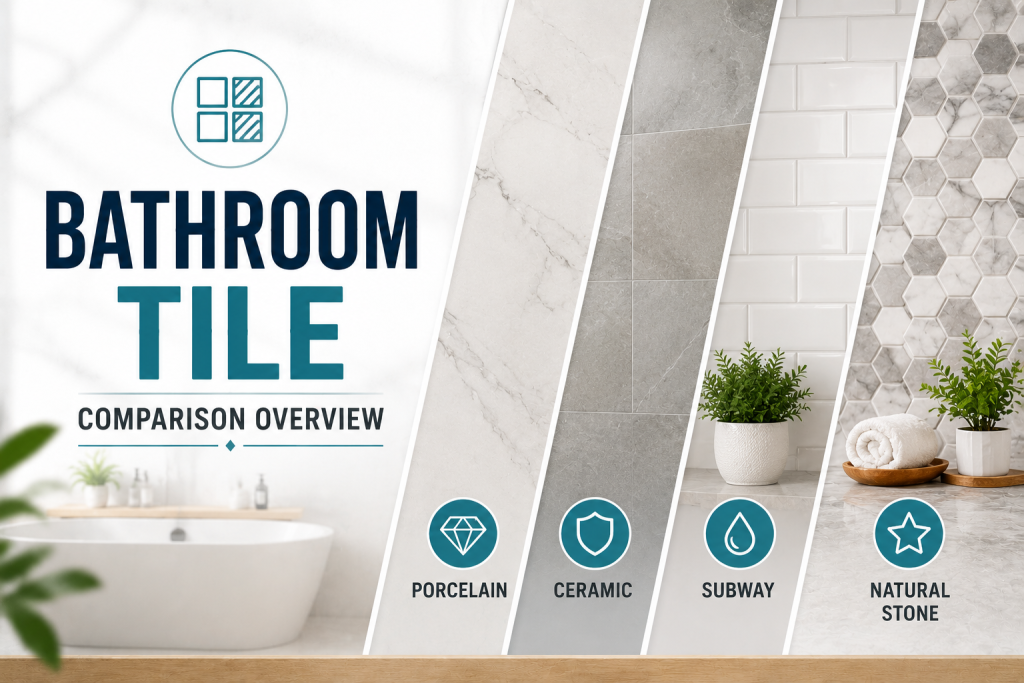
Bathroom Tile Comparison Overview
A clear bathroom tile comparison between porcelain and ceramic tile starts with understanding how each material is made and how that affects performance in wet environments. Both are clay-based tiles, but the manufacturing process and density levels create important differences in durability, water resistance, and application suitability. Porcelain tile is made from more refined clay and fired at higher temperatures, resulting in a denser, less porous surface. This makes it highly resistant to moisture absorption and ideal for waterproof bathroom tile applications such as showers, floors, and high-traffic areas.
Ceramic tile, while also durable, is generally less dense and slightly more porous. It is easier to cut and install, which makes it a popular choice for walls and lighter-use bathroom areas. However, it may not perform as well as porcelain in constantly wet environments unless properly glazed and sealed. Understanding these foundational differences helps homeowners choose the right material based on location, usage, and long-term maintenance expectations.
Porcelain Tile Durability and Performance
When comparing porcelain vs ceramic tile, porcelain is widely recognized for its superior strength and long-term performance, especially in moisture-heavy bathroom environments. Its dense composition and high-temperature firing process make it one of the most reliable options for waterproof bathroom tile applications. One of the key advantages of porcelain is its extremely low water absorption rate. This makes it highly resistant to staining, cracking, and moisture damage, even in high-traffic or constantly wet areas such as shower floors and bathroom flooring systems.
Because of this durability, porcelain is often recommended for both residential and commercial bathrooms. In addition to moisture resistance, porcelain tile durability extends to scratch resistance and overall wear. It performs well in busy households where bathrooms see frequent use. It also maintains its appearance over time, even with minimal maintenance. However, porcelain is harder to cut and install, which can increase labor costs. Despite this, many homeowners choose it for its long-term value and reliability, especially in full bathroom remodels where performance is a priority.
Ceramic Tile Benefits and Cost Advantages
While porcelain is known for strength and density, ceramic tile remains a highly popular choice in the porcelain vs ceramic tile comparison due to its affordability, versatility, and ease of installation. For many homeowners, ceramic provides a practical balance between performance and budget-friendly renovation costs. One of the primary ceramic tile benefits is its lower material and labor cost compared to porcelain. Ceramic is easier to cut and shape, which reduces installation time and makes it more accessible for DIY-friendly projects or lower-cost bathroom remodels. This can significantly reduce overall renovation expenses.
Ceramic tile also offers a wide range of design options. It is available in countless colors, patterns, and finishes, making it a strong choice for decorative wall applications and stylish shower wall tile ideas. Glazed ceramic surfaces can also provide adequate moisture resistance when properly installed. However, ceramic is generally less dense than porcelain, which means it may not perform as well in high-moisture or high-traffic flooring applications. For this reason, it is often best used on bathroom walls or low-impact areas rather than primary flooring zones.
Bathroom Floor Tile Options – Which Works Best?
When evaluating bathroom floor tile options, the choice between porcelain and ceramic becomes especially important because flooring is exposed to constant moisture, foot traffic, and cleaning wear. In most cases, porcelain is considered the stronger performer for bathroom floors due to its density and water resistance. Porcelain tile is often the preferred option for waterproof bathroom tile installations on floors because it absorbs very little moisture and resists cracking under pressure. This makes it suitable for both small bathrooms and large master suites where durability is essential.
Ceramic tile, while still usable in bathrooms, is generally better suited for wall applications or low-traffic flooring areas. It can be a cost-effective choice, but it is more prone to wear over time if exposed to heavy moisture or frequent use. Texture also plays a key role in flooring selection. Matte finishes and textured surfaces improve traction and help reduce slipping risks in wet environments. Many homeowners combine durable porcelain flooring with complementary ceramic wall designs to achieve both performance and visual appeal in a single bathroom remodel.
Shower Wall Tile Ideas and Design Uses
When exploring shower wall tile ideas, both porcelain and ceramic tiles offer strong design flexibility, but each serves slightly different purposes in modern bathroom layouts. Wall applications prioritize aesthetics, ease of cleaning, and moisture resistance, making material selection an important part of the porcelain vs ceramic tile decision. Ceramic tile is often favored for shower walls because it is lighter, easier to cut, and available in a wide variety of colors, patterns, and finishes. This makes it ideal for decorative designs, accent walls, and creative layouts that enhance the visual appeal of a bathroom remodel.
Glazed ceramic surfaces also provide solid protection against moisture when properly installed. Porcelain tile, however, is increasingly used on shower walls in high-end bathrooms due to its superior porcelain tile durability and low water absorption rate. Large-format porcelain slabs can create a seamless, modern look with fewer grout lines, which reduces maintenance and enhances a clean, contemporary aesthetic. Many homeowners combine both materials, using porcelain for durability-heavy areas and ceramic for decorative accents, to achieve a balanced mix of performance and style in shower design.
Tile Maintenance Guide and Long-Term Care
Proper upkeep plays a major role in the long-term performance of both materials in the porcelain vs ceramic tile comparison. While both options are relatively low-maintenance compared to natural stone, their care requirements differ slightly based on density, surface finish, and installation quality. Porcelain tile is generally easier to maintain due to its low porosity and high resistance to staining and moisture absorption. Routine cleaning with mild, non-abrasive cleaners is usually enough to preserve its appearance. This makes porcelain a strong option for homeowners seeking long-lasting waterproof bathroom tile solutions with minimal upkeep.
Ceramic tile also performs well with regular maintenance, but its grout lines require more attention. Because ceramic is more commonly used on walls, cleaning often focuses on removing soap scum and humidity buildup in shower areas. Proper sealing of grout lines can significantly extend its lifespan and appearance. For both materials, grout maintenance is critical. Sealing grout and addressing small cracks early helps prevent water infiltration and mold growth. With consistent care, both porcelain and ceramic tile can last for decades in residential bathrooms.
Installation Difficulty and Labor Considerations
Installation is a major factor in the porcelain vs ceramic tile decision, especially for homeowners managing a full bathroom renovation budget. While both materials require professional skill for best results, they differ significantly in cutting difficulty, labor time, and overall installation cost. Porcelain tile is denser and harder, which makes it more challenging to cut and shape during installation. This often requires specialized tools such as wet saws and diamond blades, increasing both labor time and contractor rates. Because of this, installing porcelain, especially large-format waterproof bathroom tile, typically costs more upfront.
Ceramic tile, on the other hand, is easier to cut and install due to its softer composition. This makes it more DIY-friendly and generally reduces labor expenses. It is often chosen for wall applications or simpler bathroom layouts where precision cutting is less demanding. Installation quality is critical for both materials. Poorly installed tile can lead to uneven surfaces, grout failure, and moisture intrusion. Proper waterproofing, leveling, and spacing are essential to ensure long-term durability regardless of material choice.

Cost Comparison – Porcelain vs Ceramic Tile
Cost is one of the most influential factors in the porcelain vs ceramic tile decision, especially for homeowners balancing design goals with renovation budgets. While both materials are widely available through retailers like Home Depot and Lowe’s, their pricing differences can significantly impact total project cost. Ceramic tile is generally more affordable, both in material cost and installation. Its easier cutting and lighter weight reduce labor expenses, making it a popular choice for budget-conscious bathroom remodels. This makes ceramic an attractive option for walls, backsplashes, and lower-traffic areas.
Porcelain tile typically costs more upfront due to its higher density and more complex manufacturing process. Installation costs are also higher because it requires specialized tools and more labor time. However, many homeowners consider this worthwhile due to its superior porcelain tile durability and long-term resistance to moisture and wear. In the long run, porcelain may offer better value in high-use bathrooms, while ceramic provides a cost-effective solution for decorative or low-impact areas.
Final Recommendation
Choosing between porcelain vs ceramic tile ultimately depends on where the tile will be used, your budget, and the level of durability you need in your bathroom. Both materials can perform well, but they serve slightly different purposes in a modern remodel. Porcelain is the stronger overall choice for most flooring and high-moisture applications. Its low water absorption, strong porcelain tile durability, and resistance to wear make it ideal for bathroom floors, showers, and high-traffic areas. If long-term performance and minimal maintenance are top priorities, porcelain is typically the best investment.
Ceramic tile remains an excellent option for walls, decorative accents, and budget-friendly renovations. Its design flexibility and lower cost make it appealing for homeowners focused on style and affordability. It works especially well for shower wall tile ideas where heavy foot traffic and constant water exposure are not concerns. In many modern bathrooms, the best solution is a combination of both materials, porcelain for flooring and wet zones, and ceramic for design-focused wall areas. This hybrid approach balances cost, durability, and aesthetics effectively.
FAQs – Porcelain vs Ceramic Tile
What is the main difference between porcelain vs ceramic tile?
The main difference in the porcelain vs ceramic tile comparison is density. Porcelain is denser, less porous, and more water-resistant, while ceramic is lighter and easier to cut but slightly more porous.
Which is better for bathroom floors?
Porcelain is generally better for bathroom floors due to higher porcelain tile durability and improved resistance to moisture, making it ideal for wet environments.
Can ceramic tile be used in showers?
Yes, ceramic tile can be used in showers, especially for walls. However, porcelain is often preferred for full waterproof bathroom tile installations due to better moisture resistance.
Is porcelain tile more expensive than ceramic?
Yes, porcelain typically costs more in both materials and installation because it is harder to cut and requires more labor.
Which tile is easier to maintain?
Both are low-maintenance, but porcelain generally requires less upkeep because it absorbs less moisture and stains less easily.