


How to Prevent Roof Damage | Best Tips For US Homeowners
Your roof is one of the most important structural components of your home, yet it is often overlooked until a costly problem appears. From heavy rain and hailstorms to intense summer heat and winter freeze-thaw cycles, roofs across the United States face constant exposure to harsh weather conditions. Even minor issues such as loose shingles, clogged gutters, or damaged flashing can develop into expensive repairs if left unaddressed. Learning how to prevent roof damage is one of the smartest investments homeowners can make.
Preventive care not only reduces repair costs but also protects your home’s energy efficiency, resale value, and structural integrity. Whether you live in hurricane-prone Florida, snowy Minnesota, or the hot deserts of Arizona, proactive maintenance can significantly improve roof performance. This guide explains the most effective strategies homeowners can use to prevent roof damage, identify potential issues early, and maximize the lifespan of their roofing system.
Why Homeowners Should Prevent Roof Damage Before Problems Start
Many homeowners do not think about their roof until they notice a leak, missing shingles, or water stains inside the house. Unfortunately, waiting for visible signs of trouble often leads to higher repair costs and more extensive damage. Taking steps to prevent roof damage before issues develop can save thousands of dollars over the life of a roofing system. A well-maintained roof protects your home from moisture intrusion, insulation problems, mold growth, and structural deterioration. It also plays a major role in maintaining curb appeal and preserving property value.
According to roofing professionals, small maintenance tasks performed throughout the year are far less expensive than emergency repairs or premature roof replacement. Different regions face different roofing challenges. Homes in Florida often deal with hurricanes and high humidity, while properties in states like Colorado and Minnesota must withstand snow accumulation, ice dams, and freeze-thaw cycles. Understanding these regional risks allows homeowners to create a proactive maintenance strategy that helps prevent roof damage year-round.
Weather-Related Risks That Accelerate Roof Wear
Severe weather remains one of the leading causes of roof deterioration across the United States. High winds can loosen shingles, hail can damage roofing materials, and prolonged UV exposure can cause asphalt shingles to age faster than expected. Coastal regions may also experience salt-related corrosion that affects metal roofing components. In colder climates, repeated freezing and thawing can create cracks and weaken roofing materials over time. These environmental stresses often go unnoticed until significant damage occurs, making regular inspections and preventive maintenance essential.
Signs Your Roof May Already Be Vulnerable
Early detection is critical for avoiding costly repairs. Homeowners should watch for warning signs such as missing or curling shingles, sagging roof sections, excessive granule loss in gutters, and water stains on ceilings or attic surfaces. Other indicators include damaged flashing around chimneys and vents, increased energy bills caused by poor roof performance, and visible moss or algae growth. Addressing these issues promptly can help prevent roof damage from spreading and protect the long-term health of your home.
Prevent Roof Damage With a Seasonal Roof Maintenance Plan
One of the most effective ways to prevent roof damage is to follow a consistent maintenance schedule throughout the year. Roofing systems are exposed to changing weather conditions, making routine inspections and upkeep essential for long-term performance. A proactive approach allows homeowners to identify small problems before they become major repairs. A structured seasonal roof care routine helps protect roofing materials from moisture, temperature fluctuations, debris buildup, and storm-related wear.
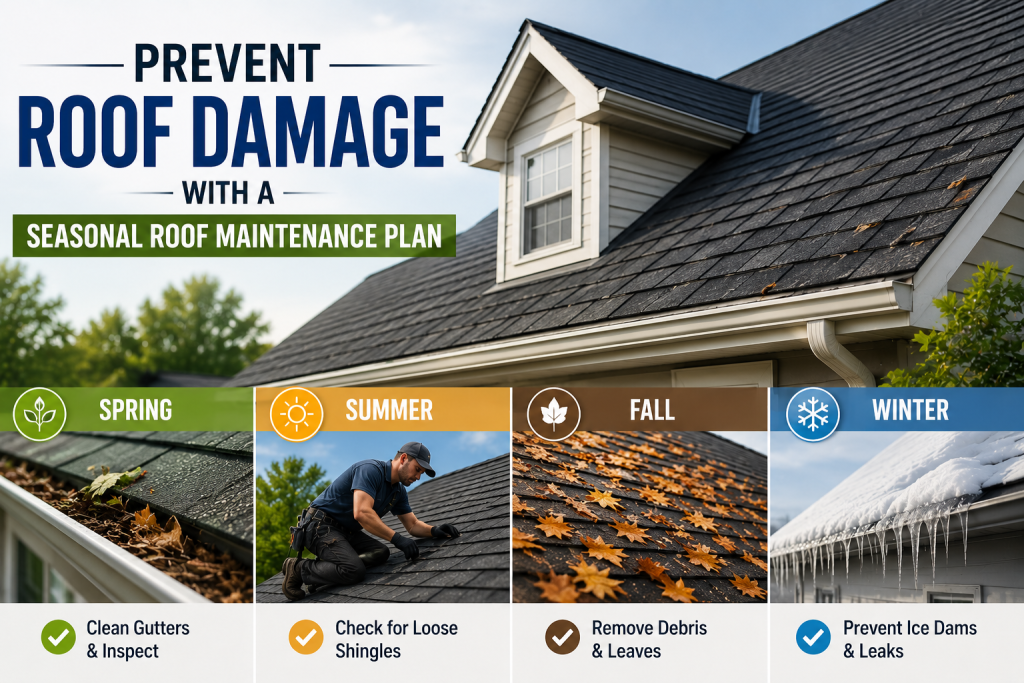
Instead of reacting to emergencies, homeowners can address potential issues at the right time and reduce the likelihood of unexpected expenses. Regular maintenance is especially important in regions that experience severe weather. Homes in the Midwest, Northeast, and Gulf Coast states often face unique roofing challenges that require year-round attention. By creating a seasonal plan, homeowners can improve roof durability, protect indoor comfort, and extend the life of their investment.
Spring and Summer Roof Maintenance Tasks
Spring is an ideal time to inspect roofing materials after winter weather has passed. Homeowners should look for cracked, loose, or missing shingles and check for signs of water intrusion in the attic. Inspecting flashing around chimneys, skylights, and vents can also reveal vulnerabilities that may lead to future leaks. During summer, intense sunlight and high temperatures can accelerate material aging. Trimming overhanging tree branches and removing accumulated debris can reduce unnecessary stress on the roofing system.
Fall and Winter Roof Maintenance Tasks
Fall preparation is critical before colder weather arrives. Leaves and debris should be removed from roof surfaces and drainage systems to ensure proper water flow. Homeowners should also inspect sealants and flashing to verify that vulnerable areas remain protected. In winter, snow accumulation and ice dams can create excess weight and moisture-related problems. Monitoring roof conditions during severe weather events can help homeowners identify concerns early and take action before significant damage develops.
Prevent Roof Damage Through Regular Inspections
Routine inspections are one of the most reliable ways to prevent roof damage and avoid unexpected repair costs. Many roofing problems begin as small defects that are difficult to spot from the ground. Over time, however, these minor issues can allow moisture to penetrate the roofing system and compromise the structure beneath. Homeowners should perform visual inspections several times each year and after major weather events.
While some problems are easy to identify, others require a closer look from a qualified roofing professional. Consistent inspections help detect damage early, improve maintenance planning, and reduce the risk of premature roof replacement. A comprehensive roof inspection guide should include an evaluation of roofing materials, flashing, drainage systems, attic ventilation, and areas surrounding roof penetrations. Examining these components regularly helps ensure that small concerns are addressed before they develop into expensive repairs.
What to Check During a Roof Inspection
A thorough inspection should focus on areas most vulnerable to water intrusion and weather-related wear. Homeowners should look for cracked, curling, or missing shingles, damaged flashing around chimneys and vents, and signs of sagging roof sections. The attic can also reveal important clues about roof performance. Water stains, mold growth, damp insulation, and inadequate ventilation may indicate hidden roofing problems that require immediate attention.
When to Schedule a Professional Inspection
Although homeowners can perform basic visual assessments, professional inspections provide a more detailed evaluation of roof condition. Experts can identify hidden damage that may not be visible from the ground and recommend appropriate repairs before problems escalate. Scheduling a professional inspection after severe storms, before listing a home for sale, or as part of an annual maintenance program can help prevent roof damage and support the long-term performance of the roofing system.
Gutter Maintenance and Roof Leak Prevention Strategies
Proper water management plays a critical role in protecting any roofing system. While shingles and flashing receive most of the attention, gutters are equally important because they direct rainwater away from the roof, siding, and foundation. When gutters become clogged, water can back up beneath roofing materials and create conditions that lead to rot, mold, and structural damage.
Homeowners who want to prevent roof damage should make drainage system maintenance a regular priority. Overflowing gutters increase the likelihood of moisture-related problems and place unnecessary stress on roofing components. Keeping water moving away from the home helps preserve both roof performance and structural integrity. In many cases, effective roof leak prevention begins with maintaining a clear drainage path. Addressing minor drainage issues early can help avoid expensive repairs and reduce the risk of hidden water intrusion.
Essential Gutter Cleaning Practices
Following basic gutter cleaning tips can significantly improve roof protection throughout the year. Gutters should be cleared of leaves, twigs, and debris at least twice annually, especially during the fall season when buildup tends to increase. Homeowners should also inspect downspouts for blockages and verify that water is being directed several feet away from the foundation. Installing gutter guards may help reduce maintenance requirements in heavily wooded areas.
Protecting Vulnerable Roof Areas
Certain sections of a roof are more susceptible to leaks than others. Flashing around chimneys, skylights, plumbing vents, and roof valleys should be inspected regularly for signs of deterioration or separation. Cracked sealants, loose flashing, and damaged roofing materials should be repaired promptly. Taking preventive action in these high-risk areas can help prevent roof damage and reduce the likelihood of water entering the home during heavy rainfall or severe storms.
Storm-Proof Roofing Tips for Long-Term Protection
Severe weather events can place tremendous stress on residential roofing systems. High winds, hail, heavy rain, and flying debris are responsible for millions of dollars in property damage each year across the United States. Homeowners who take proactive measures to prevent roof damage before a storm arrives are often better protected from costly repairs and unexpected disruptions.
Implementing practical storm-proof roofing tips can strengthen vulnerable areas and improve overall roof resilience. These measures may include securing loose materials, reinforcing flashing, replacing damaged shingles, and ensuring proper attic ventilation. Small improvements made before storm season can significantly reduce the risk of weather-related failures. Because climate conditions vary by region, homeowners should tailor their preparation efforts to local weather patterns and environmental risks.
Protecting Homes in Hurricane-Prone Regions
Homeowners in Florida, Louisiana, Texas, and other Gulf Coast states frequently face hurricanes and tropical storms. Wind-resistant shingles, properly secured roof decking, and impact-rated roofing materials can help improve storm performance. Routine inspections before hurricane season allow homeowners to identify weaknesses that could become major problems during extreme weather events. Addressing these concerns early helps prevent roof damage and supports long-term structural protection.
Protecting Roofs in Snow and Hail Regions
In northern states and mountain regions, heavy snow accumulation and hailstorms create different challenges. Excessive snow loads can strain roofing structures, while hail impacts may crack shingles and damage flashing. Removing potential hazards, monitoring roof conditions after storms, and repairing visible damage promptly can help minimize deterioration. Consistent maintenance remains one of the most effective strategies for protecting roofing systems against severe seasonal weather.
Roof Maintenance Checklist to Help Extend Roof Lifespan
Homeowners who want to prevent roof damage should follow a consistent maintenance routine throughout the year. Regular upkeep not only reduces the risk of costly repairs but also helps preserve roofing materials and improve long-term performance. Developing a simple maintenance strategy can make a significant difference in overall roof durability. A practical roof maintenance checklist should include seasonal inspections, debris removal, flashing evaluations, attic ventilation checks, and prompt repair of minor issues.
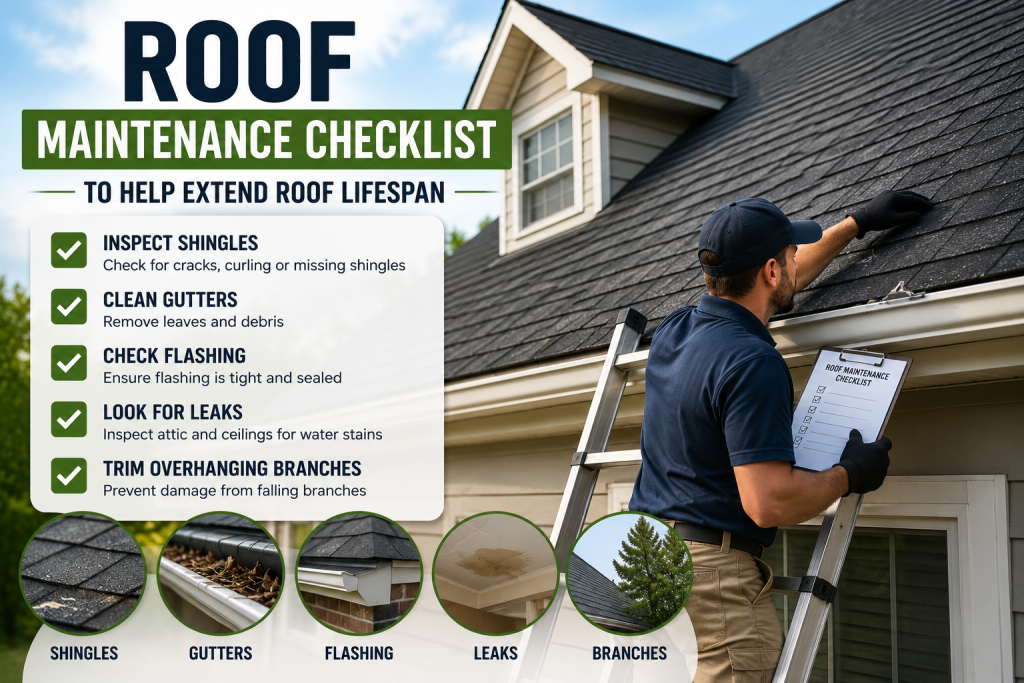
By addressing small concerns before they worsen, homeowners can avoid unnecessary expenses and maintain reliable protection against the elements. Preventive maintenance is especially important for older roofs, which may be more susceptible to weather-related wear. Staying proactive allows homeowners to identify vulnerabilities early and keep their roofing systems functioning efficiently.
Maintenance Habits That Support Long-Term Performance
Several simple habits can contribute to extending roof lifespan and improving overall roof health. Trimming overhanging tree branches helps reduce debris accumulation and minimizes the risk of impact damage during storms. Proper attic ventilation can also regulate temperature and moisture levels, helping roofing materials perform as intended. Regular inspections following severe weather events provide an opportunity to identify damage before it becomes a larger structural concern.
Common Mistakes Homeowners Should Avoid
Many roofing problems develop because minor issues are ignored for too long. Delaying repairs, neglecting routine maintenance, or allowing debris to accumulate can accelerate deterioration and increase repair costs. Homeowners should also avoid unnecessary foot traffic on roofing materials, as excessive walking can damage shingles and other components. Following a proactive maintenance plan remains one of the most effective ways to prevent roof damage and maximize the useful life of a roofing system.
Conclusion
Protecting your roof requires more than occasional repairs, it demands a proactive approach that focuses on prevention, routine maintenance, and early problem detection. From conducting regular inspections and maintaining proper drainage to preparing for severe weather and addressing minor issues quickly, homeowners have many opportunities to reduce long-term roofing costs. Taking steps to prevent roof damage can help safeguard your home’s structural integrity, improve energy efficiency, and preserve property value for years to come.
Whether you live in a hurricane-prone coastal region, a snow-heavy northern state, or an area exposed to intense summer heat, consistent roof care remains one of the best investments you can make as a homeowner. By following the strategies outlined in this guide, homeowners can reduce the risk of unexpected repairs, extend the service life of their roofing system, and enjoy greater peace of mind throughout every season. A well-maintained roof not only protects your home today but also helps ensure reliable performance well into the future.
Frequently Asked Questions
How Often Should You Inspect Your Roof to Prevent Roof Damage?
Most roofing professionals recommend inspecting your roof at least twice per year, typically during the spring and fall. Additional inspections are also recommended after severe weather events such as hailstorms, hurricanes, or high-wind conditions. Regular evaluations help prevent roof damage by identifying minor issues before they develop into expensive repairs.
Can clogged gutters cause roof damage?
Yes. When gutters become blocked with leaves, dirt, and debris, water cannot drain properly. Overflowing water can back up beneath shingles, damage fascia boards, contribute to roof leaks, and even affect your home’s foundation. Keeping gutters clear is an important part of roof protection.
What is the best way to prevent roof leaks?
The most effective approach is a combination of routine inspections, prompt repairs, proper drainage, and regular maintenance. Homeowners should pay close attention to flashing around chimneys, skylights, and roof penetrations, as these areas are among the most common sources of water intrusion.
Does roof maintenance increase home value?
A well-maintained roof can positively influence property value by improving curb appeal and reassuring potential buyers that the home has been properly cared for. It may also help reduce concerns during home inspections and support smoother real estate transactions.
How Long Does a Well-Maintained Roof Last and Help Prevent Roof Damage?
Roof lifespan depends on material type, installation quality, climate conditions, and maintenance practices. Regular upkeep can prevent roof damage and help asphalt shingle roofs last 20 to 30 years, while metal, slate, and tile roofing systems may last significantly longer when properly maintained.
Should I repair roof damage myself or hire a professional?
Minor visual inspections can often be performed safely from the ground. However, repairs involving roofing materials, flashing, structural components, or steep roof slopes should generally be handled by qualified professionals to ensure safety and proper workmanship.