

Professional Floor Cleaning Cost Guide (2026 US Pricing Breakdown)
Understanding professional floor cleaning cost is essential for homeowners trying to budget for maintenance without overpaying or underestimating service needs. In the US, pricing can vary widely depending on flooring type, home size, and the level of cleaning required. Professional floor cleaning is not a one-size-fits-all service. Hardwood, tile, vinyl, and carpet all require different equipment, cleaning solutions, and labor intensity, which directly impacts final pricing. For example, delicate hardwood floors often require specialized care, while tile and grout cleaning involves deeper scrubbing and more time.
Other factors that influence professional floor care pricing include the condition of the floors, level of dirt buildup, accessibility of rooms, and whether deep cleaning or routine maintenance is needed. Geographic location also plays a role, with higher service costs in major US metro areas. By understanding these cost drivers, homeowners can better evaluate quotes and choose the right residential floor maintenance services for their needs.
Floor Cleaning Service Pricing Overview in the US
When evaluating floor cleaning service pricing, most US homeowners will find that costs vary based on square footage, flooring type, and service complexity. On average, basic professional floor cleaning can range from budget-friendly maintenance visits to higher-priced deep cleaning services for heavily soiled or specialty surfaces. Standard residential cleaning often includes sweeping, mopping, and surface-level stain removal, while premium services may involve machine-assisted scrubbing, polishing, or sealing. The level of professional floor care required plays a major role in determining the final quote.
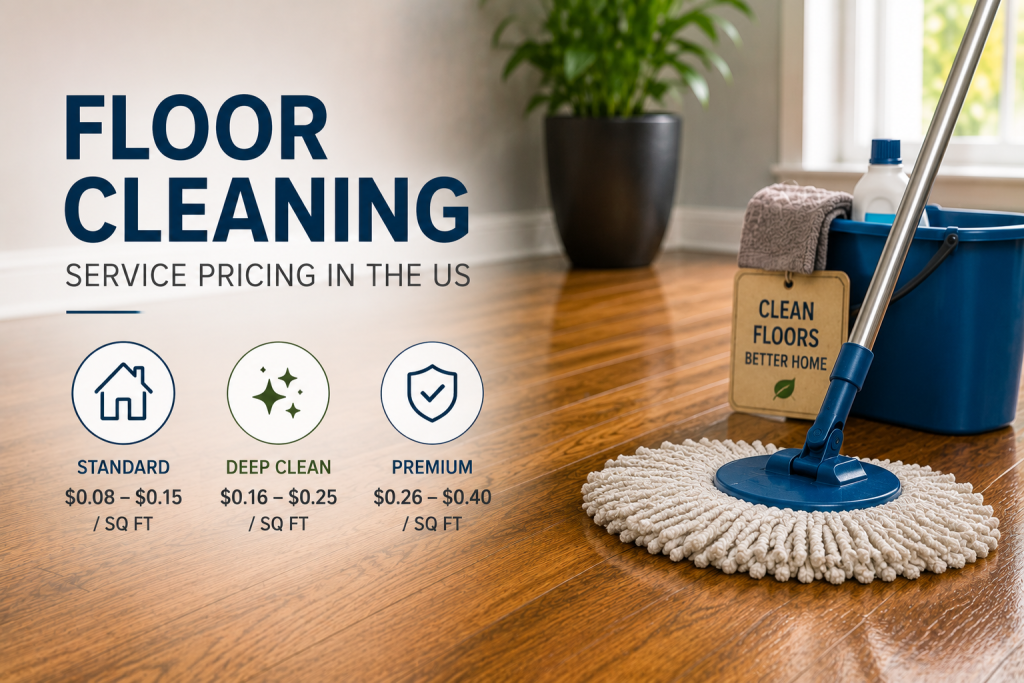
Urban areas and high-cost states like California, New York, and Massachusetts typically see higher pricing compared to suburban or rural regions. Service providers may also adjust rates based on accessibility, furniture moving requirements, and urgency of service. Understanding these pricing structures helps homeowners compare providers more effectively and choose services that align with their maintenance needs and budget expectations for residential floor maintenance services.
Hardwood Floor Cleaning Cost Breakdown
The hardwood floor cleaning cost is typically higher than standard surface cleaning because hardwood requires specialized care to avoid damage while still restoring shine and removing embedded dirt. In the US, pricing often depends on the floor’s condition, finish type, and whether the service includes deep cleaning or polishing. Light maintenance cleaning for hardwood floors generally involves dust removal, pH-balanced solutions, and microfiber-based techniques. This type of professional floor care is usually on the lower end of pricing because it is less labor-intensive and does not require heavy equipment.
However, deeper services such as buffing, polishing, or stain treatment increase the overall professional floor cleaning cost significantly. Floors with scratches, dull finishes, or heavy buildup may also require multi-step cleaning processes, which add to labor time. Hardwood cleaning costs can also vary based on square footage and whether furniture needs to be moved. Proper maintenance helps reduce long-term restoration expenses and preserves flooring value.
Tile and Grout Cleaning Cost Factors
The tile and grout cleaning cost is influenced heavily by the condition of the grout lines and the level of dirt buildup across the tiled surface. In many US homes, tile flooring is durable, but grout is porous and tends to trap dirt, grease, and moisture over time, increasing the effort required for professional cleaning. Basic tile cleaning services typically include surface washing and light scrubbing, which keeps the professional floor cleaning cost relatively moderate. However, when grout lines are heavily stained or discolored, deeper restoration methods are needed, such as steam cleaning, mechanical scrubbing, or specialized chemical treatments.
The size of the area also plays a major role in pricing. Larger kitchens, bathrooms, and entryways require more time and labor, which increases overall service costs. In some cases, sealing grout after cleaning may be recommended, adding to the total expense but improving long-term protection. Proper tile and grout maintenance not only improves appearance but also reduces future cleaning frequency and long-term maintenance costs.
Carpet Cleaning Pricing Explained
Carpet cleaning pricing in the US varies widely depending on carpet size, fiber type, and how deeply embedded the dirt is. Compared to hard flooring, carpets require more intensive cleaning methods because they trap dust, allergens, and stains within the fibers. Basic professional carpet cleaning typically includes vacuuming, pre-treatment, and hot water extraction. This type of service usually falls within standard professional floor cleaning cost ranges because it is commonly performed and relatively efficient for service providers.
However, heavily soiled carpets, pet stains, or high-traffic areas increase the overall cost due to additional treatment steps and longer drying times. Specialized stain removal, deodorizing, or protective coatings can also raise pricing. Carpet thickness and material type also influence cost, as denser fibers require more time and equipment power. In many cases, regular professional cleaning helps extend carpet lifespan and reduces the need for early replacement, making it a valuable part of residential floor maintenance services.
Deep Floor Cleaning Costs vs Standard Cleaning
When comparing deep floor cleaning costs to standard cleaning services, the key difference lies in intensity, equipment, and time required. Standard cleaning focuses on surface-level maintenance such as dust removal, light mopping, and basic stain treatment, making it more affordable and commonly scheduled for routine upkeep. Deep cleaning, however, goes much further. It targets embedded dirt, stubborn stains, and long-term buildup that regular maintenance cannot address. This often involves specialized equipment, stronger cleaning solutions, and additional labor, which increases the overall professional floor cleaning cost.
For hardwood, deep cleaning may include buffing or polishing. For tile, it often involves intensive grout scrubbing or steam-based treatment. Carpets may require hot water extraction and multiple passes to fully restore fibers. While deep cleaning is more expensive upfront, it is typically performed less frequently and can significantly extend the life of flooring materials. This makes it an important part of long-term professional floor care and home maintenance planning.
Residential Floor Maintenance Services Pricing Models
Residential floor maintenance services are typically priced using a few common models, and understanding them helps homeowners better interpret quotes and avoid overpaying for professional floor cleaning cost. The most common pricing model is per square foot, where providers charge based on the total area being cleaned. This is especially common for large homes or full-floor services, as it provides predictable scaling as space increases. Another model is per room pricing, often used for standard residential jobs like bedrooms, living rooms, or small apartments. While simpler, this method can vary depending on room size and furniture density.
Some providers also use flat-rate packages, which bundle services like deep cleaning, polishing, or stain removal into a single price. These packages are often part of recurring maintenance plans and can reduce long-term floor cleaning service pricing for homeowners. Additional fees may apply for heavy staining, furniture moving, or specialized treatments, which should always be clarified before service begins.
What Affects Professional Floor Care Pricing
Several key factors influence professional floor care pricing, and understanding them helps homeowners make sense of the wide range in professional floor cleaning cost estimates across the US. The most important factor is flooring type. Hardwood, tile, carpet, and vinyl each require different tools, cleaning solutions, and labor intensity. For example, grout-heavy tile floors or stained carpets typically cost more due to extra scrubbing and treatment time.
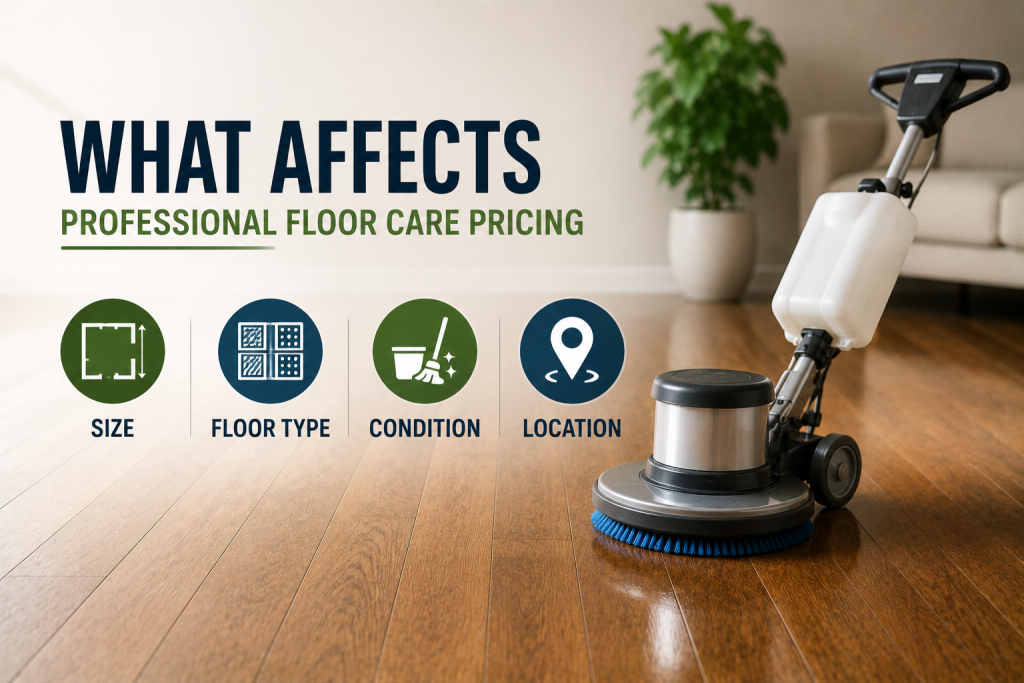
The condition of the floor also plays a major role. Light maintenance cleaning is far less expensive than deep cleaning services that involve heavy buildup, pet stains, or long-neglected surfaces. In many cases, the worse the condition, the higher the floor cleaning service pricing. Square footage, furniture removal, and accessibility can also impact pricing. Larger or cluttered spaces require more time and effort, increasing total service costs. Finally, regional labor rates across the US can significantly affect pricing, with metropolitan areas often charging more than rural regions for the same residential floor maintenance services.
DIY vs Professional Floor Cleaning Cost Comparison
Comparing DIY methods with professional floor cleaning cost helps homeowners understand where money is truly saved, and where it isn’t. At first glance, DIY cleaning appears cheaper because it eliminates labor charges, but the full picture is more complex. DIY cleaning involves purchasing tools, products, and equipment such as vacuums, mops, and cleaning solutions. Over time, these costs add up, especially if specialized products are needed for hardwood, tile, or carpet care. Additionally, improper cleaning techniques can lead to damage, increasing long-term repair expenses.
Professional services, while more expensive upfront, provide expertise, industrial-grade equipment, and targeted treatments for specific flooring types. This reduces the risk of mistakes and often delivers deeper, longer-lasting results. For example, stubborn grout stains or deep carpet dirt may be difficult to remove without professional tools, making residential floor maintenance services more cost-effective in the long run for heavily used homes. Ultimately, the decision depends on floor condition, maintenance frequency, and the homeowner’s experience with professional floor care.
Final Verdict
Determining whether the professional floor cleaning cost is worth it depends on the condition of the floors, the type of material, and how often maintenance is performed. For many US homeowners, professional services provide value that goes beyond surface cleaning. Professional cleaners use specialized equipment and techniques that can restore floors more effectively than typical DIY methods. This is especially important for deep stains, worn finishes, or heavily trafficked areas where standard cleaning is not enough. In these cases, investing in professional floor care can extend flooring lifespan and delay costly replacements. However, for well-maintained homes with light daily wear, routine DIY cleaning may be sufficient between occasional professional visits. A balanced approach is often the most cost-effective strategy, regular home maintenance combined with periodic residential floor maintenance services. Ultimately, professional cleaning is most worthwhile when it prevents damage, restores appearance, or improves long-term flooring durability.
FAQs
What is the average professional floor cleaning cost in the US?
The professional floor cleaning cost varies widely, but most US homeowners pay based on square footage, floor type, and cleaning intensity.
What affects floor cleaning service pricing the most?
Floor cleaning service pricing is mainly influenced by flooring type, condition, room size, and whether deep cleaning is required.
How much does hardwood floor cleaning cost?
The hardwood floor cleaning cost depends on whether it’s basic maintenance or includes polishing, buffing, or deep restoration.
Is tile and grout cleaning expensive?
Tile and grout cleaning costs increase when grout is heavily stained or requires deep steam or chemical treatment.
What is included in residential floor maintenance services?
Residential floor maintenance services typically include cleaning, stain removal, polishing, and periodic deep cleaning treatments.
Are deep floor cleaning costs worth it?
Yes, deep floor cleaning costs are often worth it because they restore floors and extend their lifespan compared to basic cleaning.
Is professional floor cleaning better than DIY?
Professional services usually deliver deeper results and reduce risk of damage, especially for complex flooring types.