

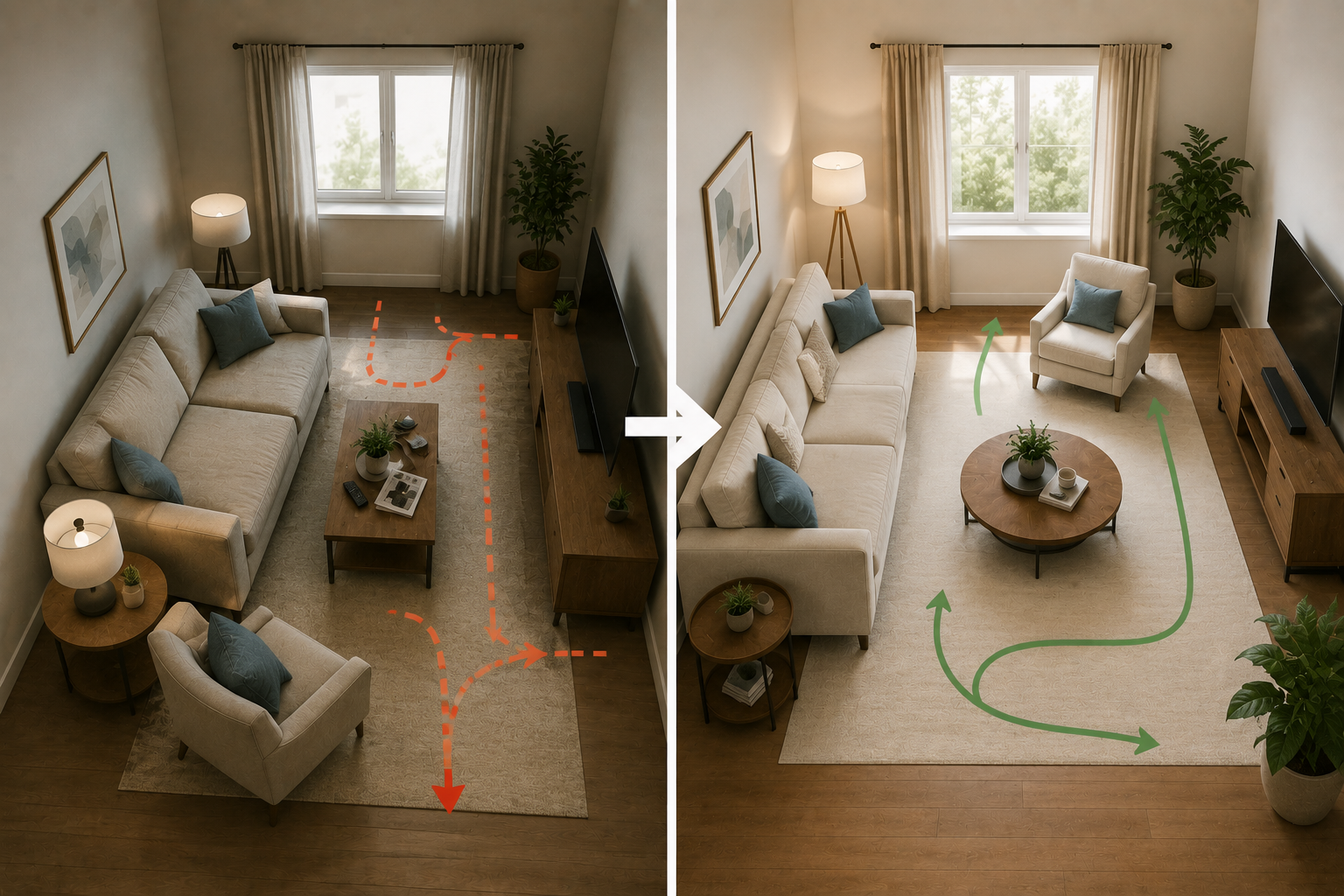
Why Proper Furniture Placement Improves Functionality
The way furniture is arranged has a direct impact on how comfortable and efficient a home feels. Practicing proper furniture arrangement helps improve traffic flow, maximize usable space, and create rooms that support everyday activities. Even well-designed spaces can feel cramped or inconvenient when furniture is positioned poorly.
Many homeowners focus on aesthetics without considering how layout affects functionality. However, proper furniture placement can make a room easier to navigate, enhance comfort, and improve the overall living experience. Whether furnishing a small apartment or a spacious open-concept home, understanding the principles of furniture placement allows homeowners to create spaces that are both attractive and highly practical.
Why Does Proper Furniture Placement Matter?
Understanding the importance of proper furniture arrangement is essential for creating a home that feels comfortable, organized, and functional. Furniture arrangement influences how people move through a room, interact with one another, and use the available space. Even small adjustments can significantly improve the overall experience of a room. A well-planned layout helps establish clear traffic pathways, define activity zones, and create a balanced visual appearance.
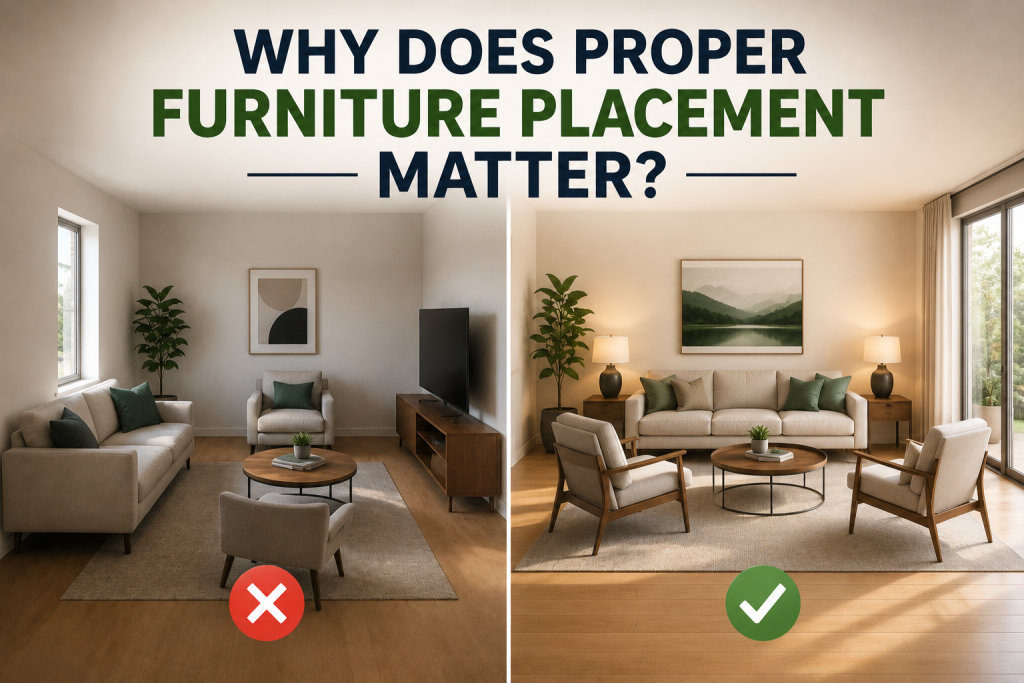
It also ensures that furniture supports daily routines rather than creating obstacles or unnecessary clutter. Whether the goal is relaxation, entertaining, or productivity, the arrangement of furniture plays a major role in achieving it. Practicing proper furniture arrangement allows homeowners to maximize space while improving comfort and accessibility. Thoughtful layouts not only enhance the appearance of a room but also contribute to a more efficient and enjoyable living environment. Furniture placement should also coordinate with wall styling, as avoiding common wall decor mistakes helps create a more balanced and visually cohesive room.
Functional Furniture Design Principles
A well-planned functional furniture layout helps homeowners create rooms that support everyday activities while maintaining comfort and visual balance. The goal is to arrange furniture in a way that enhances usability rather than simply filling available space. One important principle is establishing a clear focal point, such as a fireplace, television, or large window, and arranging seating around it. Maintaining open pathways improves movement and prevents the room from feeling crowded.
Furniture should also be scaled appropriately for the room to avoid overwhelming the space. In larger rooms, grouping furniture into separate zones can improve organization and functionality. Applying proper furniture placement principles ensures that each room serves its intended purpose effectively. Thoughtful arrangements make spaces easier to use, encourage conversation, and contribute to a more comfortable and organized home environment.
Ergonomic Room Style for Everyday Living
An effective ergonomic room design focuses on comfort, accessibility, and ease of movement. Furniture should support the way homeowners use a room while minimizing strain and improving overall functionality. A well-designed space not only looks appealing but also makes daily activities more comfortable and efficient. Proper seating heights, comfortable viewing distances, and adequate spacing between furniture pieces all contribute to an ergonomic environment.
Walkways should remain unobstructed, and frequently used items should be easily accessible. In living rooms, arranging seating to encourage conversation while maintaining comfortable distances can significantly improve usability. By applying proper furniture placement principles, homeowners can create spaces that support relaxation, productivity, and everyday living. Ergonomic design helps reduce clutter, improve accessibility, and ensure that rooms function as efficiently as possible for the people who use them most.
Room Flow Betterment Strategies
Practical room flow improvement strategies help homeowners create spaces that are easier to navigate and more enjoyable to use. Good flow ensures that furniture supports movement rather than obstructing it.
Maintain Clear Walkways
Keeping pathways open allows people to move comfortably throughout the room and reduces the feeling of clutter. Furniture should never block entryways or major traffic areas.
Create Functional Zones
Larger rooms benefit from designated areas for relaxing, dining, or working. Defining these spaces improves organization and enhances usability.
Proper Furniture Placement for Better Movement
Practicing proper furniture arrangement helps maintain comfortable spacing between furniture pieces and encourages natural traffic flow. Thoughtful layouts improve accessibility, enhance comfort, and make rooms feel more organized and functional.
Practical Furniture Placement Tips
Simple practical furniture arrangement strategies can make a noticeable difference in how a room functions. Thoughtful layouts help homeowners maximize comfort, improve accessibility, and create spaces that feel more inviting and organized. Start by identifying the room’s primary purpose and arranging furniture around a central focal point. Position seating to encourage conversation while keeping major walkways clear. Avoid overcrowding the room with unnecessary pieces, and choose furniture that is proportional to the available space.
In larger rooms, dividing furniture into smaller activity zones can improve both functionality and visual balance. Applying proper furniture placement techniques ensures that each room supports everyday activities without feeling cluttered. A well-arranged space promotes better traffic flow, enhances usability, and allows homeowners to make the most of every square foot while maintaining a comfortable atmosphere.
Home Organization Tips That Support Better Layouts
Practical home organization ideas can make furniture placement more effective by reducing clutter and improving room functionality. Organized spaces are easier to navigate and allow furniture arrangements to work as intended without unnecessary obstacles. One helpful strategy is to remove items that are rarely used and incorporate storage solutions that keep everyday essentials accessible. Multifunctional furniture, such as storage ottomans and coffee tables with built-in compartments, can help maximize space while minimizing visual clutter.
Shelving, baskets, and cabinets also contribute to a cleaner and more organized environment. Combining organization with proper furniture placement creates rooms that feel more spacious and efficient. When clutter is minimized and furniture is positioned thoughtfully, homeowners can enjoy better traffic flow, increased comfort, and a living space that supports daily routines more effectively.
Efficient Space Setup for Different Spaces
Creating an efficient room setup requires understanding how different spaces are used and arranging furniture to support those activities. Every room has unique requirements, and a layout that works well in one area may not be suitable for another. Living rooms benefit from seating arrangements that encourage conversation and maintain clear pathways. Bedrooms should prioritize comfort and accessibility, while home offices require furniture placement that supports productivity and minimizes distractions.
In open-concept homes, dividing larger areas into functional zones can improve organization and make the space feel more cohesive. Selecting appropriately sized furniture also helps maximize usability without creating overcrowding. Applying proper furniture placement principles allows homeowners to tailor each room to its specific purpose. Thoughtful layouts improve comfort, enhance efficiency, and ensure that every space functions in a practical and organized manner.
Furniture Spacing Advantages Homeowners Should Know
Understanding furniture spacing benefits can help homeowners create rooms that feel comfortable, balanced, and easy to navigate. Proper spacing is one of the most overlooked aspects of interior design, yet it plays a major role in functionality and overall comfort. Adequate spacing between furniture pieces improves traffic flow and prevents rooms from feeling cramped. It also helps define conversation areas and ensures that frequently used items remain easily accessible.
Maintaining appropriate distances between sofas, chairs, and tables creates a more inviting atmosphere while supporting everyday activities. In larger rooms, proper spacing prevents furniture groupings from feeling disconnected. Practicing proper furniture placement goes beyond choosing attractive furniture. It involves arranging pieces in a way that maximizes usability and enhances the overall experience of the space. Thoughtful spacing helps homeowners create rooms that are more practical, organized, and enjoyable to use.
Common Furniture Placement Mistakes
Even high-quality furniture can make a room feel uncomfortable if it is arranged poorly. Avoiding these common mistakes can help homeowners create spaces that are more functional and visually appealing.
- Blocking natural traffic pathways with oversized furniture.
- Choosing furniture that is too large or too small for the room.
- Ignoring the room’s focal point when arranging seating.
- Overcrowding the space with unnecessary furniture pieces.
- Leaving insufficient space between furniture items.
- Pushing every piece directly against the walls without considering flow.
- Failing to define activity zones in larger rooms.
- Using rugs that are too small for the furniture arrangement.
- Prioritizing appearance over comfort and practicality.
- Neglecting storage solutions that reduce clutter.
Recognizing these mistakes allows homeowners to improve room functionality and create more comfortable living spaces that support everyday activities.
How to Achieve Proper Furniture Placement?
Achieving proper furniture arrangement begins with understanding how each room is used and arranging furniture to support those activities. A successful layout should balance comfort, accessibility, and visual appeal while making the best use of available space. Start by identifying the room’s focal point and positioning major furniture pieces around it. Maintain clear pathways to improve movement and avoid overcrowding the space with unnecessary items.
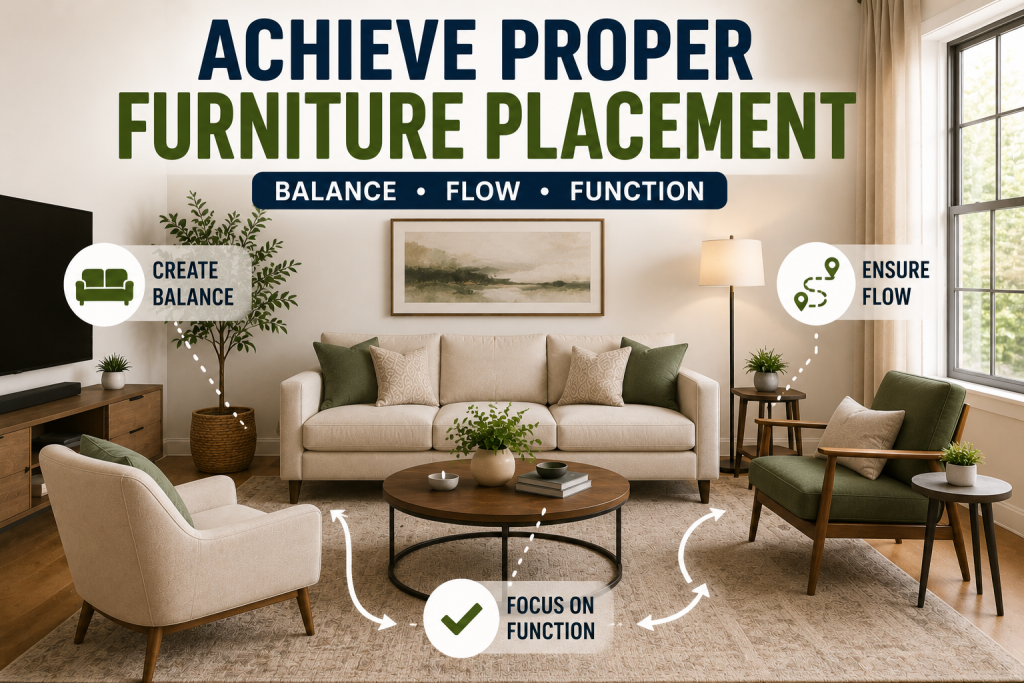
Choose furniture that fits the scale of the room and consider creating separate zones for relaxing, working, or entertaining when appropriate. Proper spacing between pieces also contributes to a more organized and comfortable environment. Small adjustments can often produce significant improvements. By focusing on functionality and thoughtful planning, homeowners can create rooms that feel welcoming, efficient, and better suited to everyday living.
Conclusion
Practicing proper furniture placement is one of the most effective ways to improve the functionality, comfort, and appearance of any room. Thoughtful furniture arrangements enhance traffic flow, support daily activities, and help homeowners make better use of available space. By considering room purpose, furniture scale, and spacing, it becomes easier to create environments that feel organized and inviting. Avoiding common placement mistakes and focusing on practical design principles can significantly improve the overall living experience. With careful planning, homeowners can transform ordinary rooms into spaces that are both efficient and enjoyable to use.
Frequently Asked Questions
Why is proper furniture placement important?
Proper furniture placement improves traffic flow, enhances comfort, and helps homeowners make better use of available space.
How can I make a room more functional?
Creating clear pathways, choosing appropriately sized furniture, and reducing clutter can significantly improve room functionality.
What are some effective home organization tips for better layouts?
Simple home organization tips, such as using multifunctional furniture, storage baskets, and built-in shelving, can help support a more efficient room layout.
Does furniture spacing affect room comfort?
Yes. Proper spacing between furniture pieces improves accessibility and helps rooms feel more balanced and inviting.
Can furniture placement make a room look bigger?
Yes. Strategic furniture placement, good traffic flow, and minimizing clutter can make a room feel more open and spacious.