


Quartz vs Granite Countertops: Cost, Durability and Maintenance Compared
Choosing between quartz vs granite countertops is one of the most common decisions homeowners face during a kitchen remodel. Both materials are widely used in US homes, but they differ significantly in composition, performance, maintenance, and long-term value. Quartz is an engineered stone made from crushed minerals and resins, designed for consistency and low maintenance. Granite, on the other hand, is a natural stone cut directly from quarries, offering unique patterns and organic variation. Each option brings distinct advantages depending on lifestyle and design goals.
This comparison helps homeowners understand the key differences between engineered stone countertops like quartz and natural stone countertops like granite. By breaking down durability, cost, maintenance, and aesthetics, you can confidently choose the best surface for your kitchen renovation without overspending or sacrificing long-term performance.
Quartz vs Granite Countertops Overview
When comparing quartz vs granite countertops, it’s important to understand what each material actually is before evaluating performance. Quartz countertops are engineered stone countertops, made by combining natural quartz crystals with resins and pigments. This manufacturing process creates a non-porous surface that is highly consistent in color and pattern, making it a popular choice for modern kitchens.
Granite countertops, on the other hand, are natural stone countertops quarried directly from the earth and cut into slabs. Each piece of granite is unique, offering one-of-a-kind patterns and mineral variations that cannot be replicated. From a usage perspective, quartz is often chosen for low-maintenance convenience, while granite is valued for its natural beauty and heat resistance. Both materials are widely used in US kitchen remodeling projects, but their differences in structure directly affect durability, upkeep, and overall kitchen design flexibility.

Key Differences Between Quartz and Granite
Understanding the core differences in quartz vs granite countertops helps homeowners make a confident decision during a kitchen remodel. While both are premium surfaces used in US homes, they differ in composition, performance, and maintenance needs. Quartz is an engineered stone countertop, designed to be non-porous and uniform. This makes it highly resistant to stains, bacteria, and moisture without requiring sealing.
Granite, as a natural stone countertop, is porous and requires periodic sealing to maintain its resistance to spills and moisture absorption. In terms of appearance, quartz offers consistent patterns and modern finishes, while granite provides unique, natural variations that no two slabs share. Heat resistance is generally stronger in granite, whereas quartz offers superior stain protection. These fundamental differences influence everything from countertop maintenance requirements to long-term durability, making it essential to evaluate lifestyle needs before choosing between the two.
Quartz Countertop Benefits and Drawbacks
Quartz countertops are widely considered one of the most practical choices in the quartz vs granite countertops comparison, especially for busy US households. One of their biggest advantages is low maintenance. As engineered stone, quartz is non-porous, meaning it does not require sealing and is highly resistant to stains from coffee, wine, and everyday cooking spills. Another major benefit is design consistency.
Quartz offers uniform patterns and a wide range of modern finishes, making it ideal for contemporary kitchens and open-concept homes. It also provides strong durability against scratches and general wear, which is why it is often recommended in high-use kitchens. However, quartz does have limitations. It is less heat-resistant than granite, meaning hot pans should not be placed directly on the surface. It can also be more expensive than some natural stone options depending on the brand and finish. Overall, quartz balances convenience and performance, but requires mindful heat protection.
Granite Countertop Durability and Performance
Granite countertops are known for their exceptional durability, making them a strong contender in the quartz vs granite countertops debate for homeowners who prioritize natural strength and heat resistance. As a natural stone countertop, granite is formed under intense pressure, giving it excellent hardness and the ability to withstand heavy daily use. One of granite’s biggest advantages is its heat resistance.
Unlike some engineered stone countertops, granite can handle hot pots and pans with minimal risk of damage, making it ideal for active cooking environments. It also resists scratches well, which adds to its long-term reliability in busy kitchens. However, granite is porous, meaning it requires periodic sealing to protect against stains and moisture absorption. Without proper countertop maintenance, liquids like oil or wine can penetrate the surface over time. Despite this upkeep, granite remains a popular choice in US homes due to its natural beauty, durability, and long-lasting performance.
Cost Comparison: Quartz vs Granite Countertops
When evaluating quartz vs granite countertops, cost is often one of the most important deciding factors for US homeowners. Both materials fall into the mid-to-high range of kitchen renovation expenses, but pricing can vary depending on quality, brand, and installation complexity. In general, engineered stone countertops like quartz tend to have a more consistent price range because manufacturing is controlled and predictable. Higher-end quartz designs can become expensive, especially for premium brands and custom finishes.
Natural stone countertops such as granite can sometimes offer more pricing flexibility. Entry-level granite slabs may be more affordable, but rare or exotic patterns can significantly increase the overall kitchen countertop costs. Installation costs for both materials are also similar, as they require professional fabrication and precise fitting. Ultimately, the final price depends on slab selection, edge detailing, and labor rates in your region. Understanding these differences helps homeowners plan a realistic renovation budget.
Maintenance and Cleaning Differences
Maintenance is one of the biggest deciding factors in the quartz vs granite countertops comparison, especially for homeowners who want long-term convenience in their kitchen. Quartz countertops, as engineered stone countertops, are non-porous and require very little upkeep. They do not need sealing and are highly resistant to stains, making everyday cleaning simple with mild soap and water. This low-maintenance nature is one of the key quartz countertop benefits for busy households.
Granite countertops, as natural stone countertops, require more regular care. Because granite is porous, it must be sealed periodically to prevent staining and moisture absorption. Without proper sealing, spills like oil, wine, or acidic foods can leave permanent marks. Both materials are relatively easy to clean on a daily basis, but quartz offers more consistency in long-term upkeep. Granite, however, rewards proper maintenance with lasting durability and natural beauty, making countertop maintenance preferences a key part of the decision.
Which Countertop Is Better for US Homes?
Choosing between quartz vs granite countertops ultimately depends on how you use your kitchen, your design preferences, and how much maintenance you’re willing to handle. There is no universal winner, only the better fit for specific household needs. For busy families who prioritize convenience, engineered stone countertops like quartz are often the preferred choice. They offer low maintenance, consistent appearance, and strong resistance to stains, making them ideal for high-use kitchens in modern US homes.
On the other hand, homeowners who value natural aesthetics and heat resistance may prefer natural stone countertops such as granite. It performs well in active cooking environments and brings unique character to each kitchen due to its natural variation. In many US remodels, the decision comes down to lifestyle: quartz for simplicity and ease, granite for natural beauty and heat performance. Both are excellent options when matched correctly to the home’s needs.
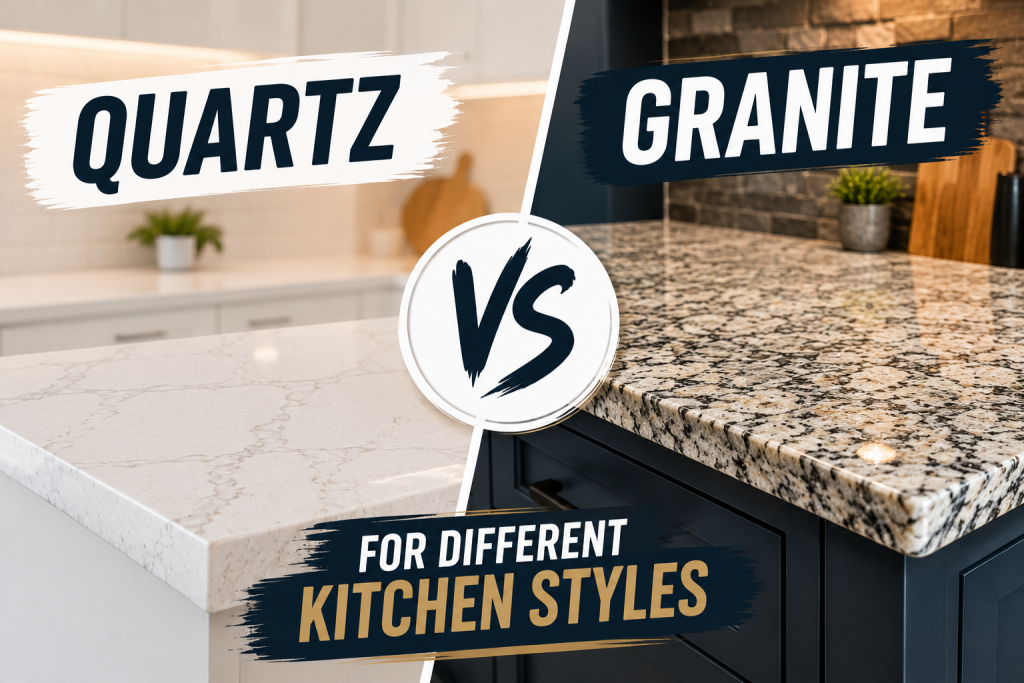
Quartz vs Granite for Different Kitchen Styles
When comparing quartz vs granite countertops, kitchen style plays a major role in determining the best fit. Each material complements different design aesthetics commonly found in US homes, from modern open layouts to traditional family kitchens. Quartz countertops, as engineered stone countertops, are a natural match for modern, minimalist, and contemporary kitchens. Their clean, consistent patterns work well in open-concept spaces where homeowners prefer a sleek, uniform look. Quartz also pairs nicely with white cabinetry, matte finishes, and streamlined modern kitchen designs.
Granite countertops, as natural stone countertops, are better suited for traditional, rustic, and transitional kitchens. The natural variation in color and pattern adds warmth and character, making it a strong choice for homes with wood cabinetry or classic design elements. Ultimately, the right choice depends on whether the homeowner wants a clean, modern aesthetic or a more natural, textured appearance that feels timeless and unique.
Long-Term Value and Resale Impact
When evaluating quartz vs granite countertops, long-term value and resale impact are important considerations for US homeowners planning a kitchen remodel. Both materials are considered premium upgrades, and either choice can positively influence home appeal when installed correctly. Quartz countertops, as engineered stone countertops, are often favored in modern real estate markets because of their low maintenance and consistent appearance.
Buyers appreciate the convenience of not needing sealing or special upkeep, which can make quartz kitchens especially attractive in fast-paced urban markets. Granite countertops, as natural stone countertops, also hold strong resale value due to their reputation for durability and natural beauty. In many traditional and higher-end homes, granite is still viewed as a luxury feature that signals quality craftsmanship. Ultimately, both materials support strong resale potential, but quartz tends to appeal more to convenience-focused buyers, while granite attracts those who value natural character and timeless design.
Conclusion
The quartz vs granite countertops decision ultimately comes down to lifestyle, maintenance preferences, and design goals. Both options are among the most popular natural stone countertops and engineered stone countertops used in US kitchens today. Quartz offers unmatched convenience with low maintenance and consistent design, while granite delivers natural beauty, heat resistance, and timeless appeal. Understanding countertop comparison factors like durability, cost, and upkeep helps homeowners make a more informed renovation decision. No matter which material you choose, both quartz and granite can significantly enhance kitchen functionality, aesthetics, and long-term home value when properly installed.
FAQ About Quartz vs Granite Countertops
Which is better, quartz vs granite countertops?
There is no single winner in the quartz vs granite countertops comparison. Quartz is better for low maintenance and stain resistance, while granite excels in heat resistance and natural beauty.
Are quartz countertops more expensive than granite?
In many US markets, engineered stone countertops like quartz can be slightly more expensive depending on brand and design. However, premium natural stone countertops like exotic granite can cost even more.
Which countertop lasts longer?
Both materials are highly durable, but granite can last longer if properly maintained, while quartz offers consistent performance with less upkeep over time.
Which requires less maintenance?
Quartz requires less maintenance because it does not need sealing, making it easier to clean compared to granite, which requires periodic sealing as part of countertop maintenance.