


Recessed Lighting Installation Cost in 2026:Complete Guide
Recessed lighting remains one of the most popular lighting upgrades for homeowners because it provides a clean, modern appearance while improving overall illumination. Whether installed in living rooms, kitchens, hallways, or basements, recessed lights can enhance both functionality and home value. Before starting a project, however, it is important to understand the factors that influence recessed lighting installation.
The total cost of installing recessed lighting depends on several variables, including the number of fixtures, labor rates, ceiling accessibility, wiring requirements, and fixture type. Retrofit installations typically have different pricing considerations than new construction projects, and regional labor costs can significantly affect the final budget. This guide breaks down the average recessed lighting installation cost, examines key pricing factors, and helps homeowners estimate what they can expect to pay for a professional installation.
Average Recessed Lighting Installation Cost 2026
The average recessed lighting installation cost varies depending on project size, fixture quality, labor rates, and the installation. Most homeowners can expect to pay anywhere from a few hundred dollars for a small project to several thousand dollars for larger installations involving multiple rooms and extensive electrical work. Projects that require new wiring, ceiling modifications, or electrical panel upgrades generally cost more than straightforward installations.

Homes with easy attic access often benefit from lower labor expenses because electricians can run wiring more efficiently. In contrast, finished ceilings with limited access may increase installation time and overall project costs. When estimating recessed lighting installation cost, homeowners should account for both material and labor expenses. Obtaining multiple quotes from licensed electricians can help ensure accurate pricing and provide a better understanding of local market rates before work begins.
Recessed Lighting Budget Per Fixture
One of the most important factors affecting a lighting project budget is the recessed lighting price per fixture. The cost of each fixture can vary significantly based on quality, size, features, and energy efficiency ratings. Basic recessed light kits are generally more affordable, while premium fixtures with smart controls, dimming capabilities, or specialized trims tend to cost more.
Homeowners should also consider the type of housing required for the installation. IC-rated and airtight fixtures, commonly used in insulated ceilings, may carry higher material costs but can improve energy efficiency and meet local building requirements. LED models are another popular option because they offer longer lifespans and lower energy consumption compared to traditional lighting products. While fixture pricing is an important part of the budget, it represents only a portion of the total recessed lighting installation cost. Labor, wiring, and ceiling access often contribute substantially to the final project expense.
Factors That Affect Recessed Lighting Installation Cost
Several variables influence the final recessed lighting installation, making it important for homeowners to evaluate their specific project requirements before setting a budget. Understanding these factors can help explain why installation quotes often vary from one home to another.
Number of Fixtures
The total number of recessed lights installed impacts both material and labor expenses. Larger projects require additional fixtures, wiring, and installation time.
Ceiling Accessibility
Homes with attic access generally allow electricians to complete installations more efficiently. Limited ceiling access can increase labor requirements and project complexity.
Wiring Requirements
New wiring runs, circuit modifications, and electrical upgrades often increase installation costs. Existing electrical infrastructure may reduce the amount of work required.
Permit and Inspection Fees
Some municipalities require permits and inspections for electrical work. These fees can add to the overall project budget and should be considered when estimating costs. Because every home is different, obtaining a detailed estimate from a licensed electrician remains one of the most effective ways to determine an accurate project cost.
Recessed Light Labor Income Breakdown
Labor is often one of the largest components of a recessed lighting project. The total recessed light labor cost depends on the installation, ceiling accessibility, local labor rates, and the amount of electrical work required. Simple installations in accessible ceilings typically require less time and fewer resources, resulting in lower labor expenses. However, projects involving finished ceilings, limited attic access, or extensive wiring modifications generally require more effort and increase labor costs.
Electricians may also need additional time to install switches, dimmers, or smart lighting controls. The experience level can also influence pricing. Licensed electricians often charge higher rates than general handymen, but they provide expertise, code compliance, and safer installations. When evaluating project estimates, homeowners should carefully review the labor portion of the quote to understand how installation requirements contribute to overall costs and project timelines.
Electrician Income for Recessed Lighting
The electrician cost for recessed lighting varies based on project complexity, regional labor rates, and the scope of electrical work required. Hiring a licensed electrician is generally recommended because recessed lighting installations often involve wiring modifications, circuit evaluations, and compliance with local electrical codes. Projects that require only a few fixtures may involve relatively modest labor expenses, while larger installations spanning multiple rooms can significantly increase overall costs.
Additional work such as installing dimmer switches, upgrading electrical panels, or running new circuits may further affect pricing. Although hiring a professional adds to the total recessed lighting installation cost, it also helps ensure the work is completed safely and correctly. Licensed electricians can identify potential wiring issues, obtain required permits when necessary, and verify that all installations meet local code requirements. For most homeowners, professional installation provides greater peace of mind and long-term reliability.
LED Recessed Lighting vs Traditional Fixtures Cost
Choosing the right fixture type can have a significant impact on both installation expenses and long-term operating costs. While traditional recessed lights are still available, many homeowners now prefer LED options because of their energy efficiency, longer lifespan, and reduced maintenance requirements.
Recessed Lighting Installation Cost and Fixture Selection
The type of fixture selected plays a major role in determining overall project costs. Premium fixtures with advanced features generally cost more than basic models, regardless of the lighting technology used.
Benefits of LED Lighting
The LED recessed lighting is often slightly higher upfront compared to some traditional lighting options. However, LED fixtures typically consume less energy and require fewer replacements over time, helping offset initial expenses.
Traditional Fixture Considerations
Traditional recessed fixtures may have lower purchase prices, but they often use more electricity and require more frequent bulb replacements. These ongoing expenses can increase the total cost of ownership.
Long-Term Value Comparison
For many homeowners, LED recessed lighting offers better long-term value due to lower utility costs, reduced maintenance, and improved energy efficiency.
Recessed Lighting Retrofit Price Explained
A recessed lighting retrofit cost estimate applies when recessed fixtures are added to an existing ceiling rather than installed during new construction. Retrofit projects are common in older homes where homeowners want to upgrade lighting without undertaking major renovations. The cost of a retrofit installation depends largely on ceiling accessibility and the condition of the existing electrical system. Homes with accessible attic space often allow electricians to complete wiring runs more efficiently, helping reduce labor requirements.
In contrast, finished ceilings with limited access may require additional time and specialized installation techniques. Retrofit projects can also involve replacing outdated fixtures with modern LED models. These upgrades often improve energy efficiency and lighting performance while maintaining the existing ceiling structure. Because every home presents unique challenges, the final recessed lighting installation cost for retrofit projects can vary considerably based on project complexity, fixture selection, and local labor rates.
Ceiling Light Setup Cost Comparison
When evaluating lighting upgrades, homeowners often compare recessed lighting with other ceiling-mounted fixtures. Understanding the ceiling light installation cost of different options can help determine which solution best fits a project’s budget and design goals. Traditional ceiling fixtures such as flush-mount lights, semi-flush fixtures, and chandeliers are often easier to install because they typically use existing electrical boxes.
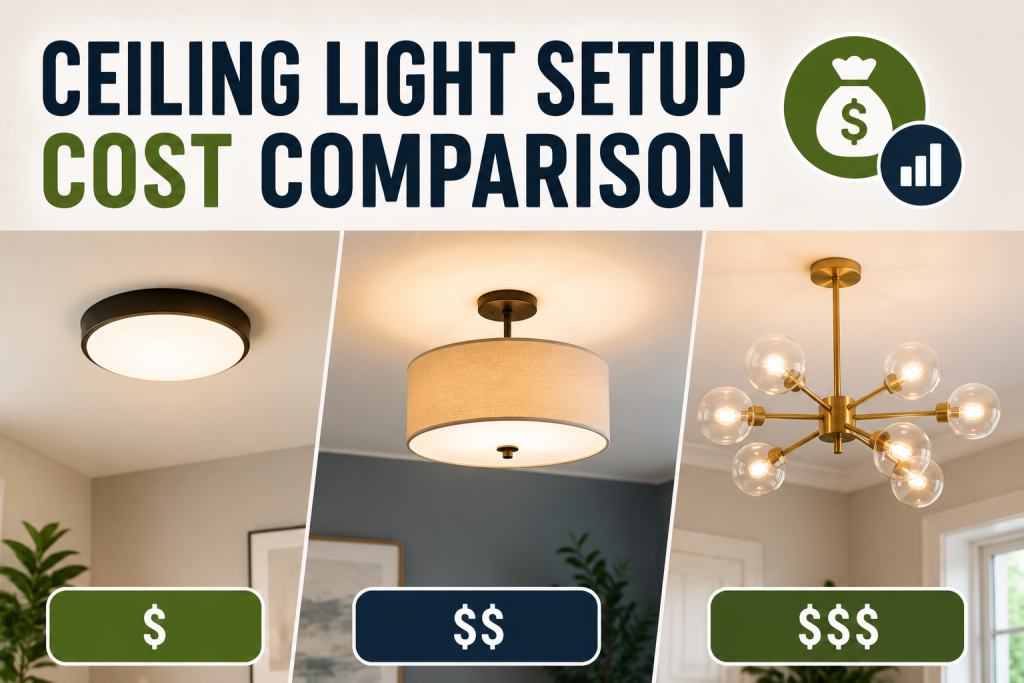
Recessed lighting, however, usually requires ceiling modifications, additional wiring, and more labor-intensive installation procedures. These factors can increase the overall recessed lighting installation cost compared to some standard ceiling fixtures. Despite the higher installation requirements, recessed lighting remains popular because it provides a clean, modern appearance and distributes light evenly throughout a room. Homeowners should compare both upfront installation costs and long-term benefits when selecting the best lighting solution for their space.
Ways to Save Money on Recessed Lighting Projects
Installing recessed lighting can be a valuable home improvement project, but homeowners can take several steps to control expenses without sacrificing quality. Careful planning often helps reduce the overall recessed lighting installation cost while still achieving the desired results. One effective strategy is to plan fixture locations before installation begins. A well-designed layout can minimize wiring requirements and reduce labor time. Obtaining multiple estimates from licensed electricians is another smart approach, as pricing can vary between contractors and regions.
Homeowners may also save money by completing recessed lighting installations during larger renovation projects when ceilings are already open and electrical work is underway. Selecting energy-efficient LED fixtures can further reduce long-term operating costs through lower energy consumption and fewer bulb replacements. By combining thoughtful planning, competitive quotes, and efficient fixture selection, homeowners can maximize value while keeping project expenses under control.
Conclusion
Understanding the factors that influence recessed lighting installation cost can help homeowners plan their projects more effectively and avoid unexpected expenses. Costs vary based on fixture selection, labor requirements, wiring complexity, ceiling accessibility, and whether the installation involves new construction or a retrofit project. While recessed lighting often requires a larger upfront investment than some traditional fixtures, many homeowners consider it worthwhile because of its modern appearance, versatility, and ability to improve overall illumination. Comparing multiple contractor estimates, selecting energy-efficient fixtures, and planning installations carefully can help maximize value. With proper budgeting and professional installation, recessed lighting can provide long-lasting benefits for both comfort and home appeal.
Frequently Asked Questions
What is the average recessed lighting installation cost?
The average recessed lighting installation cost depends on factors such as the number of fixtures, labor rates, wiring requirements, and ceiling accessibility. Larger or more complex projects typically cost more than simple installations.
How much is the light price per fixture?
The recessed lighting budget per fixture varies based on fixture quality, size, trim style, and features such as dimming capabilities or smart controls.
What affects recessed light labor income?
The labor canlighting cost is influenced by ceiling access, wiring complexity, project size, local labor rates, and the amount of electrical work required.
Is LED recessed lighting worth the extra cost?
In many cases, the LED recessed lighting cost is higher initially, but lower energy consumption, reduced maintenance, and longer fixture life can provide better long-term value.
What is the difference between recessed lighting retrofit price and new construction installation?
A recessed lighting retrofit price estimate applies to installations in existing ceilings, while new construction projects are completed before drywall is installed. Retrofit installations may require additional labor depending on ceiling accessibility.