


Remodeling Budgeting Mistakes That Cause Delays
Understanding remodeling budgeting mistakes is critical because most renovation delays are not caused by construction problems, they are caused by financial mismanagement. When a budget is incomplete, unrealistic, or poorly tracked, projects quickly lose momentum due to funding gaps, stalled contractor work, or delayed material purchases. In US home renovation projects, timelines are tightly connected to cash flow. If payments are delayed or unexpected costs arise, contractors may pause work, subcontractors may reschedule, and material orders can be postponed. These issues create a chain reaction that extends project timelines far beyond initial expectations. Most home improvement budget problems start before construction even begins, often due to underestimating costs or skipping contingency planning. Recognizing these risks early is essential for keeping renovation schedules stable and avoiding unnecessary delays throughout the project lifecycle.
Why Remodeling Budgeting Mistakes Lead to Delays
Most remodeling budgeting mistakes lead to delays because renovation timelines depend directly on financial stability and decision speed. When the budget is inaccurate or incomplete, projects often stall as homeowners reassess funding, renegotiate scope, or wait for additional financing. In many US remodeling projects, contractors schedule labor, subcontractors, and material deliveries based on agreed payment milestones. If those payments are delayed due to home improvement budget problems, work may slow down or stop entirely.

This creates a ripple effect where one missed payment can push back multiple stages of construction. Another major issue is change orders caused by poor planning. When costs are underestimated, homeowners are forced to revise decisions mid-project, which interrupts workflow and extends timelines. These renovation planning errors reduce efficiency and create uncertainty for contractors. Ultimately, budgeting mistakes don’t just increase costs, they directly disrupt scheduling, coordination, and project momentum.
Underestimating Remodel Costs and Its Impact
One of the most common remodeling budgeting mistakes is underestimating the true cost of a renovation. Homeowners often base their budgets on initial quotes or material estimates without fully accounting for labor variability, permit requirements, or unexpected structural issues. This gap between expectation and reality is a major trigger for renovation delays.
When funds run short mid-project, work often pauses while homeowners secure additional financing or reduce project scope. This interruption can delay contractor schedules, subcontractor availability, and material orders. In many cases, crews are forced to move to other jobs, pushing your project further down the queue once funding is restored. Underestimating costs also creates tension in contractor payment issues, especially when agreed milestones cannot be met on time. This disrupts workflow and can slow progress even on completed stages. Accurate cost forecasting is essential to avoid these delays and maintain steady project momentum.
Contractor Payment Issues That Stop Work
One of the most disruptive remodeling budgeting mistakes is failing to manage contractor payments correctly. In most US renovation projects, contractors rely on milestone-based payments to schedule labor, subcontractors, and material deliveries. When payments are delayed or inconsistent, work often slows down or stops completely. These contractor payment issues typically occur when homeowners underestimate total costs or run into cash flow problems mid-project.
Without proper home improvement budget planning, funds may not be available when key project phases are completed, creating a breakdown in the construction timeline. Delayed payments can also affect subcontractor availability. Electricians, plumbers, and other trades may move on to other jobs if payment schedules are not honored, causing significant renovation delays when rebooking specialists. Clear budgeting and structured payment planning are essential to maintaining trust, ensuring smooth workflow, and preventing unnecessary stoppages during the remodeling process.
Remodeling Contingency Mistakes Homeowners Make
A major source of remodeling budgeting mistakes is failing to properly plan for contingencies. Many homeowners allocate their entire budget to visible costs like materials and labor, leaving little or nothing reserved for unexpected issues. This creates serious risk once construction begins. A proper contingency fund is a core part of home improvement budget planning, typically covering surprises such as hidden water damage, outdated wiring, structural repairs, or material price increases.
Without this buffer, even small issues can trigger renovation delays, as work must pause until additional funds are secured. Another common error is setting the contingency too low or using it too early in the project. Once exhausted, any new issue immediately disrupts scheduling and may force scope reductions or financing delays. These remodeling contingency mistakes not only increase stress but also weaken contractor coordination, since trades often depend on uninterrupted funding to maintain workflow and timelines.
Renovation Planning Errors That Disrupt Timelines
Many remodeling budgeting mistakes originate before construction even begins, especially during the planning phase. Poor or incomplete planning is one of the fastest ways to create renovation delays, because every later stage depends on accurate sequencing, cost estimation, and scope clarity. A common issue is failing to define project scope in detail. When homeowners do not clearly outline materials, finishes, or structural changes, contractors are forced to adjust plans mid-project.
These renovation planning errors often lead to change orders, rework, and scheduling disruptions that slow progress significantly. Another frequent mistake is incorrect project sequencing. For example, ordering finishes before structural work is confirmed can cause delays and wasted materials. Inadequate coordination between trades also creates gaps in scheduling, where one contractor must wait for another to complete work. Strong planning is essential to ensure smooth workflow, accurate budgeting, and predictable timelines throughout the renovation process.
Home Improvement Budget Problems That Escalate Delays
Many remodeling budgeting mistakes turn into major renovation delays when small financial issues compound over time. What starts as a minor budget shortfall can quickly escalate into stalled work, missed deadlines, and disrupted contractor schedules. One of the most common home improvement budget problems is cash flow inconsistency. Even if the total budget is technically sufficient, poor timing of payments can pause progress.
Contractors and subcontractors often rely on milestone-based payments to continue work, so any delay in funding can halt multiple phases of the project. Another issue is scope creep driven by weak budget control. As new upgrades are added without adjusting the financial plan, available funds shrink, creating gaps that force work stoppages. Material delays also become more likely when purchases are postponed due to budget uncertainty. These problems rarely exist in isolation, once one delay occurs, it often triggers a chain reaction that affects the entire project timeline.
How Project Delay Causes Compound Over Time
One of the most underestimated effects of remodeling budgeting mistakes is how quickly delays compound once a project falls behind schedule. In US renovation projects, time is directly tied to cost, contractor availability, and material logistics, so even a small disruption can escalate into a larger renovation delay chain reaction. When work pauses due to budget shortfalls or home improvement budget problems, contractors often move crews to other active jobs.
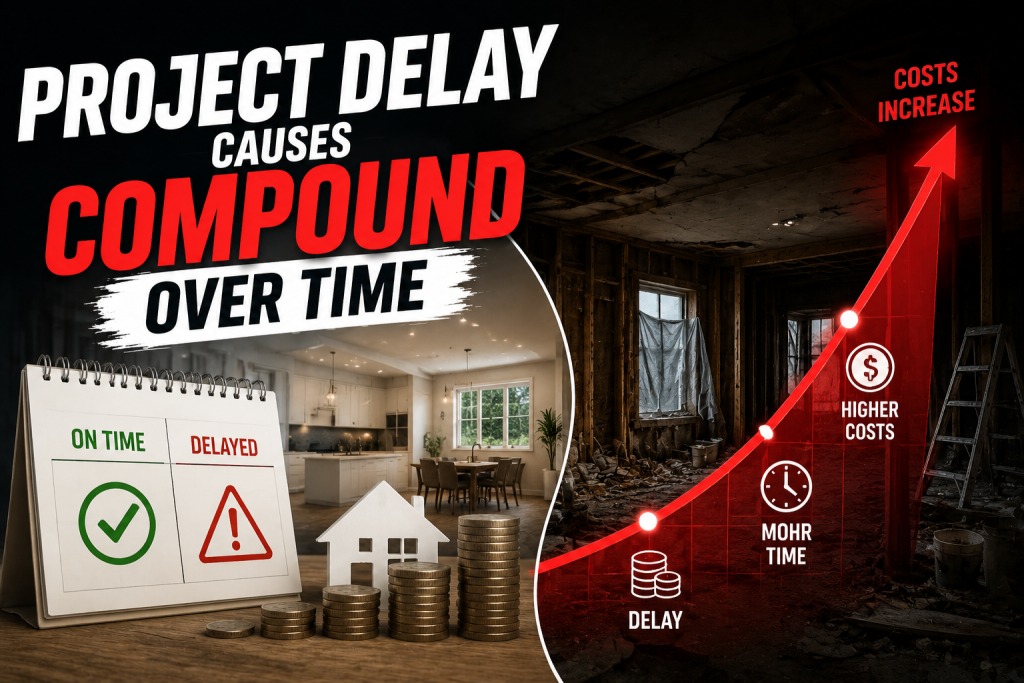
This means restarting later requires rescheduling labor, reordering materials, and sometimes renegotiating pricing, all of which extend timelines further. Delays also increase indirect costs. Extended project durations can lead to higher labor charges, storage fees for materials, and repeated mobilization costs for subcontractors. These compounding effects make initial renovation planning errors significantly more expensive over time. In many cases, a delay of just one phase can push the entire remodeling schedule weeks or even months beyond the original completion date.
How to Prevent Remodeling Budgeting Mistakes
Preventing remodeling budgeting mistakes starts with building a structured and realistic financial plan before any work begins. A detailed budget should clearly define costs across labor, materials, permits, and contingency funds to avoid gaps that lead to renovation delays later in the project. One of the most effective strategies is overestimating costs rather than underestimating them. This creates a financial buffer that protects against unexpected changes and reduces the risk of home improvement budget problems during construction.
A contingency fund of 10%–20% is commonly used in US remodeling projects to absorb surprises without halting progress. Consistent tracking is also essential. Monitoring expenses in real time helps identify overspending early and prevents small issues from escalating into major delays. Clear communication with contractors ensures that payment schedules align with project milestones, reducing the risk of contractor payment issues. Strong planning, disciplined tracking, and realistic expectations are the foundation of effective budget control.
Conclusion
Avoiding remodeling budgeting mistakes is essential for keeping any renovation on time and within budget. Most renovation delays are not caused by construction issues, but by financial mismanagement, poor planning, or unrealistic cost expectations. Strong home improvement budget planning ensures that every phase of a remodel is properly funded, while clear contractor payment issues and contingency strategies prevent work stoppages.
When budgets are structured correctly, homeowners can manage risks, reduce stress, and maintain consistent project momentum. Ultimately, good budgeting is not just about controlling costs, it is about protecting timelines, ensuring contractor coordination, and delivering a successful renovation without unnecessary delays.
FAQ About Remodeling Budgeting Mistakes
What are the most common remodeling budgeting mistakes?
The most common remodeling budgeting mistakes include underestimating total costs, skipping contingency funds, poor expense tracking, and not aligning contractor payments with project milestones. These issues often lead to renovation delays and scope disruptions.
How do budgeting mistakes cause renovation delays?
When funds run short or are misallocated, contractors may pause work until payments are made or decisions are clarified. This creates delays in scheduling, materials, and labor coordination.
What is a contingency mistake in remodeling?
A contingency mistake happens when homeowners either don’t include a buffer fund or set it too low, leaving no financial room for unexpected issues like structural repairs or material price changes.
How can I avoid remodeling budgeting mistakes?
You can avoid them by creating a detailed budget, tracking expenses regularly, planning realistic costs, and maintaining clear communication with contractors throughout the project.