


Common Remodeling Permit Delays That Slow Down Home Remodels
Home remodeling projects often begin with excitement, but many homeowners are surprised when progress stalls before construction even starts. One of the most common reasons is remodeling permit delays, which can add weeks or even months to a project timeline. Whether you’re replacing siding, expanding a kitchen, finishing a basement, or building a room addition, permits play a critical role in ensuring work meets local building requirements. Across cities such as Houston, Phoenix, and Miami, permit processing times can vary significantly based on project scope, staffing levels, and local regulations.
While some delays are unavoidable, many result from preventable mistakes made during planning and submission. Understanding the most common permit-related obstacles can help homeowners, contractors, and project managers avoid costly setbacks, keep schedules on track, and move through the approval process more efficiently.
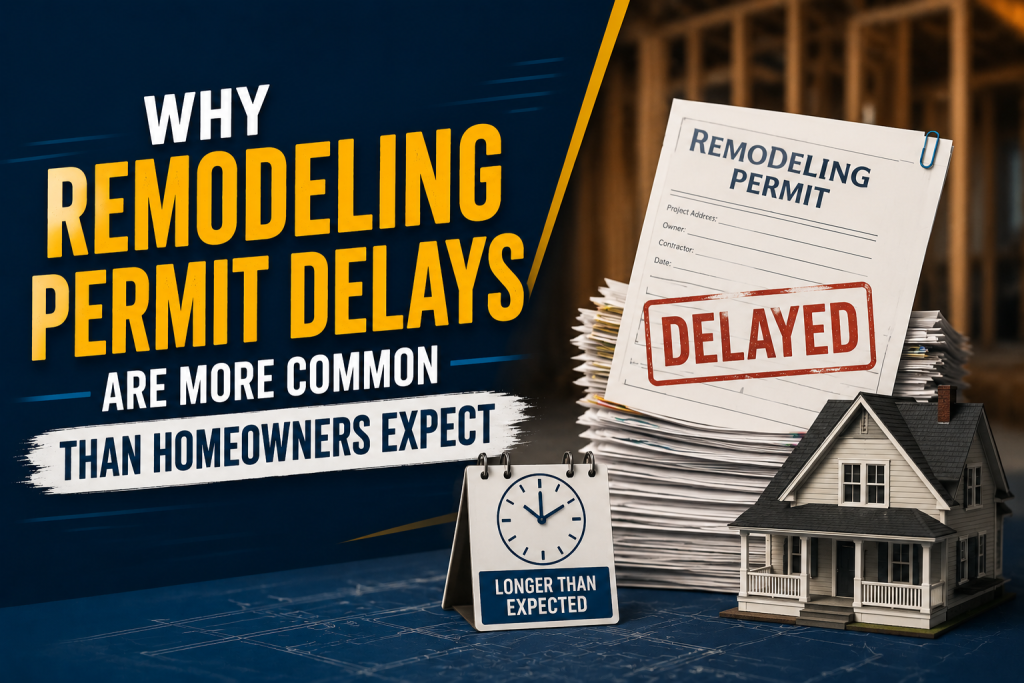
Why Remodeling Permit Delays Are More Common Than Homeowners Expect
Many homeowners assume that obtaining a permit is a simple administrative step. In reality, local building departments review plans for safety, zoning compliance, structural integrity, and adherence to regulations established by organizations such as the International Code Council. Even relatively straightforward projects can undergo multiple reviews before approval is granted. The likelihood of remodeling permit delays increases in fast-growing markets where permit offices handle large volumes of applications.
Communities throughout Texas, Florida, and California often experience seasonal surges in construction activity, creating longer review queues. Delays can also occur when homeowners underestimate documentation requirements or fail to coordinate with design professionals before submitting plans. Because permits are tied directly to project scheduling, any slowdown during approval can quickly create scheduling conflicts, labor availability issues, and unexpected budget pressures. Understanding the causes early allows homeowners to build more realistic expectations into their project plans.
Top Remodeling Permit Delays Caused by Incomplete Applications
One of the leading causes of remodeling permit delays is submitting an incomplete application package. Building departments rely on accurate information to determine whether a project meets local requirements, and even minor omissions can trigger review requests that slow the approval process. Homeowners frequently encounter setbacks because of permit application mistakes such as incorrect property information, inaccurate project descriptions, or missing signatures. These errors may seem minor, but they often require resubmission and additional review cycles.
How Permit Application Mistakes Slow Approval
When reviewers identify inconsistencies in an application, they typically place the permit on hold until corrections are submitted. During busy construction seasons, a revised application may return to the end of the review queue, extending wait times significantly.
Why Missing Construction Documents Trigger Reviews
Another common issue involves missing construction documents. Site plans, floor plans, engineering drawings, and structural details help reviewers verify compliance before work begins. When required documents are absent or incomplete, permit officials cannot complete their evaluation, resulting in additional requests for information and avoidable project setbacks.
Contractor and Planning Issues That Create Remodeling Permit Delays
Even when an application is complete, project planning mistakes can create significant obstacles during the approval process. Many projects depend on close coordination between homeowners, architects, engineers, and contractors. If communication breaks down at any stage, permit reviews can take longer than expected.
Common Contractor Permit Issues During Remodels
Some projects encounter contractor permit issues when responsibilities are not clearly defined before submission. For example, a contractor may assume that an architect will provide certain drawings, while the architect expects the contractor to supply additional specifications. These gaps often lead to requests for clarification from the permitting office, delaying approval and pushing construction schedules further back.
Scope Changes After Permit Submission
Another frequent problem occurs when homeowners make design changes after plans have already been submitted. Adjustments to room layouts, structural elements, electrical systems, or exterior features may require revised drawings and additional reviews. In many jurisdictions, even small modifications can restart portions of the approval process, adding unnecessary time and administrative complexity to an otherwise straightforward remodel.
Inspection Problems That Extend Renovation Timelines
Permit approval is only one part of the remodeling process. Most projects must pass multiple inspections throughout construction to verify that work complies with local requirements and safety standards. When issues are discovered during these reviews, project schedules can quickly fall behind.
Failed Inspections and Reinspection Requirements
One of the most disruptive setbacks involves failed inspections. Inspectors may identify concerns related to framing, electrical work, plumbing installations, or structural modifications. When this happens, contractors must correct the issue before scheduling a reinspection. Depending on inspector availability and local workloads, the additional review can add days or weeks to the project schedule.
Remodeling Code Violations That Stop Progress
Serious remodeling code violations can create even greater challenges. Work that does not meet current building standards may need substantial revisions before construction can continue. In some cases, inspectors may require portions of completed work to be removed and rebuilt. These corrections increase labor costs, delay project milestones, and create uncertainty for homeowners waiting for the next phase of construction to begin.
How Local Jurisdictions Create Permit Approval Challenges
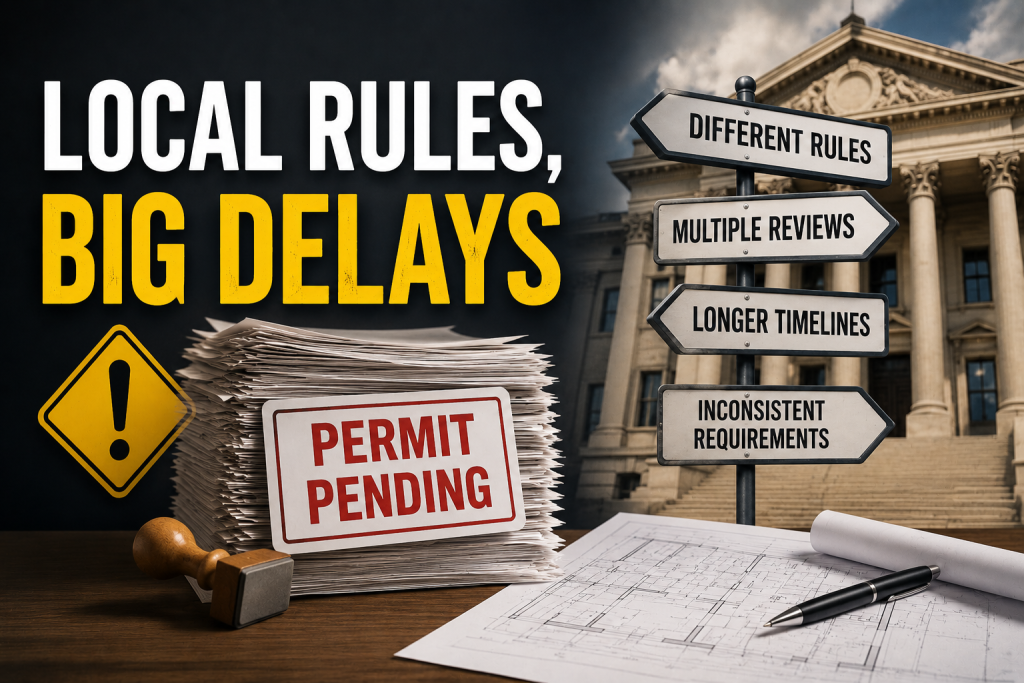
Not every delay is caused by homeowners or contractors. Local building departments often face staffing shortages, increased construction activity, and evolving code requirements that can affect review times. These factors contribute to many remodeling permit delays, particularly in rapidly growing metropolitan areas where permit volume remains consistently high. Jurisdictions may also require additional reviews for projects located in historic districts, flood-prone areas, or neighborhoods governed by special zoning regulations. Agencies may request supplemental documentation, engineering reports, or environmental assessments before granting approval.
These administrative requirements frequently lead to remodeling permit delays, even when an application is complete and professionally prepared. Homeowners who research local requirements early and build flexibility into their schedules are often better positioned to manage unexpected review periods and avoid disruptions once construction is ready to begin.
Common Permit Delay Triggers Comparison Table
Understanding which issues create the biggest disruptions can help homeowners prioritize permit preparation before construction begins. While every jurisdiction follows its own procedures, the challenges below are among the most common reasons projects experience remodeling permit delays.
| Permit Issue | Typical Impact | Potential Delay |
| Incomplete application package | Additional review requests | Several days to multiple weeks |
| Missing drawings or supporting plans | Application placed on hold | 1–4 weeks |
| Design revisions after submission | Partial or full plan review restart | 1–6 weeks |
| Inspection failures during construction | Corrective work and reinspection | Several days to multiple weeks |
| Code compliance concerns | Additional review and corrections | Varies by project scope |
| High permit office workload | Extended review queues | Days to months |
| Special zoning or historic district reviews | Supplemental approvals required | Several weeks or longer |
The exact timeline depends on project complexity, local staffing levels, and jurisdiction-specific requirements. Homeowners who submit complete documentation and maintain consistent communication with project professionals are generally less likely to experience major disruptions during the permitting process.
How Homeowners Can Avoid Permit Delays Before Construction Starts
Although some review timelines are outside a homeowner’s control, many cases of remodeling permit delays can be prevented through proper planning and preparation. Taking a proactive approach before submitting an application often saves time, reduces project risk, and helps construction begin on schedule. Homeowners should start by confirming permit requirements with their local building department and verifying that all plans, drawings, and supporting documents are complete. Working with experienced design professionals and licensed contractors can also reduce the likelihood of errors that trigger additional reviews.
To minimize remodeling permit delays, consider the following best practices:
- Submit complete and accurate application materials.
- Review local zoning and building requirements before planning begins.
- Avoid making major design changes after submission.
- Schedule inspections promptly and prepare work areas in advance.
- Maintain clear communication with contractors and project professionals.
- Build extra time into project schedules for unexpected reviews or revisions.
A well-organized permitting strategy not only improves approval efficiency but also helps homeowners avoid costly scheduling conflicts and construction interruptions later in the remodeling process.
Conclusion
Remodeling permit delays are one of the most overlooked challenges in any home renovation project, yet they can have a significant impact on timelines, budgets, and overall project success. While some delays stem from factors outside a homeowner’s control, many are caused by incomplete applications, missing documentation, design changes, inspection failures, or a lack of coordination between project stakeholders. By understanding how the permitting process works and preparing thoroughly before submitting an application, homeowners can reduce unnecessary setbacks and keep their renovation moving forward.
Frequently Asked Questions
How does the importance of remodeling permits affect permit requirements?
Permit timelines vary widely depending on project scope and local workload. Simple projects may be approved in a few days, while larger renovations can take several weeks or longer. In high-demand areas, review queues can extend timelines even further.
Can a contractor pull permits for a homeowner without causing remodeling permit delays?
Yes, in most U.S. jurisdictions, licensed contractors can submit and manage permit applications on behalf of homeowners. However, responsibility for compliance is shared, and the homeowner should still understand what is being submitted to avoid potential remodeling permit delays during the approval process.
What happens if an inspection fails?
When an inspection fails, the contractor must correct the identified issues and schedule a reinspection. This step can temporarily pause construction progress and may impact the overall project schedule.
Do permit delays affect project costs?
Yes. Delays can increase labor costs, extend equipment rentals, and disrupt contractor scheduling. Extended timelines may also impact material pricing and overall project budgeting.
Are permit requirements different by state?
Yes. Permit requirements vary significantly across states and municipalities. Areas like California, Florida, and Texas often have stricter permitting and inspection standards due to climate risks and population density.