


Complete Residential Fence Guide Buying & Installation Tips
A residential fence guide is essential for homeowners planning to improve privacy, security, and curb appeal around their property. Choosing the right fence involves more than just appearance, it requires understanding materials, installation methods, maintenance needs, and long-term durability. This residential fencing resource helps homeowners across the United States evaluate different fencing systems based on climate conditions, property type, and budget. From suburban backyards to larger residential lots, fencing plays a key role in defining boundaries and enhancing outdoor living spaces.
In many U.S. neighborhoods, homeowners must also consider HOA regulations, property line restrictions, and long-term maintenance expectations before selecting a fencing solution. That’s why a structured guide is important for making informed decisions that balance functionality and design. In this guide, we will break down materials, installation planning, design trends, and maintenance strategies to help you choose the right fencing system for your home.
Residential Fence Guide: Understanding Your Options
A structured residential fence guide begins with understanding the different fencing options available to homeowners. This residential fence guide helps clarify how various fence systems differ in function, appearance, and long-term performance across typical U.S. residential properties.
What is a residential fence system?
A residential fence is a perimeter structure installed around a home to define boundaries, improve privacy, enhance security, and add visual appeal. These systems are commonly used in suburban neighborhoods, rural properties, and urban residential zones across the United States. From a home fencing guide perspective, fences are not just functional barriers, they are also design elements that contribute to curb appeal and property value. Homeowners often choose fencing based on lifestyle needs such as pet safety, privacy, or decorative landscaping.
Why fence choice matters
Selecting the right fence impacts long-term maintenance, durability, and overall home aesthetics. Climate conditions, HOA requirements, and property layout all play a major role in determining the best option.
Common fencing materials overview
Most fencing systems fall into a few core categories, including wood, vinyl, metal, and composite materials. Each option offers different advantages in terms of cost, lifespan, and maintenance requirements. From basic boundary marking to decorative installations, homeowners have a wide range of fencing materials to choose from depending on budget and design preference.
Residential Fence Guide: Materials, Cost & Durability
A well-planned residential fence guide helps homeowners compare fencing types based on cost, durability, and long-term performance.This section focuses on how different materials perform under real U.S. weather conditions and everyday residential use.
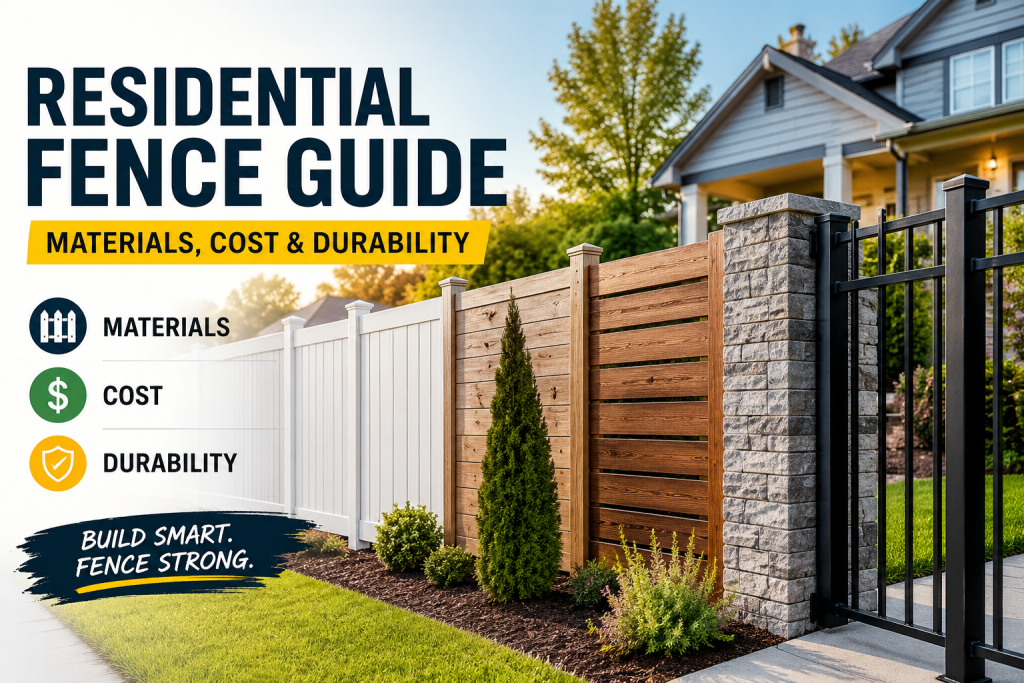
Wood, Vinyl, Metal, and Composite Options
Wood fencing remains a popular choice for its natural look and affordability, but it requires regular sealing and maintenance to prevent weather damage. Vinyl fencing offers a low-maintenance alternative with strong resistance to moisture and fading, making it ideal for many suburban homes. Metal fencing, including aluminum and steel, provides high durability and security but may offer less privacy unless combined with design enhancements. Composite fencing blends recycled materials with polymers, offering a balance of durability and modern aesthetics.
Privacy and Functional Considerations
When selecting privacy fence options, homeowners often prioritize taller solid panels that block visibility from neighbors and streets. These options are especially common in densely populated neighborhoods and urban residential areas where privacy is a top concern.
Cost vs Long-Term Value
Initial installation costs vary significantly depending on material choice. Wood is generally more affordable upfront, while vinyl and composite options often provide better long-term value due to reduced maintenance requirements. Metal fencing typically sits at a higher price point but offers extended lifespan and security benefits.
Durability in U.S. Climate Conditions
Weather plays a major role in fence performance. In humid regions, vinyl and composite materials tend to outperform wood, while metal fencing is often preferred in areas requiring high wind resistance and security strength. Proper material selection ensures better longevity and fewer repair needs over time.
Residential Fence Guide: Installation & Planning Tips
A successful residential fence guide always includes proper installation planning, since even high-quality materials can fail if the setup is incorrect. This residential fence guide section focuses on preparation, layout decisions, and key installation practices that impact long-term performance.
Planning Your Fence Layout
Before installation begins, homeowners must clearly define property boundaries, often using a professional survey to avoid disputes. Accurate layout planning ensures the fence aligns with local regulations, HOA rules, and functional needs such as privacy or pet containment.
Installation Process Overview
Proper installation typically starts with setting fence posts at the correct depth to ensure stability. Posts are then secured using concrete or compacted gravel depending on soil conditions and fence type. Panels or individual boards are installed afterward, ensuring consistent spacing and alignment.
Professional vs DIY Installation
While some homeowners attempt DIY fencing projects, professional installation is often recommended for larger properties or complex layouts. Experts ensure structural stability, proper leveling, and compliance with local building codes.
Practical Installation Considerations
From a fence installation tips perspective, weather conditions, soil type, and drainage must all be considered before installation begins. Poor planning in these areas can lead to leaning posts, uneven panels, or premature wear over time.
Design, Privacy & Modern Fence Styles
A complete residential fence guide is not only about function, it also helps homeowners understand how design choices impact curb appeal and property value. This section focuses on visual styles, layout inspiration, and how fencing integrates with modern U.S. home design trends.
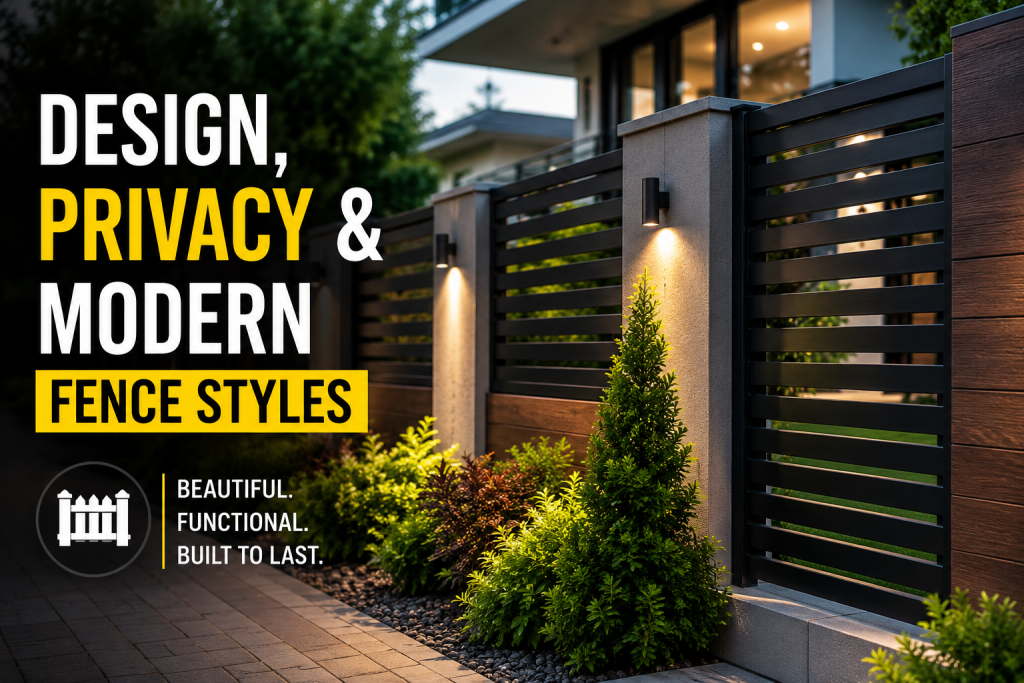
Backyard Design Inspiration
Many homeowners explore backyard fence ideas to create outdoor spaces that feel private, functional, and visually appealing. These designs often include horizontal wood slats, mixed-material fences, and greenery integration to soften the overall look of the structure.
Modern Fence Aesthetics
Modern fencing trends emphasize clean lines, minimalistic structures, and neutral color palettes. Steel frames combined with wood panels or composite materials are increasingly popular in contemporary U.S. residential architecture. These designs prioritize simplicity while maintaining durability and privacy.
Privacy and Visual Balance
Design plays a major role in balancing privacy with openness. Solid panel fencing is often used for full privacy, while semi-open designs allow light and airflow without compromising security. Landscaping elements such as hedges or climbing plants are frequently integrated for a more natural appearance.
Long-Term Style Considerations
From a modern fence designs perspective, homeowners are increasingly choosing fences that complement the architectural style of their home rather than standing as separate structures. This creates a more unified and visually appealing exterior environment.
Conclusion
A well-planned residential fence guide helps homeowners make confident decisions about one of the most important exterior upgrades to their property. This residential fence guide has shown that selecting the right fence is not just about appearance; it is about balancing privacy, durability, maintenance, and long-term value. Across U.S. residential neighborhoods, fencing choices vary widely depending on climate conditions, HOA requirements, and personal design preferences.
Whether a homeowner prioritizes privacy, security, or curb appeal, the right material and installation approach can significantly improve both functionality and property value. Ultimately, investing time in planning, material selection, and proper installation ensures that a fence performs well for years while complementing the home’s overall exterior design. A thoughtful approach leads to a fence that is not only practical but also a lasting architectural feature of the property.
Frequently Asked Questions
What is the best fencing material for residential homes in a residential fence guide?
The best option depends on priorities. Wood is affordable and natural-looking, vinyl is low-maintenance, and metal offers high durability. A residential fence guide approach recommends choosing based on climate, budget, and privacy needs.
How long does a residential fence usually last?
Fence lifespan varies by material. Wood fences typically last 10–20 years with proper care, while vinyl and metal fences can last 20–40 years or more with minimal maintenance.
What are the most popular privacy fence options?
Common privacy fence options include solid wood panels, vinyl privacy fences, and composite fencing systems. These designs are widely used in suburban U.S. neighborhoods for backyard privacy and noise reduction.
How often should fence maintenance be done?
Fence maintenance depends on material type. Wood fences may need annual sealing or staining, while vinyl and metal fences require occasional cleaning and inspections. Using regular fence maintenance tips helps extend fence lifespan.
What are modern fence design trends?
Modern fencing focuses on clean lines, horizontal slats, mixed materials, and neutral colors. Many modern fence designs also incorporate landscaping elements for a more natural and integrated look.
Is professional installation better than DIY?
For most homeowners, professional installation is recommended. Experts ensure proper alignment, post depth, and compliance with local codes, reducing long-term repair issues. However, DIY may be suitable for small or simple fencing projects.
Can fencing increase home value?
Yes, a well-designed fence can improve curb appeal, privacy, and security, all of which contribute to property value. High-quality materials and proper installation are key factors in maximizing return on investment.