


Roof Coating vs Roof Replacement: Which Option Makes More Sense for Your Roof?
Few roofing decisions have a bigger impact on your home’s protection, energy efficiency, and long-term value than choosing between a roof coating and a full replacement. Many homeowners discover signs of wear such as minor leaks, surface cracks, fading, or ponding water and immediately assume a new roof is necessary. In reality, that isn’t always the case. When comparing roof coating vs roof replacement, the right solution depends on factors such as the roof’s age, structural condition, material type, and your budget. A roof coating can restore a roof that is still structurally sound, while a replacement may be necessary when damage extends beyond the surface. For homeowners in states like Florida, Texas, Arizona, and California, climate conditions also play a major role in determining the most cost-effective approach. Understanding the differences between these two solutions can help you avoid unnecessary expenses and maximize the lifespan of your roofing system. In this guide, we’ll break down the key differences, costs, lifespan expectations, and decision-making factors so you can determine whether roof coating vs roof replacement is the smarter investment for your property.
Roof Coating vs Roof Replacement: Understanding the Key Differences
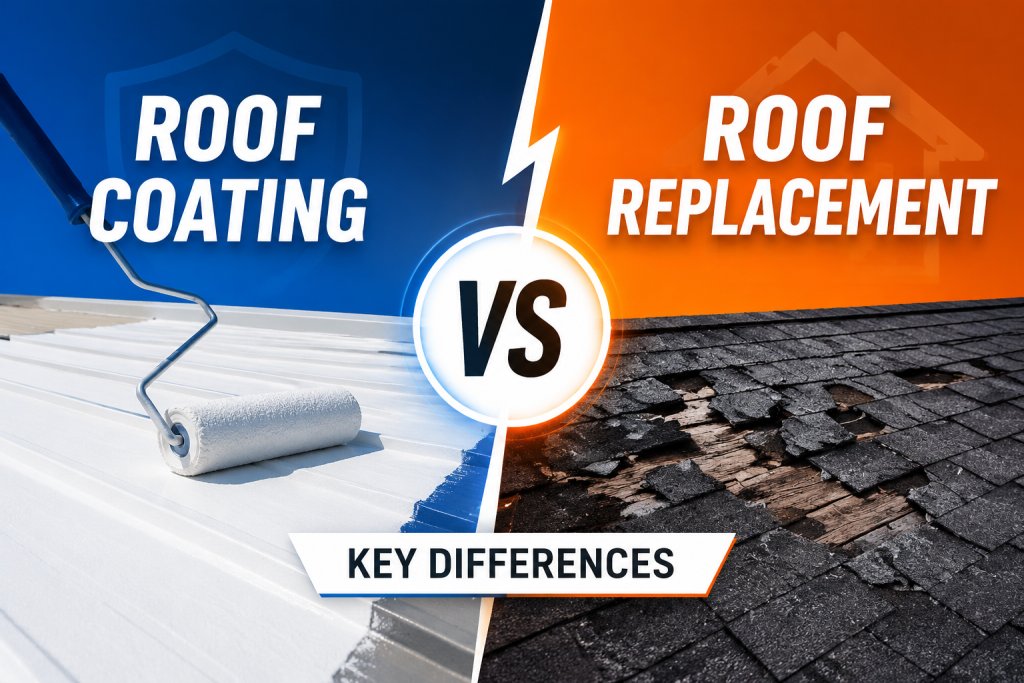
Before deciding between a roof coating and a complete replacement, it’s important to understand what each solution actually involves. While both options aim to improve roof performance and prevent future damage, they address different levels of wear and deterioration.
What Is Roof Coating?
A roof coating is a liquid-applied membrane designed to protect and restore an existing roofing system. Once cured, the coating creates a seamless protective layer that helps resist UV rays, moisture, and weather-related damage. One of the most commonly used products is an elastomeric roof coating, which expands and contracts with temperature changes to reduce cracking and premature aging. Roof coatings are typically used on roofs that remain structurally sound but show signs of surface wear. They can improve energy efficiency, reduce maintenance requirements, and extend service life without the disruption of a full replacement.
What Is Roof Replacement?
A roof replacement involves removing some or all of the existing roofing materials and installing a new roofing system. This process addresses deeper issues such as structural deterioration, widespread water intrusion, damaged decking, or roofing materials that have reached the end of their useful life. Unlike a coating, a replacement provides an entirely new roofing assembly, offering the longest potential lifespan. Although it requires a larger upfront investment, it may be the only practical option when repairs and restoration can no longer resolve underlying problems. Understanding these distinctions is the first step in evaluating the true value of roof coating vs roof replacement for your home or commercial property.
Roof Coating vs Roof Replacement: Cost Comparison for Homeowners
For many property owners, cost is the deciding factor when evaluating roof coating vs roof replacement. While both solutions can improve roof performance, the difference in upfront investment is often significant. A roof coating is generally the more affordable option because it restores the existing roof rather than removing and replacing roofing materials. Depending on the roof type, condition, and coating system used, homeowners can often spend substantially less than they would on a complete replacement project. By comparison, roof replacement costs include labor, tear-off expenses, disposal fees, underlayment installation, and new roofing materials. These additional requirements increase project costs but also provide the benefit of an entirely new roofing system.
| Factor | Roof Coating | Roof Replacement |
| Upfront Cost | Lower | Higher |
| Installation Time | Faster | Longer |
| Material Removal | Usually Not Required | Typically Required |
| Property Disruption | Minimal | Moderate to High |
| Lifespan Improvement | Moderate | Significant |
| Energy Efficiency Benefits | Often Improved | Depends on Material |
For example, a commercial building with a weathered but structurally sound roof may benefit from a commercial roof coating, allowing the owner to delay a major capital expense. However, a residential roof with extensive moisture damage or deteriorated decking will often justify the higher investment associated with replacement. Ultimately, the most cost-effective solution is not always the cheapest one. The condition of the roof should determine whether restoration or replacement delivers the better long-term return.
When Roof Coating Is the Better Choice?
Not every aging roof requires a complete replacement. In many cases, a professionally applied coating can restore performance and provide years of additional protection at a fraction of the cost. This is especially true when the roof remains structurally sound and the damage is limited to the surface layer.
Signs Your Roof Can Be Restored
A roof coating may be a suitable option if your roof shows:
- Minor leaks that have been identified and repaired
- Surface weathering from sun exposure
- Small cracks or seam separation
- Reduced reflectivity and energy efficiency
- Aging materials without structural deterioration
Many property owners explore various roof restoration options before committing to a full replacement. When the roof deck and insulation remain in good condition, restoration can often provide excellent value.
Best Roof Types for Coatings
Roof coatings perform particularly well on low-slope and flat roofing systems. Many commercial buildings and modern residential structures use restoration systems to protect roofing membranes from ongoing weather exposure. A coating can also be an effective solution for flat roof restoration, helping reduce UV damage, improve waterproofing performance, and extend the service life of the existing roof. Roofing systems such as TPO, EPDM, modified bitumen, and metal roofs are often strong candidates for coating applications when inspected and prepared correctly. In situations where structural integrity remains intact, choosing a coating instead of replacement can reduce costs, minimize disruption, and preserve the existing roofing assembly.
When Roof Replacement Is the Better Investment
Although coatings can be highly effective in the right circumstances, there are situations where a full replacement is the safer and more financially responsible choice. If significant damage exists beneath the surface, applying a coating may only delay a larger problem.
Roof replacement is often recommended when homeowners experience recurring leaks, widespread moisture intrusion, rotting roof decking, or severe storm damage. Roofs that have already undergone multiple repairs may also reach a point where restoration no longer provides meaningful value. Age is another important factor. Asphalt shingle roofs nearing the end of their expected service life may not be suitable candidates for restoration, regardless of their appearance. Similarly, roofs with saturated insulation, structural sagging, or extensive membrane failure generally require replacement rather than surface treatment.
When evaluating roof coating vs roof replacement, homeowners should focus on the overall condition of the roofing system rather than the visible surface alone. A professional inspection can identify hidden issues that may not be obvious from the ground. While replacement requires a larger investment, it offers the opportunity to install modern materials, improve weather resistance, enhance energy performance, and potentially increase property value. For roofs with substantial deterioration, replacement often delivers the most reliable long-term outcome.
Roof Coating vs Roof Replacement: Lifespan and Long-Term ROI
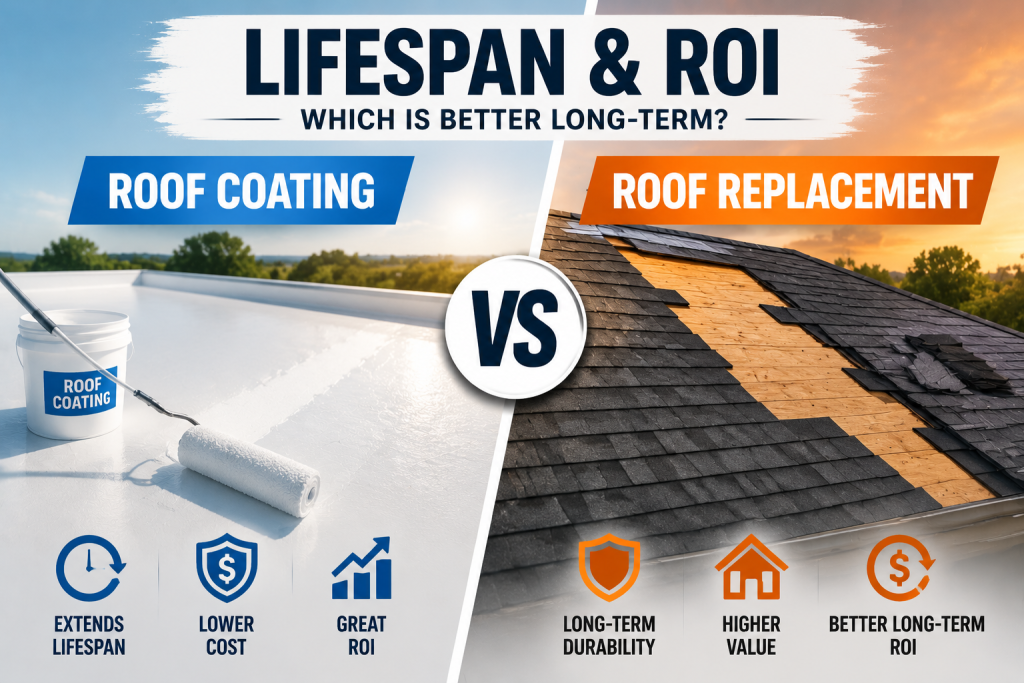
One of the most important factors homeowners consider when comparing roof coating vs roof replacement is how long each option will last. While upfront costs matter, the long-term return on investment often determines which solution provides the greatest value.
Expected Lifespan After Coating
A professionally installed roof coating can add years of service life to an existing roofing system. The exact lifespan depends on factors such as roof condition, climate exposure, maintenance practices, and coating quality. In many cases, coatings are chosen specifically for roof lifespan extension, allowing property owners to postpone a major replacement project while continuing to protect the structure. Regular inspections and timely repairs can help maximize the benefits of a coating system and maintain its protective performance over time.
Expected Lifespan After Replacement
A new roof generally offers the longest service life because it replaces aging materials and addresses underlying structural concerns. Depending on the roofing material, homeowners may expect decades of reliable performance when proper installation and maintenance standards are followed. From an ROI perspective, replacement often provides greater long-term security, especially for roofs with significant wear or damage. However, for roofs that remain structurally sound, a coating can sometimes deliver a better short-term financial return due to its lower initial cost. When evaluating roof coating vs roof replacement, the best choice depends on how long you plan to keep the property, the current condition of the roof, and your willingness to invest in future maintenance.
Climate Considerations Across the United States
Regional weather conditions can significantly influence whether a coating or replacement makes more sense. What works well in one part of the country may not provide the same performance in another. In hot and sunny states such as Arizona, Nevada, and Texas, reflective roof coatings can help reduce heat absorption and lower cooling demands during long summers. These systems are often used to improve energy efficiency while protecting roofing materials from prolonged UV exposure. Homeowners in Florida and other Gulf Coast states face different challenges. Hurricanes, heavy rainfall, and high humidity can accelerate roof deterioration. If storm damage has compromised the roofing structure, replacement may provide greater long-term protection than restoration alone.
Northern states such as Minnesota, Michigan, and Wisconsin must contend with snow accumulation, ice dams, and repeated freeze-thaw cycles. Older roofs that already show signs of structural weakness may benefit more from replacement than coating. Climate should always be part of the decision-making process when evaluating roof coating vs roof replacement. A solution that performs exceptionally well in a dry desert environment may not offer the same durability in a humid coastal region. Matching the roofing strategy to local weather conditions helps maximize performance, longevity, and overall value.
Alternative Roof Restoration Options Worth Considering
The decision is not always limited to choosing between a coating and a complete replacement. Depending on the roof’s condition, several intermediate solutions may address specific problems while keeping costs under control. For example, localized repairs can be effective when damage is confined to a small area. Replacing damaged flashing, repairing seams, or fixing isolated leaks may restore performance without requiring a larger project. Partial reroofing is another option when only one section of the roof has experienced significant deterioration.
Some property owners also combine targeted repairs with preventive restoration measures to improve overall roof performance. These approaches can help extend service life while allowing homeowners more time to plan for future upgrades. The key is obtaining a thorough roof inspection before making a decision. A professional assessment can identify whether existing problems are cosmetic, surface-level, or structural. Understanding the true condition of the roofing system allows homeowners to invest in the most appropriate solution rather than paying for work that may not be necessary. In many cases, exploring all available restoration and repair strategies can reveal a practical middle ground between minor maintenance and full replacement.
Roofing Maintenance Solutions That Protect Your Investment
Regardless of whether you choose a roof coating or a full replacement, ongoing maintenance plays a critical role in protecting your investment. Even the highest-quality roofing systems can experience premature wear if routine inspections and upkeep are neglected. Effective roofing maintenance solutions start with regular roof inspections, ideally once in the spring and once in the fall. Additional inspections should be scheduled after severe storms, hail events, or high-wind conditions. Early detection of small issues can prevent costly repairs later.
Homeowners should also keep gutters clean, remove debris from roof surfaces, and address minor leaks as soon as they are discovered. Standing water, clogged drainage systems, and damaged flashing can all shorten the life of a roofing system if left unresolved. For commercial properties and low-slope roofs, maintenance programs often include seam inspections, drainage evaluations, and surface condition assessments. These proactive measures help identify vulnerabilities before they develop into major problems. Whether your roof has been restored or completely replaced, a consistent maintenance strategy can improve performance, reduce long-term costs, and help maximize the value of your roofing investment for years to come.
How to Decide Between Roof Coating vs Roof Replacement
Choosing the right solution ultimately comes down to your roof’s condition, budget, and long-term goals. While coatings can provide a cost-effective way to restore a structurally sound roof, replacement may be necessary when significant deterioration affects the roofing system. Use the following checklist to help guide your decision:
Consider Roof Coating If
- The roof is structurally sound.
- Damage is limited to surface wear.
- Leaks have been identified and repaired.
- You want to reduce upfront costs.
- You plan to extend the roof’s service life before considering replacement.
Consider Roof Replacement If
- The roof has widespread leaks or water damage.
- Structural components have deteriorated.
- The roofing material has reached the end of its expected lifespan.
- Previous repairs have failed to resolve ongoing issues.
- You want the longest-term solution with the fewest future concerns.
When comparing roof coating vs roof replacement, there is no one-size-fits-all answer. A coating can deliver excellent value for roofs that remain in good structural condition, while replacement provides a fresh start for roofs that have sustained extensive damage or reached the end of their useful life. The best approach is to schedule a professional inspection and evaluate the roof’s actual condition before making a decision. By understanding the advantages, limitations, costs, and lifespan expectations of each option, homeowners can invest confidently in the solution that delivers the greatest long-term value.
Conclusion
Choosing between a roof coating vs roof replacement isn’t simply about cost; it’s about selecting the solution that best fits your roof’s current condition and your long-term goals. A roof coating can be an excellent investment for structurally sound roofs showing only surface wear, offering improved energy efficiency, weather protection, and added years of service at a lower upfront cost. However, when extensive leaks, structural damage, or aging materials compromise the roofing system, a full replacement provides the safest and most durable long-term solution. The key is to base your decision on a professional roof inspection rather than assumptions. By understanding the advantages, limitations, and expected lifespan of each option, you can make a confident investment that protects your property, maximizes your budget, and ensures reliable performance for years to come.
Frequently Asked Questions
Is roof coating cheaper than roof replacement?
Yes, roof coating is generally less expensive because it restores the existing roofing system rather than removing and replacing materials. However, the best value depends on the roof’s condition. If significant structural damage is present, replacement may be the more cost-effective long-term investment.
How long does a roof coating last?
The lifespan of a roof coating varies based on the coating type, installation quality, local climate, and maintenance practices. Many coating systems can provide years of additional protection when applied to a structurally sound roof.
Can every roof be coated?
No. Roof coatings are most effective on roofs that remain structurally sound and have limited surface deterioration. Roofs with severe water damage, rotting decking, saturated insulation, or major structural issues typically require replacement instead.
Does roof coating stop leaks?
A roof coating can help seal minor cracks and improve water resistance, but it is not a solution for major leaks caused by structural damage. Existing leak sources should be identified and repaired before a coating is applied.
Can DIY roof repairs void a roof warranty?
For roofs nearing the end of their service life or experiencing widespread deterioration, replacement often provides the most reliable long-term solution. A new roof can improve durability, weather resistance, energy performance, and property value.
How do I know whether my roof needs restoration or replacement?
The most reliable way to determine the right solution is through a professional roof inspection. An experienced roofing contractor can assess the roof’s age, structural condition, moisture levels, and overall performance to recommend the most appropriate course of action.