


Roof Ventilation Problems: Signs, Causes, and Solutions for Homeowners
Many homeowners focus on shingles, gutters, and insulation when maintaining their homes, but roof ventilation is often overlooked until serious issues appear. Proper airflow through the attic helps regulate temperature, control moisture, and protect roofing materials throughout the year. When ventilation is unbalanced or blocked, a variety of roof ventilation problems can develop, affecting both the roof system and the living space below. In hot climates such as Texas, Florida, and Arizona, inadequate attic airflow can trap excessive heat beneath the roof deck, increasing cooling costs and placing additional stress on roofing materials.
In colder regions like Minnesota and Colorado, trapped moisture can contribute to condensation, mold growth, and structural damage. Over time, these roof ventilation problems may shorten roof lifespan, reduce energy efficiency, and lead to costly repairs. Understanding the warning signs, underlying causes, and effective solutions can help homeowners protect their investment, improve indoor comfort, and avoid preventable roofing expenses.
Common Roof Ventilation Problems Homeowners Face
Most ventilation systems are designed to create a continuous flow of air through the attic, allowing fresh air to enter through intake vents and warm, moist air to exit through exhaust vents. When this balance is disrupted, homeowners can experience a range of roof ventilation problems that often go unnoticed until visible damage appears. One of the most common issues is poor roof airflow, which prevents hot air and moisture from escaping efficiently. This can increase attic temperatures during summer and create damp conditions during cooler months. Another concern involves blocked or improperly installed vents that restrict the movement of air throughout the attic space.
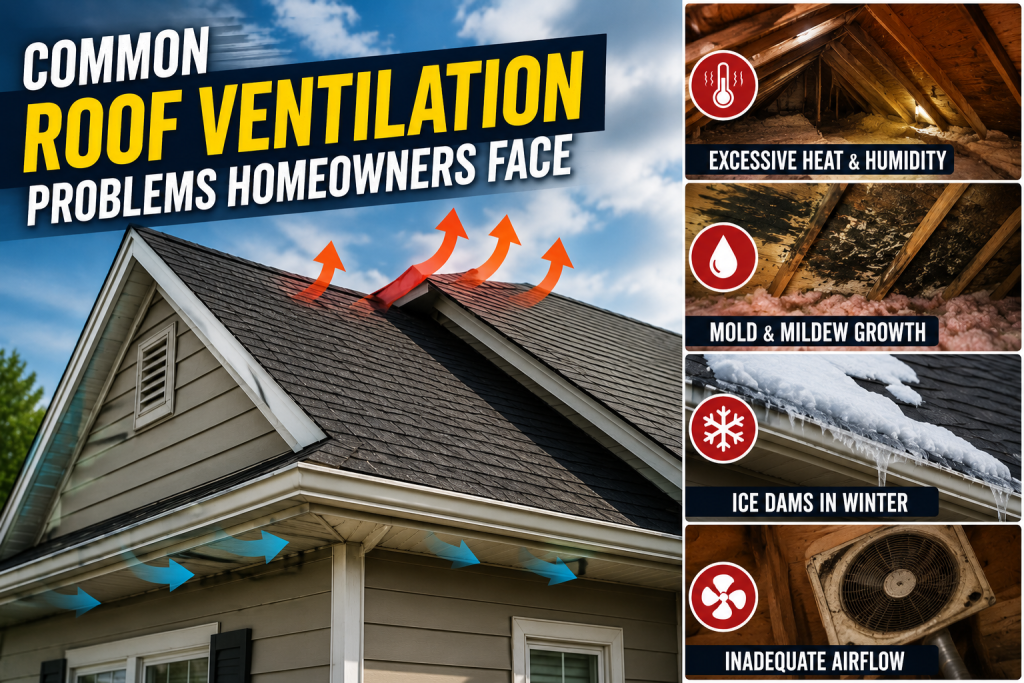
Ventilation systems may also suffer from design flaws, aging components, or maintenance neglect. Homes that have undergone roof replacements without updating ventilation systems are particularly vulnerable. In many cases, roof ventilation problems develop gradually, making regular inspections important for identifying issues before they affect roofing materials, insulation, or indoor comfort levels.
Blocked Intake and Exhaust Ventilation
A properly functioning ventilation system depends on a balanced exchange of air. Fresh air should enter through intake vents, typically located along the soffits, while warm air exits through exhaust vents near the roof peak. When either pathway becomes restricted, roof ventilation problems can quickly develop. Dust, insulation, debris, bird nests, and even improperly installed roofing materials can block ventilation openings. As airflow decreases, heat and moisture become trapped inside the attic. During the summer, this can raise attic temperatures well above outdoor conditions, increasing strain on HVAC systems.
In colder seasons, moisture accumulation may lead to wood rot, mold growth, and damage to roof decking. Regular inspections can help homeowners identify blocked vents before they cause significant issues. Ensuring that intake and exhaust openings remain clear is one of the simplest and most effective ways to reduce the risk of long-term roof ventilation problems and maintain consistent attic performance.
Improper Vent Placement
Even when a home has enough vents, their placement can determine whether the system works effectively. Intake and exhaust vents must be positioned to create a natural flow of air from the lower portion of the roof to the highest point. When vents are installed in the wrong locations, airflow becomes restricted and roof ventilation problems may persist despite having multiple ventilation components.
A common mistake is placing exhaust vents too close together or failing to provide adequate intake ventilation. This can cause air to circulate improperly within the attic rather than exiting the structure. In some cases, homeowners experience attic ventilation issues because additions, reroofing projects, or insulation upgrades alter the original airflow design. Professional roof inspections can identify these layout problems and determine whether vent relocation or additional ventilation is necessary. Correct vent placement helps maintain consistent attic temperatures, reduce moisture accumulation, and improve the overall performance of the roofing system.
How Roof Ventilation Problems Affect Your Home
Many homeowners underestimate the impact that ventilation has on the overall health of a house. While the effects may begin inside the attic, roof ventilation problems can eventually influence energy efficiency, indoor comfort, structural durability, and long-term maintenance costs. What starts as a minor airflow imbalance can gradually lead to larger concerns that affect multiple parts of the home. Excess heat trapped beneath the roof can accelerate shingle aging and increase cooling expenses during summer months. At the same time, moisture that cannot escape the attic may damage insulation, wooden framing, and roof decking.
These conditions often create an environment where mold and mildew can thrive. Over the years, unresolved roof ventilation problems can shorten the lifespan of a roofing system and contribute to expensive repairs. Identifying ventilation deficiencies early allows homeowners to protect their investment, improve energy performance, and maintain a healthier living environment.
Higher Energy Costs and Attic Temperatures
One of the earliest signs of ventilation trouble is excessive heat accumulation in the attic. Without adequate airflow, solar heat becomes trapped beneath the roof deck and gradually spreads throughout the home. This attic heat buildup can make living spaces less comfortable and force air conditioning systems to work harder during warm weather. In states such as Texas, Arizona, and Florida, attic temperatures can rise significantly above outdoor conditions when ventilation is inadequate.
As a result, homeowners often notice higher utility bills and increased strain on HVAC equipment. Prolonged exposure to excessive heat may also accelerate the aging process of asphalt shingles and other roofing materials. Although rising energy costs can have multiple causes, poor attic ventilation is frequently overlooked. Addressing ventilation deficiencies early can improve indoor comfort, reduce cooling expenses, and help preserve the long-term performance of the roof system.
Moisture Damage and Mold Growth
Heat is not the only concern inside a poorly ventilated attic. Moisture generated from daily household activities such as cooking, showering, and laundry can migrate upward and become trapped when ventilation is inadequate. Over time, these conditions contribute to roof moisture problems that may affect both the roofing structure and indoor air quality. When humid air cannot escape properly, condensation can form on roof decking, rafters, and other wooden components. Repeated exposure to moisture may encourage mold growth, wood rot, and insulation deterioration. In severe cases, structural repairs may be required to address long-term damage.
Homeowners often overlook moisture-related warning signs because they develop gradually. Musty odors, dark stains on wood surfaces, and damp insulation can indicate that excess moisture is accumulating in the attic. Maintaining proper ventilation helps remove humid air before it causes damage and supports the long-term durability of the entire roofing system.
Signs Your Home Has Roof Ventilation Problems
Ventilation issues often develop slowly, making them difficult to detect during day-to-day homeownership. However, several warning signs can indicate that airflow within the attic is no longer functioning as intended. Recognizing these symptoms early can help prevent more extensive damage and reduce future repair costs. Homeowners may notice unusually high energy bills, inconsistent indoor temperatures, or excessive heat in upper-floor rooms during summer. In colder climates, moisture accumulation, frost on attic surfaces, and water stains can signal ventilation deficiencies.
Exterior signs may include curling shingles, premature roof aging, or visible deterioration near vent openings. Because many of these symptoms can also be linked to insulation or roofing defects, a thorough inspection is often necessary to determine the root cause. Identifying roof ventilation problems before they worsen allows homeowners to protect structural components, improve efficiency, and extend the lifespan of their roofing system.
Visible Condensation and Water Stains
Condensation is one of the clearest indicators that attic ventilation is not performing properly. When warm, moisture-laden air becomes trapped and comes into contact with cooler surfaces, water droplets can form on roof decking, rafters, and other structural components. This process is especially common during winter in colder regions of the United States. Water stains on ceilings, attic framing, or insulation should never be ignored. Although roof leaks are often the first suspected cause, inadequate ventilation can produce similar symptoms.
Homeowners focused on preventing roof condensation should ensure that humid air can escape efficiently through a balanced intake and exhaust system. If left unaddressed, repeated condensation cycles can damage wood, reduce insulation effectiveness, and encourage mold growth. Regular attic inspections can help identify moisture-related warning signs before they lead to more extensive structural repairs or indoor air quality concerns.
Uneven Roof Aging and Shingle Damage
A roof that ages unevenly can be a strong indication of underlying ventilation deficiencies. Excessive heat and trapped moisture often place stress on roofing materials, causing some sections of the roof to deteriorate faster than others. While weather exposure naturally affects roof performance over time, ventilation-related wear tends to accelerate the process. Homeowners may notice curling, cracking, blistering, or premature granule loss on asphalt shingles. In some cases, roof surfaces exposed to poor airflow experience more severe deterioration than areas receiving adequate ventilation.
These differences can shorten the overall lifespan of the roofing system and increase replacement costs. Regular roof inspections can help identify abnormal wear patterns before significant damage occurs. When uneven aging is linked to ventilation deficiencies, correcting the airflow imbalance can help preserve roofing materials, improve energy efficiency, and reduce the likelihood of costly repairs in the future.
What Causes Poor Attic Airflow?
Attic airflow problems rarely stem from a single issue. In most homes, ventilation performance is affected by a combination of design, installation, maintenance, and environmental factors. Understanding these causes can help homeowners address deficiencies before they contribute to more serious roof ventilation problems. One common concern involves soffit vent issues, which occur when insulation, debris, or construction materials block intake openings. Without sufficient intake air, the entire ventilation system becomes less effective.
Homeowners may also encounter ridge vent problems caused by improper installation, inadequate sizing, or damage that restricts exhaust airflow. Additional factors include excessive insulation covering vent pathways, poor attic design, and roof modifications that alter airflow patterns. In some cases, older homes simply lack enough ventilation to meet modern standards. Identifying the root cause is the first step toward improving attic performance and preventing long-term damage to roofing materials and structural components.
How to Fix Roof Ventilation Problems
The most effective solution depends on identifying the specific cause of the ventilation deficiency. Because every home has a different roof design, attic layout, and climate exposure, there is no one-size-fits-all approach. However, most roof ventilation problems can be corrected by restoring balanced airflow and ensuring that intake and exhaust systems work together. Homeowners should begin by inspecting attic spaces for blocked vents, damaged components, and signs of excess heat or moisture. Cleaning vent openings and removing obstructions can often improve airflow immediately. In other situations, additional intake or exhaust ventilation may be required to achieve proper air circulation.
Professional roofing contractors can evaluate ventilation performance and recommend improvements based on roof size, attic square footage, and regional climate conditions. Addressing roof ventilation problems early helps protect roofing materials, improve energy efficiency, and reduce the likelihood of future repair expenses. A well-balanced ventilation system contributes to a healthier attic environment and a longer-lasting roof.
Improving Intake Ventilation
Intake ventilation serves as the foundation of an effective attic airflow system. Without a consistent supply of outside air entering the attic, exhaust vents cannot perform efficiently. Many ventilation failures occur because intake vents are blocked, undersized, or insufficient for the size of the roof structure. Homeowners should inspect soffit areas regularly to ensure that insulation, dust, and debris are not obstructing airflow. Installing ventilation baffles can help maintain clear air pathways between the attic floor and roof deck while preserving insulation performance. In older homes, additional intake vents may be necessary to meet current ventilation recommendations.
A properly designed intake system allows cooler outdoor air to enter the attic and push warm, humid air toward exhaust vents. This continuous airflow helps regulate attic temperatures, reduce moisture accumulation, and improve overall roof performance. Maintaining adequate intake ventilation is often one of the most cost-effective ways to support the long-term durability of a roofing system.
Balancing Exhaust Ventilation
Exhaust ventilation is responsible for removing warm, humid air from the attic and completing the airflow cycle. Even when sufficient intake ventilation is present, the system cannot function properly if exhaust vents are inadequate or improperly installed. Achieving the right balance between intake and exhaust airflow is essential for long-term roof performance. Common exhaust options include ridge vents, box vents, turbine vents, and powered attic ventilators. The most suitable choice depends on roof design, attic size, local climate, and ventilation goals.
A ventilation system with excessive exhaust capacity but limited intake air may create pressure imbalances that reduce overall effectiveness. Homeowners should evaluate both intake and exhaust components together rather than treating them as separate systems. When airflow is balanced correctly, heat and moisture can exit the attic efficiently throughout the year. This balanced approach helps protect roofing materials, improve energy efficiency, and reduce the risk of premature roof deterioration.
Roof Ventilation Solutions by Climate Region
Climate plays a major role in determining how a roof ventilation system should perform. Homeowners across the United States face different challenges depending on temperature patterns, humidity levels, and seasonal weather conditions. Adapting ventilation strategies to local conditions can improve roof durability and energy efficiency. In hot and humid states such as Florida, Louisiana, and Texas, ventilation systems must remove excess heat and moisture efficiently to reduce cooling costs and protect roofing materials. In dry regions like Arizona and Nevada, proper airflow helps prevent extreme attic temperatures that can accelerate roof aging.
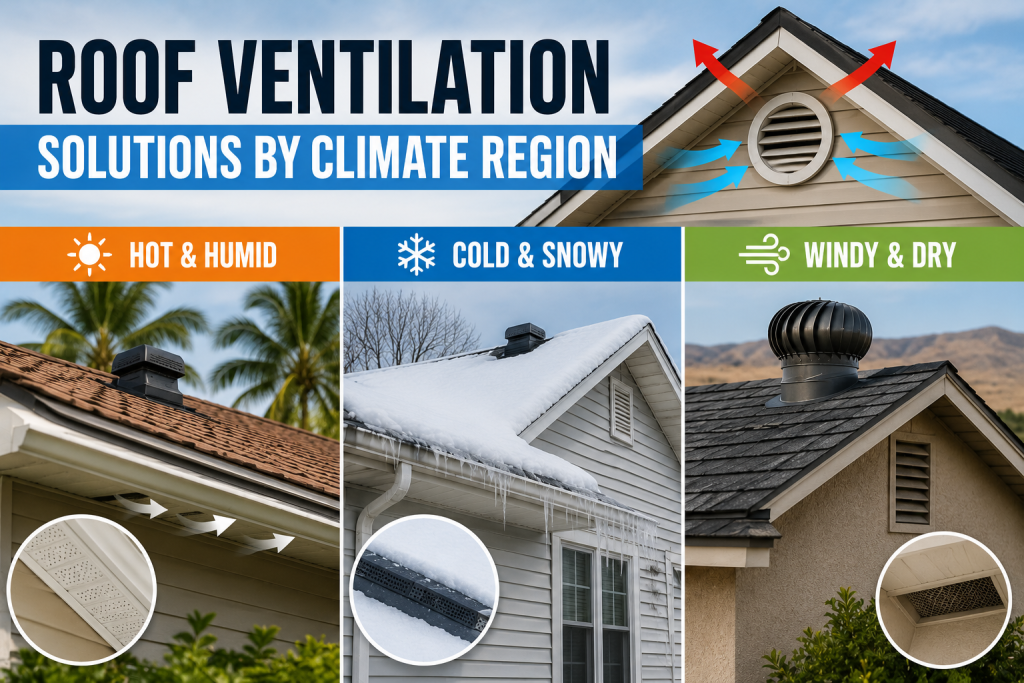
Northern states, including Minnesota, Michigan, and Wisconsin, often experience winter condensation and ice dam concerns. Balanced ventilation helps maintain more consistent roof temperatures and supports moisture control during cold weather. In coastal regions exposed to storms and high humidity, regular vent inspections are important for maintaining performance and preventing weather-related damage. Matching ventilation design to regional conditions helps homeowners maximize roof lifespan and improve year-round comfort.
When to Call a Roofing Professional
While some ventilation concerns can be identified during routine attic inspections, others require a professional evaluation. Homeowners should consider contacting a roofing contractor when signs of persistent moisture, excessive attic heat, mold growth, or premature roof deterioration continue despite basic maintenance efforts. A professional inspection is particularly valuable when planning a roof replacement, attic renovation, or major insulation upgrade. Changes to one component of the roofing system can affect airflow throughout the attic, making it important to verify that ventilation remains balanced. Contractors can also assess whether existing vents provide adequate capacity for the size and design of the home.
In many cases, ventilation deficiencies are not visible from the ground and may require specialized knowledge to diagnose correctly. A qualified roofing professional can identify underlying issues, recommend appropriate solutions, and help homeowners avoid costly repairs that may result from long-term ventilation problems. Early intervention often leads to lower repair costs and better overall roof performance.
Conclusion
Roof ventilation is one of the most important yet overlooked components of a healthy roofing system. When airflow is restricted or unbalanced, homeowners may experience higher energy costs, moisture-related damage, reduced indoor comfort, and premature roof deterioration. Many of these issues develop gradually, making routine inspections essential for protecting the long-term performance of the home. By understanding the warning signs, common causes, and available solutions, homeowners can address ventilation concerns before they become expensive repairs.
Maintaining clear intake and exhaust pathways, ensuring proper vent placement, and adapting ventilation strategies to local climate conditions can significantly improve roof longevity and attic performance. Whether you’re maintaining an existing roof or planning a future replacement, investing in proper ventilation can help protect your home, improve energy efficiency, and preserve the value of your property for years to come.
Frequently Asked Questions
What Are the Most Common Signs of Roof Ventilation Problems?
Common warning signs of roof ventilation problems include unusually high energy bills, excessive attic heat, condensation on attic surfaces, mold growth, musty odors, and premature shingle deterioration. Homeowners may also notice uneven indoor temperatures or water stains that are not caused by an active roof leak.
Can poor roof ventilation damage shingles?
Yes. Excessive attic heat can accelerate shingle aging, leading to curling, cracking, blistering, and premature granule loss. Over time, this can reduce the lifespan of the entire roofing system and increase replacement costs.
Does roof ventilation help lower energy bills?
Proper ventilation helps remove trapped heat from the attic, reducing the workload on air conditioning systems during warm weather. This improved airflow can contribute to better energy efficiency and lower cooling costs.
How Often Should Attic Ventilation Be Inspected?
Most homeowners should inspect attic ventilation at least once a year and after major storms. Regular inspections can help identify blocked vents, moisture accumulation, or other roof ventilation problems before they cause significant damage or lead to costly repairs.
Can roof ventilation prevent mold growth?
While ventilation alone cannot eliminate all mold risks, it plays a critical role in controlling moisture levels inside the attic. Proper airflow helps reduce condensation and creates conditions that are less favorable for mold development.
Should You Address Roof Ventilation Problems During a Roof Replacement?
Yes. A roof replacement is an ideal time to evaluate the entire ventilation system and identify any roof ventilation problems that may be affecting performance. Correcting these issues during the project can improve energy efficiency, reduce moisture-related risks, extend roof lifespan, and help homeowners avoid costly retrofit work in the future.