


Why Room-Specific Paint Choices Matter for US Homes?
Understanding room-specific paint choices is the foundation of a well-planned interior design strategy. Instead of using the same paint throughout the home, this approach focuses on selecting different finishes, formulations, and performance levels based on how each room is used. Every space in a home serves a different function. Kitchens and bathrooms deal with moisture, steam, and frequent cleaning, while bedrooms prioritize comfort and relaxation. Living rooms require a balance of durability and aesthetics because they experience daily traffic and social activity. These differences make a single paint type impractical for the entire home.
A thoughtful approach to interior paint selection ensures that each room gets the right level of durability, washability, and visual performance. It also helps prevent common issues like premature wear, staining, or poor surface maintenance. By treating paint as a functional material rather than just a decorative finish, homeowners can create more durable, cohesive, and comfortable living environments that perform well over time.
Interior paint choice depends on the room’s function
A successful approach to room-specific paint choices always starts with understanding how each space is used. The function of a room directly influences the type of paint it needs, from durability levels to finish selection and maintenance requirements. For example, kitchens require coatings that can handle grease, heat, and frequent cleaning. Bathrooms need waterproof coatings that can withstand humidity and prevent surface damage. Bedrooms, on the other hand, benefit from softer finishes that support relaxation and reduce visual glare.
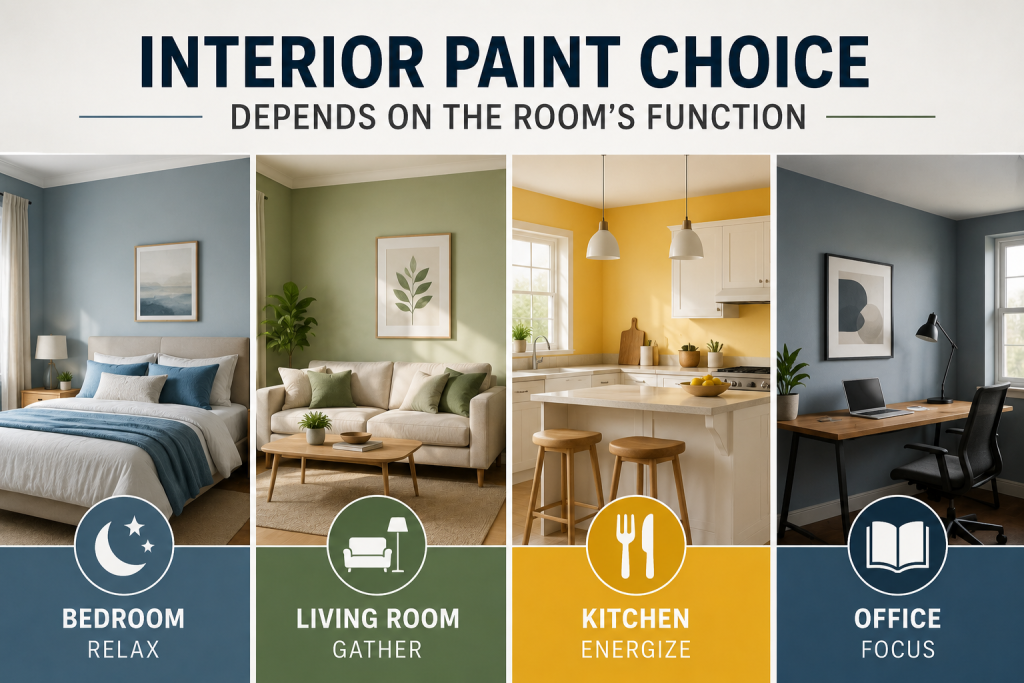
Living rooms sit in the middle, where both aesthetics and durability matter due to daily use and entertaining. This is where useful wall paint becomes important, offering a balance between appearance and long-term performance. Choosing paint based on function instead of just color helps homeowners avoid common issues like early wear, staining, or mismatched finishes. It also ensures that each room performs better under its specific conditions, improving both durability and overall comfort in the home.
Why Do Benefits Matter in Every Room?
When evaluating room-specific paint choices, durability is one of the most important factors homeowners should consider. Paint is not just a decorative layer; it also acts as a protective surface that must withstand daily wear, cleaning, and environmental conditions. In high-traffic areas like living rooms, hallways, and kitchens, paint durability benefits help reduce scuffs, stains, and surface damage over time. This means fewer touch-ups and longer intervals between repaints, which can significantly reduce long-term maintenance costs. Durability is even more critical in moisture-prone spaces such as bathrooms and laundry rooms. Without proper resistance, walls can degrade faster due to humidity, leading to peeling, bubbling, or mildew issues.
High-quality paints designed for specific room functions provide better adhesion, improved washability, and stronger resistance to daily use. This is especially important in homes where surfaces are frequently cleaned or exposed to changing temperatures. Ultimately, prioritizing durability ensures that each room not only looks better for longer but also performs more effectively under real-life household conditions.
Paint Shine Importance and Room-Specific Paint Choices
One of the most overlooked parts of room-specific paint choices is the sheen level, even though it has a major impact on how paint performs in everyday use. The paint’s importance lies in how much light a surface reflects and how well it stands up to cleaning, moisture, and wear. Flat and matte finishes have little to no shine, making them ideal for low-traffic areas like bedrooms and ceilings. They create a smooth, soft look but are less resistant to stains and moisture.
Eggshell offers a slight sheen and is commonly used in living spaces because it balances appearance with moderate durability. Satin increases durability further, making it a strong option for kitchens, hallways, and family rooms where useful wall paint is needed. Semi-gloss and gloss finishes provide the highest level of durability and washability, which is why they are often used in bathrooms, trim, and high-moisture areas that require waterproof coatings. Understanding sheen helps homeowners match paint performance to real-world room conditions rather than relying on color alone.
Useful wall paint for High-Use Areas
High-use spaces in a home require a more strategic approach to specific paint choices because these areas experience constant contact, cleaning, and wear. This is where useful wall paint becomes essential for maintaining long-term performance and appearance. Areas like kitchens, hallways, entryways, and family rooms are exposed to fingerprints, scuffs, furniture friction, and frequent cleaning. In these spaces, more durable finishes such as satin or semi-gloss are typically preferred because they offer better washability and resistance to surface damage.
Using the right useful wall paint also helps maintain a cleaner look over time. Walls in busy areas can quickly lose their finish quality if the wrong paint type is used, leading to visible wear and repeated touch-ups. In a complete home painting technique, high-traffic zones are usually prioritized with more durable coatings, while low-traffic rooms can use softer finishes for comfort and visual appeal. This balance ensures that each room performs according to its usage level while still contributing to a cohesive interior design.
Waterproof coatings for Bathrooms and Kitchens
Moisture is one of the biggest challenges when making specific paint choices, especially in kitchens and bathrooms, where steam, humidity, and water exposure are constant. This is why waterproof coatings are essential for protecting walls in these environments. Unlike standard interior paints, moisture-resistant formulas are designed to reduce water absorption and improve surface durability. This helps prevent common issues such as peeling, bubbling, and long-term staining caused by frequent exposure to steam and splashes.
Bathrooms benefit the most from these coatings due to daily shower use and limited ventilation in many homes. Kitchens also require protection, particularly near sinks, stoves, and food prep areas where moisture and grease often combine. In a well-planned home painting technique, these specialized coatings are typically paired with satin or semi-gloss finishes to improve cleanability and long-term performance. Choosing the right moisture-resistant solution ensures that high-humidity rooms remain visually clean, structurally stable, and easier to maintain over time.
How Room Lighting Affects Paint Performance?
Lighting plays a major role in how room-specific paint choices appear once applied, and it can significantly change the final look of a space. The same color and finish may look completely different depending on whether a room has strong natural light, limited windows, or mostly artificial lighting. Natural light tends to enhance brightness and reveal true undertones in paint colors. In sun-filled rooms, lighter shades may appear even more open, while darker tones can feel softer and less heavy. In contrast, rooms with limited daylight often need carefully selected interior paint to avoid feeling too dim or enclosed.
Artificial lighting also impacts perception. Warm bulbs can make colors appear more yellow or cozy, while cooler lighting may emphasize gray or blue undertones. This directly affects how useful wall paint performs in different areas of the home. Sheen level adds another layer of complexity. Higher-sheen finishes reflect more light, which can brighten darker rooms, while matte finishes absorb light for a softer, more muted appearance. Understanding room paint and lighting helps homeowners avoid unexpected color shifts and ensures each space looks consistent and intentional throughout the day.
Room-Specific Paint Choices by Home Zones
Understanding room-specific paint choices becomes even more practical when you break the home into functional zones. Each zone has different durability needs, moisture exposure, and design expectations, which directly influence the ideal paint type and finish.
High-Moisture Zones (Bathrooms, Kitchens, Laundry Rooms)
These areas require waterproof coatings because steam, humidity, and water exposure are constant. Satin or semi-gloss finishes are typically preferred due to their durability and easier cleaning. This zone benefits most from performance-focused paint rather than purely decorative finishes.
High-Traffic Zones (Hallways, Entryways, Living Rooms)
In these areas, functional wall paint is essential because walls are more likely to experience scuffs, fingerprints, and frequent cleaning. Eggshell and satin finishes work best here, offering a balance between appearance and durability.
Low-Traffic Zones (Bedrooms, Guest Rooms)
Bedrooms prioritize comfort and relaxation, so softer finishes are often used. Matte and eggshell options help reduce glare and create a calming environment. In this zone, interior paint choice focuses more on atmosphere than heavy-duty durability.
Room-specific paint choices: Ceiling and Upper Surfaces
Ceilings require a different approach entirely. Flat finishes are typically used because they minimize light reflection and help hide surface imperfections. This supports a cleaner visual look across the entire home.
Transitional Spaces (Open-Concept Areas)
Open layouts require a coordinated home painting technique where colors and finishes flow naturally between spaces. Neutral palettes and consistent sheen levels help maintain visual continuity while still respecting each zone’s functional needs.
Building a Smart home painting technique
A strong home painting strategy brings together all aspects of room-specific paint choices into one cohesive plan. Instead of selecting colors and finishes room by room without structure, homeowners benefit from thinking about the entire home as a connected system.

- The first step is defining function-based zones. High-moisture areas like kitchens and bathrooms should prioritize moisture-resistant coatings, while high-traffic spaces such as hallways and living rooms require more useful wall paint for durability and washability. Bedrooms and private spaces can focus more on comfort and softer finishes.
- Next, homeowners should consider consistency. While each room can have a different purpose, maintaining a unified palette or complementary tones helps create visual flow throughout the home. This ensures that transitions between rooms feel natural rather than disconnected.
- Lighting should also be factored into the strategy. Different rooms may require adjustments in tone or sheen based on room lighting and paint behavior to maintain balance across the entire home.
A well-planned approach ensures that every surface not only looks good individually but also contributes to a durable, harmonious, and well-designed interior overall.
Final Thoughts
Choosing room-specific paint choices is one of the most effective ways to improve both the performance and appearance of a home. Instead of treating paint as a one-size-fits-all material, a structured approach ensures each room receives the right balance of durability, finish, and visual comfort. High-use areas like kitchens and hallways benefit from useful wall paint that can handle frequent cleaning and daily wear. Bathrooms require waterproof coatings to withstand humidity, while bedrooms perform best with softer finishes that support relaxation.
Understanding paint sheen importance also helps homeowners avoid common mistakes, such as using finishes that are too flat for busy spaces or too glossy for relaxed environments. Combined with proper attention to room paint and lighting, these decisions lead to more consistent and visually balanced interiors. A thoughtful home painting technique not only improves how a home looks but also extends the lifespan of painted surfaces, reduces maintenance needs, and creates a more comfortable living environment overall.
Frequently Asked Questions
Why do room-specific paint choices matter?
Room-specific paint choices matter because each room has different conditions, like moisture, traffic, and lighting. Using the right paint improves durability, appearance, and long-term maintenance.
What is interior paint choice based on?
Interior paint choice is based on room function, exposure to moisture, level of traffic, and desired finish. Kitchens and bathrooms require more durable coatings than bedrooms or living rooms.
Why is the importance of paint sheen often overlooked?
The importance is often overlooked because many homeowners focus only on color. However, sheen affects durability, cleanability, and how light interacts with surfaces.
What is useful wall paint?
Useful wall paint refers to paints chosen specifically for performance in high-use areas like kitchens, hallways, and family rooms, where durability and washability are important.
How do room paint and lighting interact?
Room paint and lighting interact by changing how colors and finishes appear. Natural and artificial light can alter undertones, brightness, and perceived warmth or coolness.