


Why Roofs Sag: Understanding the Most Common Sagging Roof Causes
A roof is designed to protect your home from rain, wind, heat, and seasonal weather extremes. When it begins to droop or develop visible low spots, it is often a sign that an underlying problem has been affecting the structure for months or even years. Understanding the most common sagging roof causes can help homeowners identify issues early and avoid expensive repairs. A sagging roof is more than a cosmetic concern.
It may indicate weakened framing, moisture-related deterioration, excessive weight, or long-term wear within the roofing system. In regions that experience heavy snowfall, hurricanes, or frequent storms, roof structures can face additional stress that accelerates damage. Left unaddressed, these problems may compromise the safety, energy efficiency, and resale value of a home. In this guide, we’ll examine the leading sagging roof causes, warning signs to watch for, and the steps homeowners can take to protect their investment before minor issues become major structural repairs.
Top Sagging Roof Causes Every Homeowner Should Know
Most roof sagging problems develop gradually rather than appearing overnight. In many cases, homeowners don’t notice an issue until visible dips begin forming along the roofline or interior ceiling damage becomes apparent. Understanding the primary sagging roof causes can help you address problems before they threaten the structural integrity of your home.
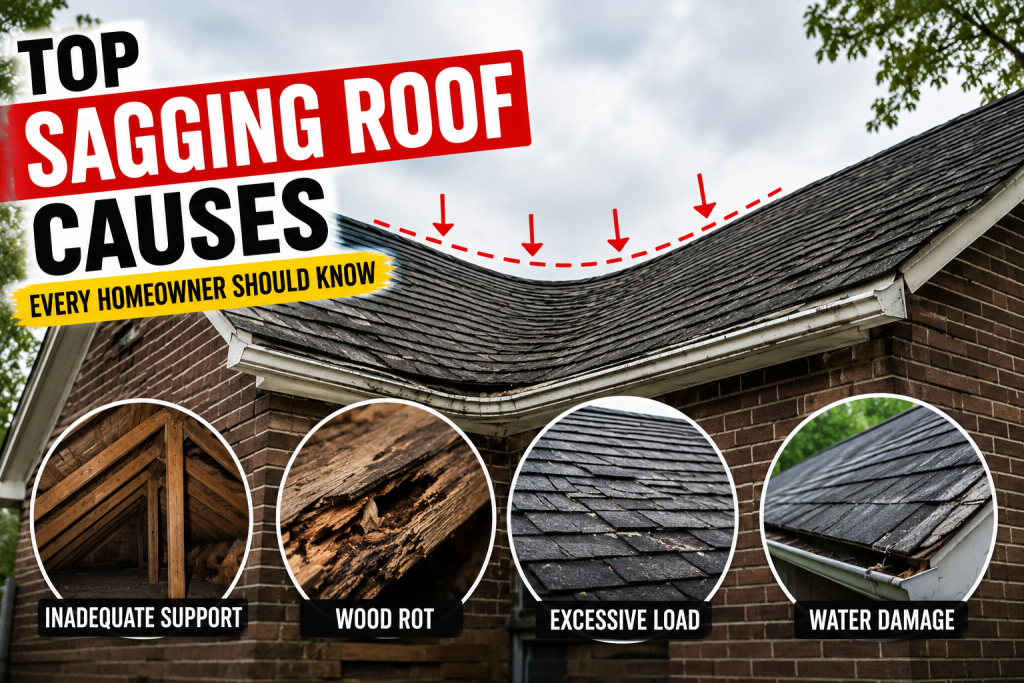
The most common causes include prolonged moisture exposure, aging construction materials, inadequate support systems, and excessive weight placed on the roof structure. Homes in areas such as Florida may experience damage from hurricane-driven rain, while properties in northern states often face additional stress from snow accumulation and freeze-thaw cycles. Over time, these conditions can weaken critical framing components and create serious roof structural problems that require professional attention. The following sections examine the specific factors that contribute to roof sagging and explain how they affect residential roofing systems across different climates and home styles.
Water Intrusion and Long-Term Moisture Damage
One of the leading sagging roof causes is long-term exposure to moisture. Even a small roof leak can allow water to penetrate beneath shingles and reach the underlying decking, rafters, and insulation. When moisture remains trapped inside the roofing system, wood components begin to deteriorate, losing the strength needed to support the roof’s weight. Over time, persistent leaks can lead to rot, mold growth, and significant roof water damage.
These issues are especially common in humid regions of the Southeast, where high moisture levels can accelerate the breakdown of roofing materials. Damaged flashing, clogged gutters, missing shingles, and poor attic ventilation often contribute to moisture buildup. Because water-related deterioration usually develops out of sight, many homeowners are unaware of the problem until sagging becomes visible. Routine maintenance and prompt leak repairs are among the most effective ways to prevent structural damage and extend the lifespan of a residential roof.
Aging Roofing Materials and Structural Wear
As roofing systems age, their ability to withstand environmental stress gradually declines. This makes material deterioration one of the most overlooked sagging roof causes affecting American homes. Asphalt shingles, roof decking, underlayment, and structural framing all experience wear over time, particularly when exposed to decades of sunlight, temperature fluctuations, and severe weather.
Most residential roofs are designed to last between 20 and 50 years depending on the material. However, aging components can weaken long before the roof reaches the end of its expected lifespan. Wood rafters may warp, fasteners can loosen, and support members may lose strength due to repeated expansion and contraction. These conditions often create subtle roof support issues that gradually worsen if maintenance is delayed. Homeowners should pay close attention to missing shingles, recurring leaks, deteriorating decking, and signs of structural movement. Addressing age-related damage early can help prevent more extensive repairs and reduce the risk of future sagging.
Excessive Weight from Snow, Roofing Layers, or Equipment
Excessive weight is another major factor behind many sagging roof causes. Every roofing system is engineered to support a specific load, including roofing materials, weather-related accumulation, and structural components. When that load is exceeded, the framing beneath the roof can begin to bend or deform. In northern states, heavy snowfall and ice dams can place thousands of additional pounds on a roof during winter. In other situations, homeowners may install new shingles over existing roofing layers rather than removing the old material first.
Multiple layers significantly increase the overall weight carried by the structure. Rooftop HVAC equipment, solar panel systems, and improperly distributed loads can also contribute to long-term stress. The warning signs often appear gradually. Small dips may develop before progressing into a noticeable uneven roofline, indicating that the underlying structure is struggling to support the load. Prompt evaluation can help prevent further movement and reduce the risk of costly structural repairs.
How Sagging Roof Causes Lead to Serious Structural Damage
Many homeowners assume a sagging roof is primarily a cosmetic issue, but the reality is far more serious. The most common sagging roof causes often affect the structural framework that supports the entire roofing system. When underlying components weaken, the roof may no longer distribute weight evenly, increasing stress on surrounding materials. As the problem progresses, damaged framing members can shift under load, creating pressure points throughout the structure. Moisture-related deterioration, excessive weight, and aging materials frequently work together, accelerating the rate of damage.
What begins as a minor dip can eventually lead to cracked ceilings, wall movement, insulation damage, and costly repairs. Structural deterioration rarely improves on its own. Once supporting components begin to fail, the roof becomes increasingly vulnerable to additional weather events and daily loads. Understanding how these issues develop helps homeowners recognize why early intervention is critical for protecting both the roof and the overall value of the property.
Damaged Rafters and Trusses
Rafters and trusses form the structural backbone of a roofing system. When these components become weakened, they can no longer support loads efficiently, making them a significant contributor to many sagging roof causes. Damage may occur as a result of moisture intrusion, insect activity, poor construction practices, or years of excessive stress. Wood framing that has absorbed moisture for extended periods often begins to rot and lose its load-bearing capacity. In some cases, homeowners may notice cracked rafters, bowed framing members, or visible movement within the attic.
These issues can cause sections of the roof to settle unevenly and place additional strain on neighboring structural elements. Because rafters and trusses are essential to roof stability, repairs should never be delayed once damage is discovered. Professional evaluation can determine whether reinforcement, partial replacement, or a more extensive structural repair is necessary to restore the roof’s strength and prevent further sagging.
Compromised Roof Decking
Roof decking serves as the foundation that supports roofing materials and helps distribute weight across the structure. When decking becomes weakened, it can contribute directly to several sagging roof causes and increase the likelihood of widespread structural deterioration. Most roof decking is made from plywood or oriented strand board (OSB), both of which are vulnerable to prolonged moisture exposure. Leaks that go undetected for months can soften the decking, reduce its strength, and create areas that flex under load.
As deterioration advances, homeowners may encounter sections of soft decking, visible depressions, or signs of roof deck damage beneath the roofing surface. Compromised decking often affects more than just the roof covering itself. It can place additional stress on rafters, trusses, and fasteners, increasing repair costs if the issue is ignored. Replacing damaged decking early helps maintain structural stability and prevents minor deterioration from developing into a larger roofing problem.
Warning Signs That Indicate a Roof Is Beginning to Sag
Recognizing the early warning signs associated with common sagging roof causes can help homeowners avoid extensive structural damage and costly repairs. In many cases, the roof provides visible clues long before a serious failure occurs. One of the most noticeable indicators is a dip or depression along the roof surface. Homeowners may also observe waviness in roof planes, ceiling cracks, or areas where interior drywall begins to separate. Doors and windows that suddenly become difficult to open or close can sometimes signal structural movement caused by roof-related stress.
The attic is another important area to inspect. Bowed rafters, water stains, mold growth, and daylight entering through the roof structure may indicate that damage is already developing. While some warning signs appear gradually, others can become more pronounced after heavy storms, prolonged rainfall, or seasonal snow accumulation. Identifying these issues early allows homeowners to take corrective action before repairs become significantly more expensive.
Can Water Damage Create a Sagging Roof?
Water damage is one of the most destructive factors affecting residential roofing systems and remains among the leading sagging roof causes. While a small leak may seem harmless at first, moisture can spread through roofing materials and gradually weaken the structure from the inside out. When water penetrates beneath shingles, it can saturate decking, insulation, and framing components. Over time, repeated exposure leads to wood rot, mold growth, and a loss of structural strength. As these materials deteriorate, the roof becomes less capable of supporting normal loads, increasing the likelihood of visible sagging.
The risk is particularly high in regions that experience frequent storms, high humidity, or poor attic ventilation. Water-related damage often remains hidden until symptoms become severe enough to affect the roof’s appearance or interior living spaces. Regular maintenance, prompt leak repairs, and routine inspections are essential for preventing moisture from turning into a major structural problem that requires extensive restoration work.
How Professionals Diagnose Roof Sagging Problems
Determining the exact source of roof sagging requires more than a visual inspection from the ground. Because multiple sagging roof causes can produce similar symptoms, roofing professionals follow a detailed evaluation process to identify the underlying issue and recommend the appropriate solution. The inspection typically begins with an exterior assessment of the roof surface, flashing, drainage systems, and overall structural condition. Contractors then examine the attic to look for moisture intrusion, framing movement, wood rot, and signs of excessive loading.
In more severe cases, a structural engineer may be consulted to evaluate the roof’s load-bearing capacity and identify compromised support members. A comprehensive residential roof inspection helps determine whether the problem is isolated to a specific area or affects the broader roofing system. Early diagnosis is important because minor structural concerns are generally less expensive to repair than widespread deterioration that has been allowed to progress for years.
Roof Repair vs Roof Replacement: Which Is the Better Option?
The best solution for a sagging roof depends on the extent of the damage and the underlying sagging roof causes affecting the structure. In some cases, targeted repairs can restore stability and prevent further deterioration. In others, a complete roof replacement may be the more cost-effective long-term investment. Minor issues such as localized leaks, small areas of wood rot, or isolated framing damage can often be addressed through professional repairs. However, if multiple structural components have deteriorated or the roof is nearing the end of its service life, replacement may provide greater value and reliability.

Homeowners should also consider factors such as future maintenance costs, energy efficiency improvements, and resale value when evaluating their options. A professional assessment is the most reliable way to determine the appropriate course of action. Following a trusted roof repair guide and obtaining expert recommendations can help ensure that repairs address the root cause of the problem rather than simply treating visible symptoms.
How to Prevent Future Roof Sagging Issues
Preventing roof sagging is far less expensive than repairing structural damage after it occurs. While many sagging roof causes develop gradually, routine maintenance can significantly reduce the likelihood of serious problems and help extend the life of the roofing system. Homeowners should schedule annual roof inspections and additional evaluations after major storms. Keeping gutters clean, repairing damaged shingles promptly, and maintaining proper attic ventilation can help prevent moisture buildup that weakens structural components over time. It’s also important to monitor the roof for signs of movement, leaks, or unusual stress.
In regions that experience heavy snowfall, removing excessive snow accumulation may help reduce structural loading. Homeowners considering rooftop equipment such as solar panels should ensure the roof is capable of supporting the additional weight. By addressing small issues early and maintaining the roof consistently, homeowners can protect their investment and avoid many of the conditions that commonly lead to sagging.
Conclusion
A sagging roof is often a warning sign that underlying structural components have been compromised by moisture, age, excessive weight, or long-term wear. While the problem may begin as a small dip or subtle change in the roof’s appearance, ignoring it can lead to costly repairs, reduced property value, and potential safety risks. Understanding the most common sagging roof causes allows homeowners to identify issues early and take corrective action before significant damage occurs.
Regular inspections, prompt repairs, and proactive maintenance play a critical role in preserving the strength and longevity of a roofing system. If you notice signs of roof sagging, it’s important to schedule a professional evaluation as soon as possible. Addressing the root cause early can help protect your home, extend the life of your roof, and prevent minor concerns from becoming major structural problems.
Frequently Asked Questions
What is the most common cause of a sagging roof?
Moisture intrusion is one of the most common reasons roofs begin to sag. Water that enters through damaged shingles, flashing failures, or poor drainage can gradually weaken decking and framing components. Over time, the affected materials lose strength, causing sections of the roof to dip or bow.
Can a sagging roof collapse?
In severe cases, yes. A sagging roof indicates that structural components are no longer performing as intended. While not every sagging roof is at immediate risk of collapse, significant structural deterioration should be evaluated promptly by a qualified roofing professional or structural engineer.
Does homeowners insurance cover damage caused by sagging roof causes?
Coverage depends on the specific sagging roof causes and the terms of the homeowner’s insurance policy. Sudden and accidental events, such as storm damage, fallen trees, or severe weather, may be covered. However, roof sagging resulting from age, wear and tear, neglect, or poor maintenance is often excluded.
How much does it cost to repair a sagging roof?
Repair costs vary widely depending on the extent of the damage. Minor structural repairs may cost a few hundred dollars, while extensive framing repairs or roof replacement projects can cost several thousand dollars. An on-site inspection is usually required to determine accurate pricing.
Can sagging roof causes be related to damaged roof decking?
Yes. Damaged or deteriorated roof decking is one of the most common sagging roof causes. When moisture weakens the decking, affected sections may lose their ability to support the roofing system properly.