


Best Slate Roof Cost For Us Homeowners
A slate roof is one of the most durable and visually striking roofing options available to homeowners in the United States. Known for its natural beauty, exceptional longevity, and premium appearance, slate is commonly found on historic homes, luxury properties, and high-end custom builds. However, these benefits come with a significant upfront investment, making cost one of the biggest considerations for homeowners planning a roof replacement. The average Slate Roof Cost varies based on factors such as roof size, material quality, labor rates, structural requirements, and geographic location.
While slate roofing generally costs more than asphalt shingles or standard metal roofing, many homeowners view it as a long-term investment because of its durability and lifespan. In regions such as the Northeast, Mid-Atlantic, and parts of New England, slate remains a highly sought-after roofing material due to its ability to withstand harsh weather conditions while enhancing curb appeal and resale value. In this guide, we’ll break down the average Slate Roof Cost, the factors that influence pricing, installation expenses, long-term value, and how slate compares with other roofing options available in today’s market.
Slate Roof Cost in 2026: Average Price Range
The average Slate Roof Cost in 2026 typically ranges from $15,000 to more than $80,000 depending on the size and complexity of the roof. Most U.S. homeowners can expect to spend between $10 and $30 per square foot for a professionally installed slate roof. Premium projects that use high-grade stone and require specialized labor can exceed these averages, particularly in areas where skilled slate roofing contractors are limited.
Several factors influence the final price, including roof pitch, accessibility, local labor rates, and the type of slate selected. Homes located in regions with strong demand for high-end roofing systems, such as the Northeast and parts of the Mid-Atlantic, often experience higher installation costs. While the initial investment is substantial, many homeowners consider slate one of the most reliable long-term roofing solutions available.
Slate Roof Cost Per Square Foot
One of the easiest ways to estimate Slate Roof Cost is by evaluating the total roofing cost per square foot. Natural slate installations generally range from $10 to $30 per square foot, while premium grades can exceed $40 per square foot in certain markets. The price typically includes materials, labor, underlayment, flashing, and project preparation. For a typical 2,500-square-foot home, roofing contractors calculate costs based on roof surface area rather than floor space. Complex roof designs with multiple valleys, dormers, skylights, or steep slopes usually increase labor requirements and overall project expenses. Homeowners should always obtain multiple estimates to understand local pricing trends before committing to a roofing project.
Slate Roof Cost for Different Home Sizes
The total Slate Roof Cost increases as roof size grows, although the cost per square foot often remains relatively consistent. Smaller homes with simple roof designs generally fall on the lower end of the pricing spectrum, while larger properties require more materials, labor, and installation time.
| Home Size | Estimated Roof Area | Average Cost Range |
| 1,500 sq. ft. | 1,700–2,000 sq. ft. | $17,000–$50,000 |
| 2,000 sq. ft. | 2,200–2,700 sq. ft. | $22,000–$65,000 |
| 2,500 sq. ft. | 2,800–3,300 sq. ft. | $28,000–$80,000 |
| 3,500+ sq. ft. | 4,000+ sq. ft. | $40,000–$120,000+ |
These figures represent broad national averages and may vary significantly by region. Homes in cities such as Dallas, Denver, Boston, or Philadelphia can experience different labor and material pricing. Additionally, larger luxury homes often require premium installation techniques and specialized contractors, which can further increase project costs.
Factors That Affect Slate Roof Cost
Several variables determine the final Slate Roof Cost, which is why two homes of similar size can receive dramatically different estimates. Material quality is often the biggest factor. High-grade natural slate roofing sourced from premium quarries generally costs more than lower-grade alternatives, but it also delivers superior appearance and performance.
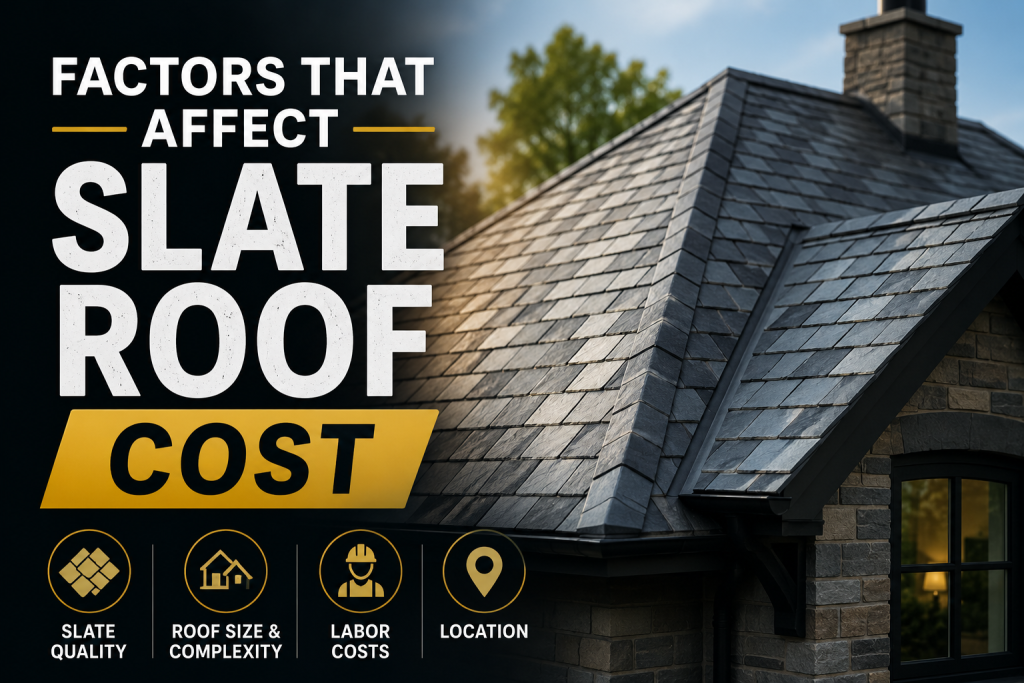
Labor is another major expense because slate installation requires specialized skills that many roofing contractors do not possess. Roof complexity also plays a significant role. Features such as dormers, chimneys, skylights, valleys, and steep slopes increase installation time and material waste. Geographic location matters as well, since labor rates and material availability vary across the United States. In some cases, homeowners may need structural upgrades before installation begins. Because slate is significantly heavier than asphalt shingles, older homes may require additional framing support to safely handle the roof’s weight.
Natural Slate vs Synthetic Slate Pricing
Material selection has a direct impact on the overall Slate Roof Cost. Homeowners typically choose between traditional natural slate and synthetic products designed to replicate its appearance. While both options offer aesthetic appeal, their pricing structures differ considerably. Natural slate remains the premium choice due to its authenticity, longevity, and ability to maintain its appearance for generations. Synthetic slate, often manufactured from composite materials, provides a lighter and more affordable alternative. Depending on the product, homeowners may spend 30% to 60% less compared to a traditional slate installation.
When evaluating options, it’s important to consider more than upfront pricing. The expected slate roofing lifespan, maintenance requirements, warranty coverage, and long-term value should all influence the decision. For homeowners seeking maximum durability and historic character, natural slate continues to be the benchmark against which other roofing materials are measured.
Roof Pitch and Accessibility Costs
Roof design can significantly influence the final Slate Roof Cost, even when two homes use the same roofing material. Steeper roofs require additional safety equipment, specialized installation methods, and more labor hours, all of which contribute to higher project expenses. Roofing crews often work more slowly on complex roof structures to ensure precise placement and secure fastening of each slate tile. Accessibility is another important factor.
Homes surrounded by landscaping features, fencing, narrow driveways, or limited equipment access may require additional preparation before work can begin. Multi-story homes can also increase labor costs because materials must be transported safely to greater heights. Properties with multiple roof sections, intersecting angles, chimneys, skylights, or architectural features generally require more detailed workmanship. These challenges increase installation time and can lead to higher material waste, making project complexity one of the most overlooked cost drivers.
Slate Roof Installation Cost Breakdown
Understanding the individual components of a roofing project helps homeowners better evaluate the total Slate Roof Cost. Material expenses usually account for a large portion of the budget, but labor, underlayment, flashing, and structural preparation can also contribute significantly to the final price. The average slate roof installation cost includes removing existing roofing materials, inspecting the roof deck, installing moisture barriers, replacing flashing around roof penetrations, and securing each slate tile individually.
Because slate is heavier and more labor-intensive than many other roofing products, installation costs are generally higher than those associated with standard asphalt shingles. Additional expenses may include permits, debris disposal, crane rentals, and structural reinforcements. Homeowners should request detailed estimates from contractors to understand exactly how project costs are allocated and to avoid unexpected charges during the installation process.
Professional Installation Expenses
Labor is one of the largest contributors to the overall Slate Roof Cost because slate roofing requires a specialized skill set that differs from standard roof installations. Experienced slate roofers must carefully cut, position, and secure individual tiles while maintaining proper alignment and weather protection. This level of craftsmanship often commands higher labor rates than conventional roofing projects.
The availability of qualified contractors can also affect pricing. In regions where slate roofing is less common, homeowners may face higher costs due to limited contractor availability or travel expenses. Areas with strong demand for luxury roofing systems, such as parts of New England and the Mid-Atlantic, often have a larger pool of experienced installers but may still carry premium labor rates. Choosing a contractor based solely on the lowest bid can be risky. Proper installation is essential to maximize roof performance, durability, and long-term value.
Structural Support Requirements
One often-overlooked factor affecting Slate Roof Cost is the structural capacity of the home itself. Natural slate is considerably heavier than asphalt shingles and many other roofing products, which means the roof framing must be strong enough to support the additional weight over the long term. Before installation, contractors may recommend a structural assessment to determine whether the existing framing system can safely handle the load.
Older homes, especially those that were not originally designed for slate, may require reinforcement of rafters, trusses, or roof decking. These upgrades can add several thousand dollars to the total project budget. Although structural improvements increase upfront expenses, they help ensure the roof performs as intended for decades. For homeowners investing in one of the most durable roofing materials available, proper structural preparation is a critical step that should never be overlooked.
Is Natural Slate Roofing Worth the Cost?
For many homeowners, the decision comes down to whether the long-term benefits justify the initial Slate Roof Cost. While slate is among the most expensive roofing options available, it offers advantages that few competing materials can match. Exceptional durability, timeless curb appeal, and strong resale value make slate an attractive option for homeowners planning to stay in their property for many years. Slate roofs are commonly found on historic homes, upscale residences, and custom-built properties where longevity and architectural character are priorities.
In some cases, a slate roof may also improve buyer perception and increase marketability when it comes time to sell. Compared with many other premium roofing materials, slate often delivers superior long-term value because it can outlast multiple replacement cycles of less expensive roofing systems. This makes it a compelling investment despite the higher upfront expense.
Lifespan and Durability Benefits
One of the strongest arguments for investing in a slate roof is its remarkable longevity. While many conventional roofing products may require replacement after a few decades, properly installed slate can continue performing for 75 to 150 years or more. This exceptional lifespan helps offset the higher Slate Roof Cost over time. Slate is naturally resistant to moisture, mold, insects, and extreme weather conditions.
It performs well in regions that experience heavy snowfall, freeze-thaw cycles, strong winds, and seasonal temperature fluctuations. Homeowners in states such as Pennsylvania, Vermont, Colorado, and Massachusetts often value slate for its proven durability in challenging climates. Beyond weather resistance, slate maintains its appearance for decades with minimal fading. This combination of durability and low maintenance makes it one of the most reliable roofing options available for long-term property protection.
Long-Term Cost Comparison
Although the initial Slate Roof Cost can seem high, evaluating roofing expenses over several decades often tells a different story. Less expensive roofing materials may require multiple replacements during the same period that a slate roof remains in service. When replacement labor, material costs, disposal fees, and future inflation are considered, the lifetime value of slate becomes much more attractive.
Homeowners should focus on total ownership costs rather than only the purchase price. A roof that lasts more than a century may ultimately provide better financial value than a cheaper system that requires replacement every 20 to 30 years. This is especially true for larger homes where repeated roof replacements can become extremely expensive. When comparing long-term investments, many homeowners discover that slate delivers a competitive return despite its premium upfront pricing and installation requirements.
Slate Roof Cost vs Other Roofing Options
When evaluating Slate Roof Cost, it’s important to compare slate with other popular roofing materials available in the U.S. market. While slate typically has the highest upfront investment, it also offers one of the longest service lives and strongest resale value benefits. Homeowners should consider not only installation expenses but also durability, maintenance requirements, and replacement frequency.
| Roofing Material | Average Cost Per Sq. Ft. | Typical Lifespan |
| Slate Roofing | $10–$30+ | 75–150+ Years |
| Metal Roofing | $8–$18 | 40–70 Years |
| Clay Tile | $10–$25 | 50–100 Years |
| Cedar Shake | $7–$15 | 25–40 Years |
| Architectural Shingles | $4–$8 | 20–30 Years |
Although slate generally costs more at installation, many homeowners view it as a lifetime roofing solution. Its durability, appearance, and ability to withstand harsh weather conditions help justify the higher investment for long-term property owners.
Upfront Cost Comparison
The initial Slate Roof Cost is generally higher than nearly every mainstream residential roofing option. This difference is largely driven by material quality, installation complexity, and the specialized labor required to work with slate. While asphalt shingles remain the most affordable roofing choice, they do not offer the same longevity or premium appearance. Metal roofing and clay tile systems often occupy the middle of the pricing spectrum, providing improved durability without reaching the investment level typically associated with slate.
However, homeowners seeking a distinctive architectural appearance and long-term performance frequently view slate as a premium upgrade rather than a standard roofing expense. Budget-conscious homeowners may find the upfront price challenging, but those focused on long-term ownership often consider slate a worthwhile investment. The higher initial expenditure can be balanced by reduced replacement frequency and long-term property value benefits.
Lifetime Value Comparison
Looking beyond installation expenses provides a clearer understanding of the true Slate Roof Cost. While slate requires a larger initial investment, its longevity can significantly reduce the need for future roof replacements. Over several decades, homeowners using less durable roofing materials may pay for multiple replacement projects, each involving labor, materials, and disposal costs.
Slate also contributes to long-term property value. Its premium appearance, historic appeal, and reputation for durability can make a home more attractive to prospective buyers. In higher-end housing markets, a well-maintained slate roof is often viewed as a desirable feature that distinguishes a property from comparable homes. When assessed over the full lifespan of the roof, slate frequently delivers a stronger value proposition than many lower-cost alternatives. For homeowners planning to remain in their property long term, the investment may prove more economical than it initially appears.
How to Reduce Slate Roof Cost Without Sacrificing Quality
Although Slate Roof Cost is typically higher than many alternative roofing systems, homeowners can take several steps to manage expenses without compromising quality. One of the most effective strategies is obtaining multiple estimates from experienced slate roofing contractors. Comparing bids can help identify fair market pricing while ensuring contractors provide similar scopes of work.
Scheduling a roofing project during slower seasons may also create opportunities for cost savings. Some contractors offer more competitive pricing during periods of lower demand. Homeowners should also review estimates carefully to understand material specifications, warranty coverage, and labor inclusions before making a decision. Investing in experienced installers rather than choosing the lowest bidder can help prevent costly repairs in the future. A properly installed slate roof often delivers greater long-term value and performance, making workmanship just as important as material selection.
Conclusion
Understanding Slate Roof Cost is essential before investing in one of the most durable and attractive roofing systems available. While slate requires a significant upfront commitment, its exceptional longevity, low replacement frequency, and timeless appearance can provide substantial long-term value for homeowners. Factors such as roof size, labor rates, structural requirements, and material quality all influence project pricing.
By comparing estimates, evaluating long-term ownership costs, and working with experienced contractors, homeowners can make a more informed decision about whether slate is the right roofing solution for their property. For those seeking durability, premium aesthetics, and decades of reliable performance, slate remains one of the strongest long-term roofing investments available in the U.S. housing market.
Frequently Asked Questions
How much does a slate roof cost for a 2,500-square-foot home?
A 2,500-square-foot home can typically cost between $28,000 and $80,000 or more, depending on roof complexity, labor rates, material grade, and regional pricing. Homes with steep slopes, multiple roof features, or structural reinforcement requirements may fall on the higher end of the range.
How long does a slate roof last?
A professionally installed slate roof can last anywhere from 75 to 150 years or longer. The exact lifespan depends on slate quality, installation workmanship, climate conditions, and ongoing maintenance.
Does slate increase home value?
Yes. Slate roofing is often considered a premium home feature that can improve curb appeal, attract buyers, and enhance resale value. Luxury and historic properties frequently benefit the most from this added market appeal.
Is slate roofing more expensive than metal roofing?
In most cases, yes. Slate generally carries a higher upfront cost than metal roofing due to material expenses and specialized installation requirements. However, slate may offer a longer service life and greater architectural appeal.