


Stamped Concrete vs Pavers
Choosing the right patio material can affect more than appearance, it influences maintenance, durability, long-term value, and how your outdoor space performs over time. For homeowners planning a backyard upgrade, one of the most common comparisons comes down to stamped concrete and pavers. Stamped concrete offers the appearance of premium materials with a continuous surface and typically lower upfront costs. Pavers, on the other hand, are known for flexibility, easier repairs, and strong long-term performance.
When comparing stamped concrete vs pavers, the right choice depends on budget, climate, maintenance expectations, and overall design goals. Some homeowners prioritize affordability and a cleaner finish, while others focus on durability and future repair flexibility. This guide breaks down cost, appearance, maintenance, and performance to help homeowners decide which patio material creates the best long-term value.
Stamped Concrete vs Pavers: What Is the Difference?
Although both materials can create attractive outdoor spaces, stamped concrete and pavers are built differently and perform differently over time. Stamped concrete is installed as a poured slab that is textured and colored to resemble natural stone, brick, or other premium finishes. This creates a continuous surface with fewer visible joints and a more seamless appearance. Many homeowners choose a decorative concrete patio because it delivers custom aesthetics at a lower initial cost. Pavers are individual units installed over a compacted base system. Because each piece remains separate, pavers can adjust more easily to minor ground movement and simplify future repairs.
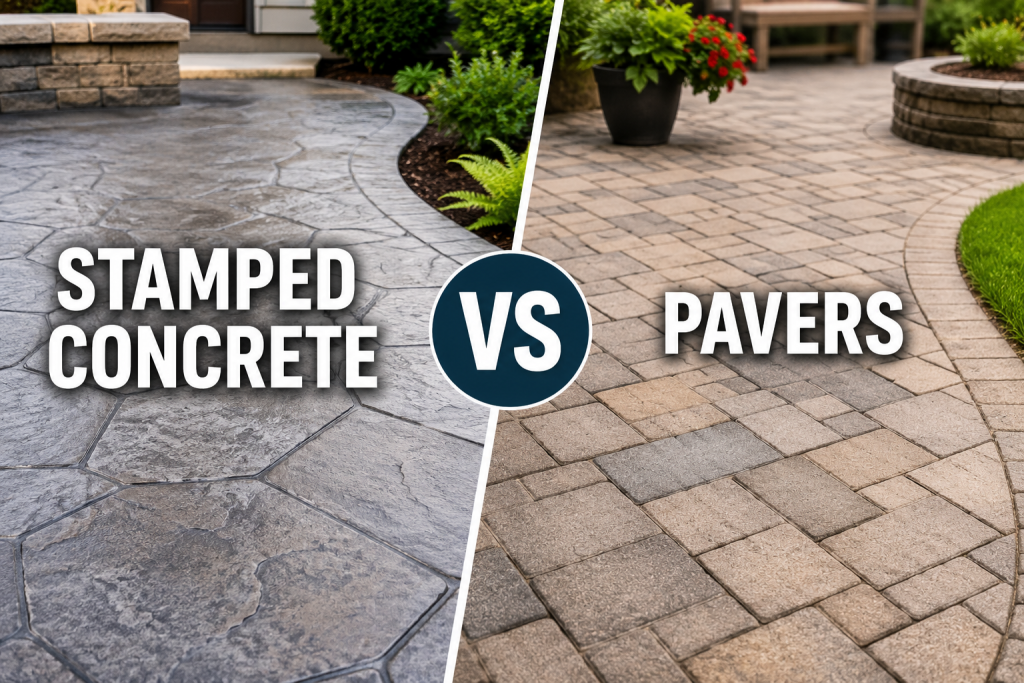
Key differences include:
- Construction method
- Surface appearance
- Repair flexibility
- Installation process
- Long-term maintenance
When evaluating stamped concrete vs pavers, homeowners should compare not only appearance but also how each material performs under weather exposure, traffic, and long-term ownership conditions.
Cost Comparison: Which Option Costs Less?
Cost is usually one of the first factors homeowners evaluate when choosing a patio material. While stamped concrete often starts with a lower installation price, long-term ownership expenses can change the overall value equation. Stamped concrete generally costs less upfront because installation is faster and requires fewer individual materials. Decorative finishes and custom patterns increase pricing, but the initial investment often remains lower than paver systems.
When comparing stamped concrete vs pavers, many homeowners find stamped concrete attractive because it delivers custom visual appeal while keeping initial project costs more manageable. Pavers typically cost more due to labor-intensive placement, base preparation, and finishing work. However, easier repairs may reduce future replacement expenses.
Average considerations include:
- Stamped concrete: lower initial investment
- Pavers: higher installation cost
- Repair costs: typically lower for pavers
- Long-term ownership: depends on climate and maintenance
A complete paver patio comparison should look beyond installation pricing and include repair flexibility, expected lifespan, and future upkeep costs before making a final decision.
Durability and Long-Term Performance
Durability often becomes more important than installation cost once a patio begins experiencing weather exposure, foot traffic, and seasonal movement. The material that performs best over time depends heavily on climate and maintenance habits. Stamped concrete provides a solid surface but may develop visible cracking as the ground expands and contracts. Freeze-thaw cycles, moisture changes, and settlement can make repairs more noticeable because damaged sections are harder to isolate. One of the most important stamped concrete patio pros and cons considerations is balancing visual appeal with long-term repair flexibility.
Pavers generally handle movement more effectively because individual units shift independently without affecting the entire patio surface. Damaged areas can often be repaired without replacing large sections. When evaluating stamped concrete vs pavers, homeowners should consider how each material responds to long-term weather exposure, repair requirements, and seasonal ground movement before making a final decision.
Key durability considerations include:
- Resistance to cracking
- Repair flexibility
- Weather performance
- Surface longevity
When evaluating patio durability, homeowners should consider expected lifespan and repair costs, not just installation price. In long-term ownership scenarios, pavers often provide stronger flexibility while stamped concrete remains a practical option for lower upfront investment.
Maintenance Requirements Over Time
Maintenance requirements can significantly affect the true cost of a patio over time. Even materials with lower installation costs may require more upkeep to preserve appearance and performance. Stamped concrete generally requires periodic cleaning and resealing to protect color, surface texture, and resistance to moisture exposure. Over time, visible cracks may require patching or resurfacing depending on severity. Pavers also require maintenance, but repairs are often more localized. Joint sand may need replenishment, and occasional leveling can help maintain an even surface.
Maintenance differences typically include:
- Sealing frequency
- Surface cleaning
- Crack management
- Repair approach
- Long-term upkeep costs
A complete patio maintenance comparison should account for both routine maintenance and future repair expectations. For homeowners comparing stamped concrete vs pavers, lower maintenance often depends more on climate conditions and installation quality than material choice alone.
Installation Complexity and Timeline
Installation affects not only project cost but also how quickly homeowners can begin using their outdoor space. Although both options require proper site preparation, the construction process differs considerably. Stamped concrete is generally installed faster because the surface is poured, finished, textured, and cured as a continuous slab. This can reduce labor time and simplify larger patio projects.
Pavers require more detailed preparation. Excavation, grading, base compaction, edge restraints, and individual placement all contribute to a longer construction timeline but may improve future repair flexibility. When comparing stamped concrete vs pavers, homeowners should weigh installation speed against long-term adaptability, especially for patios expected to handle seasonal movement and future maintenance needs.
Installation considerations include:
- Site preparation requirements
- Project duration
- Labor intensity
- Weather sensitivity
- Long-term repair access
Professional paver installation often takes longer upfront but creates a modular surface that can simplify maintenance and future updates. For homeowners balancing speed and long-term adaptability, installation expectations should be part of the overall decision process.
Comparison Table: Stamped Concrete vs Pavers
Comparing key performance categories side by side makes it easier to determine which patio material aligns with your budget, maintenance expectations, and long-term goals.
| Category | Stamped Concrete | Pavers |
| Upfront Cost | Lower | Higher |
| Appearance | Seamless, custom textures | Modular, flexible layouts |
| Maintenance | Periodic sealing | Joint maintenance |
| Repairability | Moderate | Easier |
| Lifespan | Good | Excellent |
| Weather Performance | Moderate | Strong |
| Installation Speed | Faster | Slower |
Homeowners comparing stamped concrete vs pavers should avoid focusing on a single category such as installation price. For projects centered on appearance and lower upfront cost, stamped concrete remains attractive. For homeowners prioritizing flexibility, easier repairs, and long-term performance, pavers often provide stronger overall value. Reviewing both installation and ownership costs creates a more balanced decision.
Which Patio Material Should You Choose?
The better patio material depends on how you prioritize cost, appearance, maintenance, and long-term ownership. There is no universal winner because different homeowners value different outcomes.
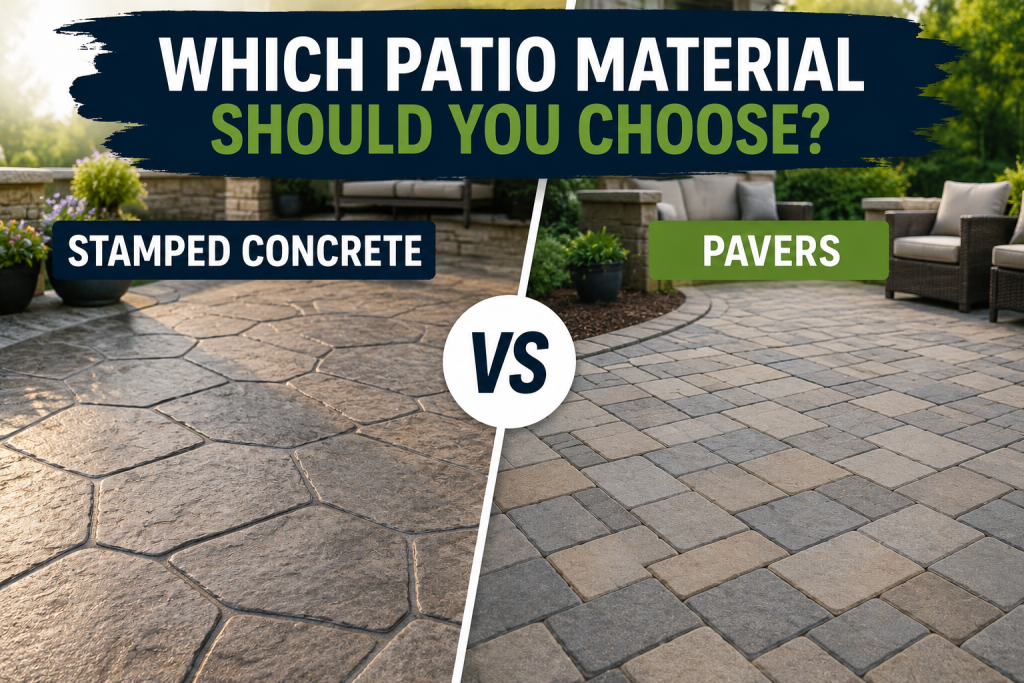
Stamped concrete may be the stronger choice if your priorities include:
- Lower upfront investment
- Faster installation
- Seamless decorative appearance
- Simpler initial project planning
Pavers may be the better fit if your goals include:
- Easier repairs
- Greater design flexibility
- Better long-term adaptability
- Improved resistance to movement and cracking
Homeowners considering future upgrades should also evaluate patio resurfacing options, since repair strategies can influence long-term ownership costs. When deciding between stamped concrete vs pavers, focus on how the patio will perform over years of use, not just how it looks on installation day.
Final Verdict
Both stamped concrete and pavers can create attractive, functional outdoor spaces, but they deliver value in different ways. Stamped concrete remains appealing for homeowners who want a decorative appearance, faster installation, and lower upfront costs. It works especially well for projects where visual impact and budget control are top priorities. Pavers generally stand out for repair flexibility, stronger long-term performance, and easier adaptation to ground movement over time.
Although installation costs are higher, many homeowners consider the added durability worth the investment. When comparing stamped concrete vs pavers, the best choice depends on climate conditions, maintenance expectations, design goals, and how long you plan to stay in the home. The right patio should support everyday outdoor living while improving curb appeal, usability, and long-term homeowner satisfaction.
FAQs
Is Stamped Concrete Cheaper Than Pavers in a Stamped Concrete vs Pavers Comparison?
In most stamped concrete vs pavers comparisons, stamped concrete has a lower initial installation cost because the construction process is generally faster and requires fewer individual materials. However, long-term repair and maintenance expenses may reduce the overall cost difference over time.
Which option lasts longer?
Pavers often provide longer service life because individual units can be repaired or replaced more easily.
Which adds more home value?
Both can improve outdoor appeal, but pavers are often viewed as a more premium long-term upgrade.
Which requires less maintenance?
Stamped concrete usually requires periodic sealing, while pavers may need occasional joint maintenance and localized repairs.
Which option is easier to repair?
Pavers are generally easier to repair because damaged sections can often be replaced individually instead of resurfacing larger areas.