


Steam Cleaning vs Dry Cleaning Floors: Which Method Is Better? (2026 US Guide)
Choosing between steam cleaning vs dry cleaning floors can be challenging for homeowners who want cleaner floors without causing unnecessary damage. Both methods are widely used in residential settings, but they work very differently and are suited to different flooring materials. Steam cleaning uses heated water vapor to loosen dirt, sanitize surfaces, and remove grime without relying heavily on chemical cleaners. Dry cleaning, on the other hand, uses low-moisture techniques, specialized cleaning compounds, or absorbent pads to clean floors while minimizing water exposure.
The right choice depends on several factors, including flooring type, moisture sensitivity, cleaning goals, and long-term maintenance needs. Hardwood, laminate, tile, vinyl, and carpet each respond differently to these cleaning approaches. Understanding the strengths and limitations of both floor cleaning methods is essential for protecting flooring investments, improving cleanliness, and supporting effective residential floor care over time.
What Is Steam Cleaning?
Steam cleaning is one of the most popular floor cleaning methods because it combines heat and moisture to remove dirt, grease, and bacteria from flooring surfaces. The process works by heating water to create steam, which loosens debris and helps sanitize floors without requiring large amounts of chemical cleaners. Many homeowners choose steam cleaning because it provides deep cleaning capabilities and can be highly effective on sealed tile, stone, and certain vinyl surfaces. The high temperature helps break down grime in hard-to-reach areas and can improve overall floor hygiene.
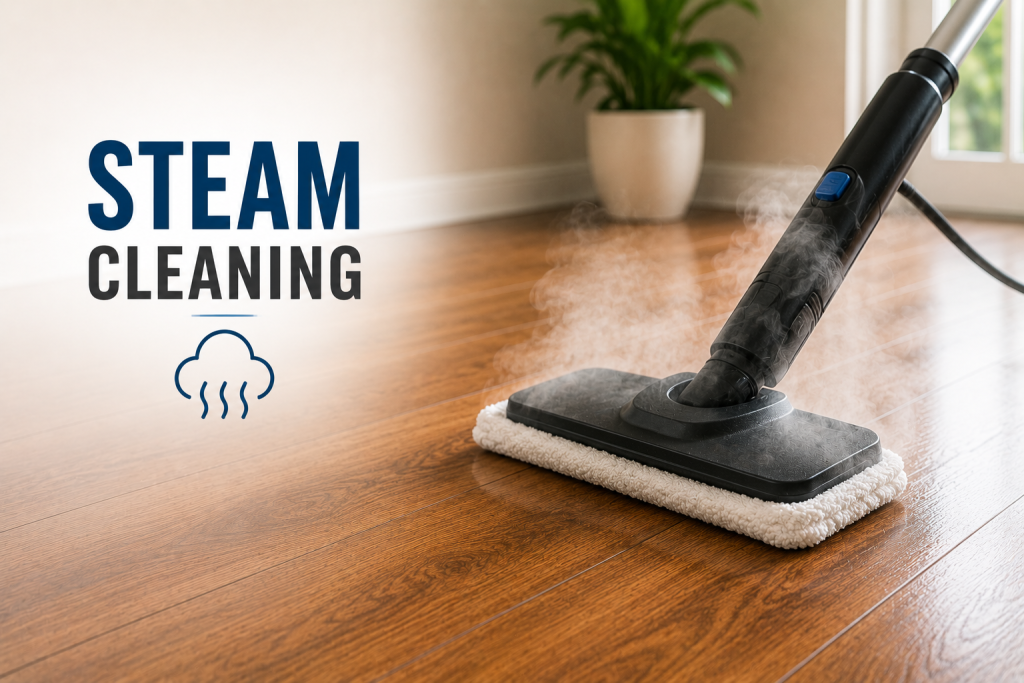
However, steam cleaning is not suitable for every flooring type. Materials that are sensitive to moisture, such as some hardwood and laminate floors, may be vulnerable to swelling, warping, or finish damage if exposed to excessive steam. This makes flooring compatibility an important consideration when evaluating steam cleaning vs dry cleaning floors. When used correctly, steam cleaning offers a powerful solution for deep floor maintenance and sanitation.
What Is Dry Floor Cleaning?
Dry floor cleaning systems are designed to clean flooring with little to no moisture, making them a popular option for surfaces that are sensitive to water exposure. Instead of relying on steam or large amounts of liquid, these systems use absorbent compounds, microfiber technology, cleaning pads, or specialized machines to lift dirt and debris from the floor.
One of the biggest advantages of dry cleaning is the reduced risk of moisture-related damage. This makes it particularly useful for hardwood, laminate, and other flooring materials that can warp, swell, or deteriorate when exposed to excessive water. In many cases, floors can also be used immediately after cleaning because there is little drying time required.
While dry cleaning may not provide the same sanitizing effect as high-temperature steam, it excels in routine maintenance and low-moisture environments. For homeowners comparing steam cleaning vs dry cleaning floors, dry methods often offer a safer approach for delicate flooring while still supporting effective residential floor care.
Hardwood Floor Steam Cleaning – Risks and Benefits
When evaluating steam cleaning vs dry cleaning floors, hardwood flooring deserves special attention because it is one of the most moisture-sensitive flooring materials found in US homes. While steam cleaning can effectively remove dirt and sanitize surfaces, it also introduces heat and moisture that may damage wood over time. The primary benefit of hardwood floor steam cleaning is its ability to loosen grime without relying heavily on chemical cleaners. For sealed hardwood surfaces, some manufacturers may allow limited steam use under specific conditions. However, even sealed floors can develop issues if moisture penetrates seams or small imperfections.
Potential risks include warping, cupping, finish deterioration, and expansion caused by repeated exposure to steam. These problems can be costly to repair and may require refinishing or board replacement. For most homeowners, dry cleaning methods are generally considered the safer option for routine hardwood maintenance, as they reduce moisture exposure while still providing effective cleaning performance.
Tile Floor Deep Cleaning Comparison
Tile flooring is one of the few surfaces where both cleaning methods perform well, making it a key area in the steam cleaning vs dry cleaning floors debate. Because tile is highly durable and moisture-resistant, homeowners have greater flexibility when choosing between these floor cleaning methods. For tile floor deep cleaning, steam cleaning offers a significant advantage. The combination of heat and moisture helps loosen embedded dirt, grease, and grime from both tile surfaces and grout lines. It can also help sanitize floors without heavy chemical use, making it attractive for kitchens, bathrooms, and entryways.
Dry cleaning methods are also effective, especially for routine maintenance and quick touch-ups. They remove dust and surface debris efficiently while eliminating drying time. However, they generally do not penetrate grout or remove deep-set contaminants as effectively as steam cleaning. For heavily used tile floors, steam cleaning is often preferred for periodic deep cleaning, while dry methods work well for regular maintenance between intensive cleaning sessions.
Carpet Cleaning Comparison
A carpet cleaning comparison reveals some of the biggest differences in the steam cleaning vs dry cleaning floors discussion. Unlike hard surfaces, carpets trap dirt, allergens, pet dander, and moisture deep within their fibers, making cleaning method selection especially important. Steam cleaning, often called hot water extraction, is widely regarded as one of the most effective deep-cleaning methods for carpets. It penetrates deep into carpet fibers, removing embedded dirt and allergens while helping refresh the overall appearance of the carpet. This makes it a popular choice for homes with pets, children, or allergy concerns.
Dry carpet cleaning uses low-moisture compounds or specialized machines to absorb dirt without saturating the carpet. The main advantage is faster drying times, allowing rooms to return to normal use quickly. It also reduces the risk of moisture-related issues. For deep sanitation and heavy soil removal, steam cleaning often delivers superior results. For routine maintenance and convenience, dry cleaning can be a practical alternative.
Cost and Maintenance Differences of Steam Cleaning vs Dry Cleaning Floors
Cost is an important factor when comparing steam cleaning vs dry cleaning floors, especially for homeowners managing long-term maintenance budgets. While both methods help maintain flooring, their equipment requirements, service costs, and maintenance implications can vary significantly. Steam cleaning often requires specialized machines capable of generating high-temperature vapor. Whether purchased or rented, this equipment can represent a larger upfront investment. Professional steam-cleaning services may also cost more because of the deeper cleaning process and longer drying times involved.
Dry floor cleaning systems are often less expensive for routine maintenance. Many use simple microfiber tools, absorbent pads, or low-moisture cleaning machines that are easier to operate and maintain. They also reduce downtime since floors can typically be used immediately after cleaning. From a long-term perspective, choosing the wrong cleaning method for a flooring type can create repair costs that far exceed cleaning expenses. Matching the method to the flooring material is often the most cost-effective strategy for ongoing residential floor care.
Best Floor Maintenance Techniques by Flooring Type
The most effective floor maintenance techniques depend on the flooring material, which is why there is no single answer to the steam cleaning vs dry cleaning floors debate. Each flooring type responds differently to moisture, heat, and cleaning intensity. For hardwood flooring, dry cleaning methods are generally the safest option because they minimize moisture exposure and reduce the risk of warping or finish damage. Laminate floors also benefit from low-moisture cleaning due to their sensitivity to water infiltration.

Tile flooring is highly versatile and can handle both steam and dry cleaning. Steam cleaning is especially useful for periodic tile floor deep cleaning, while dry methods are ideal for routine upkeep. Vinyl flooring can often tolerate light steam cleaning if manufacturer guidelines allow it, though dry cleaning remains a safe maintenance choice. For carpets, steam cleaning is often preferred for deep sanitation, while dry cleaning provides quicker maintenance with minimal downtime. Matching the cleaning method to the flooring material is the foundation of successful residential floor care.
Common Mistakes When Choosing a Cleaning Method
One of the biggest issues homeowners face in the steam cleaning vs dry cleaning floors decision is assuming that one method works universally for all flooring types. This often leads to avoidable damage and reduced floor lifespan.
A common mistake is using steam cleaning on moisture-sensitive materials like hardwood or laminate. Even small amounts of trapped moisture can lead to warping, swelling, or long-term structural issues. On the other hand, relying only on dry cleaning for heavily soiled surfaces like grout lines or deep carpet fibers can result in incomplete cleaning and buildup over time.
Another frequent error is ignoring manufacturer guidelines. Flooring materials and finishes often come with specific cleaning recommendations, and overlooking them can void warranties or accelerate wear. Some homeowners also underestimate drying time and moisture exposure, especially in enclosed spaces. Choosing the wrong method without considering ventilation, flooring type, and soil level can negatively impact long-term residential floor care and increase maintenance costs.
Final Verdict
When comparing steam cleaning vs dry cleaning floors, the best choice ultimately depends on flooring type, moisture tolerance, and cleaning goals rather than a single “better” method. Both approaches play an important role in effective residential floor care, but they serve different purposes. Steam cleaning is ideal for deep cleaning tasks where sanitation and grime removal are priorities. It works particularly well on tile and some carpeted surfaces, offering strong performance for periodic deep maintenance. However, its moisture and heat can be risky for sensitive materials like hardwood and laminate if not used carefully. Dry cleaning systems are better suited for routine maintenance and moisture-sensitive flooring. They provide safer, faster cleaning with minimal downtime and reduced risk of damage, making them ideal for everyday upkeep. In most US homes, the most effective strategy is a hybrid approach: use dry cleaning for regular maintenance and steam cleaning selectively for deep cleaning on compatible surfaces. This balance helps preserve flooring while maintaining cleanliness and longevity.
FAQs
What is the main difference between steam cleaning vs dry cleaning floors?
Steam cleaning uses heat and moisture to deep clean and sanitize, while dry cleaning uses low-moisture systems to clean without water exposure.
Is steam cleaning safe for hardwood floors?
Hardwood floor steam cleaning is generally not recommended unless explicitly approved by the manufacturer, as moisture can cause warping or damage.
When should I use dry floor cleaning systems?
Dry floor cleaning systems are best for routine maintenance, moisture-sensitive floors, and quick cleanups with minimal drying time.
Which method is better for tile floors?
Tile can handle both, but steam is better for tile floor deep cleaning, while dry cleaning is ideal for regular maintenance.
Is steam cleaning better than dry cleaning for carpets?
For deep cleaning, steam often performs better, while dry methods offer faster drying and convenience in carpet cleaning comparison scenarios.
What are the risks of improper floor cleaning methods?
Incorrect methods can cause hardwood floor steam cleaning damage, laminate swelling, vinyl wear, or incomplete cleaning results.
What is the best overall floor cleaning strategy?
A hybrid approach works best, dry cleaning for routine care and steam cleaning for deep periodic maintenance.