

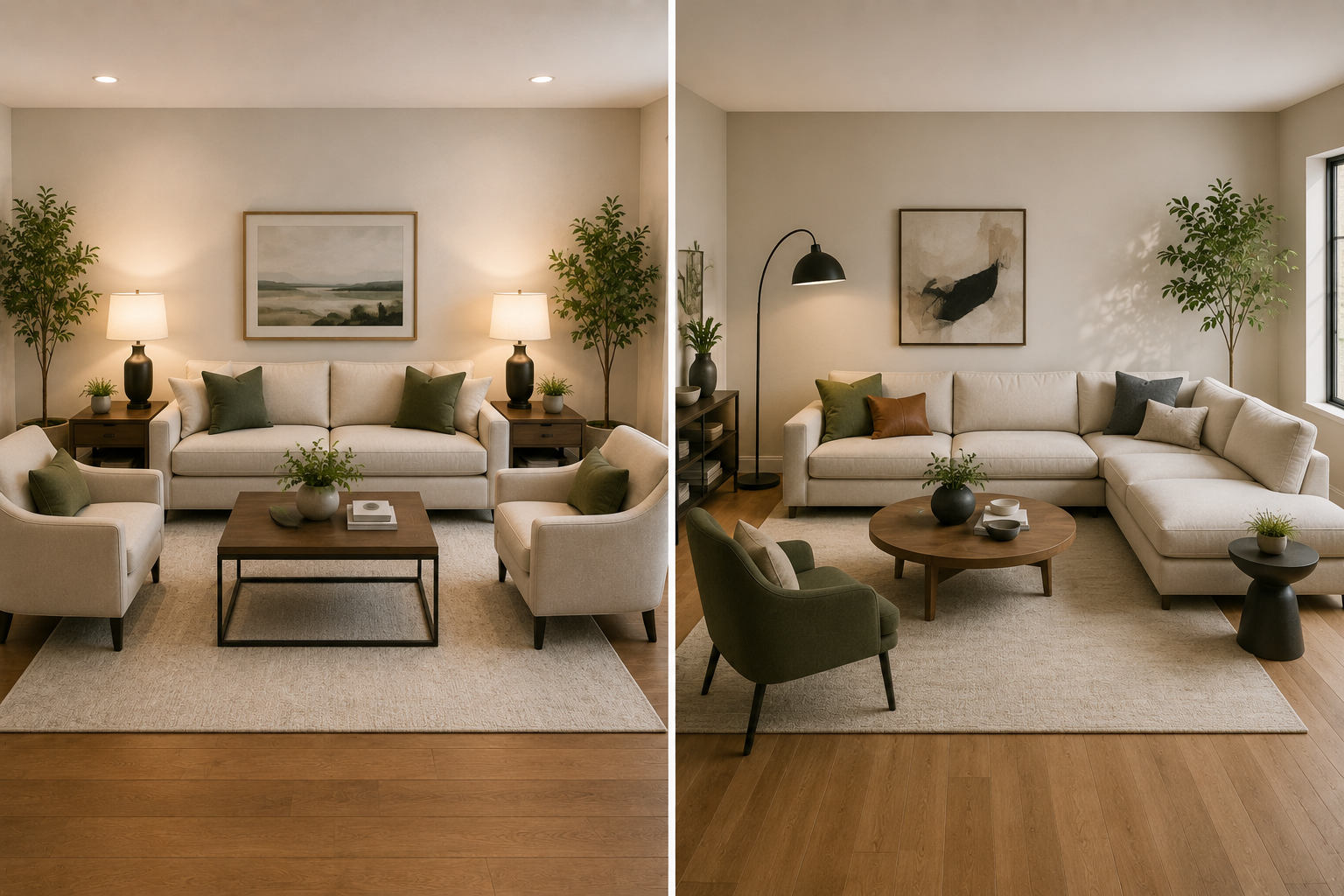
Symmetrical vs Asymmetrical Furniture Layouts
Choosing the right furniture arrangement can dramatically influence how a room looks and functions. Understanding symmetrical versus asymmetrical furniture layouts helps homeowners create spaces that feel comfortable, balanced, and visually appealing. Each approach offers unique advantages and can significantly affect the atmosphere of a room.
Some homeowners prefer the formal appearance and structure associated with symmetrical layouts, while others are drawn to the relaxed and dynamic feel of asymmetrical designs. Learning the differences between these approaches allows homeowners to make more intentional decorating decisions. This guide explores the strengths, weaknesses, and best uses of symmetrical vs asymmetrical furniture layout styles to help you create a room that matches your needs and personal preferences.
Understanding Symmetrical vs Asymmetrical Furniture Layout
A comparison of symmetrical versus asymmetrical furniture layout begins with understanding how each approach creates visual balance. Symmetrical layouts rely on matching furniture arrangements placed evenly around a central focal point, while asymmetrical layouts achieve balance through the careful distribution of different shapes, sizes, and visual weights. Symmetrical designs are often associated with traditional and formal interiors because they create a sense of order and predictability.
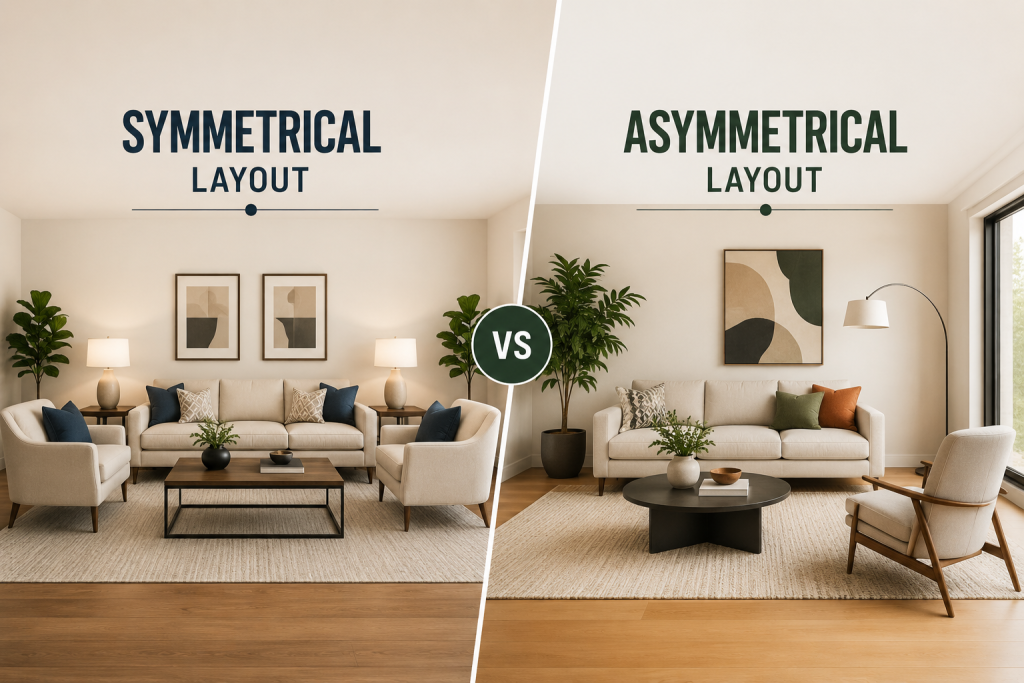
Asymmetrical layouts, on the other hand, tend to feel more relaxed and dynamic, making them popular in contemporary and modern homes. Neither style is inherently better; the right choice depends on the room’s purpose, architecture, and desired atmosphere. Understanding symmetrical vs asymmetrical furniture layout principles allows homeowners to design spaces that reflect their personal style while maintaining comfort and functionality. Both approaches can create attractive rooms when applied thoughtfully and with attention to scale and balance.
Balanced Room Decor Principles
Strong balanced room design principles are essential for creating spaces that feel comfortable, visually appealing, and functional. Balance in interior design does not necessarily mean that every element must match perfectly. Instead, it involves distributing furniture, colors, and decorative elements that create harmony throughout the room. Visual weight plays an important role in achieving balance.
Large furniture pieces, dark colors, and bold patterns naturally attract attention and should be arranged thoughtfully to prevent one side of the room from feeling heavier than the other. Lighting, artwork, and accessories can also contribute to overall balance when positioned strategically. Understanding symmetrical vs asymmetrical furniture layout concepts helps homeowners apply these principles effectively. Whether creating a formal living room or a more relaxed family space, balanced design enhances comfort and ensures that the room feels cohesive and inviting.
Asymmetrical Room Tips for Modern Homes
Creative asymmetrical room ideas have become increasingly popular because they create spaces that feel relaxed, dynamic, and visually interesting. Unlike traditional layouts that rely on identical furniture arrangements, asymmetrical designs use different shapes, sizes, and decorative elements to achieve balance without strict uniformity. For example, a large sectional sofa can be balanced with a pair of accent chairs rather than another matching sofa.
Similarly, a floor lamp on one side of the room may visually offset a bookshelf or artwork on the opposite side. These variations add personality and help prevent rooms from feeling overly formal or predictable. Understanding symmetrical vs asymmetrical furniture layout principles allows homeowners to create modern interiors that feel both comfortable and balanced. Asymmetrical arrangements are especially well-suited to contemporary homes where flexibility, casual living, and unique design elements are often prioritized over perfect symmetry.
Symmetrical Bedroom Layouts and Their Benefits
A well-designed symmetrical bedroom creates a sense of order, elegance, and visual harmony. This approach is commonly used in traditional homes and formal entertaining spaces because it provides a balanced and structured appearance.
Create a Strong Focal Point
Symmetrical layouts often revolve around a central feature such as a fireplace, television, or large window. Matching furniture pieces are arranged evenly around this focal point to create a cohesive design.
Enhance Visual Balance
Identical sofas, matching chairs, and paired lighting fixtures contribute to a polished and organized appearance that feels calm and predictable.
Symmetrical vs Asymmetrical Furniture Layout Considerations
Understanding symmetrical versus asymmetrical furniture layout styles helps homeowners determine which approach best suits their lifestyle and design preferences. While symmetrical arrangements offer timeless appeal, they may feel more formal than asymmetrical layouts, which often provide greater flexibility and creativity.
Furniture Balance Ways That Improve Flow
Effective furniture balance techniques help create rooms that feel comfortable, organized, and easy to navigate. Regardless of whether a homeowner prefers symmetrical or asymmetrical arrangements, maintaining visual balance is essential for improving both aesthetics and functionality. One important technique is distributing large furniture pieces evenly throughout the room to prevent one area from feeling visually heavier than another. Mixing different shapes and heights can also create interest while preserving harmony.
Area rugs, lighting fixtures, and artwork contribute to balance when placed strategically. Maintaining clear traffic pathways is equally important because good flow enhances the overall usability of the space. Understanding symmetrical vs asymmetrical furniture layout principles allows homeowners to apply techniques more effectively. Thoughtful furniture placement can improve room flow, enhance visual appeal, and create a more welcoming environment that supports everyday living and entertaining.
Indoor Design Balance and Visual Weight
Understanding interior design balance and visual weight is essential for creating rooms that feel cohesive and visually comfortable. Visual weight refers to how much attention an object attracts based on its size, color, texture, and placement. Larger furniture pieces and darker colors generally carry more visual weight than smaller or lighter elements. Achieving balance involves distributing these elements thoughtfully throughout the room. A large sofa, for example, may be balanced by multiple smaller chairs, artwork, or lighting fixtures placed elsewhere in the space.
Texture and color also influence how balanced a room feels, even when furniture pieces are not identical. Knowing the differences between symmetrical vs asymmetrical furniture layout styles helps homeowners manage visual weight more effectively. Whether designing a traditional room or a contemporary space, proper balance creates a sense of harmony and improves both the appearance and the room’s functionality.
Formal Room Design vs Casual Arrangements
A traditional formal room layout often relies on symmetry, matching furniture pieces, and clearly defined seating areas to create an elegant and structured appearance. These layouts are commonly found in traditional living rooms, dining rooms, and spaces designed primarily for entertaining guests. Casual arrangements, on the other hand, prioritize comfort and flexibility. Instead of matching furniture, they often combine different shapes, sizes, and textures to create a relaxed atmosphere.
Casual layouts are especially popular in family rooms and open-concept homes where practicality and everyday use are more important than strict visual order. Understanding symmetrical vs asymmetrical furniture layout styles helps homeowners choose the approach that best suits their lifestyle. While formal layouts offer timeless elegance, casual arrangements often provide greater versatility and a more welcoming environment for modern living.
Modern Room Organization Styles
Contemporary modern room arrangement styles often emphasize simplicity, functionality, and flexibility. Unlike traditional interiors that rely heavily on symmetry, modern spaces frequently combine symmetrical and asymmetrical elements to create rooms that feel both balanced and visually interesting. Clean lines, multifunctional furniture, and open layouts are common characteristics of modern room design. Instead of matching every piece of furniture, homeowners may use contrasting shapes, textures, and accent pieces to create visual harmony.
This approach allows rooms to feel more dynamic while maintaining comfort and practicality. Neutral color palettes and minimal clutter also contribute to the clean appearance associated with modern interiors. Understanding symmetrical vs asymmetrical furniture layout concepts helps homeowners adapt these design styles to their own spaces. By blending structure with creativity, modern arrangements can create rooms that feel comfortable, stylish, and well-suited to contemporary lifestyles.
Common Furniture Balance Mistakes
Even beautiful furniture can create an uncomfortable space when balance is overlooked. Avoiding these common mistakes can help homeowners achieve a more cohesive and visually appealing room.
- Concentrating all large furniture pieces on one side of the room.
- Ignoring the room’s focal point when arranging seating.
- Using too many matching pieces, which can make the room feel rigid.
- Overcrowding one area while leaving another area empty.
- Choosing furniture that is out of scale with the room.
- Blocking natural traffic pathways.
- Using accessories that compete for attention.
- Failing to consider visual weight when decorating.
- Prioritizing appearance over comfort and functionality.
- Neglecting lighting and artwork when creating balance.
Recognizing these issues can help homeowners create rooms that feel more harmonious, comfortable, and functional, regardless of their preferred design style.
How to Choose a Symmetrical vs Asymmetrical Furniture Layout?
Choosing a symmetrical vs asymmetrical furniture layout depends largely on the room’s purpose, architectural style, and your personal preferences. Both approaches can create attractive and functional spaces, but each produces a different atmosphere. Homeowners who prefer a formal, organized look often gravitate toward symmetrical layouts. Matching furniture arrangements and balanced focal points create a sense of order that works well in traditional living rooms and entertaining spaces.
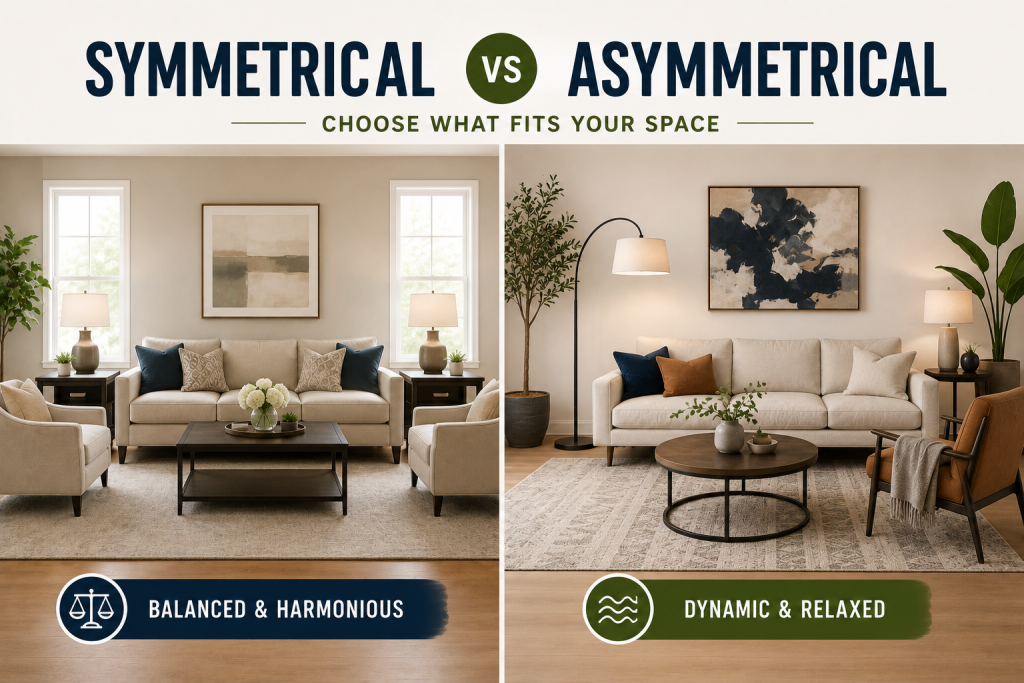
Those who value flexibility and a more relaxed atmosphere may prefer asymmetrical arrangements, which allow for greater creativity and a more casual feel. It is also possible to combine elements of both styles. Many modern interiors use symmetrical foundations with asymmetrical accents to create visual interest. By considering lifestyle needs and design goals, homeowners can select a layout that provides both comfort and aesthetic appeal.
Conclusion
Understanding the differences between symmetrical and asymmetrical furniture layouts can help homeowners create rooms that reflect their personal style while maintaining comfort and functionality. Symmetrical arrangements offer structure, elegance, and a sense of order, while asymmetrical layouts provide flexibility and a more relaxed atmosphere. Neither approach is inherently better, and many modern interiors successfully combine elements of both styles. By considering visual balance, room purpose, and lifestyle needs, homeowners can design spaces that feel inviting and harmonious. Thoughtful furniture placement ensures that every room supports everyday living while enhancing the overall appearance of the home.
Frequently Asked Questions
What is the difference between a symmetrical vs asymmetrical furniture layout?
A symmetrical vs asymmetrical furniture layout differs in how balance is achieved. Symmetrical layouts use matching elements, while asymmetrical layouts rely on visual weight and contrasting pieces.
Which layout style works best for modern homes?
Many homeowners prefer asymmetrical arrangements because they provide flexibility and create a more relaxed atmosphere.
Are symmetrical layouts only used in traditional homes?
No. A symmetrical living room can work well in both traditional and contemporary spaces, depending on the furniture and décor choices.
How do you create balance in a room without matching furniture?
Using size, color, texture, and proper spacing helps distribute visual weight and maintain harmony throughout the space.
What are some examples of asymmetrical room tips?
Popular asymmetrical room tips include pairing a sectional sofa with accent chairs, mixing furniture shapes, and using varied lighting elements to create visual balance.