


Tile Roof vs Metal Roof: Which Roofing Material Is Best for Your Home?
Choosing a new roof is one of the biggest investments a homeowner can make. When comparing tile roof vs metal roof, the decision often comes down to durability, appearance, maintenance requirements, and long-term value. Both roofing systems have earned a strong reputation across the United States, but they perform differently depending on climate, budget, and home design. When comparing tile roof vs metal roof, homeowners often find that both materials offer unique advantages.
Tile roofs are commonly found in warm-weather regions such as Florida, Arizona, and Southern California, where their classic appearance and longevity make them a popular choice. Metal roofing, on the other hand, has gained popularity nationwide because of its strength, energy performance, and modern aesthetic. Understanding how these materials compare can help you choose the right solution for your home, whether your priority is curb appeal, storm resistance, or long-term savings.
Tile Roof vs Metal Roof: Key Differences at a Glance
When evaluating tile roof vs metal roof, homeowners should look beyond the initial price tag and consider factors such as lifespan, structural requirements, energy performance, and maintenance. While both options are premium roofing systems, they serve different needs and architectural styles.
Tile Roof vs Metal Roof Comparison Table
| Feature | Tile Roof | Metal Roof |
| Typical Lifespan | 50–100+ years | 40–70 years |
| Upfront Cost | Higher | Moderate to High |
| Weight | Heavy | Lightweight |
| Maintenance | Moderate | Low |
| Energy Efficiency | Good | Excellent |
| Fire Resistance | Excellent | Excellent |
| Storm Resistance | Good | Excellent |
Who Should Choose Each Roofing Type?
In a tile roof vs metal roof comparison, tile roofing is often preferred for Mediterranean, Spanish, and Southwestern-style homes where appearance and longevity are top priorities. Metal roofing is ideal for homeowners seeking a lightweight, durable solution with excellent weather resistance. In many regions, especially Texas, Colorado, and Florida, metal roofs are increasingly chosen for their ability to withstand extreme weather while helping improve overall energy performance.
Tile Roof vs Metal Roof Cost Comparison
Cost is often one of the first factors homeowners consider when comparing roofing materials. In the tile roof vs metal roof debate, tile roofing generally requires a larger upfront investment due to material costs, specialized installation, and additional structural support requirements. Because tile roofs are significantly heavier, some homes may need reinforcement before installation, increasing project expenses.
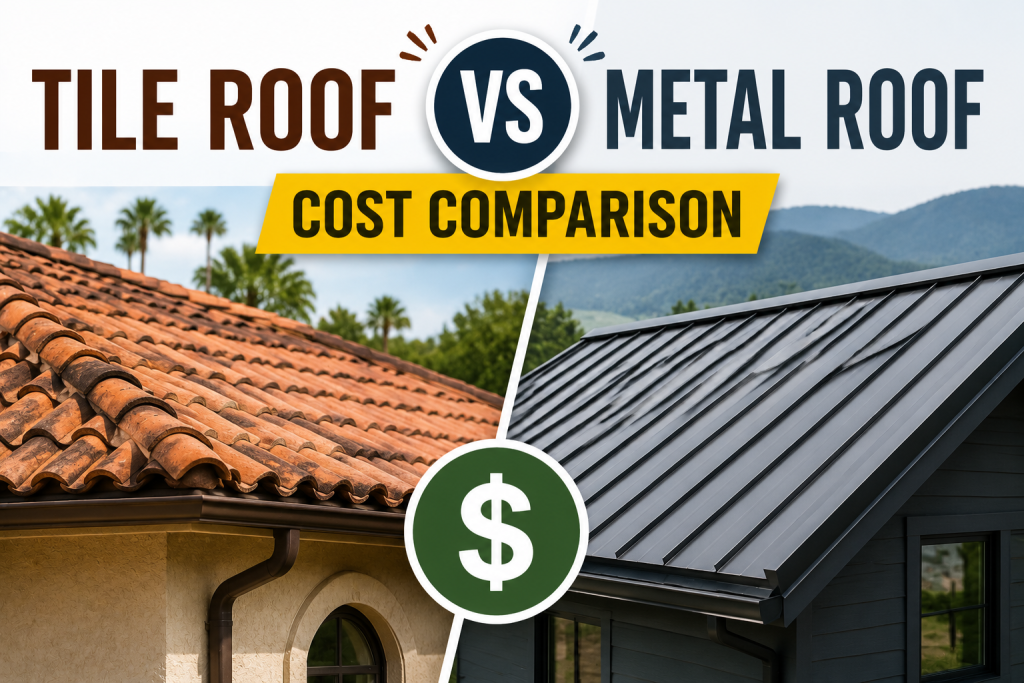
Metal roofing typically has a lower installation cost, although premium materials such as aluminum, copper, or standing-seam steel systems can raise the overall price. However, long-term ownership costs tell a different story. A proper roofing lifespan comparison often shows that both roofing systems can provide decades of service when professionally installed. Metal roofs usually require fewer repairs over time, while tile roofs may occasionally need individual tiles replaced due to impact damage. Homeowners should evaluate both initial costs and lifetime value before making a final decision.
Tile Roof vs Metal Roof Lifespan and Durability
Durability is a major consideration when choosing a premium roofing system. In many cases, the tile roof vs metal roof decision comes down to how long the roof is expected to last and how well it handles local weather conditions. Both options rank among the most durable roofing materials available to American homeowners, but they achieve that durability in different ways.
Which Roof Lasts Longer?
Traditional clay tile roofing can last 50 to 100 years or more when properly maintained. Concrete tiles also offer exceptional longevity and are commonly used in warm-weather regions. Metal roofing systems typically provide a service life of 40 to 70 years, depending on the material and coating quality.
Weather Resistance Performance
Metal roofs excel in areas prone to heavy snow, hail, and high winds. Tile roofs perform exceptionally well in hot climates and offer excellent fire resistance. For homeowners in hurricane-prone states such as Florida, product quality and installation standards are often just as important as the roofing material itself.
Energy Efficiency and Home Comfort
Energy performance can have a noticeable impact on monthly utility bills, especially in regions that experience long, hot summers. When comparing roofing systems, homeowners should consider how effectively each material reflects heat and regulates indoor temperatures. Both tile and metal roofs can contribute to a more energy-efficient roofing system when paired with proper attic ventilation and insulation.
Cooling Performance in Hot Climates
When comparing tile roof vs metal roof in hot climates, tile roofs naturally create an air gap beneath the tiles, helping reduce heat transfer into the home. This feature makes them particularly popular in states such as Arizona, Nevada, and Southern California. Their thermal properties can help maintain a more comfortable indoor environment during extreme heat.
Energy Savings Potential
Metal roofing reflects a significant amount of solar radiation, especially when coated with reflective finishes approved by ENERGY STAR. This can reduce cooling demands in warm climates like Texas and Florida. For homeowners focused on long-term efficiency, both roofing materials can deliver strong energy-saving benefits when installed correctly.
Roof Maintenance Requirements
Maintenance needs can influence the long-term value of any roofing investment. A proper roof maintenance comparison helps homeowners understand the level of care each roofing system requires throughout its lifespan. While both materials are known for durability, maintenance expectations differ depending on climate, installation quality, and exposure to severe weather.
Tile Roof Maintenance Needs
Tile roofs generally require periodic inspections to identify cracked or displaced tiles. While the overall system can last for decades, individual tiles may break if impacted by falling branches or foot traffic. Homeowners should also keep valleys and drainage areas free of debris to prevent water-related issues.
Metal Roof Maintenance Needs
In the tile roof vs metal roof debate, metal roofs are often considered the lower-maintenance option. They typically require occasional inspections to check fasteners, flashing, and sealants. Protective coatings help resist corrosion, making metal roofing a practical choice in many climates. With proper upkeep, metal roofs can maintain their appearance and performance for several decades with minimal repair requirements.
Best Climates for Tile and Metal Roofs
Climate is one of the most important factors to consider when selecting a roofing material. While both systems can perform exceptionally well, the ideal choice often depends on local weather patterns, temperature fluctuations, and environmental conditions. Understanding where each material performs best can help homeowners maximize durability and long-term value.

Regions Where Tile Roofs Excel
Tile roofing performs particularly well in warm, sunny climates where extreme heat is a concern. States such as Arizona, California, Nevada, and Florida have long embraced tile roofs because of their durability and heat-resistant properties. The material also offers excellent fire resistance, making it attractive in some wildfire-prone regions.
Regions Where Metal Roofs Perform Best
Metal roofing is highly versatile and performs well across a wide range of climates. In snow-heavy regions such as Colorado and parts of the Midwest, metal roofs shed snow efficiently and resist freeze-thaw damage. They are also popular in coastal and hurricane-prone areas because many systems are engineered to withstand strong winds and severe storms.
Pros and Cons of Tile Roofing
Tile roofing has remained a popular choice for generations because of its longevity, visual appeal, and proven performance in warm climates. For homeowners seeking premium roofing solutions, tile offers several advantages, but it also comes with important considerations that should be evaluated before installation.
Pros of Tile Roofing
- Exceptional lifespan that can exceed 50–100 years.
- Strong resistance to fire, insects, and rot.
- Excellent thermal performance in hot climates.
- Distinctive appearance that enhances curb appeal.
- Can increase perceived home value in many markets.
Cons of Tile Roofing
- Higher upfront installation costs.
- Significant weight may require structural reinforcement.
- Individual tiles can crack from impact or improper foot traffic.
- Repairs often require specialized roofing professionals.
For homeowners prioritizing longevity and traditional aesthetics, tile remains one of the most respected premium roofing options available in the United States.
Which Roof Adds More Value to a Home?
A new roof can improve both curb appeal and buyer confidence, making it an important factor in overall property value. When evaluating tile roof vs metal roof, homeowners often want to know which option delivers the best return on investment. The answer largely depends on regional preferences, architectural style, and local market expectations.
Resale Value Benefits
Tile roofs are often viewed as premium upgrades in markets where Mediterranean and Spanish-style homes are common. Their long lifespan and distinctive appearance can appeal to buyers looking for a high-end property. Metal roofs also offer strong resale benefits because many buyers appreciate their durability, energy efficiency, and low maintenance requirements.
Buyer Preferences by Region
In states such as Florida, Arizona, and California, tile roofing is frequently associated with luxury homes and established neighborhoods. In areas that experience severe weather, including parts of Texas, Colorado, and the Midwest, metal roofing may attract buyers seeking long-term protection and lower maintenance costs. Ultimately, the best value comes from choosing a roof that aligns with local demand and your home’s architectural design.
Final Verdict
Choosing between tile roof vs metal roof ultimately depends on your budget, climate, design preferences, and long-term goals as a homeowner. Both roofing systems offer exceptional durability, strong weather resistance, and the potential to increase property value when professionally installed. Tile roofing is often the better choice for homeowners who prioritize architectural character, longevity, and performance in hot climates. Its timeless appearance makes it particularly attractive for Mediterranean, Spanish, and Southwestern-style homes.
In a roofing styles comparison, tile roofs are typically favored for their traditional elegance and distinctive curb appeal. Metal roofing, meanwhile, stands out for its lightweight construction, low maintenance requirements, and ability to perform well in a wide variety of weather conditions. If your priority is a traditional, high-end appearance and decades of service, tile may be the ideal solution. If you prefer a modern, versatile roof with excellent energy performance and storm resistance, metal roofing is likely the stronger investment. The right choice is the one that aligns with your home’s needs, local climate, and long-term ownership plans.
Frequently Asked Questions
Is a tile roof better than a metal roof?
Neither roofing material is universally better. Tile roofs are known for their exceptional lifespan, traditional appearance, and strong performance in hot climates. Metal roofs offer excellent durability, lower maintenance requirements, and superior performance in many severe weather conditions. The best choice depends on your budget, climate, and architectural preferences.
Which Lasts Longer in a Tile Roof vs Metal Roof Comparison?
In a tile roof vs metal roof comparison, tile roofing generally lasts longer. Many tile roofs can last 50 to 100 years or more, while most metal roofs last 40 to 70 years with proper installation and maintenance.
Is a metal roof cheaper than tile roofing?
In most cases, metal roofing has a lower upfront cost than tile roofing. Tile roofs often require additional structural support because of their weight, which can increase installation expenses. However, actual costs vary based on roof size, material selection, labor rates, and geographic location.
Which Is Better for Hot Climates: Tile Roof vs Metal Roof?
When comparing tile roof vs metal roof for hot climates, both perform well. Tile roofs naturally reduce heat transfer, while metal roofs reflect solar heat and can lower cooling costs. The better choice depends on your home’s design, budget, and energy-efficiency goals.
Does a metal roof increase home value?
Yes. A professionally installed metal roof can improve curb appeal, enhance energy efficiency, and reduce future maintenance concerns. These benefits can make a home more attractive to potential buyers, particularly in regions that experience severe weather or high cooling costs.