


Understanding Carpet Flooring Types: A Complete Guide for Modern Homes
Choosing the right flooring can significantly affect comfort, durability, and overall home value, especially in busy US households where lifestyle demands vary from region to region. From humid climates like Florida to colder northern states such as Minnesota, homeowners often look for flooring that balances softness, insulation, and long-term performance.
Understanding types of carpet flooring helps you make informed decisions based on traffic levels, maintenance needs, and budget. Some carpets prioritize luxury and comfort underfoot, while others focus on durability and stain resistance for high-traffic areas like living rooms, hallways, and family spaces. Leading US manufacturers such as Shaw Floors, Mohawk Industries, and Stainmaster have developed modern carpet technologies that cater to different residential needs, making selection more specialized than ever.
Carpet Pile Construction: The Foundation of Carpet Performance
When evaluating carpet flooring types, the first major distinction homeowners should understand is pile construction. This refers to how the carpet fibers are looped or cut during manufacturing, and it directly impacts softness, durability, and how the carpet wears over time in real US homes.
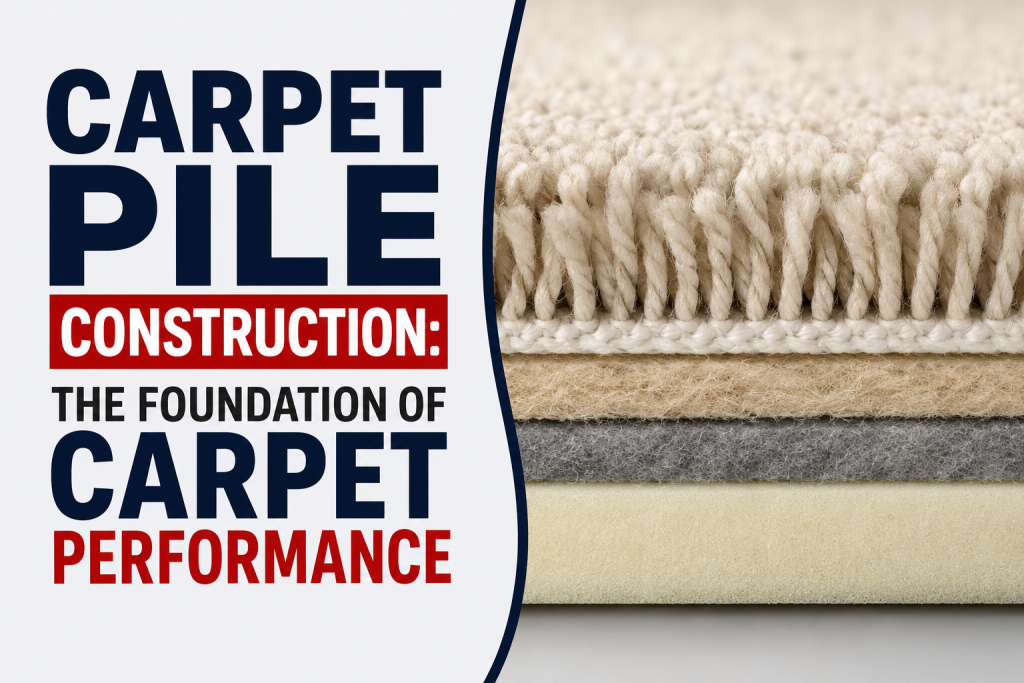
The most common construction methods are cut pile and loop pile, each performing differently depending on household activity levels, pets, and regional climate conditions. In high-traffic homes like those in busy suburbs of Dallas or Chicago, pile structure can determine how long a carpet maintains its appearance before showing wear patterns or matting.
Cut pile carpets have fibers that are sheared at the top, creating a softer, more cushioned feel underfoot. Loop pile carpets, on the other hand, keep fibers uncut, forming a tighter and more durable surface that resists crushing. These structural differences are essential when selecting among carpet flooring types, especially for families balancing comfort and durability in everyday living spaces.
Cut Pile Carpet and Its Residential Appeal
Among the most widely chosen types of carpet flooring, cut pile designs are known for their soft, cushioned feel and versatile appearance in American homes. This construction method involves cutting the fiber loops at the top, which creates an upright texture that feels plush underfoot and works especially well in bedrooms, living rooms, and low-to-moderate traffic areas.
In many US households, especially in colder climates like the Midwest and Northeast, cut pile carpets are favored because they add warmth and comfort during long winters. However, homeowners in warmer states such as Arizona or Nevada often choose them for their aesthetic appeal in formal spaces rather than heavy-use areas. Cut pile carpets also come in multiple finishes such as plush, saxony, and frieze, each offering a different visual and tactile experience. These variations make them a flexible option when comparing carpet flooring types, especially for homeowners balancing comfort, style, and resale value in competitive real estate markets.
Loop Pile Carpet and Everyday Durability
Loop pile construction is one of the most practical types of carpet flooring for busy US households that prioritize durability over ultra-soft texture. In this design, the carpet fibers are left uncut and looped back into the backing, creating a tight, structured surface that resists crushing and maintains its shape under heavy foot traffic. This makes loop pile carpets especially popular in high-use areas like hallways, family rooms, and stairs, common stress points in suburban homes across states like Texas, Illinois, and Georgia. Because of their dense structure, they tend to perform well in homes with children or pets, where wear resistance is a major concern.
However, loop pile carpets may feel firmer underfoot compared to plush styles, which is why they are often chosen for practicality rather than luxury appeal. When comparing types of carpet flooring, loop pile options stand out as a long-term, low-maintenance solution that supports both durability and consistent appearance in active living environments.
Berber Carpet and Its Modern Residential Use
Berber carpet is one of the most recognizable styles among types of carpet flooring, known for its tight loop construction and speckled appearance. Traditionally inspired by North African weaving styles, modern Berber used in US homes is typically made from nylon, polyester, or olefin fibers, offering strong resistance to wear and staining.
In American residential design, Berber carpet is especially common in basements, family rooms, and rental properties due to its durability and ability to hide dirt effectively. Homeowners in high-traffic states like California and Texas often prefer it because it performs well in active households and requires less frequent deep cleaning compared to softer carpet styles. However, one consideration is that Berber can snag if loops are pulled, making it less ideal for homes with very active pets. Despite this, it remains a practical and cost-effective option among carpet flooring types, particularly for homeowners focused on long-term performance and low maintenance rather than plush comfort.
Types of carpet flooring and Balanced Everyday Comfort
Textured carpet is one of the most versatile types of carpet flooring found in modern US homes because it blends softness with practicality. This style is created by twisting carpet fibers in different directions, which helps reduce visible footprints and vacuum marks, making it ideal for busy households that want a clean, consistent look without constant maintenance.
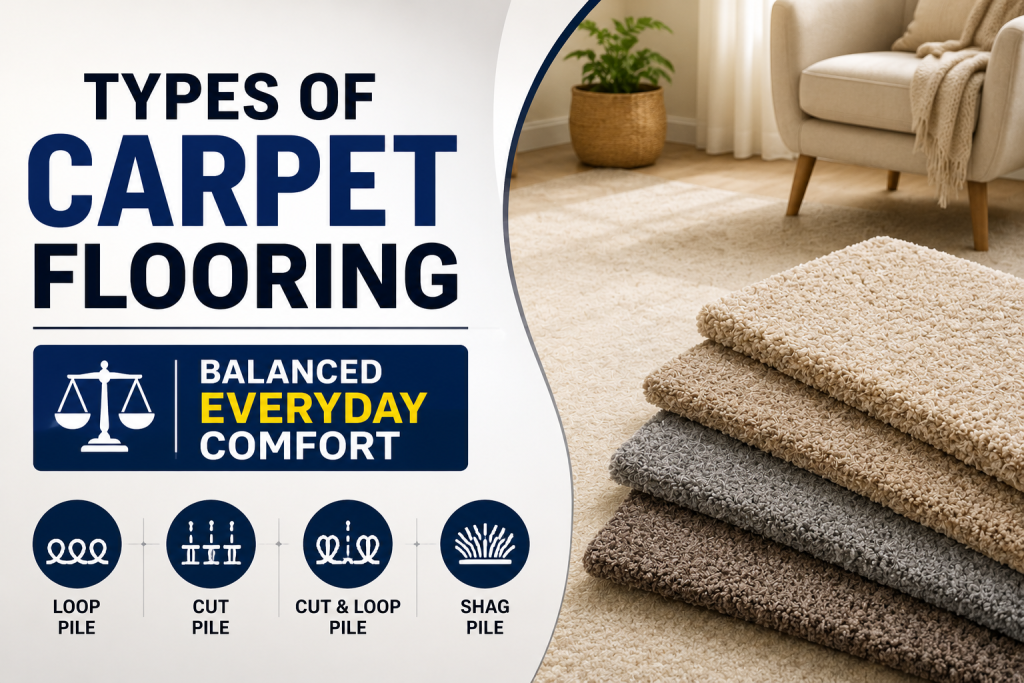
In suburban homes across states like Ohio, North Carolina, and Colorado, textured carpet is often installed in living rooms, bedrooms, and open-plan spaces where foot traffic is moderate but appearance still matters. It strikes a balance between comfort and durability, offering a softer feel than loop styles while being more forgiving than high-pile luxury carpets. Another advantage is its adaptability to different interior styles, from traditional to contemporary. When evaluating types of carpet flooring, textured carpet is frequently chosen by homeowners who want a practical, family-friendly option that maintains its appearance over time without appearing overly formal or overly casual.
Plush Carpet and High-End Residential Comfort
Plush carpet is often considered one of the most luxurious types of carpet flooring in American residential design, offering a smooth, velvety surface with a uniform appearance. Unlike textured styles, plush carpet fibers are cut evenly and densely packed, creating a soft, formal finish that feels premium underfoot.
This carpet type is commonly found in primary bedrooms, formal living rooms, and upscale homes in markets like California, New York, and Washington state, where interior aesthetics and resale value play a major role in material selection. Homeowners often choose plush carpet to enhance comfort in low-traffic areas where visual elegance matters more than extreme durability. However, plush carpet does require more maintenance, as footprints and vacuum marks are more visible on its smooth surface. When comparing carpet flooring types, it is best suited for controlled environments where comfort and luxury are prioritized over heavy daily wear.
Carpet Fibers Explained: What Actually Determines Performance
When comparing types of carpet flooring, construction style matters, but fiber choice is what ultimately determines durability, stain resistance, and long-term performance in American homes. Carpet fibers affect everything from how the flooring feels underfoot to how well it holds up in high-traffic areas, moisture-prone environments, and households with kids or pets.
The most common residential carpet fibers in the US include nylon, polyester, olefin (polypropylene), and wool. Nylon is widely considered the most durable and resilient, making it a top choice for busy homes in states like Illinois and New Jersey. Polyester is valued for its softness and stain resistance at a lower price point, while olefin performs well in moisture-prone areas like basements or coastal climates. Wool, though premium, offers natural comfort and longevity but comes with a higher cost and maintenance requirements. Understanding these material differences is essential when evaluating carpet flooring types, because two carpets that look identical on the surface can perform very differently over time based on fiber composition.
Residential Carpet Types: Choosing the Right Fit for Your Home
Understanding types of carpet flooring in a real-world residential context comes down to matching performance with lifestyle needs. Most US homeowners don’t choose carpet based on a single feature; they balance comfort, durability, maintenance, and long-term value depending on how each room is used. For example, family homes in high-traffic suburbs like Atlanta or Dallas often prioritize durability in main living areas, while reserving softer, more comfortable options for bedrooms. Meanwhile, homes in colder northern regions may lean toward thicker, insulated carpet choices to improve warmth and energy efficiency during long winters.
This is where residential carpet types become important, as they group carpet choices into practical categories based on use-case rather than just appearance. Whether the goal is stain resistance for active households, a luxury feel for primary suites, or budget-friendly solutions for rental properties, the right selection depends on aligning carpet performance with daily life demands.
Final Guide
Selecting the best option among types of carpet flooring comes down to understanding how your household actually uses each space. A carpet that performs well in a quiet guest bedroom may fail quickly in a high-traffic hallway or active family room, especially in busy US suburban homes where daily wear is constant. Start by evaluating traffic levels, maintenance expectations, and climate conditions. Homes in humid regions like Florida or coastal states benefit from stain-resistant, moisture-tolerant fibers. In contrast, colder regions like Minnesota or Michigan often prioritize insulation and softness for added warmth. Budget also plays a key role, especially when planning full-home flooring upgrades or remodels aimed at improving resale value. Ultimately, the best approach to types of carpet flooring is not choosing one “best” carpet, but matching the right construction and fiber to each room’s function. This ensures long-term performance, better comfort, and stronger return on investment for homeowners focused on both lifestyle and property value.
FAQs About Types of Carpet Flooring
What are the most common types of carpet flooring used in US homes?
The most common types of carpet flooring in American homes include cut pile, loop pile, textured carpet, and plush styles. Each is chosen based on room usage, soft carpets for bedrooms, and more durable options for high-traffic areas like hallways and living rooms.
Which carpet type is best for high-traffic areas?
Loop pile and textured carpet are generally the best choices for high-traffic spaces. Their construction helps resist crushing and wear, making them ideal for busy households in states like Texas, Illinois, and Georgia.
Is plush carpet a good option for families with kids or pets?
Plush carpet offers comfort but may not be the most practical choice for active families. It shows footprints and stains more easily, so it’s usually better suited for low-traffic rooms like primary bedrooms or formal living spaces.
How long does residential carpet typically last?
Most residential carpet types last between 8 and 15 years, depending on fiber quality, traffic levels, and maintenance. Higher-quality nylon carpets tend to last longer than polyester or olefin options.
What carpet fiber is the most durable?
Nylon is widely considered the most durable carpet fiber in the US market. It performs well in busy households and maintains its appearance longer compared to many other synthetic fibers.