


Types of Driveways Explained for Residential Homes
Choosing the right driveway is about more than creating a place to park your vehicle. The driveway plays a major role in curb appeal, property value, maintenance costs, and the overall appearance of your home. For many American homeowners, selecting the best option depends on budget, climate, durability expectations, and long-term upkeep requirements. With so many types of driveways available today, it can be difficult to determine which material offers the best balance of performance and aesthetics.
Some homeowners prioritize affordability, while others focus on longevity or architectural style. Regional weather conditions also matter. A driveway that performs well in Arizona’s dry climate may not be the ideal choice for a homeowner in Minnesota, where freeze-thaw cycles can affect surface durability. This guide explains the most popular residential driveway materials, their advantages, potential drawbacks, and the situations where each option works best.
Why Choosing the Right Driveway Matters
A driveway is one of the first features visitors notice when approaching a home. Beyond appearance, the right driveway can improve functionality, reduce maintenance expenses, and contribute to long-term property value. Homeowners often focus on roofing, siding, and landscaping upgrades, but driveway selection can have a significant impact on curb appeal and resale potential. The best choice depends on several factors, including local climate, household traffic, installation budget, and maintenance expectations.
In regions such as Florida and Texas, heat resistance may be a priority, while homeowners in northern states often need surfaces that can withstand snow removal and repeated freeze-thaw cycles. Drainage performance is another important consideration, especially in areas that experience heavy rainfall. Understanding the different types of driveways available today helps homeowners make a more informed investment that aligns with both their practical needs and aesthetic goals.
Types of Driveways: Understanding the Most Popular Residential Options
Modern homeowners can choose from several types of driveways, each offering unique benefits in terms of appearance, durability, maintenance, and cost. The right material often depends on how the driveway will be used, the home’s architectural style, and local environmental conditions. Some options are designed for affordability and quick installation, while others provide a premium appearance that can enhance curb appeal and increase perceived property value. Maintenance requirements also vary considerably. Certain surfaces may need periodic sealing, while others require occasional leveling or repairs over time.
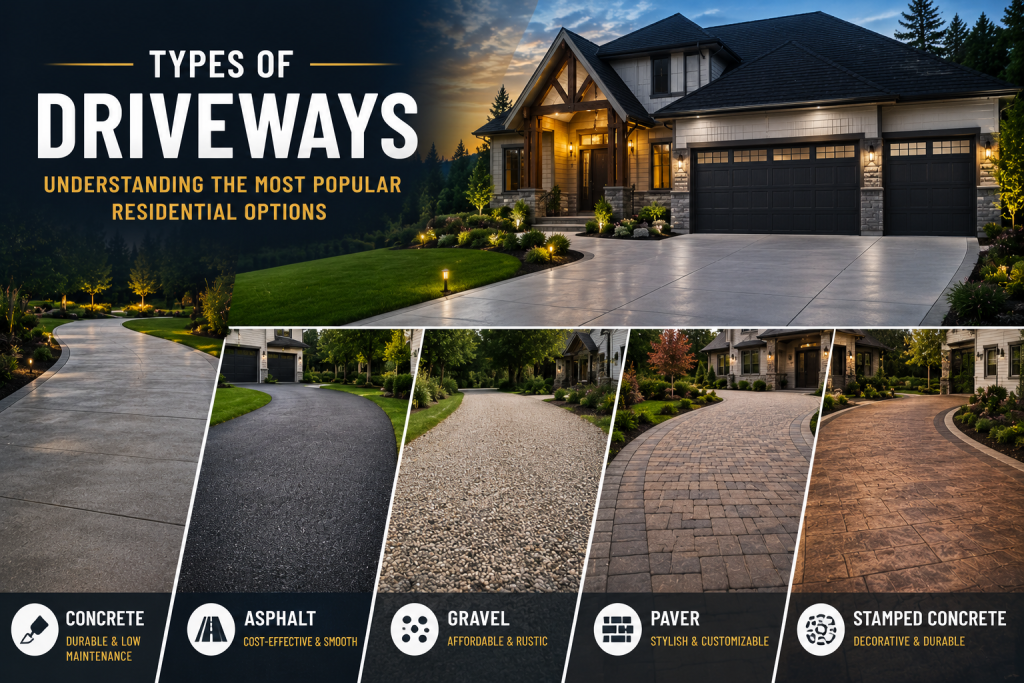
When comparing residential driveway materials, it is important to evaluate both the upfront installation cost and the long-term ownership expenses. A driveway that costs less initially may require more maintenance throughout its lifespan. The following sections break down the most common driveway materials used across the United States and explain where each option performs best.
Concrete Driveways: A Durable Choice Among Types of Driveways
Among the most popular types of driveways, concrete driveways are known for their strength, clean appearance, and long service life. When properly installed and maintained, a concrete surface can last 30 years or more, making it a practical investment for many homeowners. Concrete performs especially well in suburban neighborhoods where curb appeal and durability are priorities. Its smooth surface is easy to clean, supports heavy vehicles, and complements a wide range of architectural styles.
Homeowners can also choose different finishes and textures to create a more customized appearance. However, concrete is typically more expensive to install than some alternative materials. In colder regions, cracking can occur if the surface is exposed to repeated freeze-thaw cycles without proper drainage. Despite this consideration, concrete remains one of the most reliable driveway materials for long-term residential use.
Asphalt Driveways
For homeowners seeking a balance between affordability and performance, asphalt driveways remain one of the most common residential paving solutions in the United States. Asphalt is generally less expensive to install than concrete and can often be completed more quickly, making it attractive for budget-conscious projects. One of asphalt’s biggest advantages is its flexibility. The material can expand and contract with temperature changes, which helps reduce cracking in regions that experience harsh winters. This characteristic makes asphalt a popular choice in northern states where snow and ice are common seasonal challenges.
On the downside, asphalt typically requires periodic sealing to maintain its appearance and protect the surface from moisture and UV exposure. Over time, fading and minor surface deterioration may occur. Even with routine maintenance, many homeowners appreciate asphalt for its practical combination of durability, accessibility, and cost-effectiveness.
Gravel Driveways
Homeowners with large properties or rural homes often choose gravel driveways because of their low installation cost and straightforward construction process. Gravel can be installed relatively quickly and is available in various sizes and colors, allowing homeowners to match the driveway to their property’s appearance. One of the biggest advantages of gravel is excellent drainage. Water can move through the surface more easily than with many hard-paved materials, helping reduce standing water after heavy rainfall. This feature can be especially beneficial in areas where drainage is a concern.
The primary drawback is maintenance. Gravel may shift over time due to vehicle traffic, weather conditions, and natural settling. Periodic raking and replenishment are often necessary to keep the surface level and visually appealing. Despite these requirements, gravel remains a practical choice for homeowners seeking an economical and functional driveway solution.
Paver Driveways
For homeowners seeking a premium appearance, paver driveways offer exceptional design flexibility and strong curb appeal. Individual pavers are available in a wide variety of shapes, patterns, textures, and colors, making it possible to create a customized look that complements the home’s architecture. One advantage of paver surfaces is repairability. If a section becomes damaged or settles unevenly, individual pavers can often be replaced without removing the entire driveway. This can simplify long-term maintenance compared to some continuous paving materials.
Pavers also provide excellent visual appeal for upscale properties and can contribute positively to perceived home value. However, installation costs are typically higher because of the labor-intensive preparation and placement process. Weed growth between joints and occasional re-leveling may also be necessary. Despite the higher investment, many homeowners choose pavers for their durability, versatility, and attractive finished appearance.
Comparing Types of Driveways by Cost, Durability, and Maintenance
When evaluating types of driveways, homeowners should look beyond the initial installation price. A lower-cost driveway may require more frequent maintenance, while a higher-cost option can deliver better longevity and fewer repairs over time. Concrete generally offers a long lifespan with moderate maintenance requirements, making it a popular choice for suburban homes. Asphalt is often more affordable upfront but typically requires periodic sealing to maintain performance. Gravel has the lowest installation cost but demands regular upkeep to keep the surface level and attractive.
Paver systems usually involve the highest initial investment, yet they provide excellent visual appeal and simplified spot repairs. Climate also plays a significant role in long-term performance. Areas with heavy snowfall, extreme heat, or frequent rainfall can affect how different materials age. Comparing durability, maintenance expectations, and lifetime value helps homeowners select a driveway that supports both their budget and long-term property goals.
Stamped Concrete Driveways
Among decorative upgrades within types of driveways, stamped concrete driveways are designed to mimic the appearance of high-end materials like stone, brick, or slate while maintaining the structural benefits of poured concrete. This makes them a popular choice for homeowners who want a custom look without the cost of natural stone installation. Stamped concrete is created by pressing patterns into freshly poured concrete and applying color treatments to enhance realism.
The result can significantly improve curb appeal, especially for homes aiming for a more upscale or architectural finish. While visually appealing, stamped surfaces do require periodic sealing to protect the finish and preserve color vibrancy. In regions with extreme weather, surface wear may become noticeable over time if maintenance is neglected. Even so, stamped concrete remains a strong option for homeowners seeking a decorative yet durable driveway solution.
Circular Driveway Styles
Within advanced types of driveways, circular driveway styles are often associated with larger homes, luxury properties, and estates where space and curb presentation are key priorities. These driveways typically loop from the main road to the front of the home, allowing vehicles to enter and exit without reversing into traffic. One of the main benefits of a circular design is improved traffic flow. This layout is especially useful for households with multiple drivers or frequent visitors.
It also enhances the visual impact of a property, creating a grand entrance that complements landscaped front yards and architectural focal points. However, circular driveways require more land than standard straight designs, which may not be suitable for smaller suburban lots. Installation costs can also be higher due to the increased surface area and design complexity. Despite these considerations, they remain a popular choice for homeowners seeking both convenience and a high-end appearance.
Residential Paving Options
Homeowners exploring types of driveways will find a wide range of residential paving options designed to match different budgets, climates, and design preferences. Beyond traditional materials like concrete and asphalt, modern paving solutions now include reinforced composites, permeable surfaces, and hybrid systems that improve drainage and sustainability.
Many homeowners choose paving solutions based on long-term performance rather than just upfront cost. For example, permeable systems are increasingly used in areas with heavy rainfall to reduce runoff and improve water management. In contrast, traditional solid surfaces remain popular for their simplicity and proven durability. The right paving choice often depends on regional climate, soil conditions, and HOA requirements. In some neighborhoods, aesthetic guidelines may also influence material selection. With so many available options, homeowners can tailor their driveway design to balance functionality, appearance, and maintenance needs effectively.
Which Types of Driveways Add the Most Home Value?
When evaluating types of driveways, homeowners often focus on which option delivers the strongest return on investment and improves resale appeal. In the U.S. housing market, curb appeal plays a major role in buyer perception, and the driveway is one of the first hardscape features potential buyers notice. High-end materials like pavers and stamped finishes typically enhance perceived property value due to their visual appeal and design flexibility.

These options are especially attractive in suburban neighborhoods where exterior presentation influences buyer interest. Meanwhile, concrete remains a strong middle-ground option, offering durability and a clean, neutral appearance that appeals to a wide range of buyers. In competitive housing markets, such as parts of California, Texas, and Florida, a well-maintained driveway can subtly influence resale value by improving first impressions. Ultimately, the best investment depends on balancing budget, maintenance expectations, and neighborhood standards rather than choosing the most expensive material alone.
Final Thoughts
Choosing between the many types of driveways is ultimately a balance of budget, durability, maintenance expectations, and long-term curb appeal. Each material—whether concrete, asphalt, gravel, or pavers—offers distinct advantages depending on your property’s needs and regional climate conditions. For homeowners in colder regions like the Midwest or Northeast, durability against freeze-thaw cycles is often the top priority. In warmer states such as Arizona or Texas, heat resistance and surface stability become more important. Meanwhile, coastal or high-rainfall areas may require better drainage performance to prevent long-term surface damage. The best driveway investment is one that aligns with both your lifestyle and your home’s long-term value goals. By carefully comparing options and considering maintenance requirements, homeowners can select a solution that enhances both function and curb appeal for years to come.
Frequently Asked Questions
What is the most durable driveway material?
Concrete and paver systems are generally considered the most durable options, especially when properly installed and maintained. Their lifespan can extend several decades under normal residential use.
Which driveway type is the cheapest to install?
Gravel is typically the most affordable upfront option, making it popular for rural properties or large lots where budget is a primary concern.
What are the best types of driveways for cold climates?
When evaluating different types of driveways for cold climates, asphalt is often considered one of the best options. Among various driveway materials, asphalt performs well in freeze-thaw environments because of its flexibility, which helps reduce cracking during seasonal temperature changes in colder regions where types of driveways must withstand snow, ice, and frequent temperature shifts.
Do driveways increase home value?
Yes, a well-designed driveway improves curb appeal and can positively influence buyer perception, especially in competitive real estate markets. Understanding these factors helps homeowners choose the most suitable option based on both practical needs and long-term value.