


Types of Fences Explained: Residential Fence Guide
Choosing between different types of fences is one of the most important decisions a homeowner makes when improving a property. A fence is not just a boundary—it affects privacy, security, curb appeal, and even long-term home value. With so many materials and styles available today, understanding the main options can help homeowners make a smarter investment based on budget, climate, and design goals. Most residential properties in the United States use fencing for one or more key purposes: protecting children and pets, increasing privacy from neighbors, defining property lines, or improving outdoor aesthetics.
However, not all fencing materials perform the same in different environments. For example, humid southern states often require weather-resistant options, while colder northern regions need materials that can withstand freeze-thaw cycles. In this guide, we’ll break down the most common fencing options, their advantages, drawbacks, and where each option works best. By the end, you’ll have a clear understanding of which fencing style fits your home, neighborhood standards, and long-term maintenance expectations.
Overview of the Most Common Types of Fences
When evaluating different types of fences, homeowners in the United States typically narrow their choices down to a few core materials that balance cost, durability, privacy, and appearance. Each option serves a different purpose depending on the property layout, local climate, and homeowner priorities such as maintenance level or curb appeal. Wood remains one of the most traditional choices, often used for privacy-focused yards and natural aesthetics. Vinyl has grown in popularity due to its clean look and low maintenance requirements, making it appealing for busy homeowners. Metal options such as aluminum are frequently chosen for their durability and resistance to rust, while chain-link is widely used for affordability and functional security purposes.
Beyond materials, fencing also varies by design purpose. Some homeowners prioritize full privacy, while others prefer decorative boundaries that enhance landscaping. This is where styles begin to overlap with function, especially in suburban neighborhoods where HOA rules and resale value often influence decisions.Understanding the main categories of fencing helps homeowners quickly eliminate unsuitable options and focus on materials that match both lifestyle and long-term maintenance expectations.
Wood Fencing vs Vinyl Fencing for Homes
Among the most popular types of fences, wood and vinyl are often compared because both are widely used in suburban neighborhoods across the United States. While they can achieve similar privacy-focused designs, they differ significantly in maintenance, lifespan, and overall cost of ownership.
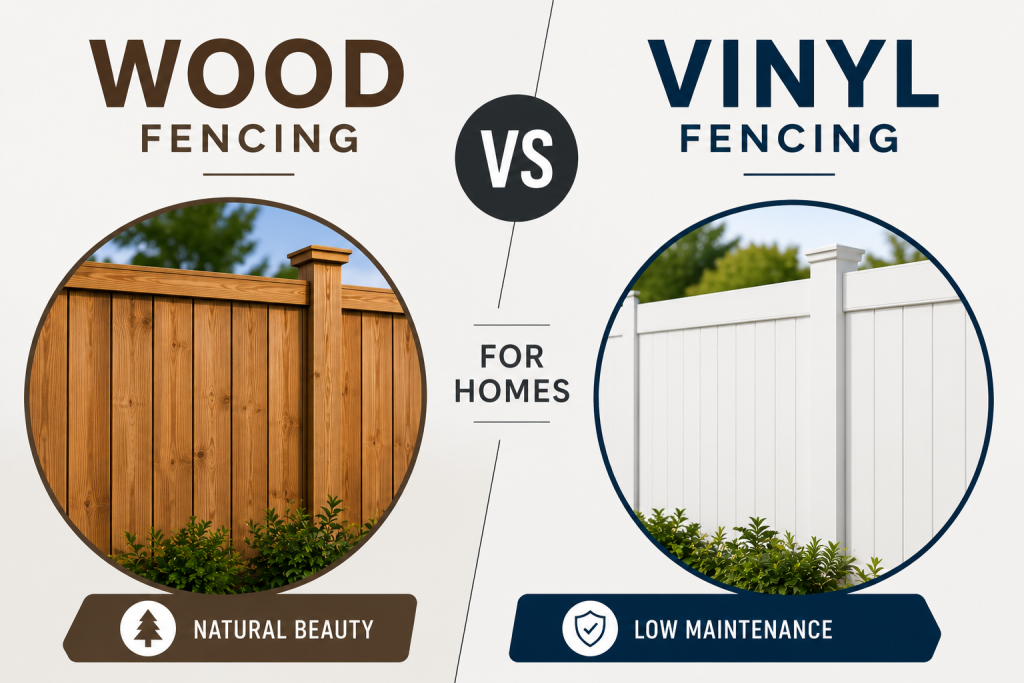
Wood Fencing: Natural Appeal and Flexibility
Wood fencing is valued for its natural appearance and design flexibility. Homeowners can customize height, stain color, and panel style to match architectural features or landscaping themes. It is commonly used in backyard privacy applications and remains one of the most traditional choices for residential properties. However, wood requires regular sealing or staining to prevent warping, rot, and insect damage, especially in humid or rainy climates.
Vinyl Fencing: Low Maintenance Modern Option
Vinyl fencing has become a strong alternative for homeowners seeking a cleaner, low-maintenance solution. It does not require painting or staining and is resistant to moisture damage, making it ideal for regions with frequent rain or high humidity. Although upfront costs are higher than wood, long-term maintenance expenses are significantly lower, making it a practical investment for many households. Both materials remain popular in modern fencing because they balance privacy, durability, and curb appeal in different ways depending on homeowner priorities.
Types of Fences: Aluminum vs Chain-Link Metal Fencing
When comparing different types of fences, metal options like aluminum and chain-link are among the most practical and widely used across residential and commercial properties in the United States. Each serves a distinct purpose depending on whether the homeowner prioritizes appearance, security, or affordability.
Aluminum Fencing: Durable and Decorative
Aluminum fencing is commonly chosen for its balance of strength and visual appeal. It offers a clean, modern look that can complement both traditional and contemporary homes. Unlike steel or iron, aluminum is resistant to rust, making it suitable for humid or coastal environments. Many homeowners use it for front yards, pool enclosures, and decorative boundaries where visibility is important but style still matters.
Chain-Link Fences: Budget-Friendly Security
Chain-link fences are among the most affordable and functional fencing options available. They are widely used for securing backyards, commercial spaces, and large properties where cost efficiency is a priority. While chain-link fences do not provide privacy on their own, privacy slats or landscaping can be added to improve coverage. Their durability and low installation cost make them one of the most practical choices for homeowners and property owners alike. Both options highlight how metal fencing can serve very different needs depending on budget, aesthetics, and property function.
Privacy Fence Styles and Backyard Fence Designs
Privacy-focused fence designs are among the most requested options by homeowners across the United States. These styles are specifically built to reduce visibility from neighboring properties, block street views, and create a more secure, comfortable outdoor living space.
Privacy Fence Styles for Residential Properties
Privacy fencing typically includes solid panel designs such as full-height wood boards, vinyl panels, or composite materials that eliminate gaps between slats. These designs are especially popular in suburban neighborhoods where homeowners value seclusion for patios, pools, and backyard entertainment areas. Many modern homes also incorporate hybrid styles that combine partial visibility with privacy screening to maintain airflow while still reducing direct sightlines.
Backyard Fence Designs for Function and Aesthetics
Backyard fence designs vary widely depending on landscaping goals and property layout. Some homeowners prefer tall, enclosed designs for maximum privacy, while others choose shorter decorative boundaries to highlight gardens or outdoor features. Decorative tops, lattice extensions, and mixed-material designs are often used to enhance curb appeal while maintaining function. As one of the most important segments of types of fences, privacy and backyard-focused options continue to evolve as homeowners prioritize outdoor living spaces, HOA compliance, and long-term property value improvements.
Decorative Types of Fences and Final Comparison Guide
Not all types of fences are built purely for privacy or security—many homeowners also choose fencing to enhance curb appeal and create a more visually appealing landscape. Decorative fencing plays a major role in elevating the overall design of a property while still serving basic boundary or safety functions.

Decorative Fencing for Curb Appeal
Decorative fencing is commonly used in front yards, gardens, and entryways where appearance matters as much as function. These designs often include ornamental details, custom post caps, and mixed materials that complement the architectural style of the home. Homeowners use decorative fencing to highlight landscaping features, frame walkways, or create a welcoming entrance without fully blocking visibility.
Choosing the Right Fence for Your Home
Selecting the right option from the many types of fences depends on balancing key factors such as budget, maintenance level, durability, and aesthetic goals. While some homeowners prioritize privacy and security, others focus on style and resale value. Climate also plays an important role, as certain materials perform better in humid, coastal, or cold-weather regions. Ultimately, understanding how each fencing category performs helps homeowners make a confident decision that aligns with long-term property needs, HOA guidelines, and overall design preferences.
Conclusion
Understanding the main types of fences helps homeowners make smarter decisions when planning outdoor improvements, whether the goal is privacy, security, or enhancing curb appeal. Each fencing material offers its own balance of cost, durability, maintenance, and design flexibility, which makes the selection process highly dependent on individual property needs. Wood and vinyl remain strong choices for privacy-focused yards, while aluminum and chain-link options provide practical solutions for durability and budget-conscious installations. Decorative fencing adds an additional layer of design value, allowing homeowners to personalize their outdoor spaces without sacrificing function. In the end, choosing the right fencing solution comes down to evaluating long-term maintenance, climate conditions, HOA requirements, and how the fence will support both daily use and future property value. A well-chosen fence not only defines your space but also enhances the overall look and functionality of your home for years to come.
Frequently Asked Questions
What are the most common types of fences for residential properties?
The most common types of fences for residential properties include wood, vinyl, aluminum, and chain-link. Different fencing options serve various purposes, ranging from privacy and curb appeal to security, durability, and affordability.
Which fence is best for privacy?
Wood and vinyl are generally the top choices for privacy-focused installations. Solid panel designs help block visibility and create more secluded outdoor spaces.
What is the lowest maintenance fencing option?
Vinyl and aluminum are typically considered the lowest maintenance fencing options because they do not require frequent painting, sealing, or rust treatment.
Are metal fences better than wood fences?
It depends on your priorities. Metal fences like aluminum offer longer durability with less maintenance, while wood provides a more natural look but requires ongoing upkeep.
Which fence is best for backyard use?
For most homeowners, backyard fencing depends on use case. Privacy-focused yards often use wood or vinyl, while open designs may use aluminum or chain-link for visibility and security. Understanding these common questions helps simplify the decision-making process when choosing the right fencing solution for your home.