


Different Types of Floor Maintenance Explained (2026 US Guide)
Understanding the types of floor maintenance is essential for homeowners who want to protect their investment and extend the lifespan of flooring systems. In US homes, flooring is exposed daily to foot traffic, moisture, temperature changes, and accidental spills, all of which gradually affect appearance and performance over time. Different flooring materials, such as hardwood, tile, vinyl, laminate, and carpet, require different maintenance approaches. What works for one surface may damage another, which is why a structured understanding of maintenance categories is so important for effective residential flooring upkeep.
Instead of treating maintenance as a single task, it helps to break it into distinct types such as cleaning, refinishing, polishing, sealing, and deep restoration. Each method serves a specific purpose and is used at different stages of a floor’s lifecycle. This guide breaks down each maintenance type so homeowners can choose the right approach for long-term durability and appearance.
Preventive Floor Maintenance
Preventive care is one of the most important types of floor maintenance because it focuses on avoiding damage before it happens. Instead of fixing problems later, preventive maintenance helps homeowners protect flooring through consistent habits and simple protective measures. In most US homes, this includes routine cleaning, using entry mats, placing furniture pads, and controlling indoor moisture levels. These small actions significantly reduce wear and tear on all flooring types, including hardwood, vinyl, laminate, tile, and carpet.
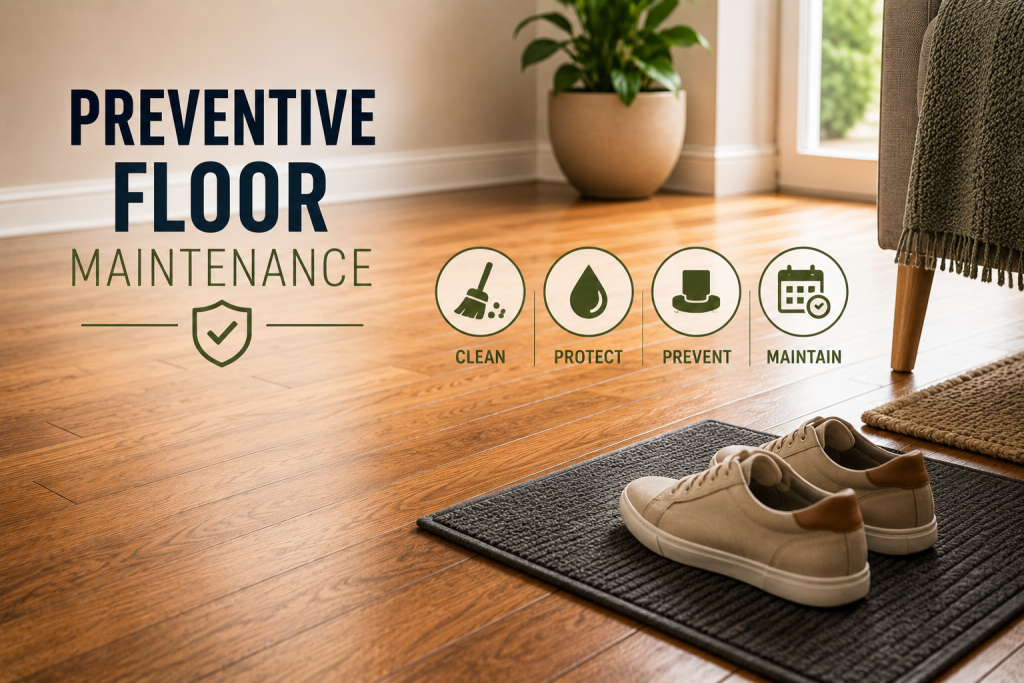
Preventive residential flooring upkeep is especially important in high-traffic areas like hallways, kitchens, and living rooms where dirt and debris can quickly accumulate. Regular sweeping or vacuuming prevents scratches caused by grit, while quick spill cleanup reduces the risk of staining or moisture damage. While preventive maintenance does not restore damaged floors, it plays a critical role in extending the lifespan of flooring systems and reducing the need for expensive repairs or restoration in the future.
Hardwood Floor Refinishing
Among the most important types of floor maintenance, hardwood floor refinishing is a restorative process that brings worn or damaged wood floors back to life. Over time, hardwood surfaces lose their shine due to scratches, foot traffic, and exposure to moisture or sunlight, especially in busy US households. hardwood floor refinishing typically involves sanding down the top layer of the wood to remove imperfections, followed by staining and sealing to restore its original appearance. This process not only improves aesthetics but also strengthens the protective layer that shields the wood from future damage.
Unlike basic cleaning or preventive care, refinishing is a more intensive maintenance method usually performed every several years depending on usage and floor condition. It is particularly important in homes where floors experience heavy traffic or visible wear. While it can be costly compared to other maintenance types, refinishing significantly extends the life of hardwood flooring and helps maintain long-term property value.
Tile Grout Cleaning and Restoration
Tile grout cleaning is a crucial part of the types of floor maintenance because even durable tile surfaces can lose their appeal when grout lines become stained, cracked, or dirty. In many US homes, kitchens, bathrooms, and entryways are the most affected areas due to constant exposure to moisture, dirt, and spills. Unlike the tile itself, grout is porous, meaning it absorbs liquids and debris over time. This makes regular cleaning essential to prevent discoloration and bacterial buildup. Routine maintenance often includes scrubbing grout lines with specialized brushes and applying pH-neutral cleaners designed for tile surfaces.
When buildup becomes severe, grout restoration may be required. This can involve deep cleaning, re-grouting damaged sections, or applying a protective sealant to prevent future staining. These steps help restore both cleanliness and structural integrity. Proper grout maintenance not only improves appearance but also extends the durability of tiled floors, making it an essential component of long-term residential flooring upkeep.
Carpet Deep Cleaning Methods
Carpet deep cleaning is a key part of the broader types of floor maintenance because carpets trap dust, allergens, and dirt deep within fibers that regular vacuuming cannot fully remove. In many US households, especially those with pets or children, carpets require periodic deep cleaning to maintain hygiene and appearance. Unlike surface-level cleaning, deep cleaning involves methods such as hot water extraction (steam cleaning), shampooing, or encapsulation. These techniques help lift embedded dirt, remove stains, and refresh carpet fibers. Professional-grade equipment is often more effective than DIY machines, especially for older or heavily soiled carpets.
Regular deep cleaning also improves indoor air quality by reducing allergens and bacteria buildup. Most experts recommend scheduling this type of maintenance at least once or twice a year, depending on foot traffic and household conditions. When performed correctly, carpet deep cleaning restores softness, color, and freshness, making it an essential step in long-term residential flooring upkeep.
Vinyl Floor Polishing and Care
Vinyl floor polishing and care is another important category within the types of floor maintenance, especially for modern US homes that use vinyl for kitchens, bathrooms, and high-traffic areas. Vinyl flooring is valued for its durability and low maintenance, but it still requires proper care to maintain its shine and surface protection over time. Routine maintenance typically involves sweeping or vacuuming to remove dirt and debris, followed by damp mopping using a mild, non-abrasive cleaner. This prevents buildup that can dull the surface or leave streaks. Unlike hardwood, vinyl does not usually require traditional waxing, but certain finishes may benefit from periodic polishing to restore gloss.
It’s important to avoid harsh chemicals or abrasive tools, as these can damage the protective wear layer and reduce the floor’s lifespan. Instead, using vinyl-safe products ensures long-term performance and appearance. With consistent care, vinyl floors remain visually appealing and highly functional, making them one of the easiest flooring types to maintain in residential settings.
Laminate Floor Care Techniques
Laminate floor care is a vital part of the overall types of floor maintenance, especially in US homes where laminate is widely used as a cost-effective alternative to hardwood. While laminate is designed to be durable and scratch-resistant, it still requires proper care to prevent surface wear and moisture-related damage. Routine maintenance typically includes dry sweeping or vacuuming to remove dust and debris that can act like abrasives underfoot. For deeper cleaning, a lightly damp microfiber mop with a laminate-safe cleaner is recommended. Excess water should always be avoided, as moisture can seep into seams and cause swelling or warping.
Unlike hardwood, laminate cannot be refinished, which makes preventive care even more important. Homeowners should also use furniture pads and entry mats to reduce scratches and dirt buildup in high-traffic areas. When properly maintained, laminate flooring offers long-lasting performance and appearance, making it a popular option in modern residential flooring systems.
Floor Sealing Methods Explained
Floor sealing methods play a crucial role in the types of floor maintenance because they provide a protective barrier that helps extend the life of many flooring systems. In US homes, sealing is commonly used on surfaces like hardwood, concrete, natural stone, and sometimes tile grout to prevent moisture penetration, staining, and surface wear. Different sealing methods include surface sealers, penetrating sealers, and topical coatings. Penetrating sealers soak into the material and protect it from within, making them ideal for porous surfaces like stone or grout. Topical sealers, on the other hand, create a protective layer on the surface, offering added resistance against scratches and spills.
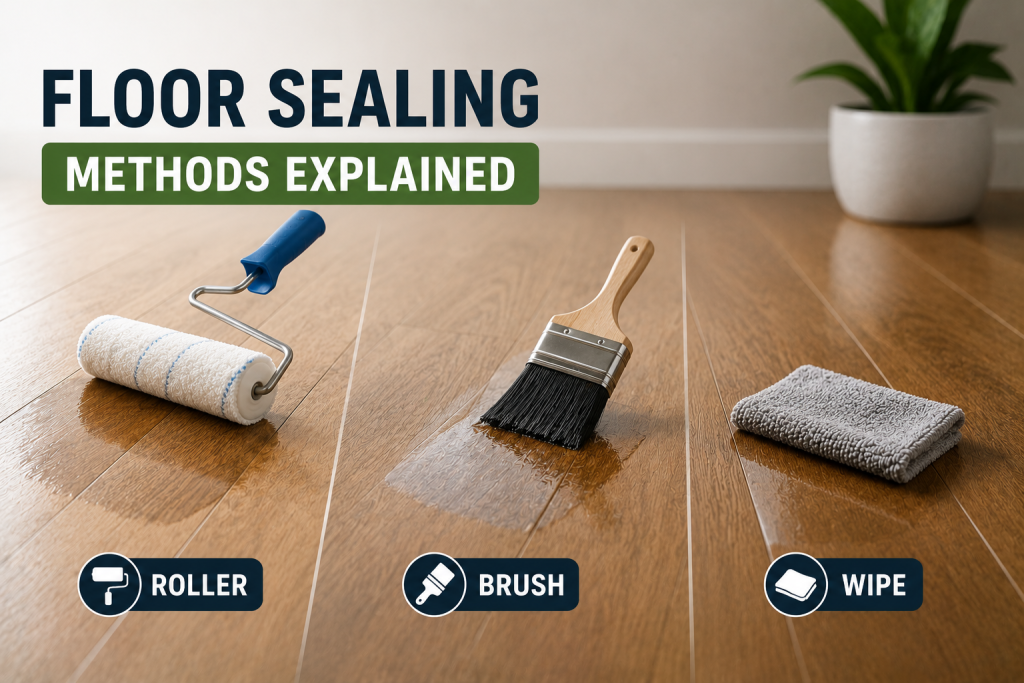
In hardwood flooring, sealing is typically applied after sanding or refinishing to lock in color and protect the surface. For tile floors, sealing grout lines helps prevent discoloration and moisture absorption, especially in kitchens and bathrooms. Proper sealing is a long-term investment in residential flooring upkeep, reducing maintenance frequency and helping floors maintain their appearance and durability over time.
Corrective vs Restorative Maintenance
Understanding types of floor maintenance also means recognizing the difference between corrective and restorative care, as both serve distinct roles in keeping flooring functional and visually appealing in US homes. Corrective maintenance focuses on fixing minor issues before they worsen. This includes repairing small scratches, replacing damaged planks, re-grouting tile lines, or addressing early signs of wear. It is typically less expensive and helps maintain residential flooring upkeep without major disruption.
Restorative maintenance, on the other hand, is more intensive and is used when floors have significant damage or long-term wear. This can include hardwood floor refinishing, deep carpet extraction, full tile restoration, or resurfacing worn vinyl. These processes aim to return flooring as close as possible to its original condition. While corrective maintenance helps slow deterioration, restorative work is often necessary after years of use or neglect. Together, they form a complete maintenance cycle that protects both appearance and long-term flooring performance.
Final Verdict
Choosing the right approach from the different types of floor maintenance comes down to balancing prevention, routine care, and timely restoration. In most US homes, the most effective strategy is not relying on a single method, but combining multiple maintenance types throughout the flooring lifecycle. Preventive maintenance should always be the foundation. Simple habits like regular cleaning, using mats, and controlling moisture help protect all flooring types and reduce long-term damage. This minimizes the need for costly interventions and supports consistent residential flooring upkeep. Corrective maintenance should be used when early signs of damage appear, such as scratches, loose tiles, or minor stains. Addressing these issues quickly prevents them from becoming larger problems. Restorative methods, including hardwood floor refinishing or deep cleaning treatments, should be reserved for floors that show significant wear or aging. Together, these layers of maintenance create a complete system that preserves both appearance and durability while optimizing long-term flooring value.
FAQs
What are the main types of floor maintenance?
The main types of floor maintenance include preventive care, corrective maintenance, and restorative methods such as refinishing, deep cleaning, and sealing.
What is preventive residential flooring upkeep?
Preventive residential flooring upkeep includes daily cleaning, spill control, and protective measures like mats and furniture pads to avoid damage.
When is hardwood floor refinishing needed?
Hardwood floor refinishing is needed when floors show deep scratches, dullness, or surface wear that cannot be fixed with cleaning.
What does tile grout cleaning involve?
Tile grout cleaning involves scrubbing grout lines, removing stains, and applying sealers to prevent moisture and dirt buildup.
How often should carpet deep cleaning be done?
Carpet deep cleaning is typically recommended once or twice a year depending on foot traffic and household conditions.
What is floor sealing used for?
Floor sealing methods protect surfaces like wood, stone, and grout from moisture, stains, and long-term wear.
What is the difference between corrective and restorative maintenance?
Corrective maintenance fixes small issues early, while restorative maintenance repairs significant damage through methods like refinishing or deep cleaning.