


Types of House Siding Explained
Choosing among the different types of house siding is one of the biggest exterior decisions a homeowner makes. Siding does more than shape curb appeal—it protects the structure from moisture, wind, UV exposure, and seasonal temperature changes while influencing maintenance costs and long-term resale value. The right material can also improve energy performance and help reduce utility bills in climates with extreme heat or cold.
Across the United States, siding selection often varies based on local weather conditions, HOA expectations, and long-term ownership goals. When evaluating exterior materials, homeowners should compare durability, appearance, installation requirements, and expected lifespan rather than focusing only on upfront cost. Modern siding options also offer improved insulation performance and stronger resistance against weather-related wear.
How to Compare Different Types of House Siding Before Choosing
With so many exterior materials available, comparing types of house siding using a structured approach leads to better long-term decisions. The best choice depends on climate, maintenance expectations, budget, and how long you plan to stay in the home. Start with durability. Homes in hurricane-prone or humid regions often need stronger moisture and impact resistance, while colder areas benefit from materials that handle freeze–thaw cycles well.
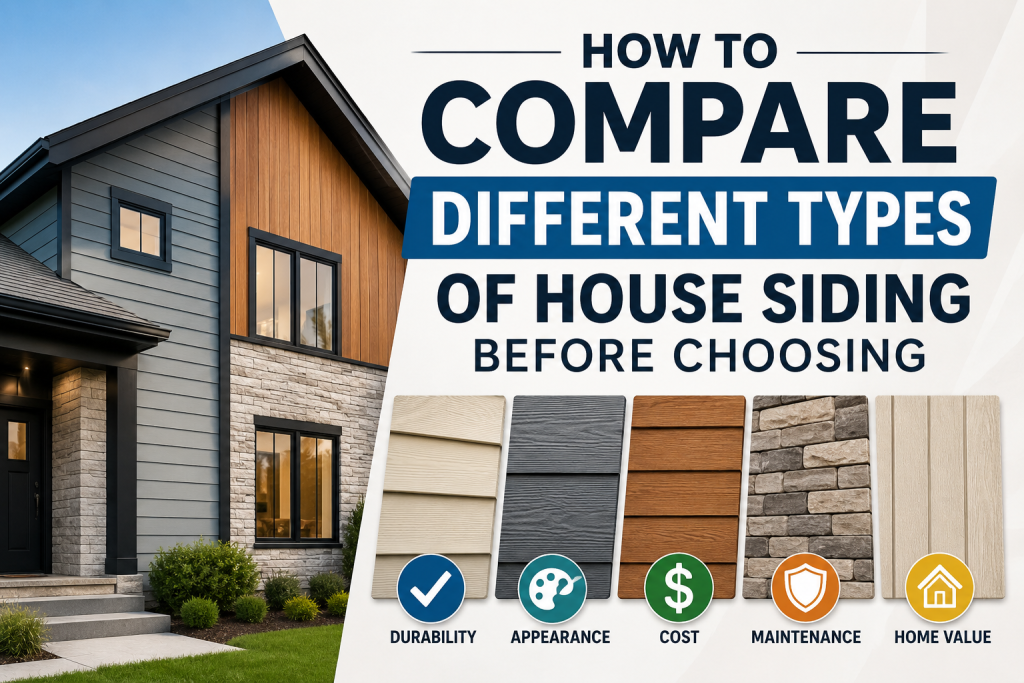
Next, evaluate maintenance. Some siding products require periodic repainting or sealing, while others need little more than occasional cleaning. Energy performance also matters. Exterior materials contribute to thermal efficiency and may affect heating and cooling costs throughout the year. Finally, think about appearance and resale value. The right siding should complement architectural style while supporting long-term curb appeal and homeowner expectations.
| Factor | What to Evaluate |
| Cost | Installation + ownership cost |
| Lifespan | Expected service life |
| Maintenance | Cleaning and upkeep |
| Climate Fit | Heat, humidity, storms |
| Appearance | Style and resale impact |
Most Popular Siding Materials for US Homes
Homeowners comparing types of house siding usually balance appearance, weather resistance, maintenance, and long-term ownership costs. The materials below continue to dominate US residential remodeling because each serves different climates and design goals.
Vinyl Siding
Vinyl siding remains one of the most common choices because of its affordability, low upkeep, and broad design flexibility. It works well for homeowners prioritizing value and simple maintenance.
Fiber Cement Siding
Fiber cement siding is widely selected for durability and strong performance in humid and storm-exposed regions. It is often chosen for premium curb appeal and longevity.
Engineered Wood Siding
Homeowners who want the warmth of real wood with reduced upkeep often consider engineered wood siding.
Stucco Siding
Popular across warmer and drier areas, stucco siding creates a seamless exterior appearance and strong thermal performance.
Brick Veneer Siding
For traditional architecture and lasting visual appeal, brick veneer siding remains a recognizable option.
Metal Siding
Modern and increasingly popular, metal siding offers clean lines and dependable resistance in demanding environments.
Best Siding Styles for Homes Based on Climate and Architecture
Selecting the right exterior finish is not only about material—it is also about matching regional weather patterns and home design. Among the many types of house siding, the best option often depends on where the property is located and how the exterior is expected to perform over time. In hot and humid Southern states such as Florida, moisture resistance and heat performance usually take priority. In the Midwest and Northeast, homeowners often focus on freeze–thaw durability and insulation value. Homes in Texas and the Southwest frequently prioritize heat management and lower maintenance requirements. Architectural style matters just as much. Colonial, Craftsman, modern farmhouse, and contemporary homes each benefit from different profiles and textures. Exploring different siding styles for homes helps homeowners improve curb appeal while maintaining long-term functionality and resale appeal.
Cost, Maintenance, and Lifespan Comparison
When comparing types of house siding, looking beyond installation cost gives a more realistic picture of long-term value. Maintenance requirements, expected lifespan, and repair frequency all influence total ownership cost over time. Lower-cost materials may reduce initial spending but can require more frequent cleaning, repainting, or replacement. Premium options often cost more upfront while delivering better durability and reduced maintenance.
Climate also changes long-term performance. Homes exposed to coastal moisture, severe storms, heavy snow, or prolonged heat may experience different replacement cycles depending on the exterior material selected. For many homeowners, the best decision balances three goals: manageable maintenance, predictable long-term expenses, and improved resale value.
| Consideration | Long-Term Impact |
| Initial Cost | Installation budget |
| Maintenance | Annual upkeep |
| Lifespan | Replacement timing |
| Repairs | Unexpected expenses |
| Resale Value | Return on investment |
Which House Siding Type Adds the Most Value
Among all types of house siding, the highest-value choice is not always the most expensive—it is the option that fits the home’s location, maintenance expectations, and long-term ownership goals. For resale-focused homeowners, exterior appearance and durability tend to influence buyer perception the most. Updated siding can improve curb appeal, strengthen first impressions, and help a property feel more move-in ready. In competitive housing markets, exterior condition often affects how buyers evaluate total home value.
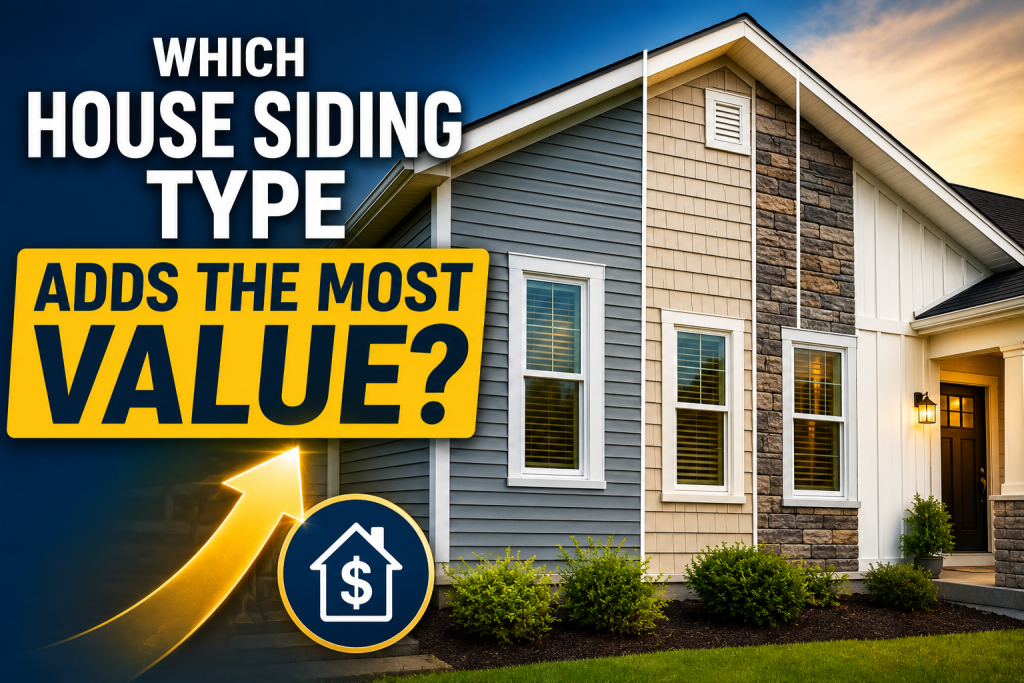
Energy efficiency can also contribute to perceived value. Better-performing exterior systems may support lower utility costs and improved indoor comfort throughout the year. Homeowners planning to stay long term should prioritize lifecycle value rather than short-term savings. A siding upgrade that aligns with climate conditions and future maintenance expectations usually delivers the strongest return over time.
Conclusion
Choosing between the available types of house siding comes down to more than appearance alone. The right decision should reflect your local climate, maintenance expectations, budget, and long-term plans for the property. Some homeowners prioritize lower ownership costs, while others focus on durability, energy performance, or maximizing curb appeal before resale. Evaluating exterior materials through a long-term lens often leads to better outcomes than choosing based only on installation price. Before moving forward with a siding project, compare lifespan, weather resistance, and upkeep requirements alongside architectural compatibility. A well-selected siding system can protect your home, improve exterior aesthetics, and deliver lasting value for years to come.
Frequently Asked Questions
Which Types of House Siding Last the Longest?
The lifespan of different types of house siding depends on installation quality, local climate conditions, and ongoing maintenance. High-performing exterior materials can remain in excellent condition for several decades when properly maintained and protected from moisture exposure, temperature fluctuations, and weather-related wear.
What is the most affordable siding option?
Budget-friendly options generally appeal to homeowners looking to reduce upfront renovation costs while still improving exterior appearance and protection.
Which siding requires the least maintenance?
Low-maintenance siding products usually need occasional cleaning rather than repainting or sealing. This can reduce annual ownership costs and simplify long-term upkeep.
What works best in humid climates?
Homes in humid environments benefit from siding materials that resist moisture absorption, mold growth, and repeated weather exposure.
Does replacing siding increase home value?
In many cases, exterior upgrades can improve curb appeal, strengthen buyer perception, and support resale potential—especially when the existing exterior shows visible wear or aging.
How often should house siding be replaced?
Replacement timing varies based on material performance, installation quality, local weather conditions, and maintenance history. Regular inspections help identify early signs of deterioration before larger repairs become necessary.