


Types of Indoor Lighting Explained
Understanding the different types of indoor lighting is essential for creating a comfortable, functional, and visually appealing home. Lighting does much more than brighten a room; it influences mood, improves usability, highlights design features, and helps homeowners make the most of their living spaces. Choosing the right lighting strategy can dramatically improve both the appearance and practicality of any room.
From living rooms and kitchens to bedrooms and home offices, each area requires a unique approach to illumination. By learning how the various types of indoor lighting work together, homeowners can create balanced environments that support everyday activities while enhancing overall comfort. This guide explains the major lighting categories, how they are used in residential spaces, and how to combine them effectively for the best results.
What Are the Types of Indoor Lighting?
The primary types of indoor lighting are ambient, task, accent, and aesthetic lighting. Each serves a specific purpose and contributes to the overall functionality and appearance of a space. Rather than relying on a single light source, professional designers often combine multiple lighting types to create a balanced and comfortable environment. Mood lighting provides general illumination for a room and serves as the foundation of a lighting plan.
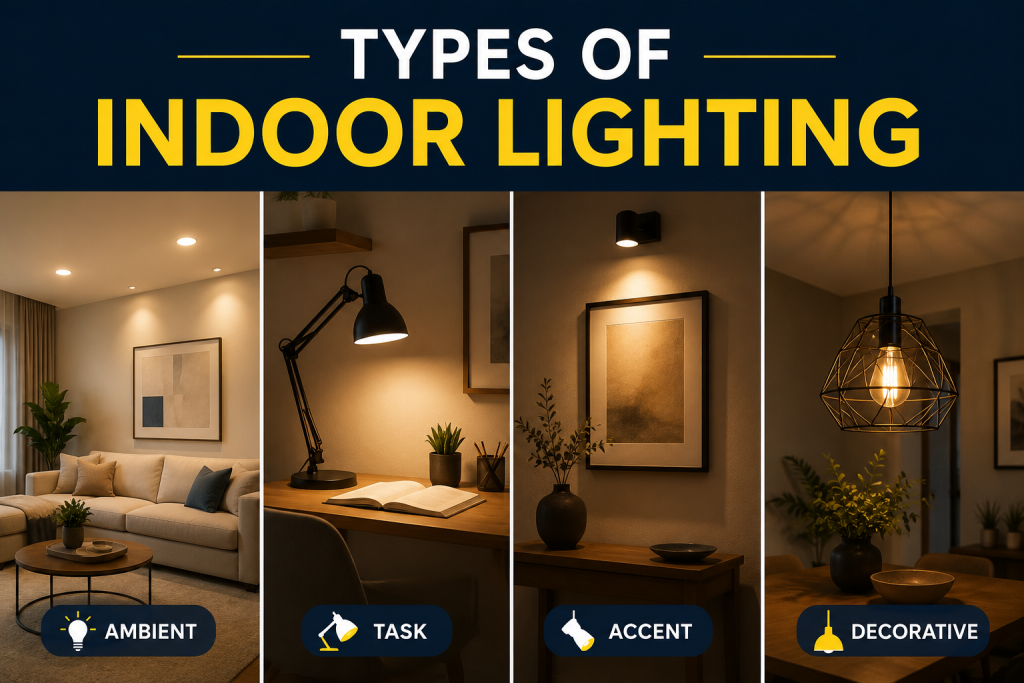
Direct lighting delivers focused brightness for activities such as reading, cooking, or working. Accent lighting draws attention to artwork, architectural features, or decorative elements, while aesthetic lighting enhances a room’s style and visual appeal. When these lighting categories are used together, they create a layered design that improves comfort, flexibility, and aesthetics. Understanding how each type functions helps homeowners make informed decisions when planning lighting upgrades, remodeling projects, or designing new living spaces.
Mood Lighting: The Foundation of Every Room
Ambient lighting is the primary source of illumination in a room and forms the foundation of any effective lighting plan. Its purpose is to provide consistent, comfortable brightness that allows people to move around safely and perform everyday activities. Without adequate mood lighting, a room can feel dark, uninviting, and difficult to use. Common sources of mood lighting include recessed lights, ceiling-mounted fixtures, chandeliers, pendant lights, and natural daylight from windows.
The goal is to distribute light evenly throughout the space while minimizing harsh shadows and overly bright areas. Many homeowners also use dimmer switches to adjust mood lighting levels based on the time of day or specific activities. Among the various types of indoor lighting, mood lighting is the most important because it serves as the base layer that supports all other lighting elements. When properly designed, it creates a comfortable environment while improving the overall functionality and appearance of the home.
Direct Lighting: Focused Light for Everyday Activities
Direct lighting is designed to provide concentrated illumination for specific activities that require greater visibility and precision. Unlike mood lighting, which brightens an entire room, direct lighting focuses on work areas to improve comfort, reduce eye strain, and enhance productivity. It plays an important role in both residential and functional spaces throughout the home. Common examples of direct lighting include desk lamps, under-cabinet kitchen lights, reading lamps, vanity lighting around bathroom mirrors, and pendant lights installed above work surfaces.
These fixtures help ensure adequate brightness for activities such as cooking, reading, grooming, studying, and working from home. When planning the different types of indoor lighting, homeowners should carefully evaluate where focused illumination is needed most. Combining direct lighting with ambient and feature lighting creates a balanced environment that supports everyday activities while maintaining a comfortable and visually appealing atmosphere throughout the home.
Feature Lighting: Highlighting Features and Décor
Feature lighting is used to draw attention to specific areas, objects, or architectural details within a room. While ambient and direct lighting focus on functionality, feature lighting adds depth, dimension, and visual interest. It helps create a more polished and professionally designed appearance by emphasizing important focal points.
Common Uses for Feature Lighting
Homeowners often use feature lighting to highlight artwork, fireplaces, built-in shelving, textured walls, decorative collections, and architectural features. Proper placement helps create contrast and adds character to a space.
Types of Fixtures Used for Feature Lighting
Popular feature lighting fixtures include wall sconces, track lighting, picture lights, recessed spotlights, LED strip lights, and cabinet lighting. These options provide targeted illumination without overwhelming the room.
Types of Indoor Lighting That Add Visual Depth
Among the various types of indoor lighting, feature lighting is especially effective at creating visual depth and enhancing a room’s overall design. When combined with ambient and direct lighting, it helps establish a layered lighting plan that feels balanced, inviting, and visually appealing.
Aesthetic Lighting: Combining Function and Style
Aesthetic lighting serves as both a source of illumination and a design feature within a home. Unlike other lighting categories that focus primarily on functionality, decorative fixtures are often chosen for their visual appeal and ability to enhance a room’s overall style. They can act as focal points while contributing to the atmosphere of a space. Popular aesthetic lighting options include chandeliers, pendant lights, statement ceiling fixtures, wall sconces, and designer lamps.
These fixtures are available in a wide range of styles, from modern and minimalist designs to traditional and farmhouse-inspired looks. Homeowners often use aesthetic lighting to reflect their personal taste while complementing existing décor. Although aesthetics play a major role, aesthetic lighting should still provide adequate illumination for the room. When incorporated alongside ambient, task, and feature lighting, decorative fixtures help create a balanced and attractive environment that combines practicality with visual interest.
Understanding Lighting Zones in Modern Homes
Successful lighting design relies on combining multiple light sources rather than depending on a single fixture. This approach, commonly known as lighting layers, helps homeowners create spaces that are more functional, comfortable, and visually appealing. By blending different lighting types, it becomes easier to adapt a room for various activities and times of day. A layered lighting plan typically includes mood lighting for overall illumination, direct lighting for specific activities, and feature lighting to highlight architectural features or décor.
Decorative fixtures can also be incorporated to enhance the room’s style while contributing additional light. Together, these layers create depth and flexibility that a single light source cannot provide. Among the various types of indoor lighting, layered lighting is one of the most important design concepts because it allows homeowners to control brightness, improve usability, and create a more inviting atmosphere. This strategy is widely used in modern homes to balance aesthetics and functionality.
Residential Lighting Kinds for Different Rooms
Different rooms have different lighting requirements, which is why understanding various residential lighting types is essential for creating a comfortable and functional home. Choosing the right combination of fixtures helps improve usability while enhancing the overall appearance of each space.
Living Rooms and Bedrooms
Living rooms typically benefit from layered lighting that combines ambient, accent, and decorative fixtures. Bedrooms often perform best with soft mood lighting supplemented by bedside lamps and dimmable fixtures for added comfort.
Kitchens and Home Offices
Kitchens require a mix of ambient and direct lighting to support food preparation and daily activities. Home offices benefit from focused direct lighting that reduces eye strain and improves productivity.
Types of Indoor Lighting for Bathrooms and Entryways
Bathrooms often need bright direct lighting around mirrors, while entryways benefit from decorative fixtures that create a welcoming first impression. Selecting the right types of indoor lighting for each room ensures the home remains functional, attractive, and comfortable for everyday living.
Home Automation Basics Every Homeowner Should Know
Understanding home illumination basics can help homeowners make better lighting decisions and create more comfortable living spaces. Effective lighting is not just about selecting attractive fixtures; it also involves choosing the right brightness levels, color temperatures, and fixture placement to support the function of each room. One of the most important considerations is measuring brightness in lumens rather than watts. Lumens indicate how much light a bulb produces, while watts measure energy consumption.
Homeowners should also pay attention to color temperature, as warm white lighting creates a cozy atmosphere, while cooler lighting is often better for task-oriented spaces such as kitchens and home offices. Another key principle is maintaining balance throughout a room. Combining multiple light sources helps eliminate dark corners and reduces glare. By applying these foundational lighting concepts, homeowners can improve comfort, functionality, and the overall appearance of their interiors.
Common Indoor Lighting Mistakes to Avoid
Even the best lighting fixtures can underperform if they are not part of a well-planned lighting strategy. Avoiding these common mistakes can help homeowners improve both functionality and visual appeal:
- Relying on a single ceiling fixture to illuminate an entire room.
- Ignoring the importance of layered lighting when designing a space.
- Choosing bulbs with the wrong color temperature for the room’s purpose.
- Installing fixtures that are too large or too small for the space.
- Failing to include adequate task lighting in kitchens, offices, and reading areas.
- Overlooking feature lighting that can add depth and highlight architectural features.
- Using excessive brightness that creates glare and visual discomfort.
- Neglecting dimmer switches that provide flexibility throughout the day.
- Placing fixtures in locations that create shadows or uneven illumination.
- Prioritizing style over functionality when selecting lighting products.
By avoiding these mistakes, homeowners can maximize the benefits of their lighting system and create a more comfortable, attractive, and practical living environment.
How to Choose the Right Types of Indoor Lighting for Home?
Choosing the right types of indoor lighting starts with understanding how each room is used and what level of illumination is required. Rather than selecting fixtures based solely on appearance, homeowners should focus on balancing functionality, comfort, and design. A thoughtful lighting plan can improve everyday living while enhancing the overall value and appeal of the home.
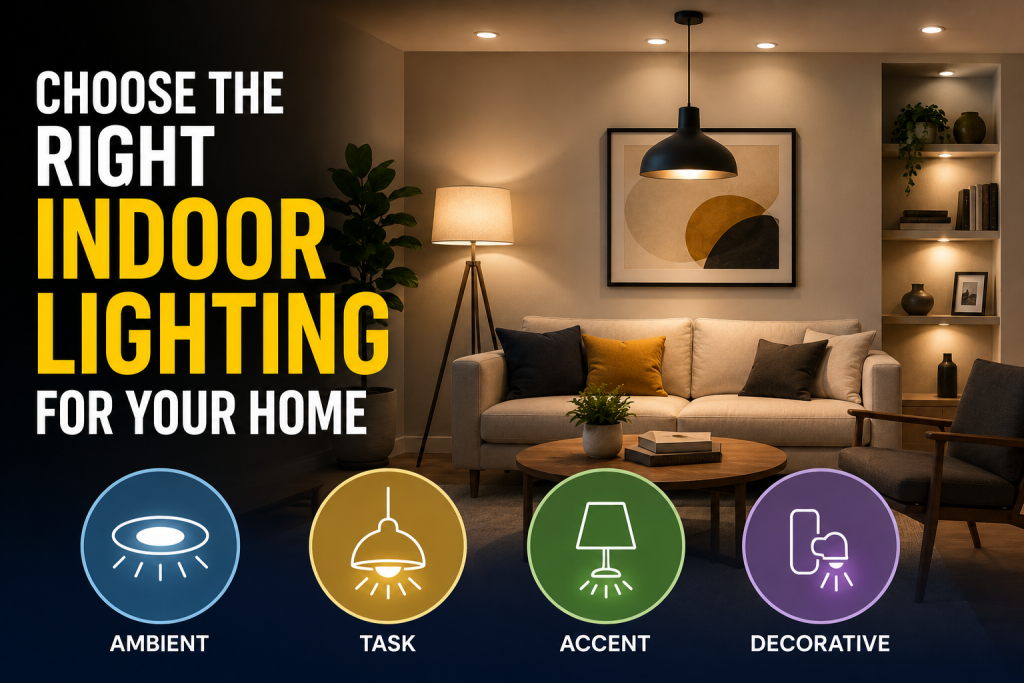
Begin by identifying the primary activities that take place in each space. Rooms used for reading, cooking, working, or grooming often require additional direct lighting, while living areas may benefit from a combination of ambient, accent, and decorative fixtures. Ceiling height, room size, natural light availability, and interior design style should also influence lighting decisions. By combining multiple lighting zones and choosing fixtures that complement the room’s purpose, homeowners can create spaces that are practical, visually appealing, and adaptable to changing needs throughout the day.
Conclusion
Understanding the different types of indoor lighting is essential for creating a home that is both functional and visually appealing. From ambient and direct lighting to accent and decorative fixtures, each lighting category serves a unique purpose and contributes to a well-balanced design. By using layered lighting strategies and selecting fixtures that match the needs of each room, homeowners can improve comfort, enhance aesthetics, and support everyday activities. Whether you’re updating a single room or planning a whole-home renovation, choosing the right lighting approach can transform the way your home looks, feels, and functions.
Frequently Asked Questions
What are the main types of indoor lighting?
The main types of indoor lighting are mood lighting, direct lighting, feature lighting, and aesthetic lighting. Each serves a different purpose and contributes to a balanced lighting design.
Why is mood lighting important in a home?
Mood lighting provides general illumination for a room, making it comfortable and functional for everyday activities while serving as the foundation of a lighting plan.
What is the difference between direct lighting and mood lighting?
When comparing direct lighting and mood lighting, direct lighting focuses on specific activities such as reading or cooking, while mood lighting provides overall room illumination.
How can I create a layered lighting design?
A layered lighting design combines ambient, task, and feature lighting to improve functionality, flexibility, and visual appeal throughout the home.
Which lighting type is best for living rooms?
Most living rooms benefit from a combination of ambient, accent, and decorative lighting. This approach creates a comfortable atmosphere while supporting various daily activities.