


Types of Patios Explained
Choosing the right patio can influence everything from outdoor comfort and curb appeal to maintenance requirements and long-term homeowner value. With so many materials and design approaches available, understanding the differences before starting a project can help avoid costly decisions later. Today’s patios go far beyond a simple concrete slab. Homeowners can choose from material-based designs, covered structures, decorative layouts, and options tailored to specific climates and lifestyles.
Understanding the different types of patios allows homeowners to compare appearance, durability, budget, and usability based on how the outdoor space will actually be used. This guide explains the most common patio categories, highlights where each option performs best, and helps homeowners identify the right patio solution for their backyard goals.
What Are the Main Types of Patios?
Patios can be grouped by both material selection and structural design. The best option depends on budget, maintenance expectations, local climate, and how the outdoor area will be used throughout the year.
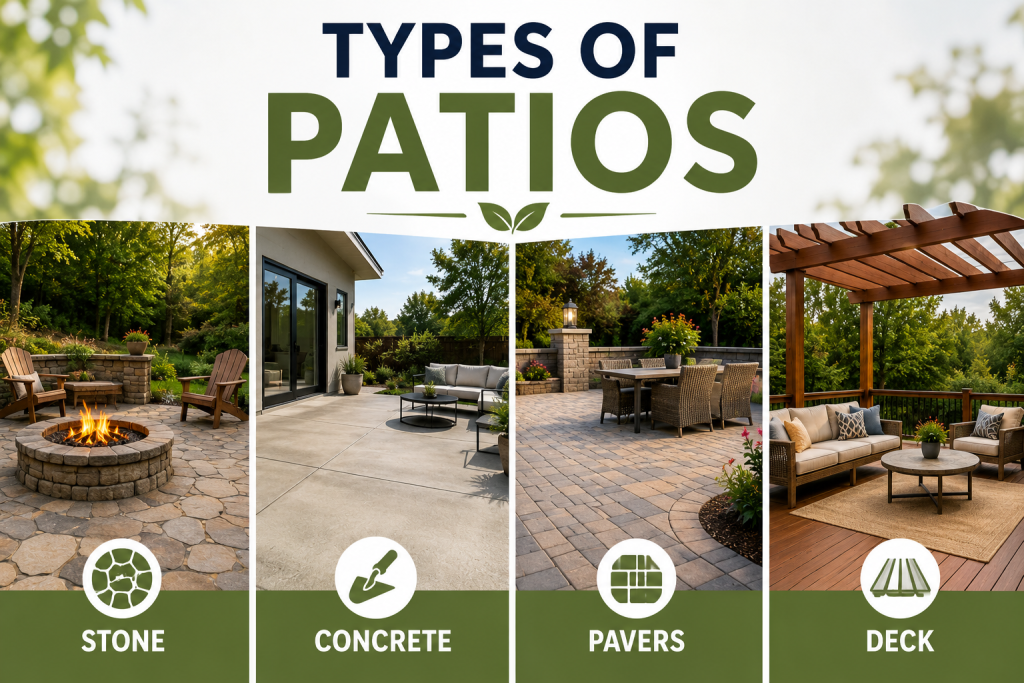
The most common types of patios include:
- Concrete patios
- Paver patios
- Brick patios
- Natural stone patios
- Covered patios
- Decorative and custom patio layouts
Each option creates a different balance of cost, appearance, and long-term performance. Some homeowners prioritize lower installation expenses, while others focus on premium aesthetics or reduced maintenance. Modern patio styles continue to evolve as outdoor living spaces become more integrated with everyday home use. Understanding these categories early makes it easier to narrow choices and create a patio that fits both lifestyle goals and long-term ownership expectations.
Concrete Patios
Concrete remains one of the most popular patio materials because of its affordability, clean appearance, and flexibility across different backyard layouts. A standard concrete patio creates a durable outdoor surface that works well for dining areas, entertaining spaces, and everyday outdoor use. Homeowners can also customize concrete through finishes, textures, colors, and decorative patterns to create a more premium appearance.
Advantages of concrete patios include:
- Lower upfront installation cost
- Wide design flexibility
- Minimal visual clutter
- Broad availability across US markets
Potential considerations include periodic sealing and the possibility of visible cracking in regions affected by freeze-thaw cycles or shifting soil conditions. Among the different types of patios, concrete continues to appeal to homeowners looking for practical performance and balanced long-term value.
Paver Patios
Paver patios remain one of the most versatile choices for homeowners seeking long-term durability and stronger repair flexibility. Unlike continuous surfaces, pavers use individual units installed over a prepared base system. A well-installed paver patio can adapt more effectively to minor ground movement and allows damaged sections to be repaired without replacing the entire surface. This makes pavers especially attractive in regions with seasonal expansion and changing weather conditions.
Benefits of paver patios include:
- Easier localized repairs
- Strong design flexibility
- Better movement tolerance
- Premium appearance options
Pavers also support a wide range of patterns, colors, and layouts that work across traditional and modern backyard designs. Among the available types of patios, pavers are often selected for homeowners prioritizing durability, customization, and long-term outdoor usability.
Brick Patios
Brick patios continue to appeal to homeowners who prefer timeless design and classic outdoor character. Their warm appearance works especially well with traditional homes, cottage-style landscapes, and historic-inspired outdoor spaces. Brick surfaces create a distinctive look while offering reliable durability when installed over a properly prepared base. Pattern selection can dramatically change the finished appearance and help define entertaining or dining zones.
Popular approaches include:
- Running bond layouts
- Herringbone patterns
- Basketweave installations
- Mixed-border accents
Many homeowners exploring brick patio ideas choose brick because it creates strong visual warmth and long-term curb appeal. Compared with other types of patios, brick often requires more attention to weed control and joint maintenance but remains a durable and visually recognizable option for backyard design.
Natural Stone and Flagstone Patios
Natural stone patios are often chosen for homeowners seeking a premium outdoor appearance with unique texture and long-lasting visual appeal. Because each stone piece varies naturally, these patios create a more custom and organic backyard environment. A flagstone patio remains one of the most popular natural stone options because it balances durability with a distinctive high-end appearance. Stone patios work particularly well in outdoor spaces designed around landscaping, entertaining, and relaxed seating areas.
Benefits of natural stone patios include:
- Premium visual appeal
- Unique surface variation
- Strong long-term durability
- Excellent curb appeal potential
Natural stone generally requires a larger investment than basic patio materials but can deliver strong visual value. Among the different types of patios, natural stone continues to stand out for homeowners prioritizing aesthetics and long-term outdoor design quality.
Covered and Specialty Patio Designs
Not all patios are defined only by surface material. Structural features and specialty layouts can dramatically change comfort, usability, and the overall outdoor experience. Covered patios create more protection from sun and weather while extending usable outdoor time throughout the year. Pergolas, shade structures, outdoor kitchens, and multi-zone layouts have also become increasingly popular for modern backyard upgrades.
Popular specialty features include:
- Attached roof extensions
- Pergolas and shade systems
- Outdoor cooking areas
- Multi-level patio layouts
- Integrated seating zones
Many homeowners researching covered patio designs prioritize comfort and year-round functionality, especially in warmer regions with strong sun exposure. As outdoor patio types continue evolving, more projects combine materials, shade elements, and entertainment features to create flexible outdoor living spaces.
Types of Patios Comparison Table: Patio Types at a Glance
Comparing patio categories side by side helps homeowners identify which option aligns best with budget, maintenance expectations, and long-term backyard goals.
| Patio Type | Cost | Maintenance | Lifespan | Style | Best For |
| Concrete | Lower | Moderate | Good | Clean and modern | Budget-friendly projects |
| Pavers | Moderate–High | Moderate | Excellent | Flexible layouts | Long-term durability |
| Brick | Moderate | Moderate | Excellent | Traditional | Classic outdoor spaces |
| Natural Stone | Higher | Moderate | Excellent | Premium | Luxury outdoor design |
| Covered Patio | Moderate–High | Moderate | Excellent | Functional | Year-round usability |
Homeowners comparing different types of patios should focus on how each option performs over time instead of choosing based only on appearance. Installation costs, maintenance requirements, and daily usability often create a bigger long-term impact than initial visual preferences.
How to Choose the Right Patio
Selecting the right patio starts with understanding how the outdoor space will actually be used. The best option should balance appearance, budget, climate performance, and long-term maintenance expectations.
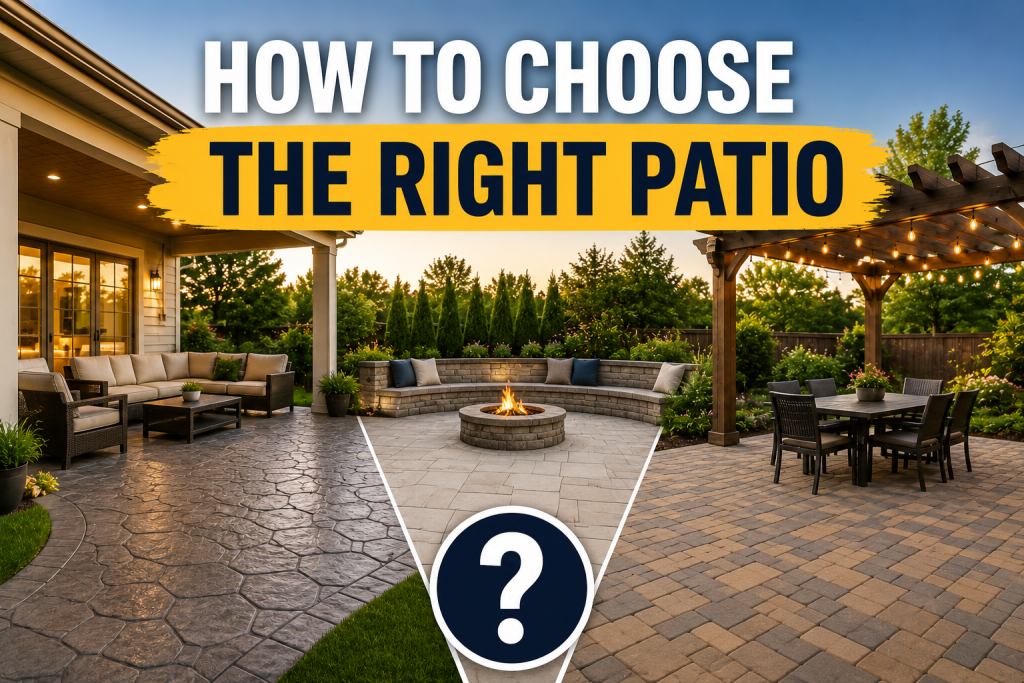
Start by asking a few practical questions:
- Will the patio be used daily or occasionally?
- Is weather protection important?
- How much maintenance is acceptable?
- Is resale value a priority?
- Does the backyard need entertaining space?
Homeowners in hotter climates often prioritize shade and lighter materials, while colder regions may focus more on repair flexibility and seasonal durability. When evaluating different types of patios, choosing based on lifestyle needs usually creates better long-term satisfaction than selecting materials purely for appearance. A successful patio should improve outdoor usability while supporting homeowner goals for comfort, function, and curb appeal.
Final Verdict
The best patio is not always the most expensive or visually dramatic—it is the one that fits your backyard goals, maintenance expectations, and everyday lifestyle. Concrete remains a practical choice for affordability and flexibility. Pavers continue to stand out for repairability and long-term performance. Brick delivers timeless appeal, while natural stone creates a more premium outdoor experience. Covered designs improve comfort and extend usability throughout the year. When comparing different types of patios, homeowners should consider climate, budget, maintenance needs, and how frequently the outdoor space will be used. The right patio can improve curb appeal, increase enjoyment of outdoor living, and create long-term value for the home.
FAQs
Which patio material lasts the longest?
Natural stone and properly installed pavers are often considered among the longest-lasting patio materials because of their durability and repair flexibility.
Which Types of Patios Cost the Least?
Among the different types of patios, concrete typically remains one of the most affordable options for homeowners seeking lower installation costs while maintaining long-term outdoor usability.
What patio style adds the most value?
Covered patios, natural stone surfaces, and premium paver layouts often create stronger perceived value and outdoor usability.
Which patio works best in hot climates?
Lighter-colored materials and shaded patio designs generally perform better in regions with high temperatures.
Which patio requires the least maintenance?
Maintenance depends on installation quality and climate, although concrete and certain covered patio layouts are often considered lower-maintenance options.