


Best Types of Roofing Materials For US Homes
Choosing the right roof is one of the most important decisions a homeowner can make. The roof protects your home from weather, contributes to energy efficiency, affects insurance costs, and plays a major role in curb appeal. With so many types of roofing materials available today, selecting the best option requires more than simply comparing upfront costs. Different roofing materials perform better in different climates across the United States. A roof that works well in the humid conditions of Florida may not be the best choice for homes facing heavy snow loads in Minnesota or freeze-thaw cycles in the Northeast. Factors such as durability, maintenance requirements, lifespan, and resale value should all influence your decision.
Modern homeowners can choose from traditional options like asphalt shingles as well as premium materials designed for enhanced longevity and weather resistance. Understanding how each roofing material performs can help you make a more informed investment and avoid costly replacement mistakes in the future. In this guide, we’ll explore the most popular roofing materials, compare their strengths and weaknesses, and explain which options work best for different homes, budgets, and climate conditions.
Types of Roofing Materials Homeowners Should Know
The roofing industry offers a wide range of solutions for different budgets, architectural styles, and climate conditions. While some materials prioritize affordability, others focus on longevity, energy performance, or premium aesthetics. Understanding the most common types of roofing materials can help homeowners narrow down their choices and select a roof that aligns with both short-term and long-term goals.
Before making a decision, it is important to evaluate installation costs, expected lifespan, maintenance requirements, and regional weather patterns. Homeowners in hurricane-prone states, for example, often prioritize wind resistance, while those in colder regions may focus on snow-shedding performance and freeze-thaw durability. The following roofing materials remain among the most widely installed options across the United States.
Asphalt Shingle Roofs
For decades, asphalt shingle roofs have dominated the U.S. residential market because they offer a practical balance of affordability, availability, and performance. Most asphalt roofing systems last between 20 and 30 years, depending on product quality, installation standards, and local climate conditions.
These roofs are available in multiple styles and colors, allowing homeowners to match a variety of architectural designs. They are commonly installed in states ranging from Texas and Georgia to Ohio and Pennsylvania. In addition, many leading manufacturers such as GAF, Owens Corning, and CertainTeed offer enhanced warranty options that can increase homeowner confidence. Although asphalt roofs are generally cost-effective, they may require earlier replacement than premium materials when exposed to extreme weather or prolonged UV exposure.
Metal Roofing Systems
Homeowners seeking longer service life and improved energy performance often consider metal roofing as an alternative to traditional roof coverings. Modern metal roofs are available in standing seam panels, corrugated profiles, and metal shingles, making them suitable for both contemporary and traditional homes. One of the biggest advantages of metal roofs is durability. Depending on the material and installation quality, a properly maintained metal roof can last 40 to 70 years. Among the various types of roofing materials available today, metal roofing is often recognized for its impressive lifespan and energy efficiency. Many systems are also designed to reflect solar heat, which can help reduce cooling costs in warmer regions such as Texas, Arizona, and Florida.
Metal roofs perform exceptionally well during severe weather events. Their ability to withstand high winds, heavy rain, and snow accumulation makes them a popular choice in areas that experience challenging climate conditions. While the initial investment is typically higher than asphalt-based systems, many homeowners view the extended lifespan and lower maintenance requirements as valuable long-term benefits. For homeowners comparing the available types of roofing materials, metal systems often stand out for their combination of longevity, energy efficiency, and weather resistance.
Comparing Types of Roofing Materials by Durability and Lifespan
When evaluating roofing systems, lifespan is often one of the most important factors for homeowners. A roof with a higher upfront cost may deliver greater long-term value if it lasts significantly longer and requires less maintenance over time. Comparing the expected service life of different types of roofing materials can help homeowners make a more informed investment decision.
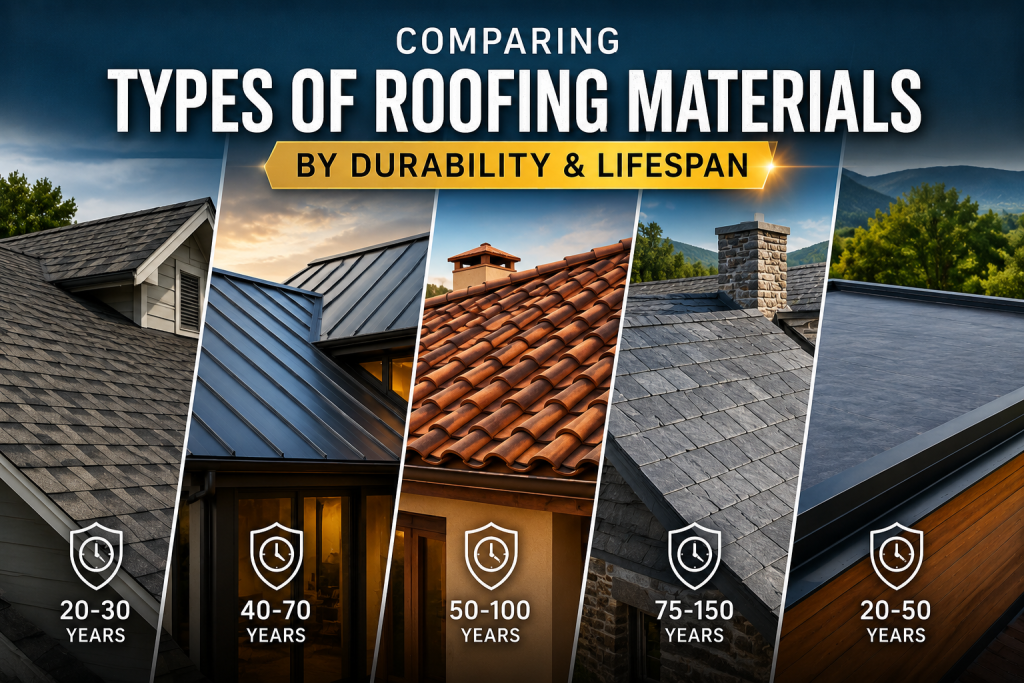
Durability is influenced by several factors, including material quality, installation standards, local weather conditions, and ongoing maintenance. Roofs exposed to intense sunlight, coastal salt air, heavy snowfall, or severe storms may age differently than those installed in milder climates. Understanding these differences allows homeowners to balance budget considerations with long-term performance expectations.
Clay Tile Roof Performance
Known for its distinctive appearance and exceptional longevity, clay tile roofing remains a popular choice in warm-weather regions throughout the United States. These roofs are especially common in states such as Florida, California, Arizona, and parts of Texas, where Mediterranean and Spanish-style architecture is prevalent. Clay tiles are highly resistant to heat, UV exposure, and fire. In many cases, a properly installed clay tile roof can last 50 years or more. Among the premium types of roofing materials, clay tile roofs are valued for their exceptional longevity and timeless architectural appeal.
Their natural thermal properties can also help regulate indoor temperatures, making them attractive in hot climates where cooling costs are a concern. However, clay tiles are considerably heavier than many other roofing products. Homeowners may need additional structural reinforcement before installation, which can increase project costs. Despite the higher investment, many property owners appreciate the premium appearance and long-term durability that clay tile roofs provide.
Slate Roofs for Long-Term Value
Among all residential roofing products, slate roofing is often considered the benchmark for longevity and premium curb appeal. Made from natural stone, slate roofs have been used for centuries and remain a popular choice for luxury homes, historic properties, and high-end renovations throughout the United States. One of slate’s greatest advantages is its remarkable lifespan. In many cases, a properly installed slate roof can last 75 to 100 years or more, making it one of the longest-lasting roofing systems available.
Slate is also highly resistant to fire, moisture, mold growth, and extreme weather conditions, which contributes to its reputation as one of the most reliable durable roofing materials on the market. The primary drawback is cost. Both materials and installation require a significant investment, and the roof structure must be capable of supporting the additional weight. Even so, homeowners focused on long-term ownership, architectural character, and resale value often find slate to be a worthwhile investment that delivers decades of dependable performance.
Types of Roofing Materials for Different U.S. Climate Zones
Climate plays a major role in determining how well a roof performs over time. Homeowners who choose roofing products based solely on price may overlook important regional factors that affect durability, maintenance needs, and energy efficiency. Evaluating types of roofing materials according to local weather conditions can help prevent premature wear and reduce long-term ownership costs.
Best Roofs for Hot Southern States
Homes located in Florida, Texas, Arizona, and other warm-weather regions face constant exposure to intense sunlight, high temperatures, humidity, and severe storms. When comparing types of roofing materials, homeowners in these areas often prioritize products that reflect heat and resist UV damage for better long-term performance and energy efficiency. Metal systems, clay-based products, and reflective roofing solutions are commonly selected because they help reduce heat absorption. In hurricane-prone areas, homeowners should also prioritize roofing products with strong wind-resistance ratings and installation methods that meet local building codes.
Best Roofs for Snow and Freeze-Thaw Regions
Northern states such as Minnesota, Wisconsin, Michigan, and New York present a different set of roofing challenges. Heavy snow accumulation, ice dams, and repeated freeze-thaw cycles can place significant stress on roofing systems throughout the winter months. Roofs with strong structural performance and efficient snow-shedding capabilities generally perform best in these climates. Proper attic ventilation, insulation, and moisture management are equally important because they help prevent ice-related damage and extend the service life of the roofing system.
Residential Roofing Options Based on Budget
Cost is often the deciding factor for homeowners planning a roof replacement. While upfront pricing is important, evaluating long-term value can provide a more accurate picture of ownership costs. The best residential roofing options balance installation expenses, expected lifespan, maintenance requirements, and overall performance. Homeowners should avoid focusing solely on the lowest-priced solution. A roofing material that lasts decades longer may deliver a stronger return on investment by reducing future replacement and repair expenses. Comparing the major roofing categories side by side can make the decision process easier.
| Roofing Material | Typical Lifespan | Initial Cost | Maintenance Level | Energy Efficiency |
| Asphalt Shingles | 20–30 Years | Low | Moderate | Moderate |
| Metal Roofs | 40–70 Years | Moderate to High | Low | High |
| Clay Tile Roofs | 50+ Years | High | Low | High |
| Slate Roofs | 75–100+ Years | Very High | Low | Moderate |
| Synthetic Roofs | 30–50 Years | Moderate to High | Low | Moderate |
When comparing the various types of roofing materials, homeowners should consider both current budget limitations and future ownership goals. A longer-lasting roof may cost more initially but can reduce lifecycle expenses while improving property value over time.
Durable Roofing Materials That Improve Home Value
A roof is more than a protective barrier it is also a major contributor to property value. Buyers often view a newer, high-quality roof as a sign that a home has been properly maintained. As a result, investing in premium roofing products can enhance curb appeal, reduce buyer concerns, and support stronger resale potential. Homeowners evaluating different types of roofing materials should consider how their choice may affect future marketability. In many housing markets, durable and visually appealing roofing systems can make a property more attractive to prospective buyers.
Composite Roofing Benefits
Modern composite roofing products are engineered to replicate the appearance of natural slate, wood shakes, or clay tiles while reducing weight and maintenance requirements. These synthetic materials have gained popularity among homeowners who want premium aesthetics without some of the structural challenges associated with traditional roofing products. Many composite roofing systems offer strong resistance to moisture, impact damage, and weather-related wear. They can also provide a longer lifespan than entry-level roofing products, making them an attractive option for homeowners seeking a balance between performance and appearance.
Premium Roofing Materials for Resale Value
Homes equipped with premium roofing systems often generate stronger buyer interest, particularly in competitive real estate markets. Materials known for longevity and architectural appeal can create a positive first impression while signaling lower future maintenance costs. When selecting a roof, homeowners should consider not only immediate needs but also how the roofing material aligns with long-term ownership goals. A quality roofing system can contribute to improved market perception, increased buyer confidence, and enhanced overall property value.
How to Choose the Right Roofing Material for Your Home
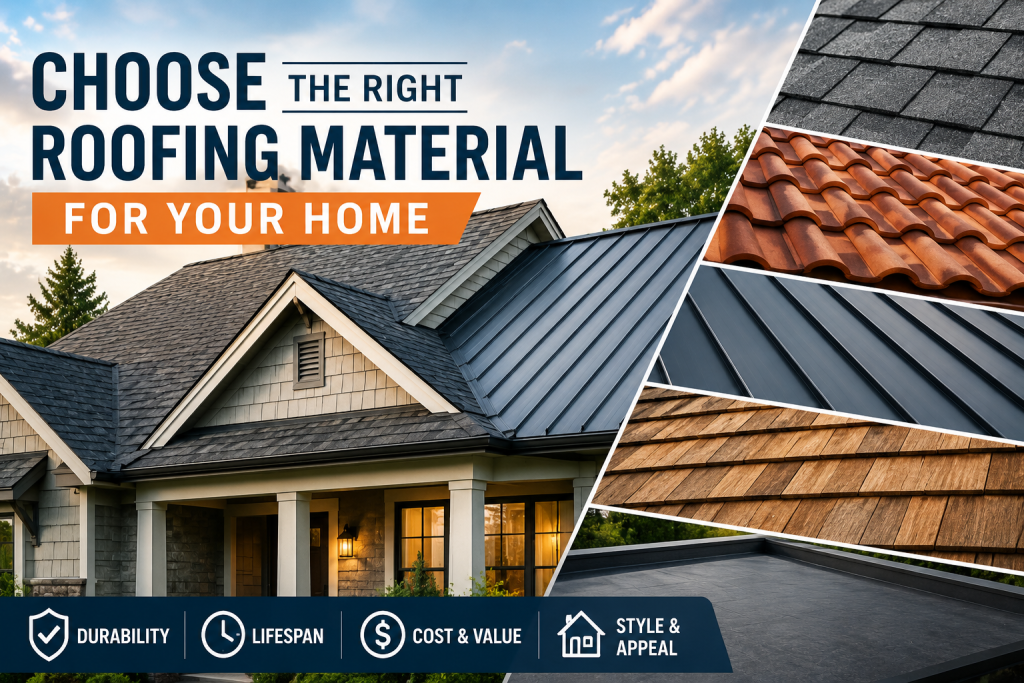
Selecting the best roof requires balancing budget, climate conditions, maintenance expectations, and long-term property goals. While there is no single solution that works for every homeowner, understanding the strengths and limitations of various types of roofing materials can make the decision process much easier. Before committing to a roofing project, consider the following factors:
- Local climate and weather exposure
- Expected lifespan of the roofing system
- Maintenance requirements
- Energy-efficiency goals
- HOA guidelines and neighborhood standards
- Insurance considerations
- Long-term resale value
Homeowners should also work with qualified roofing contractors who understand local building codes and regional weather challenges. Professional installation is often just as important as the roofing material itself when it comes to long-term performance.
Conclusion
The wide range of types of roofing materials available today gives homeowners more choices than ever before. From affordable asphalt-based systems to premium slate and synthetic alternatives, each roofing option offers a unique combination of cost, durability, appearance, and performance. The best roofing investment depends on your home’s location, climate conditions, budget, and long-term ownership plans. By carefully comparing roofing materials and understanding how they perform in real-world conditions, homeowners can choose a roof that delivers lasting protection, improved energy efficiency, and stronger property value for years to come.
Frequently Asked Questions
What is the longest-lasting roofing material?
Natural slate is widely considered one of the longest-lasting roofing materials available, with many installations lasting 75 to 100 years or longer when properly maintained.
Which roofing material is best for hot climates?
Materials that reflect solar heat and resist UV damage generally perform best in warm regions. Metal and clay-based roofing products are commonly used in states with high temperatures and strong sun exposure.
Is a metal roof better than an asphalt roof?
The answer depends on budget and long-term goals. Metal roofs typically last longer and require less maintenance, while asphalt-based systems usually have lower upfront installation costs.
Do premium roofing materials increase home value?
In many markets, premium roofing systems can improve curb appeal, increase buyer confidence, and reduce concerns about future maintenance expenses.
How often should a roof be replaced?
Replacement timelines vary by material, installation quality, climate, and maintenance practices. Homeowners should schedule regular roof inspections to identify issues before they become major problems.