


Common Vinyl Flooring Problems Homeowners Face (Complete US Guide)
While vinyl flooring is widely known for durability and affordability, many homeowners still encounter vinyl flooring problems over time, especially in busy US households. These issues are often not caused by the material alone but by installation quality, subfloor conditions, moisture exposure, or lack of proper maintenance. Modern vinyl products like luxury vinyl plank (LVP) and rigid core flooring are designed to resist water and everyday wear, but no flooring system is completely immune to damage. Problems such as warping, bubbling, scratches, or peeling can develop depending on environmental conditions and usage patterns.
Understanding these issues is important because it helps homeowners identify whether a problem is minor and repairable or a sign of deeper installation or moisture-related failure. In many cases, early detection can prevent costly replacements and extend the life of the floor significantly. This guide breaks down the most common issues, their causes, and practical solutions so homeowners can better manage vinyl flooring maintenance and protect their investment long-term.
Warped Vinyl Flooring Causes and Fixes
One of the most concerning vinyl flooring problems homeowners encounter is warped vinyl flooring, where planks or sheets begin to lift, bend, or lose their flat surface. This issue is especially common in US homes exposed to temperature fluctuations, humidity, or improper installation practices. Warping usually happens when vinyl flooring expands and contracts due to heat or moisture exposure. In poorly installed floors, lack of proper expansion gaps along walls can also cause pressure buildup, forcing planks to lift over time. Subfloor moisture is another major cause, particularly in basements or ground-level rooms where vapor barriers were not installed correctly.
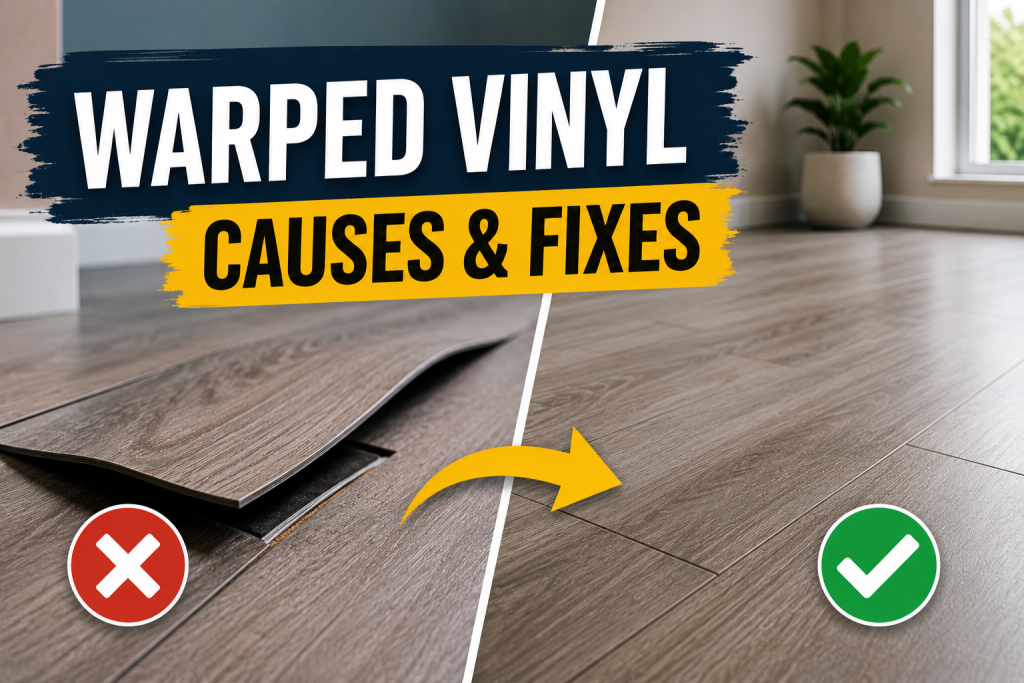
Fixing warped vinyl flooring depends on severity. Minor cases can sometimes be corrected by allowing the floor to acclimate and reinstalling affected planks. In more severe situations, damaged sections may need to be replaced entirely. If moisture is the root cause, addressing the underlying subfloor issue is essential to prevent recurrence. Brands like COREtec and Shaw Floors offer more stable rigid core options that help reduce warping risks.
Scratched Vinyl Plank Flooring Issues
Another common set of vinyl flooring problems involves scratched vinyl plank flooring, which can affect the appearance of even high-quality floors over time. While vinyl is designed with a protective wear layer, it is still exposed to daily stress from furniture movement, pet claws, dirt particles, and heavy foot traffic. In most US homes, surface scratches occur when abrasive debris like sand or grit is not cleaned regularly. Dragging heavy furniture without protective pads is another major cause. Even though premium products from brands like Shaw Floors and Mohawk Industries include stronger wear layers, no vinyl floor is completely scratch-proof.
Minor scratches are often cosmetic and may be less visible depending on the flooring’s pattern and texture. However, deeper scratches that penetrate the wear layer may require plank replacement for a consistent finish. Preventing scratches is largely about maintenance. Regular sweeping, using felt pads under furniture, and avoiding abrasive cleaning tools can significantly reduce long-term surface damage and improve overall vinyl flooring maintenance performance.
Vinyl Floor Bubbling Explained
One of the more noticeable vinyl flooring problems homeowners may face is vinyl floor bubbling, where sections of the flooring develop raised bumps or air pockets beneath the surface. This issue can affect both sheet vinyl and improperly installed luxury vinyl plank (LVP), and it often signals an underlying installation or moisture-related issue. In many US homes, bubbling occurs when adhesive fails to bond properly or when air becomes trapped during installation. In glue-down systems, uneven application of adhesive or insufficient rolling pressure can create pockets that expand over time. Temperature changes can also contribute, especially if flooring was not properly acclimated before installation.
Moisture is another major cause. When water seeps into the subfloor or edges of the flooring, it can weaken adhesion and create separation between layers. This is particularly common in kitchens, bathrooms, and basements where waterproof flooring issues are more likely if sealing is incomplete. Small bubbles may sometimes be repaired by re-adhering the affected area, but larger or recurring bubbles often require partial replacement and correction of the underlying cause.
Vinyl Flooring Repair Options
When dealing with vinyl flooring problems, understanding vinyl flooring repair options can help homeowners avoid full replacement and reduce long-term costs. The right repair method depends on the type of damage, flooring system, and how early the issue is detected. For minor surface damage such as small scratches or light scuffs, repair is often cosmetic. Specialized vinyl repair kits can help blend or fill imperfections, especially in patterned or textured floors where minor flaws are less noticeable. However, deeper scratches that penetrate the wear layer usually require plank replacement to restore a uniform finish.
For issues like lifted edges, bubbling, or loose planks, localized repairs are often possible. Click-lock systems allow individual planks to be removed and replaced, while glue-down floors may require re-adhesion using appropriate flooring adhesive. In some cases, affected areas must be carefully cut and replaced. Brands such as COREtec and Shaw Floors are designed with modular repair in mind, making it easier to replace damaged sections without disturbing the entire floor. Proper diagnosis is key, as repairing without addressing the root cause can lead to recurring issues.
Waterproof Flooring Issues in Real Homes
Even though vinyl is widely marketed as durable and moisture-resistant, waterproof flooring issues can still occur in real-world installations, especially when installation or maintenance practices are not done correctly. Many vinyl flooring problems that appear to be material failures are actually caused by subfloor moisture, poor sealing, or improper installation conditions. In US homes, the most common issue is moisture getting trapped beneath the flooring. This can happen in basements, kitchens, or bathrooms where humidity levels are high or where water has seeped through edges, seams, or damaged caulking. Over time, trapped moisture can weaken adhesives in glue-down systems or cause plank movement in floating floors.
Another issue is misunderstanding “waterproof” claims. While many luxury vinyl products are considered waterproof vinyl flooring, this typically refers to the surface and core—not the entire installation system. Water can still penetrate through expansion gaps, poorly sealed edges, or damaged joints. To prevent these issues, proper subfloor preparation, moisture barriers, and correct installation methods are essential. Without these steps, even high-quality flooring can develop long-term performance problems.
Peeling Vinyl Flooring Causes
One of the more frustrating vinyl flooring problems homeowners face is peeling vinyl flooring, where the surface layer begins to lift away from the backing or edges start separating from the subfloor. This issue is more common in older installations, lower-quality products, or areas exposed to moisture and heat fluctuations. In many US homes, peeling occurs due to adhesive failure in glue-down vinyl installations. If the adhesive was applied unevenly, expired, or not suited for the subfloor type, bonding weakens over time. In floating click-lock systems, peeling or edge lifting can happen when planks are not properly locked or when expansion gaps are insufficient.
Moisture is another major factor. Water intrusion from spills, leaks, or high humidity can break down adhesives and cause layers to separate. This is especially common in kitchens, bathrooms, and basements where waterproof flooring issues are more likely if sealing is incomplete. Heat exposure, such as direct sunlight through large windows, can also accelerate peeling by causing expansion and contraction cycles in the material. Addressing peeling early is important, as small areas can often be repaired, while larger sections may require replacement to restore a smooth, uniform surface.
Vinyl Flooring Maintenance to Prevent Damage
Proper vinyl flooring maintenance is one of the most effective ways to reduce long-term vinyl flooring problems and extend the life of your floors in US homes. While vinyl is known for being low-maintenance, neglecting basic care can still lead to issues like scratches, dull surfaces, or premature wear. Routine cleaning is the foundation of good maintenance. Regular sweeping or vacuuming helps remove dirt, sand, and debris that can act like sandpaper on the surface, contributing to scratched vinyl plank flooring over time. Occasional damp mopping with a mild cleaner keeps the floor looking fresh without damaging the wear layer.
Preventive care is just as important. Using furniture pads under heavy items reduces pressure points and prevents dents or edge damage. Area rugs in high-traffic zones such as entryways and hallways can also help reduce wear. Homeowners should also avoid harsh chemicals, steam mops, or abrasive scrubbing tools, as these can damage protective coatings and lead to early surface deterioration. Consistent care ensures vinyl flooring remains durable, attractive, and functional for years.
When to Repair vs Replace Vinyl Flooring
Knowing when to repair or replace is key when dealing with ongoing vinyl flooring problems, especially for homeowners trying to avoid unnecessary renovation costs. Not every issue requires full replacement, but ignoring serious damage can lead to bigger long-term structural concerns. Minor issues such as small scratches, light surface scuffs, or isolated scratched vinyl plank flooring can usually be repaired without replacing the entire floor. Individual planks in click-lock systems can often be removed and swapped out, making localized fixes cost-effective and practical. However, more serious problems like widespread vinyl floor bubbling, recurring peeling, or significant warped vinyl flooring often indicate deeper issues such as moisture intrusion or improper installation. In these cases, simple repairs may only provide temporary relief if the root cause is not addressed.

Replacement becomes the better option when damage covers large sections, affects multiple rooms, or compromises the floor’s structural integrity. High-quality brands like COREtec and Shaw Floors make replacement easier due to modular plank systems. Ultimately, the decision depends on damage severity, repair cost, and long-term performance expectations.
Final Verdict
The best way to handle vinyl flooring problems is not just fixing them, but preventing them from happening in the first place. Most issues like warped vinyl flooring, peeling vinyl flooring, or vinyl floor bubbling are less about the material itself and more about installation quality, moisture control, and ongoing care. In US homes, prevention starts with proper subfloor preparation. A clean, dry, and level surface significantly reduces the risk of future issues. For moisture-prone areas like basements and bathrooms, using appropriate underlayment and ensuring proper sealing helps protect against waterproof flooring issues over time. Choosing higher-quality products from brands like COREtec and Mohawk Industries also improves long-term performance due to stronger wear layers and more stable core construction. Regular vinyl flooring maintenance, including cleaning, protecting furniture contact points, and avoiding harsh chemicals, further extends lifespan and appearance. Ultimately, vinyl remains one of the most reliable flooring options in modern homes when installed correctly and properly maintained, offering strong durability with manageable repair needs.
FAQs
What are the most common vinyl flooring problems?
The most common vinyl flooring problems include warping, scratching, bubbling, peeling, and moisture-related damage in poorly installed areas.
Why does vinyl flooring warp?
Warped vinyl flooring usually happens due to moisture, poor subfloor preparation, or lack of expansion gaps during installation.
Can scratched vinyl plank flooring be repaired?
Light scratches can often be treated with repair kits, but deeper damage to scratched vinyl plank flooring may require plank replacement.
What causes vinyl floor bubbling?
Vinyl floor bubbling is typically caused by trapped air, adhesive failure, or moisture seeping into the subfloor.
Is vinyl flooring repair expensive?
Vinyl flooring repair is usually affordable for small sections, but costs increase if multiple planks or large areas need replacement.
What are waterproof flooring issues?
Even waterproof flooring issues can occur if water enters through seams, edges, or improper installation despite waterproof materials.
How can I prevent peeling vinyl flooring?
Proper installation, moisture control, and regular vinyl flooring maintenance help prevent peeling vinyl flooring over time.