

Walk-In Shower vs Bathtub: Which Is Better?
The decision between a walk-in shower vs bathtub is one of the most important choices homeowners face during a bathroom remodel. Both options offer distinct advantages, and the right choice often depends on lifestyle, family needs, space, and long-term home value goals. A well-planned bathroom design can significantly improve comfort, functionality, and resale appeal. Whether you’re upgrading an outdated space, understanding the trade-offs between showers and tubs is essential. Modern homeowners are increasingly balancing convenience with relaxation, making this comparison more relevant than ever. This guide breaks down the differences, benefits, and real-world considerations of each option so you can confidently decide what works best for your home.
Walk-In Shower vs Bathtub: Key Differences
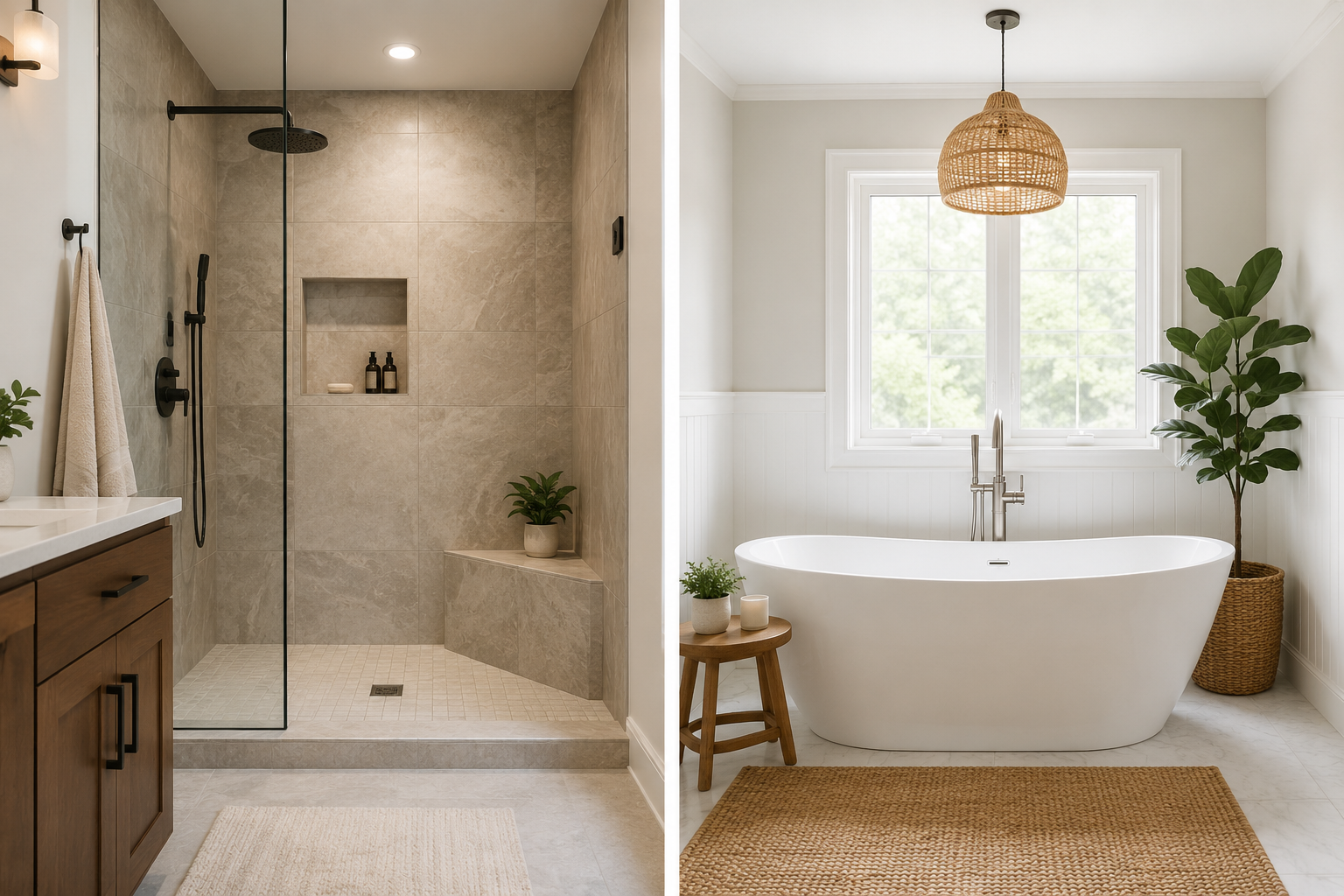
Understanding the core differences in a walk-in shower vs bathtub setup is essential before choosing the right option for your bathroom remodel. Walk-in showers are designed for convenience, accessibility, and modern efficiency, often featuring open layouts, glass enclosures, and minimal thresholds. Bathtubs, on the other hand, prioritize relaxation and long soaking sessions, making them ideal for homeowners who value comfort and unwinding after a long day.

From a functional standpoint, showers typically use less space and are easier to maintain, while tubs require more floor area but offer a completely different bathing experience. Many modern design approaches today focus on combining both elements in larger bathrooms, but space constraints often force homeowners to choose one. Ultimately, the decision comes down to lifestyle needs, bathroom size, and long-term usability. A clear shower vs tub comparison helps highlight how each option serves different priorities in modern home design.
Shower vs Tub Comparison: Pros and Cons
A detailed shower vs tub comparison helps homeowners weigh practical benefits against lifestyle preferences when deciding between a walk-in shower and a bathtub. Walk-in showers offer clear advantages in convenience, accessibility, and modern design. They are easier to enter and exit, require less daily maintenance, and fit well into compact or contemporary bathroom layouts. This makes them a strong choice for busy households and aging-in-place planning.
Bathtubs, however, provide unmatched relaxation and comfort. Many homeowners value soaking tubs for stress relief, therapeutic use, and family-friendly bathing options for children. They also serve as a classic feature in traditional home designs and can appeal to certain buyer preferences in the real estate market. In most bathroom remodel ideas, the decision comes down to prioritizing speed and efficiency versus relaxation and versatility. Understanding these pros and cons ensures your choice aligns with both daily routines and long-term home goals.
Soaking Tub Benefits for Homeowners
A soaking tub offers a level of comfort and relaxation that a walk-in shower vs bathtub comparison often highlights as a major advantage for tubs. Deep soaking tubs are designed to fully immerse the body, helping reduce stress, relieve muscle tension, and create a spa-like experience at home. This makes them especially appealing for homeowners who prioritize wellness and relaxation in their daily routine.
Beyond comfort, soaking tubs are often considered a premium feature in bathroom remodel ideas, adding a sense of luxury and timeless appeal to the space. They are available in freestanding, alcove, and drop-in styles, allowing flexibility in both modern and traditional bathroom layouts. In some cases, they can also enhance perceived home value, particularly in primary bathrooms. While they require more space and water usage than showers, their lifestyle benefits make them a strong choice for homeowners focused on comfort and relaxation-driven design decisions.
Walk-In Showers and Accessibility Advantages
Walk-in showers are often the preferred choice in a walk-in shower vs bathtub decision when accessibility and ease of use are top priorities. With low or no thresholds, they allow for safer entry and exit, making them ideal for aging homeowners, individuals with mobility challenges, or anyone planning for long-term accessible bathroom design. Unlike traditional tubs, walk-in showers can be customized with features such as grab bars, built-in seating, handheld showerheads, and slip-resistant flooring.
These upgrades not only improve safety but also enhance daily convenience. This is why many modern bathroom upgrades today focus on barrier-free shower designs that support aging-in-place living. In addition, walk-in showers often create a more open and spacious feel in the bathroom, especially when combined with glass enclosures. This makes them a strong fit for both small and large bathrooms, offering practicality without sacrificing modern style or functionality.
Which Option Works Best for Families?
When comparing a walk-in shower vs bathtub, family needs often play a decisive role in the final choice. Bathtubs are typically more practical for households with young children, as they make bathing easier, safer, and more controlled. This is why tubs are still a core feature in many family bathroom options, especially in primary or shared bathrooms. Walk-in showers, however, are better suited for older children, teenagers, and adults who prioritize speed and convenience.
They reduce morning congestion in busy households and require less time for daily routines. In homes with multiple bathrooms, a balanced approach is often used—keeping at least one tub for family use while installing showers in secondary bathrooms. Ultimately, the best choice depends on how the bathroom will be used day-to-day. A thoughtful walk-in shower vs bathtub decision ensures the space supports both current family needs and future lifestyle changes.
Modern Bathroom Upgrades and Design Trends
Modern homeowners increasingly approach the walk-in shower vs bathtub decision through the lens of style, efficiency, and long-term value. Today’s modern bathroom upgrades often favor clean lines, open layouts, and functional features that improve daily comfort while maintaining a sleek aesthetic. Walk-in showers align closely with contemporary design trends, especially when paired with frameless glass, large-format tile, and minimalist fixtures. These elements create a seamless look that enhances visual space and supports a more open bathroom layout.
Meanwhile, bathtubs are still evolving, with freestanding soaking tubs becoming a popular focal point in luxury-inspired bathrooms. Many modern design approaches now combine both elements when space allows, but modern trends clearly lean toward streamlined shower designs. Ultimately, design preference plays a major role, but functionality and maintenance expectations also strongly influence which option fits best within today’s evolving bathroom styles.
Walk-In Shower vs Bathtub: Impact on Resale Value and Home Features
When evaluating a walk-in shower vs bathtub, resale value is an important consideration for many homeowners. Real estate preferences vary by buyer type, but in general, updated bathrooms are a strong selling point. A well-designed walk-in shower can enhance modern appeal, especially in primary bathrooms where buyers prioritize convenience and style. However, bathtubs still play a key role in certain markets, particularly for families.
Many buyers view at least one bathtub in the home as essential, which makes it a valuable feature in overall resale value bathroom features. Homes without any tubs may appeal less to family-oriented buyers, depending on the local market. The best approach in many modern bathroom layouts is balance—installing a walk-in shower in one bathroom while retaining a tub in another when possible. This strategy helps maximize appeal across different buyer groups and supports stronger long-term resale potential.
Cost Comparison and Maintenance Differences
When comparing a walk-in shower vs bathtub, cost and maintenance are two of the most practical deciding factors for homeowners. Walk-in showers typically have a wider cost range depending on materials, tile work, and glass enclosures, but they can be more expensive upfront when custom features are included. Bathtubs, especially standard alcove models, are often less expensive to install initially but may require additional space and plumbing considerations.
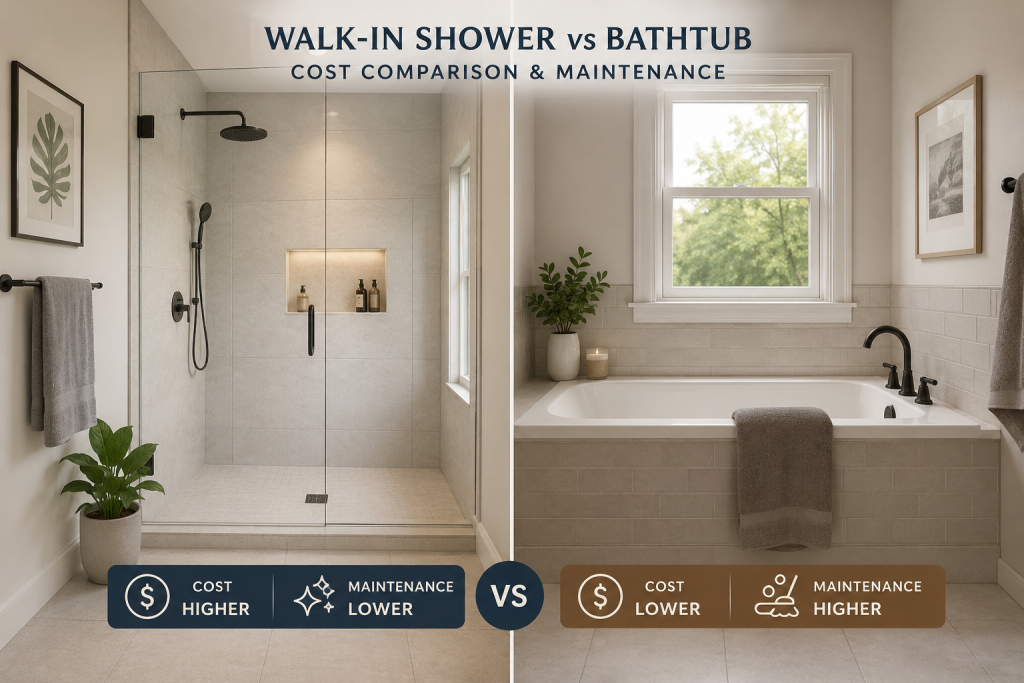
From a maintenance perspective, walk-in showers are generally easier to clean due to open layouts and fewer surfaces for grime buildup. However, grout lines and glass panels may require regular upkeep. Bathtubs tend to collect soap residue and require more scrubbing over time, particularly around edges and seals. In many modern bathroom design decisions, homeowners weigh long-term maintenance alongside initial cost. Choosing between the two ultimately depends on whether you prioritize lower upfront installation costs or easier everyday cleaning and long-term convenience.
Conclusion
Choosing between a walk-in shower vs bathtub ultimately comes down to how you use your bathroom, your household needs, and your long-term home goals. Walk-in showers offer modern convenience, accessibility, and space efficiency, making them ideal for busy lifestyles and contemporary homes. Bathtubs, on the other hand, provide comfort, relaxation, and strong appeal for families and buyers who value traditional bathing options. In many cases, the best solution is not strictly one or the other, but a thoughtful balance based on your layout and priorities.
Reviewing key factors such as maintenance, cost, and resale value bathroom features helps ensure your decision supports both daily living and future property value. Whether you’re planning bathroom remodel ideas for a small upgrade or a full renovation, selecting the right option ensures your bathroom remains functional, comfortable, and aligned with modern design expectations for years to come.
Frequently Asked Questions
Walk-In Shower vs Bathtub: Is a Walk-In Shower Better Than a Bathtub?
In a walk-in shower vs bathtub comparison, neither option is universally better. Walk-in showers are ideal for convenience, accessibility, and modern living, while bathtubs are better for relaxation and family use. The best choice depends on lifestyle and bathroom space.
Do walk-in showers increase home value?
Yes, walk-in showers can improve appeal in resale value bathroom features, especially in primary bathrooms. However, having at least one bathtub in the home is still preferred by many family-oriented buyers.
What are the main benefits of a soaking tub?
Soaking tub benefits include stress relief, muscle relaxation, and a spa-like bathing experience. They are especially valued in larger bathrooms or luxury-focused designs.
What is better for small bathrooms?
Walk-in showers are typically better for small spaces because they maximize floor area and create a more open feel, making them a popular choice in modern bathroom upgrades.
Can I have both a shower and a tub?
Yes, many bathroom remodel ideas combine both when space allows. This setup provides flexibility for families and improves overall functionality.