


Wallpaper vs Paint: Which Is Better for Interior Walls?
Choosing between wallpaper and paint is one of the most common decisions homeowners face when updating interiors. Both options can transform a room, but they differ in cost, durability, maintenance, and overall appearance. The wallpaper vs paint debate has evolved in recent years as homeowners now have access to textured wallpapers, peel-and-stick products, and modern paint finishes that were not widely available before.
Many homes in Dallas use neutral paint palettes for resale appeal, while contemporary interiors in Miami often incorporate statement walls and bold textures. Today’s homeowners compare wall design choices, maintenance requirements, and long-term value before choosing between wallpaper and paint for interior upgrades.
Wallpaper vs Paint: Understanding the Difference
The wallpaper and paint decision goes beyond appearance because both materials affect maintenance, installation, durability, and long-term design flexibility. Homeowners often choose based on budget, room function, and desired visual impact. Paint has remained the traditional choice in American homes because it is affordable, easier to apply, and widely available. Modern finishes also offer greater color variety and support many interior paint benefits, including easier touch-ups and repainting flexibility.
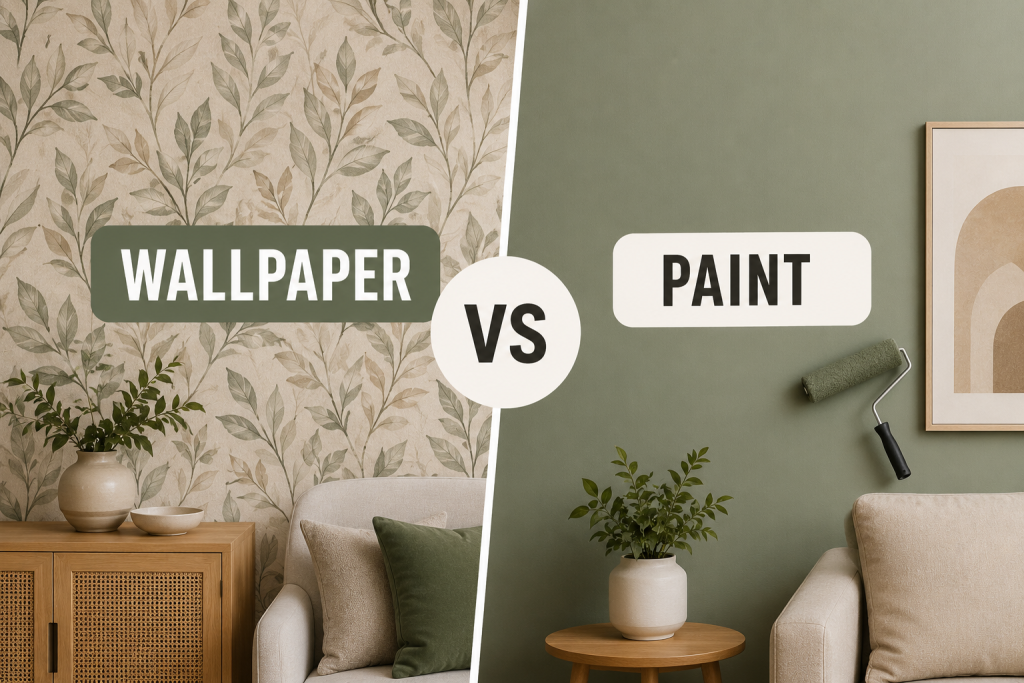
Wallpaper, however, has evolved significantly. Today’s products include textured finishes, murals, and peel-and-stick wallpaper that simplify installation and removal. Modern wallpaper is often used to create accent walls and decorative focal points. The growing popularity of wallpaper has also expanded available wall design choices, giving homeowners more ways to personalize builder-grade interiors while balancing style and resale considerations.
Wallpaper and Paint Cost Comparison
Cost is one of the biggest factors in the wallpaper vs paint decision because installation expenses, materials, and long-term maintenance can vary significantly. Paint is usually the more affordable option for most homeowners. Standard interior painting projects often involve lower material costs and simpler labor requirements. One of the major interior paint advantages is the ability to repaint rooms easily without extensive preparation, helping reduce future renovation costs.
Wallpaper generally requires a larger upfront investment because materials, adhesives, and installation labor increase overall expenses. Premium textures and designer patterns can raise pricing further. However, modern products such as peel-and-stick wallpaper offer a more budget-friendly alternative and reduce installation complexity. When evaluating wall covering comparison costs, homeowners should also consider future maintenance, replacement needs, and the expected lifespan of each finish before making a final decision.
Wallpaper and Paint for Design and Style
Design flexibility plays a major role in the wallpaper vs paint comparison because both finishes create different visual experiences and support different interior styles.
Modern Wallpaper Tips for Statement Walls
Today’s modern wallpaper tips extend far beyond traditional floral patterns. Homeowners increasingly use textured finishes, geometric prints, murals, and peel-and-stick wallpaper to create feature walls and customized interiors. Wallpaper works especially well for accent walls because it introduces depth and texture that paint alone may not achieve.
Painted Wall Styles and Interior Flexibility
Paint remains one of the most adaptable wall design options because homeowners can easily update colors and finishes over time. One of the biggest interior paint advantages is flexibility. Paint works with minimalist interiors, farmhouse styles, contemporary homes, and open layouts, support future renovations more easily than wallpaper.
Durability and Maintenance Comparison
Durability is an important part of the wallpaper vs paint decision because maintenance requirements directly affect long-term ownership costs and appearance. Painted walls are generally easier to maintain because touch-ups and color updates require less effort. One of the major interior paint advantages is simple maintenance, especially in busy areas such as hallways, living rooms, and family spaces.
Modern coatings have also improved painted fence durability, helping walls resist stains, fading, and everyday wear. Wallpaper offers longer visual consistency because patterns hide minor imperfections better than paint. However, repairs may be more difficult if sections become damaged. Modern peel-and-stick wallpaper simplifies replacement compared with traditional wallpaper systems. In a covering comparison, homeowners should consider traffic levels, cleaning needs, humidity exposure, and expected renovation frequency before selecting a finish.
Wallpaper vs Paint by Room Type
Room function can significantly influence the wallpaper and paint decision because moisture levels, traffic, and maintenance needs vary throughout the home.
Living rooms: Wallpaper vs Paint
Paint remains popular because of its flexibility and strong interior paint advantages, while wallpaper works well for statement walls and decorative focal areas.
Bedrooms:
Both finishes perform well. Many homeowners choose modern wallpaper tips for feature walls behind beds, while paint supports easier future updates.
Bathrooms:
Paint is often preferred because humidity may affect some wallpaper materials. Moisture-resistant products are usually recommended when using wallpaper.
Home offices:
Wallpaper creates customized workspaces and expands available wall design choices, especially in remote work environments.
Entryways and hallways:
High-traffic areas often benefit from stronger painted surface durability because touch-ups are easier over time.
Pros and Cons of Wallpaper and Paint
The wallpaper vs paint decision depends on the homeowner’s priorities because each option offers different advantages and limitations. Paint remains popular because of affordability, easy application, and long-term flexibility. One of the biggest advantages of interior paint is the ability to repaint walls quickly when styles change. Paint also supports better surface durability in busy households because touch-ups are simpler.
Wallpaper offers a stronger visual impact and expands available wall design choices through textures, patterns, and decorative finishes. Modern products and peel-and-stick wallpaper have also made installation easier than traditional wallpaper systems. However, wallpaper may require higher upfront costs and more effort during replacement. Paint usually demands more frequent updates but offers easier maintenance. Understanding these wallpaper benefits and drawbacks helps homeowners choose finishes that match their budget, style goals, and renovation plans.
DIY Installation and Renovation Considerations
DIY potential is another important factor in the wallpaper vs paint comparison because installation complexity directly affects cost, time, and renovation planning. Paint remains the easier option for most homeowners because application tools are simple and mistakes are generally easier to correct. One of the major interior paint advantages is that repainting can refresh a room without removing existing finishes.
Wallpaper installation usually requires more preparation because alignment, cutting, and surface smoothing affect the final result. However, modern peel-and-stick wallpaper has made DIY projects more accessible by simplifying installation and removal. Homeowners planning frequent style updates often prefer paint because it supports wall design choices more easily. For long-term decorative feature walls and statement spaces, wallpaper may provide a stronger visual impact while reducing the need for frequent redesigns.
Wallpaper vs Paint for Resale Value and Long-Term Appeal
Resale considerations can also influence the wallpaper and paint decision because interior finishes affect buyer perception and long-term flexibility. Paint remains the safer option for many homeowners because neutral palettes appeal to a wider audience and support easier updates before selling a property. One of the key interior paint advantages is the ability to refresh interiors quickly to match changing market trends.
Wallpaper can still improve presentation when used strategically. Modern feature walls, textured finishes, and modern wallpaper ideas often help create memorable spaces in living rooms, bedrooms, and home offices. However, highly personalized patterns may not appeal to every buyer. When evaluating long-term wall design choices, many homeowners combine paint with accent wallpaper walls to balance style, flexibility, and resale appeal.
Best Rooms for Wallpaper and Paint in Modern Homes
Choosing the right finish by room type can make the wallpaper vs paint decision easier because every space has different design and maintenance requirements. Living rooms often support both options. Paint remains popular because of the many interior paint advantages, while wallpaper works well for statement walls and decorative focal areas. Bedrooms are ideal spaces for modern wallpaper tips because textured finishes and patterns can create visual depth behind beds without overwhelming the room.

Home offices have also become a common place for wallpaper installations because feature walls help personalize workspaces and expand available wall design choices. Kitchens and bathrooms usually favor paint because moisture and humidity may affect some wallpaper products over time. Many homeowners also choose peel-and-stick wallpaper for smaller areas because it offers easier installation and future updates while preserving flexibility for changing interior styles and renovation plans.
Conclusion
The wallpaper vs paint decision ultimately depends on budget, maintenance expectations, design goals, and room function. Paint remains a popular choice because of affordability, flexibility, and the many interior paint advantages that support long-term updates and easier maintenance. Wallpaper, on the other hand, offers greater texture, stronger visual impact, and expanded wall design choices through patterns and decorative finishes. Modern products such as peel-and-stick wallpaper have also made installation more accessible for homeowners. Understanding wallpaper pros and cons, maintenance needs, and painted surface durability helps homeowners choose the best finish for their interior style, renovation plans, and long-term goals.
FAQs
Wallpaper vs paint, which is better for interior walls?
The wallpaper vs paint decision depends on budget, maintenance needs, and design goals. Paint offers flexibility and affordability, while wallpaper provides stronger texture and decorative impact.
Is peel-and-stick wallpaper worth using?
Yes. Peel and stick wallpaper has become popular because it is easier to install and remove than traditional wallpaper, making it suitable for DIY projects and rental-friendly updates.
What are the main interior paint advantages?
Major interior paint advantages include lower upfront cost, easier touch-ups, flexible color updates, and simpler maintenance over time.
Which option lasts longer, wallpaper or paint?
Wallpaper often maintains its appearance longer, while improved coatings continue increasing painted wall durability in modern homes.
What are the biggest wallpaper benefits and drawbacks?
Common wallpaper benefits and drawbacks include strong visual appeal and design variety, balanced against higher installation costs and more difficult replacement processes.