

Wood Fence vs Vinyl Fence Cost Comparison & Breakdown
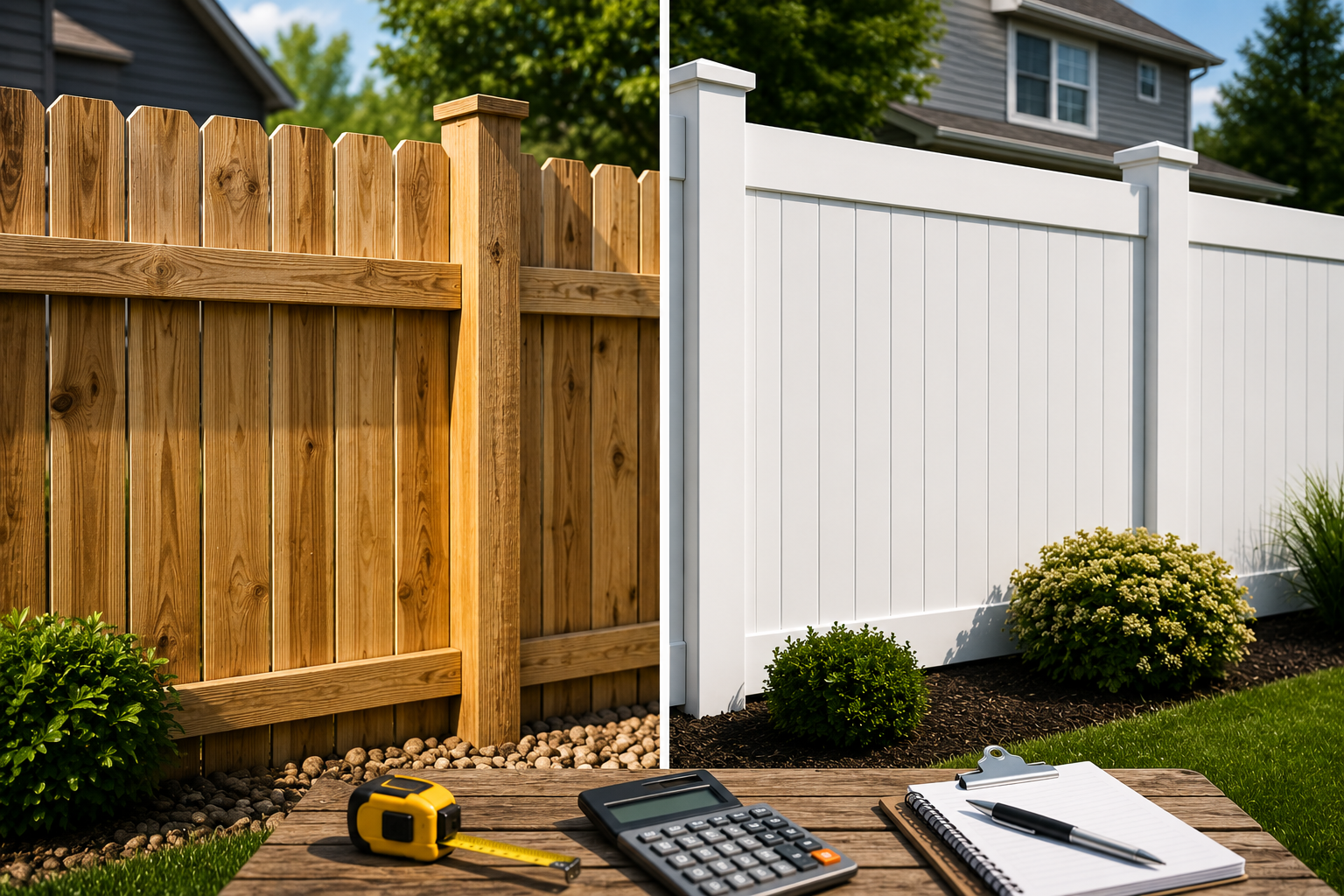
Choosing between wood and vinyl fencing is one of the most common decisions homeowners face when planning a new fence installation. A wood fence vs vinyl fence cost comparison helps determine which material offers the best balance of affordability, durability, and long-term value. While wood fences are known for their traditional appearance and lower upfront costs, vinyl fencing has gained popularity due to its durability and reduced maintenance requirements. The difference in ownership costs often extends beyond the initial installation price, making it important to evaluate both short-term and long-term expenses.
For many U.S. homeowners, factors such as climate conditions, property style, and expected maintenance play a significant role in the decision-making process. A detailed analysis can help identify which option aligns better with budget expectations and long-term property goals. In this guide, we will compare installation expenses, maintenance requirements, durability, and overall value to help homeowners make a more informed fencing investment.
Wood Fence vs Vinyl Fence Cost: Understanding the Price Difference
Comparing wood fence vs vinyl fence cost starts with understanding how installation pricing is structured. While both materials are commonly used for residential properties, their upfront expenses can differ significantly based on material quality, fence height, and local contractor rates.
Average Installation Costs
In most U.S. markets, wood fencing typically has a lower initial installation cost than vinyl. However, the total investment varies depending on design complexity, property size, and regional labor pricing. When evaluating wood privacy fence cost, homeowners should also account for staining, sealing, and future repair expenses that may arise over time.
Material and Labor Considerations
Material quality plays a major role in overall pricing. Wood fencing is generally less expensive to purchase, but costs fluctuate depending on the species and grade selected. Vinyl fencing often requires a higher upfront investment because of manufacturing and material expenses. When reviewing vinyl fence pricing, homeowners should consider that installation costs may be offset by reduced maintenance needs throughout the fence’s lifespan. Labor requirements for both materials are relatively similar, although custom layouts and challenging terrain can increase project costs regardless of the material chosen.
Cost Comparison Overview
A proper fencing material comparison should look beyond installation alone. While wood may appear more affordable initially, long-term maintenance and replacement expenses can significantly influence overall ownership costs.
Wood Fence vs Vinyl Fence Cost: Long-Term Maintenance Expenses
When evaluating wood fence vs vinyl fence cost, long-term maintenance is one of the most important factors that affects total ownership value. While upfront installation pricing is important, ongoing upkeep can significantly change the overall investment over time. Wood fencing requires regular maintenance such as staining, sealing, and occasional board replacement to protect against moisture, insects, and weather damage. These recurring costs can add up over the lifespan of the fence, especially in humid or wet climates where deterioration happens faster.
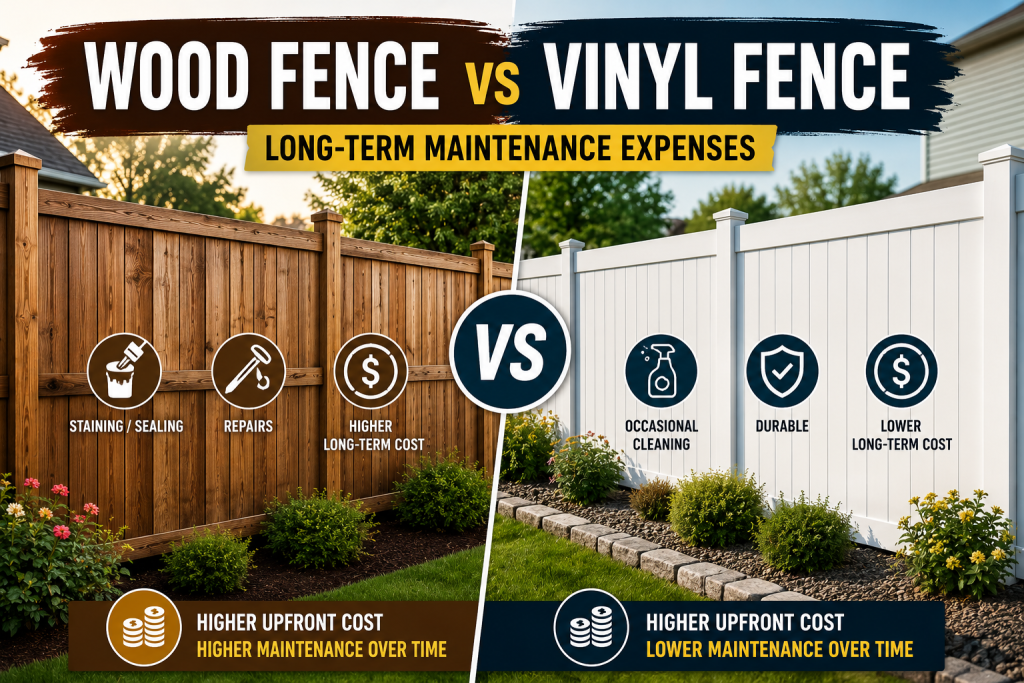
Vinyl fencing, on the other hand, is widely recognized for its durability and ease of care. Homeowners often prefer low-maintenance fencing options like vinyl because they only require occasional cleaning with water and mild soap, without the need for painting or sealing. Over time, maintenance differences can offset initial cost savings. While wood may be cheaper to install, vinyl often provides more predictable long-term expenses, making it a strong choice for homeowners focused on convenience and reduced upkeep. Overall, maintenance expectations play a key role in determining the true value behind wood fence vs vinyl fence cost decisions.
Wood Fence vs Vinyl Fence Cost: Durability and Lifespan Comparison
A key part of understanding wood fence vs vinyl fence cost is evaluating how each material performs over time in real-world conditions. Durability and lifespan directly influence long-term value, especially for homeowners planning to stay in their property for many years. Wood fencing offers a natural appearance but is more vulnerable to weather-related wear such as rot, warping, and insect damage. Its lifespan depends heavily on maintenance routines and climate conditions, meaning performance can vary significantly across different U.S. regions.
Vinyl fencing is engineered for strength and weather resistance, making it less prone to cracking, fading, or structural deterioration. Many homeowners prefer vinyl as a long-term solution due to its consistent performance and reduced repair needs. From a fence durability comparison perspective, vinyl generally outperforms wood in longevity and resistance to environmental stress. However, wood still remains popular for its aesthetic appeal and traditional look, especially in residential neighborhoods where design style is a priority. Ultimately, durability plays a major role in determining overall cost efficiency when analyzing wood fence vs vinyl fence cost over the full lifecycle of a fence.
Choosing the Right Fence for Your Property
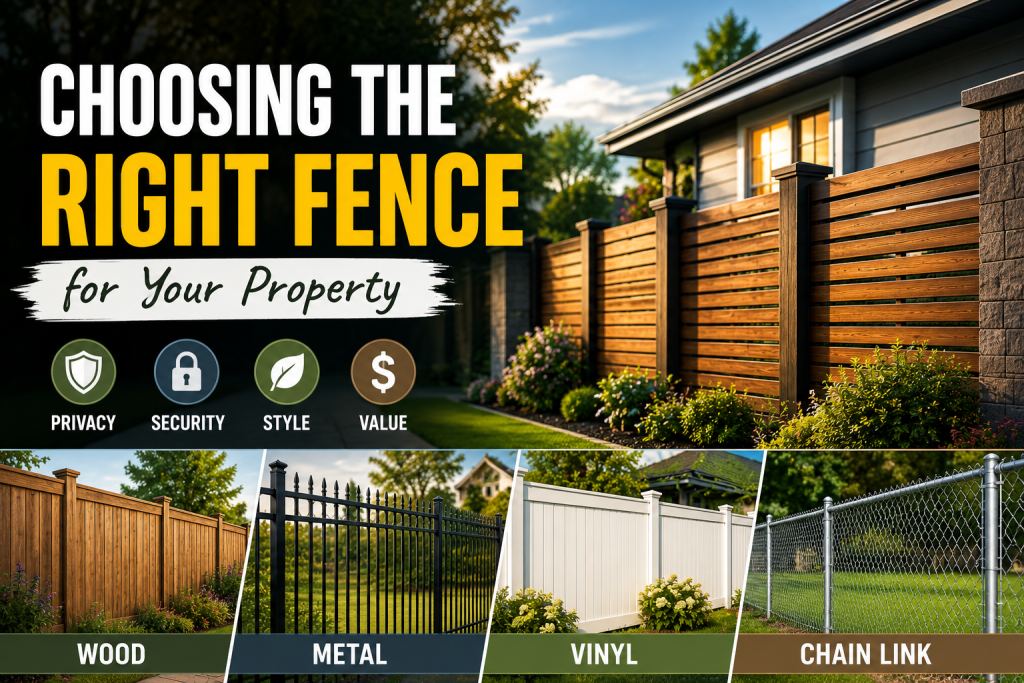
When evaluating wood fence vs vinyl fence cost, homeowners should also consider how each material fits their specific property needs, lifestyle, and long-term maintenance expectations. Cost is important, but functionality and design compatibility often determine the best overall choice.
Privacy and Appearance Considerations
Wood fencing is often preferred for its natural, traditional look and strong privacy coverage. It blends well with landscaping and is commonly used in suburban neighborhoods where visual warmth and customization matter. Vinyl fencing, on the other hand, provides a clean, modern appearance with consistent color and structure. It is widely chosen for homeowners who want a polished look with minimal upkeep, especially in newer residential developments. Many backyard fencing options today combine aesthetics with functionality, allowing homeowners to balance privacy needs with curb appeal improvements. The right choice often depends on how the fence will be used—whether for security, pets, privacy, or decorative boundaries.
Climate and Maintenance Factors
Climate plays a major role in long-term performance. Wood may require more maintenance in humid or wet regions, while vinyl tends to perform consistently across different weather conditions. Homeowners should consider both environmental exposure and maintenance commitment when deciding between materials. In the end, selecting the right fence involves balancing appearance, durability, and long-term cost efficiency within the framework of wood fence vs vinyl fence cost considerations.
Conclusion
Understanding wood fence vs vinyl fence cost is essential for homeowners who want to make a smart, long-term investment in their property. While both materials offer clear advantages, the right choice ultimately depends on budget, maintenance expectations, and design preferences.Wood fencing remains a popular option for its natural appearance and lower upfront cost, but it requires ongoing maintenance to maintain its condition over time. Vinyl fencing typically involves a higher initial investment, but it offers strong durability and reduced upkeep, making it appealing for homeowners focused on long-term convenience.
When comparing residential fence costs, it becomes clear that total ownership value extends beyond installation alone. Maintenance, repairs, and lifespan all play a major role in determining which material provides better long-term efficiency.In the end, both wood and vinyl fencing can be excellent choices depending on the homeowner’s priorities. A careful evaluation of cost, durability, and maintenance needs ensures a fence that enhances both property value and everyday functionality.
Frequently Asked Questions
Which is cheaper: wood fence vs vinyl fence cost?
A full wood fence vs vinyl fence cost comparison shows that wood fencing is generally cheaper upfront compared to vinyl fencing. However, vinyl fencing may offer better long-term value due to lower maintenance requirements and fewer repair needs over time.
How long does wood fencing last compared to vinyl?
Wood fences typically last 10–20 years depending on maintenance and climate conditions. Vinyl fences can last 20–30 years or more with minimal upkeep, making them more durable in many environments.
What is vinyl fence pricing based on?
Vinyl fence pricing depends on factors such as panel style, height, thickness, installation complexity, and local labor rates. Decorative designs or custom layouts may increase overall costs.
What is the average wood privacy fence cost?
The wood privacy fence cost varies depending on wood type, fence height, and design. Basic installations are more affordable, but long-term maintenance like staining and sealing should also be considered.
Which fencing material is easier to maintain?
Vinyl is easier to maintain because it only requires occasional cleaning. Wood requires more frequent maintenance, including sealing, staining, and occasional repairs.
What are the main differences in fencing material comparison?
A fencing material comparison shows that wood offers a natural look and lower upfront cost, while vinyl provides better durability and lower maintenance requirements.
Are there affordable backyard fencing options?
Yes, backyard fencing options include chain-link, basic wood fences, and standard vinyl panels. The best choice depends on budget, privacy needs, and design preferences.
Which fence lasts longer overall?
In most cases, vinyl outlasts wood due to its resistance to moisture, insects, and weather damage, making it a stronger long-term investment for homeowners.