

Understanding Curb Appeal Improvement Cost for Homeowners
The curb appeal improvement cost varies widely depending on the type of project, home size, region, and material quality. For most US homeowners, improving curb appeal can range anywhere from a few hundred dollars for simple updates to over $30,000 for full-scale exterior transformations. In competitive housing markets like Austin, Charlotte, and Denver, homeowners are increasingly investing in exterior renovation costs that directly improve resale value. Buyers today expect clean landscaping, modern siding, updated lighting, and well-maintained front porches as baseline standards.
Industry groups like NAHB highlight that exterior improvements remain one of the most influential factors in buyer perception. This makes understanding curb appeal improvement cost essential before starting any project. This guide breaks down real-world pricing for landscaping, painting, porch upgrades, and exterior renovations so homeowners can plan smarter, avoid overspending, and maximize curb appeal ROI.
Landscaping Cost Breakdown: Front Yard Makeover and Curb Appeal Improvement Cost
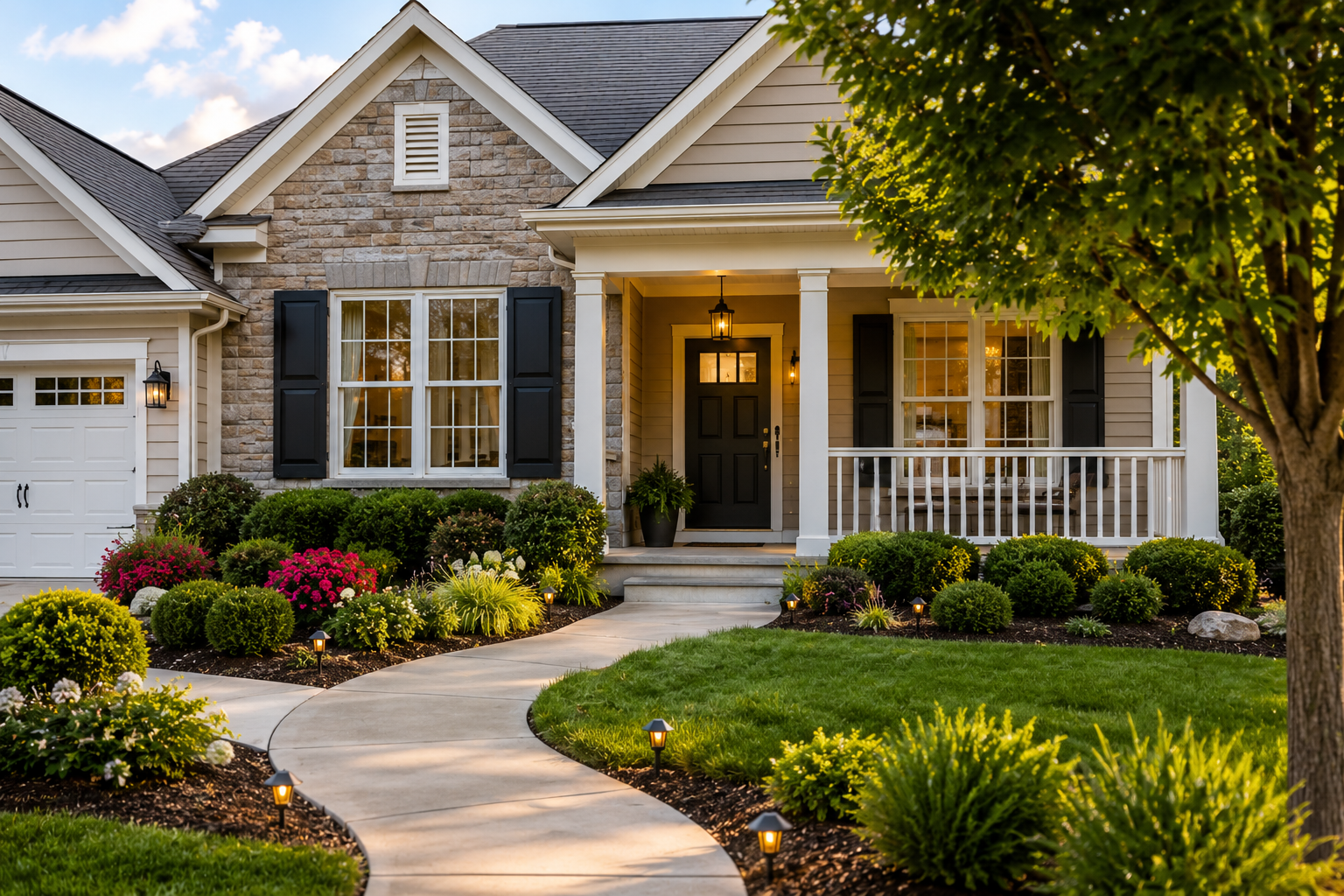
Landscaping is usually the first place homeowners invest when improving curb appeal, and it can range from highly affordable refreshes to full-scale redesigns. The landscaping cost depends on yard size, plant selection, labor rates, and whether hardscaping elements like walkways or retaining walls are included. In most U.S. neighborhoods, a basic front yard refresh typically starts around a few hundred dollars, while professional landscape redesigns can exceed several thousand. In regions like San Diego and Atlanta, homeowners often invest more in drought-resistant plants, irrigation systems, and mulch upgrades due to climate demands. Meanwhile, in colder areas such as Minneapolis, landscaping costs often include seasonal planning, evergreen planting, and drainage improvements to handle snowmelt and freeze-thaw conditions.
Typical front yard makeover pricing can be broken into tiers:
- Basic refresh: cleanup, mulch, trimming, and edging
- Mid-range upgrade: planting beds, sod installation, and lighting
- High-end redesign: irrigation systems, stone walkways, and architectural landscaping
According to industry benchmarks from NAHB, landscaping improvements consistently rank among the highest-impact exterior investments for perceived property value. Well-planned designs not only enhance aesthetics but also improve long-term maintenance efficiency, helping homeowners maximize results while managing curb appeal improvement cost more effectively. This makes landscaping one of the most cost-effective ways to increase visual appeal and long-term property value.
Exterior Painting Cost Breakdown
Exterior painting is one of the most visible and transformative improvements homeowners can invest in. A fresh coat of paint instantly modernizes a home, hides wear and weather damage, and significantly improves perceived property value. The exterior painting cost depends on home size, number of stories, surface condition, paint quality, and labor rates in your region. Because painting delivers noticeable visual impact at a relatively manageable curb appeal improvement cost, it remains one of the most popular choices for exterior updates. In many U.S. markets such as Raleigh and Salt Lake City, homeowners typically see pricing range from basic repaints for small single-story homes to higher-end projects involving prep work, trim repair, and premium weather-resistant coatings. Homes in harsher climates often require more durable paint systems designed to resist moisture, UV exposure, or freeze-thaw cycles.
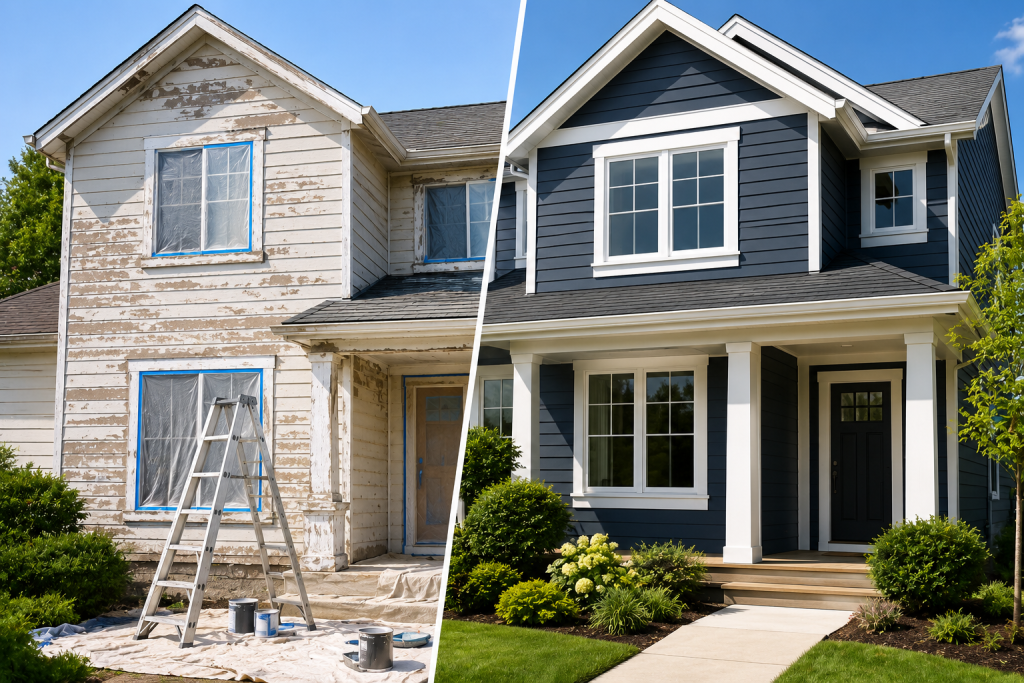
Higher-quality materials also impact long-term value. Premium exterior coatings recommended for durability often align with energy-efficient and weather-resistant standards promoted by programs like ENERGY STAR. While paint itself doesn’t change insulation, reflective coatings can help reduce heat absorption in warmer regions. For homeowners focused on curb appeal ROI, painting is one of the fastest-return projects available. Neutral modern colors, such as warm whites, grays, and earthy tones, tend to perform best in resale scenarios because they appeal to a wider range of buyers and make architectural details stand out more clearly. Compared with larger renovation projects, painting also offers a relatively lower curb appeal improvement cost while delivering noticeable visual impact.
Front Porch Renovation Cost Breakdown
The front porch is one of the highest-impact zones for improving curb appeal, and the front porch renovation cost can vary significantly based on scope, materials, and structural changes. Small cosmetic updates are relatively affordable, while full rebuilds or expansions can become a major investment depending on design complexity and local labor rates. In U.S. suburban markets like Columbus and Indianapolis, homeowners often focus on mid-range porch upgrades such as new railings, flooring replacement, lighting upgrades, and fresh paint. These improvements can dramatically enhance home exterior upgrade pricing efficiency by improving visibility without requiring full structural reconstruction.
More extensive renovations may include roof extensions, column replacements, or converting a small stoop into a full sitting porch. In warmer climates, ceiling fans and shaded coverings are common additions, while colder regions prioritize durable materials that withstand snow, ice, and moisture exposure. Materials from manufacturers like James Hardie are often used for porch columns, trim, and siding accents due to their durability and low maintenance requirements. Combined with modern lighting and updated entry doors, porch renovations significantly improve curb appeal ROI, since they directly influence the first impression of any home. A well-designed porch not only improves aesthetics but also increases usability, creating a welcoming transition space that enhances both lifestyle value and resale appeal.
Curb Appeal Improvement Cost and ROI: Which Exterior Upgrades Pay Off the Most?
When evaluating curb appeal ROI, not all exterior upgrades deliver equal financial returns. Some projects are primarily aesthetic, while others directly influence appraisal value and buyer demand. Understanding this difference helps homeowners prioritize spending and avoid over-investing in low-impact improvements. In most U.S. housing markets, including competitive areas like Charlotte and Tampa, garage door replacement, entry door upgrades, and siding improvements consistently rank among the highest-return projects. These upgrades improve the visible front elevation, which is the first thing buyers evaluate during showings. Roofing upgrades also contribute significantly to ROI, especially when using durable materials from brands like Owens Corning and GAF. A newer roof reduces buyer concerns about future repair costs, which often translates into stronger offers.
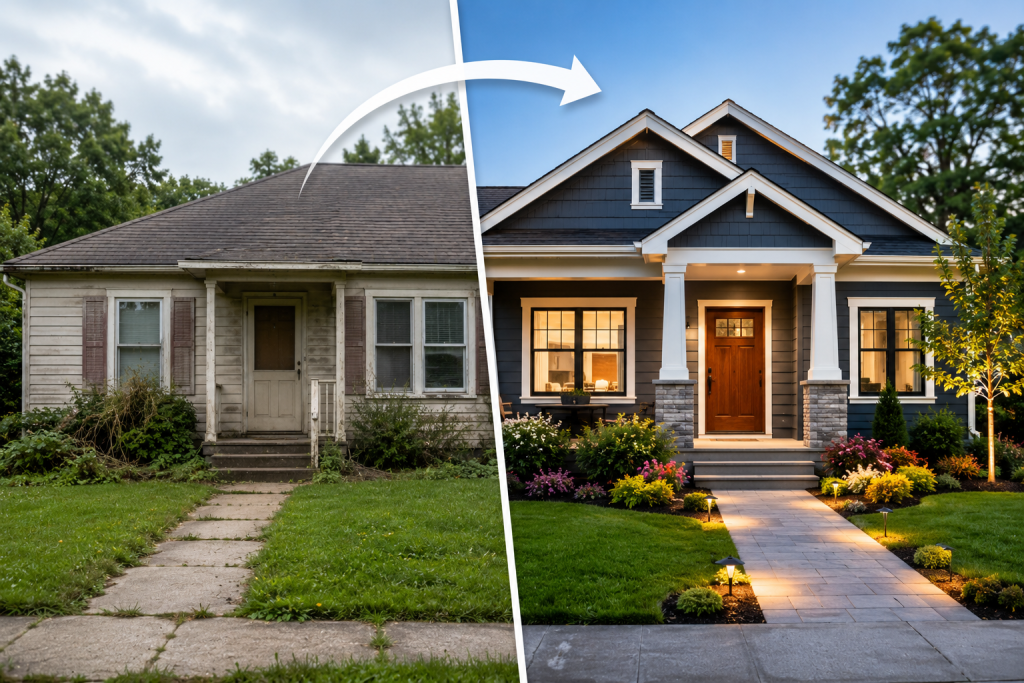
According to remodeling insights tracked by organizations like NAHB, exterior-focused projects tend to outperform many interior upgrades in perceived value because they directly influence first impressions and emotional response. Landscaping and lighting upgrades also contribute to ROI, especially when paired with clean maintenance and cohesive design. Even relatively low-cost improvements can significantly increase perceived home value when executed strategically and help homeowners manage overall curb appeal improvement cost more efficiently. Overall, the best ROI comes from a balanced approach, combining structural upgrades, visual enhancements, and climate-appropriate materials to maximize both appeal and long-term durability.
Home Exterior Upgrade Pricing: What a Full Project Costs
When homeowners move beyond small fixes and start planning a complete exterior transformation, curb appeal improvement cost becomes a more complex calculation. A full curb appeal overhaul often combines multiple projects—siding, paint, roofing touch-ups, landscaping, lighting, and entryway improvements—into one coordinated investment. In many U.S. regions like Nashville and Sacramento, mid-range exterior renovation packages typically include repainting, minor siding repairs, front yard upgrades, and lighting improvements. Higher-end projects may involve full siding replacement, roof upgrades, and redesigned porches, significantly increasing total exterior renovation costs.
Material selection plays a major role in pricing. For example, fiber cement siding from James Hardie is more expensive upfront than vinyl, but offers superior durability and long-term performance in humid or storm-prone climates. Similarly, roofing systems from GAF and Owens Corning can increase initial costs while reducing future maintenance expenses. Labor is another major factor. Homes with complex architecture, multiple stories, or older structural conditions often require more preparation work, which increases total cost. Regional differences also matter, coastal and high-demand urban areas generally have higher contractor pricing than rural regions. Ultimately, full exterior upgrades should be viewed as a bundled investment strategy rather than isolated projects. When planned correctly, they significantly improve curb appeal ROI, energy efficiency, and long-term property value.
Final Cost Summary
Understanding curb appeal improvement cost is not just about listing prices, it’s about building a smart budget that prioritizes impact, durability, and resale value. Most homeowners get the best results when they combine low-cost visual upgrades with a few high-ROI structural improvements instead of attempting a full renovation all at once. A practical budgeting approach in U.S. markets like Phoenix and Portland often starts with basic front yard makeover pricing improvements such as landscaping refreshes and exterior painting. These create immediate visual transformation without requiring major structural work. From there, homeowners can scale into mid-range investments like porch upgrades, lighting systems, and driveway improvements, followed by larger projects such as siding replacement or roofing upgrades if needed. Materials from James Hardie and roofing systems from Owens Corning are often selected for long-term value because they reduce maintenance costs over time. According to insights from NAHB, homeowners who phase exterior improvements strategically tend to achieve better overall curb appeal ROI compared to those who rush into large, unplanned renovations. The most effective strategy is simple:
start with visibility (clean + paint), then move to function (roof + siding), and finish with detail (lighting + landscaping). This layered approach ensures every dollar spent contributes directly to both curb appeal and long-term home value.
Frequently Asked Questions (FAQ)
What is the average curb appeal improvement cost for homeowners?
The average curb appeal improvement cost varies widely depending on project scope. Small upgrades like landscaping refreshes or painting may cost a few hundred to a few thousand dollars, while full exterior overhauls involving siding, roofing, and hardscaping can exceed $20,000–$50,000 in many U.S. markets.
What is the most affordable way to improve curb appeal?
The most budget-friendly improvements include pressure washing, mulch installation, trimming landscaping, repainting the front door, and updating exterior lighting. These low-cost exterior renovation costs often deliver strong visual impact without major construction work.
How much does a front yard makeover cost?
Front yard makeover pricing typically ranges from basic $500–$2,500 refreshes to $5,000–$15,000+ for professional landscaping redesigns. Costs depend on yard size, plant selection, irrigation systems, and whether hardscaping elements like walkways are included.
Does curb appeal really affect home value?
Yes. Strong curb appeal significantly influences buyer perception and can improve resale value. According to NAHB, exterior appearance is one of the first factors buyers evaluate, often shaping their overall impression before entering the home.
What exterior upgrades offer the best ROI?
High-ROI projects include garage door replacement, entry door upgrades, siding replacement, and landscaping improvements. Materials from James Hardie and roofing systems from GAF are often used in higher-value renovations due to durability and long-term performance.
Is exterior painting worth the cost?
Yes. Exterior painting is one of the most cost-effective home exterior upgrade pricing projects. It quickly improves appearance, protects surfaces from weather damage, and enhances overall curb appeal ROI, especially when using modern, neutral color palettes.