

Epoxy Garage Floor Cost in 2026: Complete Pricing Guide for U.S. Homeowners
Upgrading a garage floor has become one of the most popular exterior home improvements for U.S. homeowners in 2026, especially as demand grows for durable, low-maintenance surfaces that improve both function and resale value. The epoxy garage floor cost is often the first question homeowners ask when considering this upgrade, but pricing can vary widely depending on materials, labor, and preparation work.
Most residential projects fall between budget-friendly DIY kits and high-end professional installations that include surface grinding, crack repair, and multi-layer coatings. In many cases, homeowners compare epoxy with newer alternatives like polyaspartic systems or hybrid coatings, which have different performance and pricing structures. Understanding the true epoxy garage floor cost requires more than a simple per-square-foot estimate. Factors like garage size, concrete condition, regional labor rates, and coating type all influence the final price. This guide breaks down every cost component so you can plan your project with realistic expectations and avoid hidden expenses.
Average Epoxy Garage Floor Cost in 2026
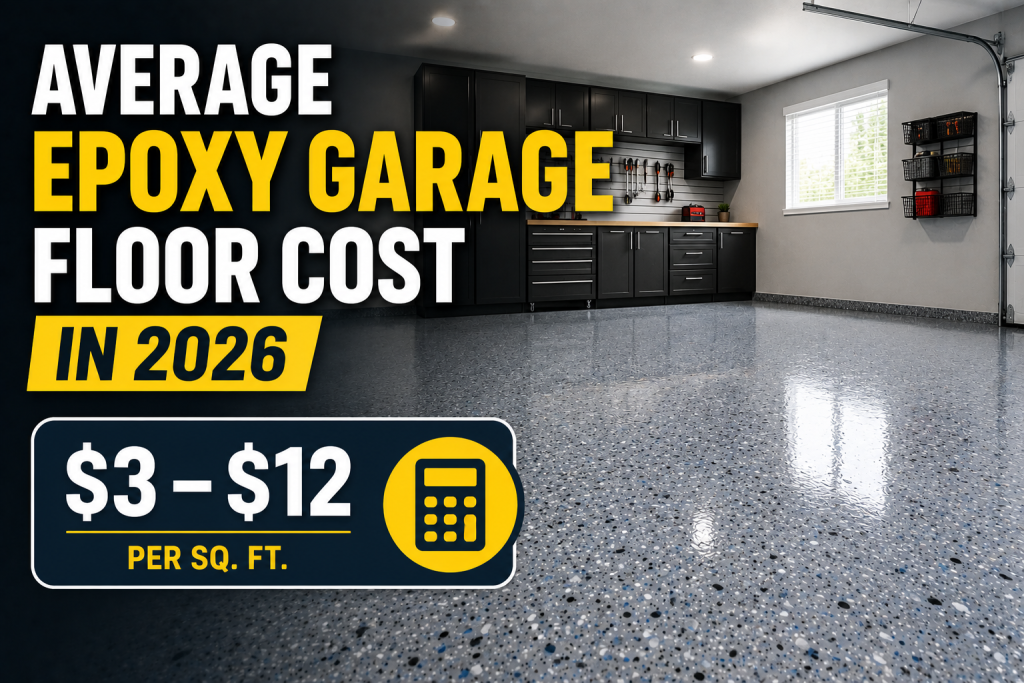
The epoxy garage floor cost in 2026 varies based on whether homeowners choose a basic DIY kit or a professionally installed multi-layer system. On average, U.S. homeowners can expect total installed prices to range from $3 to $12 per square foot, with most mid-range residential projects falling between $1,200 and $4,800 for a standard two-car garage. Entry-level DIY coatings are the lowest-cost option but often lack the durability and surface preparation required for long-term performance. Professional installations, which include concrete grinding, crack repair, and multiple epoxy layers, sit at the higher end of the pricing spectrum but deliver significantly better longevity and finish quality.
When evaluating the epoxy garage floor cost, garage size plays a major role. A typical 400–600 square foot two-car garage represents the most common pricing benchmark used by contractors across the U.S. Larger garages or heavily damaged concrete slabs can increase total costs due to additional labor and material requirements. Overall, homeowners should treat the epoxy garage floor cost as a range rather than a fixed price, since preparation work and coating quality can significantly shift the final budget.
Epoxy Flooring Cost Per Square Foot
Understanding the epoxy flooring cost per square foot is one of the most important steps for homeowners planning a garage upgrade. In 2026, pricing typically ranges from $3 to $12 per square foot installed, depending on system quality, surface preparation, and contractor expertise. On the lower end, basic epoxy systems may include minimal surface prep and a single coating layer, making them more affordable but less durable. Mid-range systems usually involve mechanical grinding, crack repairs, and multiple epoxy coats with decorative flakes for added texture and slip resistance. Premium systems often incorporate higher-grade resins designed for longer lifespan and improved chemical resistance.
Labor is a major factor in the epoxy flooring cost per square foot, especially when extensive prep work is required. Uneven concrete, oil stains, or moisture issues can significantly increase installation time and overall pricing. For most U.S. homeowners, the epoxy garage floor cost aligns closely with the complexity of surface preparation, meaning better-prepared slabs tend to deliver more predictable and long-lasting results.
Garage Floor Coating Cost Breakdown
The garage floor coating cost depends heavily on the type of system chosen and the level of surface preparation required before application. In most U.S. residential projects, epoxy remains the most common option, but polyaspartic and hybrid systems are increasingly used for faster curing times and improved UV resistance. Material costs typically make up a smaller portion of the total project compared to labor and preparation. Basic epoxy coatings are the most affordable, while multi-layer decorative systems with flakes or metallic finishes increase overall pricing. Premium coatings that include polyaspartic topcoats generally sit at the higher end of the budget due to their enhanced durability and faster installation process.
Surface preparation is one of the biggest drivers of the garage floor coating cost, often involving grinding, degreasing, crack filling, and moisture mitigation. Poorly prepared concrete can significantly reduce coating lifespan, making prep work a critical part of the investment. When evaluating the overall epoxy garage floor cost, homeowners should consider not just the coating material but the full system, including labor, preparation, and finishing layers.
Garage Epoxy Installation Process & Pricing
The garage epoxy installation process is one of the biggest factors influencing the overall project cost and final floor performance. Unlike simple paint applications, professional epoxy systems require multiple steps to ensure proper adhesion, durability, and long-term resistance to wear.
The process typically begins with surface preparation, which includes mechanical grinding to open the pores of the concrete. This step is critical because it allows the epoxy to bond properly. Contractors also repair cracks, fill voids, and remove oil stains or contaminants that could interfere with adhesion. In many cases, this preparation stage accounts for a significant portion of the total labor cost.
After preparation, the epoxy base coat is applied, often followed by decorative flakes or color layers, depending on the design. A protective topcoat is then added to seal the surface and improve resistance to chemicals, abrasion, and UV exposure. When analyzing the epoxy garage floor cost, installation complexity is a key driver. More damaged concrete or higher-end finishes naturally increase both labor time and overall project pricing.
Epoxy Labor Cost Explained
The epoxy labor cost is often the largest and most variable part of a garage floor coating project. While materials like epoxy resin and topcoats have relatively predictable pricing, labor depends heavily on the condition of the concrete slab, garage size, and the complexity of surface preparation required before installation. Most contractors break labor into three main phases: preparation, application, and finishing. Preparation is typically the most time-consuming stage and may include diamond grinding, crack repair, degreasing, and moisture testing. This step is essential because poor prep work can significantly reduce the lifespan of the coating system.
Application labor covers mixing and applying multiple epoxy layers, often including decorative flakes or color blends. The finishing stage includes sealing and curing time management to ensure a smooth, durable surface. When evaluating overall epoxy garage floor cost, homeowners often underestimate how much labor influences the final price. In many cases, labor can account for 50% or more of the total project cost, especially in older garages with damaged or uneven concrete.
Residential Epoxy Flooring Prices by Garage Size
The residential epoxy flooring prices vary significantly depending on the size of the garage, since square footage directly impacts both material usage and labor time. In most U.S. homes, garages fall into three common categories: one-car, two-car, and three-car layouts, each with distinct pricing expectations.
A one-car garage typically ranges from 200 to 300 square feet and is the most affordable to coat, especially if the concrete is in good condition. A standard two-car garage, usually 400 to 600 square feet, represents the most common project size and is often used as the baseline for estimating epoxy garage floor cost. Larger three-car garages can exceed 800 square feet and require more labor-intensive preparation and material application. As garage size increases, contractors often provide slight per-square-foot discounts, but total project cost still rises due to added materials and extended labor time. Surface condition remains a major variable regardless of size, especially if repairs or leveling are required before coating.
Polyaspartic Floor Cost vs Epoxy
The polyaspartic floor cost is generally higher than traditional epoxy systems, but many homeowners consider it a worthwhile upgrade due to its faster curing time and improved durability. While epoxy garage coatings can take several days to fully cure, polyaspartic systems often allow light foot traffic within hours, making them attractive for homeowners who want minimal downtime.
In terms of pricing, polyaspartic coatings typically range above standard epoxy installations due to higher material costs and specialized application requirements. However, they also offer superior UV resistance, meaning they are less likely to yellow or fade in garages exposed to sunlight.
When comparing the epoxy garage floor cost to polyaspartic alternatives, epoxy remains the more budget-friendly option upfront. However, polyaspartic systems may reduce long-term maintenance and recoating needs, which can balance out costs over time. For many U.S. homeowners, the decision comes down to budget versus performance, with epoxy favored for affordability and polyaspartic preferred for long-term durability and faster installation.
Garage Floor Resurfacing vs Full Replacement
When evaluating the garage floor resurfacing option, homeowners are often deciding whether a light restoration is enough or if a full epoxy system is necessary. Resurfacing is typically used when the existing concrete is structurally sound but has minor surface imperfections such as light cracks, discoloration, or shallow wear. In these cases, a thin overlay or coating system can restore appearance and improve surface protection at a lower cost.
Full replacement or a complete multi-layer epoxy system is required when the concrete slab has deeper damage, widespread cracking, oil saturation, or moisture issues. These conditions demand more extensive preparation, including grinding and crack injection, which increases both labor and material expenses. In terms of epoxy garage floor cost, resurfacing is usually the more affordable option upfront, but it may not deliver the same long-term durability as a full professional coating system. Homeowners should carefully evaluate slab condition before choosing between the two approaches to avoid premature failure or additional repair costs.
Cost Differences by U.S. Region
The epoxy garage floor cost can vary noticeably across different regions of the United States due to labor rates, climate conditions, and contractor availability. In higher-cost metropolitan areas such as California and the Northeast, installation prices tend to be significantly above the national average because of higher labor expenses and stricter building standards. In humid regions like Florida and along the Gulf Coast, additional moisture mitigation steps may be required before installation. This can increase both preparation time and overall project cost. In colder Midwest states, freeze-thaw cycles often lead to more concrete repair work, which also raises labor costs due to additional surface preparation needs.
In contrast, states like Texas and Arizona often fall closer to the national average, though premium coatings may be recommended due to heat and UV exposure. These regional differences mean the final epoxy garage floor cost is never fixed and should always be adjusted based on local conditions and contractor pricing. Understanding regional pricing helps homeowners set realistic expectations and avoid underestimating total installation budgets.
DIY vs Professional Epoxy Installation
When planning an upgrade, many homeowners consider whether to handle installation themselves or hire a contractor, since this decision has a major impact on the overall epoxy garage floor cost. DIY epoxy kits are widely available and can reduce upfront expenses significantly, making them attractive for budget-conscious homeowners. However, these kits typically offer thinner coatings and limited surface preparation compared to professional systems. Professional installation includes industrial grinding, crack repair, moisture testing, and multi-layer application, all of which improve durability and long-term performance. While this approach increases initial cost, it also reduces the risk of peeling, bubbling, or premature wear.
DIY projects often struggle with improper surface preparation, which is the most common cause of epoxy failure. Uneven application and poor curing conditions can further shorten the lifespan of the floor In most U.S. homes, professional installation is preferred when homeowners want a long-lasting finish and are willing to invest more upfront for better results. DIY options are best suited for small garages or temporary solutions.
Conclusion
For many homeowners, the decision to invest in epoxy comes down to long-term value rather than just upfront pricing. While the epoxy garage floor cost can feel high compared to basic concrete paint or DIY kits, the performance benefits often justify the investment in the right conditions. Epoxy flooring provides a durable, easy-to-clean surface that resists oil stains, chemicals, abrasions, and general wear. This makes it especially valuable for homeowners who use their garage as a workshop, storage space, or high-traffic entry area. It also improves the overall appearance of the garage, which can positively influence resale appeal in competitive U.S. housing markets. However, its value depends heavily on proper installation and concrete condition. Poor surface preparation or low-quality materials can reduce lifespan and lead to premature failure, reducing return on investment. In most residential cases, a professionally installed epoxy system offers strong long-term value, especially when compared to frequent maintenance or replacement of lower-quality flooring alternatives.
Frequently Asked Questions
How much does epoxy garage floor cost per square foot?
The epoxy garage floor cost per square foot typically ranges from $3 to $12 installed in most U.S. residential projects. Pricing depends heavily on surface preparation, coating quality, and labor requirements.
What is included in garage floor coating cost?
The garage floor coating cost usually includes surface preparation, materials, labor, crack repair, and the final protective topcoat. Premium systems may also include decorative flakes or moisture barriers.
What affects epoxy flooring cost per square foot the most?
The biggest factor in epoxy flooring cost per square foot is surface preparation. Damaged or uneven concrete requires more grinding and repair work, which increases labor costs.
Why is epoxy labor cost so high?
The epoxy labor cost is high because professional installation involves multiple steps, including grinding, repairs, and multi-layer application, all of which are time-intensive.
How much does polyaspartic floor cost compared to epoxy?t per square foot?
The polyaspartic floor cost is generally higher than epoxy due to faster curing times, UV resistance, and more advanced material properties.
Is garage floor resurfacing cheaper than full epoxy?
Yes, garage floor resurfacing is typically cheaper, but it may not provide the same durability or lifespan as a full epoxy system.
How much does polyaspartic floor cost compared to epoxy?t per square foot?
The polyaspartic floor cost is generally higher than epoxy due to faster curing times, UV resistance, and more advanced material properties.
What are residential epoxy flooring prices for a 2-car garage?
Residential epoxy flooring prices for a standard 2-car garage (400–600 sq ft) usually range between $1,200 and $4,800 depending on system quality and prep work.
Can epoxy garage flooring be installed over old concrete?
Yes, but proper preparation is required to ensure adhesion. Cracks, oil stains, and moisture issues must be addressed before installation.