

Epoxy vs Tile Garage Flooring: Which Is Better? (2026 Guide)
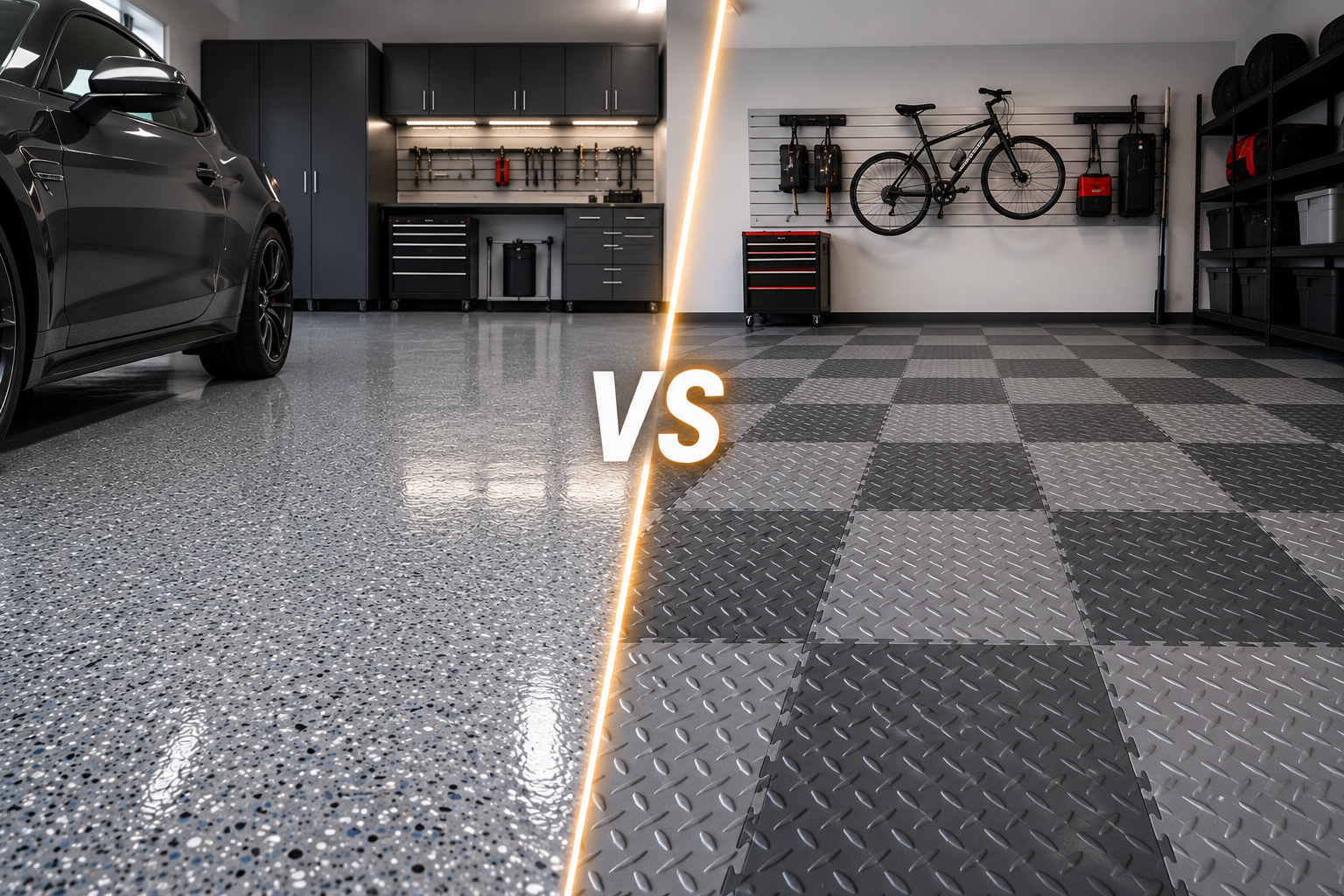
Choosing between epoxy vs tile garage flooring is one of the most common decisions U.S. homeowners face when upgrading their garage space. Both options are widely used in residential garages, but they perform very differently when it comes to durability, maintenance, and long-term value. In many American homes, garages are no longer just parking spaces; they function as workshops, storage areas, and even hobby zones. This makes the choice of flooring critical, and the debate around garage flooring becomes even more important when factoring in vehicle traffic, oil exposure, and seasonal climate changes.
While epoxy creates a seamless, bonded surface over concrete, tile systems offer modular installation and easier replacement of damaged sections. Understanding how epoxy vs tile garage flooring performs in real-world conditions helps homeowners avoid costly mistakes and choose a solution that fits both lifestyle and budget. This guide breaks down the key differences so you can make an informed decision based on durability, maintenance, and long-term performance.
Overview of Garage Floor Coating vs Tile
When comparing garage floor maintenance, it’s important to understand that these two systems function very differently at a structural level. Epoxy is a liquid-applied coating that chemically bonds to concrete, creating a continuous surface layer. Tile systems, on the other hand, are modular flooring solutions that sit on top of the concrete slab and lock together mechanically. In the debate of epoxy vs tile garage flooring, epoxy is typically chosen for its seamless finish and strong resistance to oil, moisture, and abrasion. Because it forms a bonded surface, it helps protect the underlying concrete from long-term wear and staining, making it a popular option in U.S. residential garages.
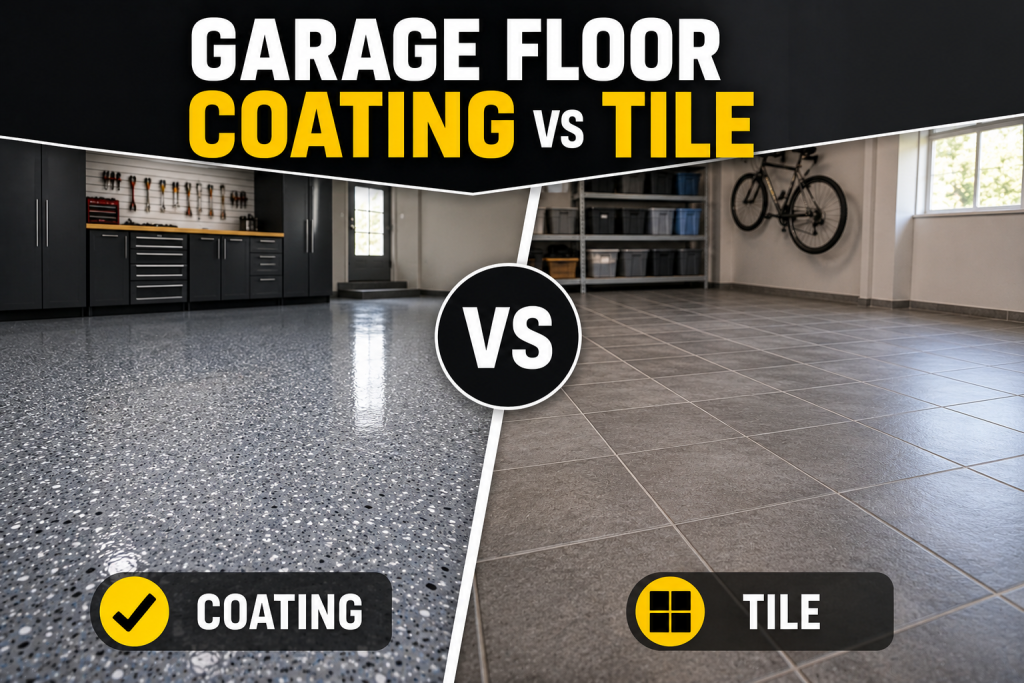
Tile systems offer a different advantage: flexibility. Damaged sections can be replaced individually without redoing the entire floor. This modular design is often appealing in garages where impact damage or localized wear is expected. Understanding this fundamental difference is essential before evaluating epoxy vs tile garage flooring, as each system solves different homeowner needs depending on usage, climate, and maintenance expectations.
Epoxy vs Tile Garage Flooring Pros and Cons
When evaluating both flooring, epoxy systems are often praised for their seamless finish and strong bond with concrete. In U.S. residential garages, epoxy creates a continuous surface that helps resist oil stains, moisture intrusion, and everyday wear from vehicle traffic. One of the main advantages of flooring comparisons is durability. Properly installed epoxy coatings can handle heavy loads, hot tire contact, and chemical exposure better than many surface-level flooring options. This makes it a strong choice for homeowners seeking long-term protection.
However, epoxy also has limitations. If the concrete underneath shifts or was not properly prepared, issues like peeling or cracking can occur. Repairs can be more complex since damaged areas often require resurfacing rather than simple patch replacement. Despite these drawbacks, epoxy remains a leading option in garage flooring decisions due to its performance, appearance, and ability to protect concrete in demanding garage environments.
Garage Floor Tile Comparison (Interlocking Systems)
In the epoxy vs tile garage flooring debate, interlocking garage tiles represent the most popular alternative to coated systems. These tiles are typically made from PVC or polypropylene and are designed to snap together over the existing concrete slab without adhesives or curing time.
One major advantage in of flooring comparisons is installation simplicity. Homeowners can often complete a tile floor installation in a single day, and damaged tiles can be replaced individually without affecting the rest of the floor. This modular design makes maintenance more flexible compared to coated surfaces.
However, tile systems also have limitations. Over time, heavy vehicle loads, moisture beneath the slab, or temperature changes can cause slight movement or separation between tiles. In the context of both flooring, this can lead to uneven surfaces or dirt accumulation in seams if not properly maintained. While tiles offer convenience and design flexibility, they may not match the long-term seamless durability that epoxy systems provide in demanding garage environments.
Durability Comparison for Garage Floors
Durability is one of the most important factors in both flooring decisions, especially for U.S. homeowners dealing with vehicle traffic, heavy storage, and seasonal temperature shifts. Both systems offer protection, but they behave very differently under long-term stress. Epoxy systems are known for their strong adhesion to concrete, creating a seamless surface that resists abrasion, oil stains, and chemical exposure. In most epoxy vs tile garage flooring comparisons, epoxy tends to perform better under continuous vehicle loads because there are no joints or seams that can weaken over time.
Tile systems, however, distribute weight across interlocking sections and can handle moderate impacts well. In epoxy vs tile garage flooring scenarios, tiles have the advantage of being individually replaceable if damage occurs, which can extend their usable lifespan in certain environments. However, in high-traffic or heavy-use garages, epoxy generally provides more consistent long-term durability, especially when properly installed on a well-prepared concrete slab.
Maintenance Differences Over Time
Maintenance is a key deciding factor in epoxy vs tile garage flooring, especially for homeowners who want a low-effort solution that still performs well under daily garage use. While both systems are relatively easy to maintain compared to bare concrete, they differ significantly in how they age and require upkeep. Epoxy floors are generally easier to clean because they form a seamless, non-porous surface. Dirt, oil, and debris stay on top rather than settling into gaps. In most flooring comparisons, epoxy requires only routine sweeping and occasional mopping to maintain its appearance and performance over time.
Tile systems, however, require more detailed maintenance due to their modular design. Dirt and moisture can accumulate in the joints between tiles, which may require periodic deep cleaning. In flooring discussions, this is often seen as a trade-off for their easy replacement advantage. Overall, epoxy tends to offer a more effortless long-term maintenance experience, while tiles require slightly more ongoing attention to keep the surface looking clean and uniform.
Basement Flooring Comparison Insights
While the focus of epoxy vs tile garage flooring is typically on garages, many homeowners also consider how each system performs in below-grade spaces like basements. These environments introduce additional challenges such as moisture vapor, cooler temperatures, and reduced airflow, all of which can affect flooring performance over time. Epoxy systems are often used in basements because they create a sealed surface that helps reduce dusting and moisture penetration from the concrete slab. In flooring comparisons extended to basements, epoxy is generally favored for its ability to form a continuous barrier that improves durability and cleanliness.
Tile systems can also be installed in basements, but they rely on a stable, dry subfloor. If moisture is present beneath the surface, tiles may shift or trap humidity underneath, which can affect long-term stability. In flooring evaluations, this makes tiles more dependent on ideal subfloor conditions. Overall, epoxy tends to perform more consistently in basement environments where moisture control is a key concern.
Cost & Installation Breakdown
Cost and installation complexity play a major role in the epoxy vs tile garage flooring decision, especially for homeowners in the U.S. trying to balance budget, labor, and long-term performance. While both systems can vary widely in price depending on quality and brand, their installation processes are fundamentally different. Epoxy flooring typically requires professional surface preparation, including grinding or shot blasting, crack repair, and proper mixing and curing conditions. This makes installation more labor-intensive, but in flooring comparisons, epoxy often delivers better long-term value due to its durability and seamless finish.
Tile systems are generally easier and faster to install, often allowing homeowners to complete the project themselves without specialized tools. This lowers upfront labor costs in flooring projects, making tiles appealing for budget-conscious or DIY-focused users. However, while tiles may reduce installation effort, epoxy systems often provide better lifecycle value by reducing maintenance and replacement needs over time.
Which Option Is Best for U.S. Garages?
Choosing the right solution in the epoxy vs tile garage flooring comparison ultimately depends on how the garage is used and the conditions it must withstand. In U.S. homes, garages serve a wide range of purposes, from simple vehicle storage to full workshop environments, so performance priorities can vary significantly. Epoxy systems are often preferred in flooring decisions where long-term durability, chemical resistance, and a seamless finish are top priorities. They perform especially well in high-traffic garages, homes with multiple vehicles, or spaces exposed to oil and moisture.
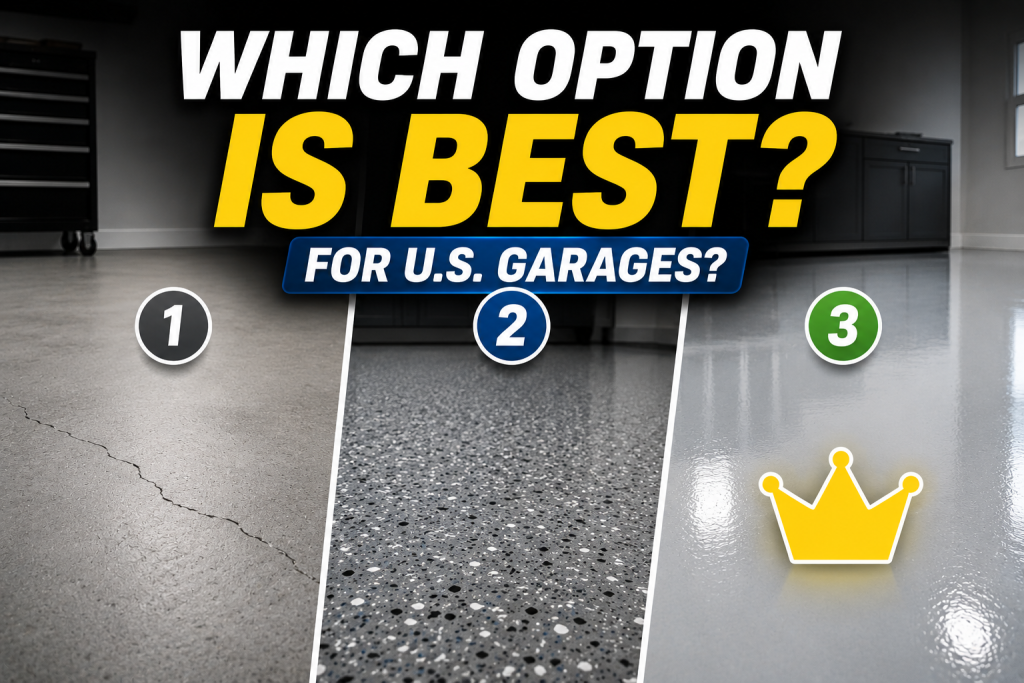
Tile systems, on the other hand, are better suited for homeowners who value modular flexibility and easy DIY installation. In flooring comparisons, tiles can be a practical choice for garages where occasional damage replacement or design customization is more important than maximum durability. In most heavy-use U.S. garage environments, epoxy tends to be the stronger long-term solution, while tiles offer convenience and flexibility for lighter or more adaptable setups.
Conclusion
The epoxy vs tile garage flooring comparison ultimately comes down to balancing durability, maintenance, installation, and long-term value. Both systems offer clear advantages, but they serve different homeowner priorities in U.S. garage environments. Epoxy performs best when seamless strength, chemical resistance, and long-term durability are top concerns. In most flooring scenarios, it is the preferred choice for high-traffic garages and spaces exposed to oil, moisture, and heavy vehicle use. Tile systems, on the other hand, offer unmatched installation flexibility and modular repairability. They are ideal for homeowners who want a DIY-friendly solution or prefer the ability to replace damaged sections without resurfacing the entire floor. By understanding these differences, homeowners can make a more informed decision based on real-world usage rather than appearance alone.
Frequently Asked Questions
What is better: epoxy vs tile garage flooring?
In most U.S. garages, epoxy vs tile garage flooring comes down to use case. Epoxy is better for long-term durability, while tiles offer easier installation and replacement flexibility.
Which lasts longer, epoxy or garage tiles?
Epoxy generally lasts longer in high-traffic environments because it bonds directly to concrete, while tiles may shift or wear at the joints over time.
Are garage floor tiles easier to install than epoxy?
Yes, tiles are typically easier to install since they interlock without adhesives or curing, unlike epoxy which requires surface prep and drying time.
Is epoxy or tile better for heavy vehicles?
For heavy vehicles, epoxy is usually preferred because it provides a seamless, load-resistant surface without weak points between sections.
Do garage tiles trap moisture?
They can. In some cases, moisture can accumulate beneath or between tiles, especially if the subfloor is not fully dry or sealed.
Which is easier to maintain?
Epoxy is generally easier to maintain because it has no seams where dirt or oil can collect.
Can you use both epoxy and tiles together?
Yes, some homeowners use epoxy in high-traffic zones and tiles in storage or workshop areas for a hybrid setup.
Which option is more cost-effective?
Tiles often have lower upfront installation costs, while epoxy may offer better long-term value due to durability and reduced maintenance.