
Engineered Hardwood vs Solid Hardwood (2026 US Guide)
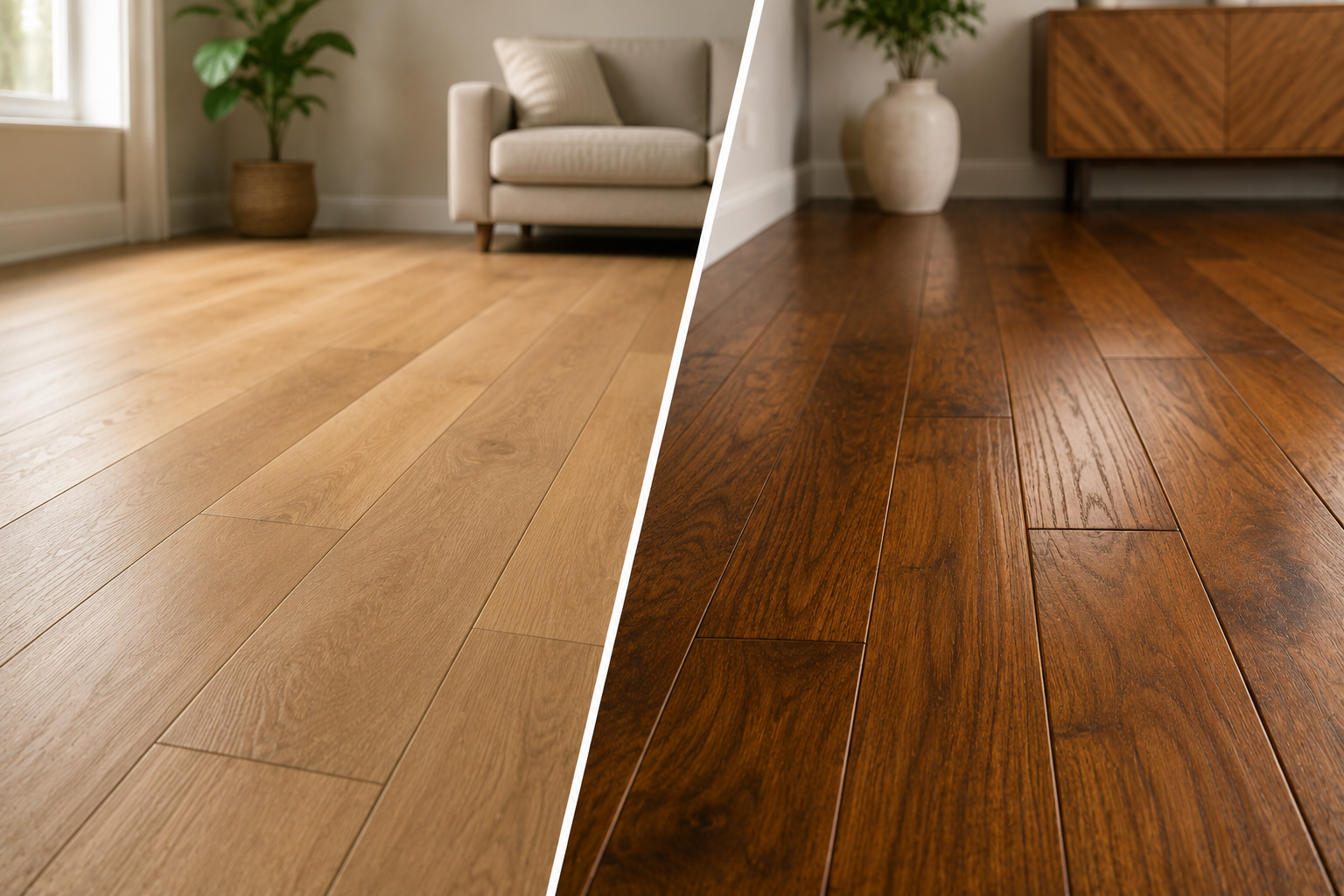
Choosing between engineered hardwood vs solid hardwood is one of the most important decisions homeowners make during a flooring renovation. Both options offer the natural beauty of real wood, but they differ significantly in construction, durability, moisture performance, installation requirements, and long-term value. Solid hardwood is manufactured from a single piece of natural wood, while engineered hardwood features a real wood veneer attached to multiple layers of plywood or composite materials. Although they may look similar once installed, their performance can vary depending on climate, household activity, and maintenance expectations.
For US homeowners, factors such as humidity levels, resale goals, renovation budgets, and room location often influence the best choice. Understanding these differences helps homeowners select flooring that matches both their lifestyle and long-term investment strategy. This guide compares both flooring types to help you make an informed decision.
What Is Solid Hardwood Flooring?
Solid hardwood flooring is made from a single piece of natural wood throughout the entire plank. Popular species include oak, maple, hickory, and walnut, all of which have been used in American homes for generations. Because the material is solid from top to bottom, it can be sanded and refinished multiple times, making it one of the longest-lasting flooring options available.
One of the biggest advantages in the solid hardwood flooring pros and cons discussion is longevity. With proper care, solid hardwood can last for decades and often becomes a major selling point for prospective homebuyers. It is also available in a wide range of species, stains, and plank widths, allowing homeowners to customize the look of their interior spaces. However, solid hardwood is more sensitive to moisture and humidity changes. In regions with significant seasonal fluctuations, it may expand or contract, requiring careful installation and climate control to maintain long-term performance.
What Is Engineered Hardwood Flooring?
Engineered hardwood flooring is constructed using a real hardwood veneer layered over multiple sheets of plywood or high-density composite material. This layered design gives the floor the appearance of traditional hardwood while improving dimensional stability in environments where moisture and temperature fluctuate throughout the year.

One of the key advantages in the engineered wood flooring pros and cons comparison is its ability to resist expansion and contraction better than solid hardwood. This makes engineered flooring especially popular in humid regions such as Florida, the Gulf Coast, and other areas where moisture levels can affect traditional wood floors.
Modern engineered products are available in a wide variety of wood species, finishes, and plank styles, making them a strong option for contemporary and traditional homes alike. While refinishing opportunities may be more limited depending on the thickness of the wear layer, engineered hardwood provides homeowners with a practical balance of appearance, performance, and installation flexibility.
Durability Comparison
When comparing engineered hardwood vs solid hardwood, durability is often one of the biggest deciding factors. Both flooring types can provide excellent long-term performance, but they achieve durability in different ways.
In terms of surface wear, the wood species and finish have a greater impact than the flooring construction itself. For example, a hickory or maple floor will generally resist dents and scratches better than softer wood species regardless of whether it is engineered or solid. This is a key consideration when evaluating wood floor durability in busy households.
Solid hardwood has a major advantage when it comes to restoration. Because the entire plank is solid wood, it can be sanded and refinished multiple times over its lifespan. Engineered hardwood, by contrast, may have limited refinishing potential depending on the thickness of its wear layer. For homeowners prioritizing maximum longevity, solid hardwood typically offers the stronger long-term durability profile.
Moisture Resistance Comparison
Moisture performance is one of the most significant differences in the engineered hardwood vs solid hardwood debate. While both products contain real wood, their construction methods affect how they respond to humidity and temperature changes throughout the year.
Solid hardwood naturally expands and contracts as moisture levels fluctuate. In regions with high humidity or dramatic seasonal shifts, this movement can sometimes lead to gaps, cupping, or minor warping if indoor conditions are not properly controlled. For this reason, solid hardwood performs best in climate-controlled environments.
Engineered hardwood is often considered the better moisture-resistant hardwood flooring option because its layered core helps reduce expansion and contraction. This added stability makes it well-suited for coastal regions, humid Southern states, and homes built on concrete slabs. While neither flooring type is waterproof, engineered hardwood generally handles moisture-related challenges more effectively, making it a practical choice for many modern US homes.
Installation Differences
Installation requirements can significantly influence the decision between engineered hardwood vs solid hardwood, especially during remodeling projects. While both options can create a beautiful finished floor, the installation process differs in complexity, flexibility, and cost. Solid hardwood is typically nailed or stapled directly to a wooden subfloor. It also requires an acclimation period before installation to help the wood adjust to indoor conditions. Because of these requirements, installation is often more labor-intensive and may increase overall project costs.
Engineered hardwood offers greater versatility. Depending on the product, it can be floated, glued, or stapled, making it compatible with a wider variety of subfloors, including concrete. This flexibility makes engineered flooring especially appealing for basements, condos, and modern homes where traditional hardwood installation may be more challenging. For many homeowners, installation convenience is one of the strongest advantages of engineered hardwood, particularly when time and budget are major considerations.
Flooring Lifespan Comparison
When evaluating flooring lifespan comparison, both engineered and solid hardwood can provide decades of service, but their long-term potential differs. The expected lifespan depends on factors such as wood species, installation quality, maintenance habits, and environmental conditions. Solid hardwood is widely recognized for its exceptional longevity. Because it can be refinished multiple times, many solid hardwood floors remain in service for 50 years or more. This ability to restore the surface repeatedly is one of the strongest advantages in the solid hardwood flooring pros and cons discussion.
Engineered hardwood also offers impressive durability, often lasting several decades when properly maintained. However, its refinishing capability depends on the thickness of the hardwood veneer. Some premium engineered products can be refinished more than once, while others may have limited restoration options. For homeowners focused on maximum lifespan and long-term investment value, solid hardwood generally holds the advantage, while engineered flooring offers strong performance with added climate stability.
Cost and Value Comparison
Cost is often one of the biggest factors when comparing engineered hardwood vs solid hardwood. While pricing varies by wood species, finish, and region, engineered hardwood generally offers a lower upfront investment due to its manufacturing process and installation flexibility.
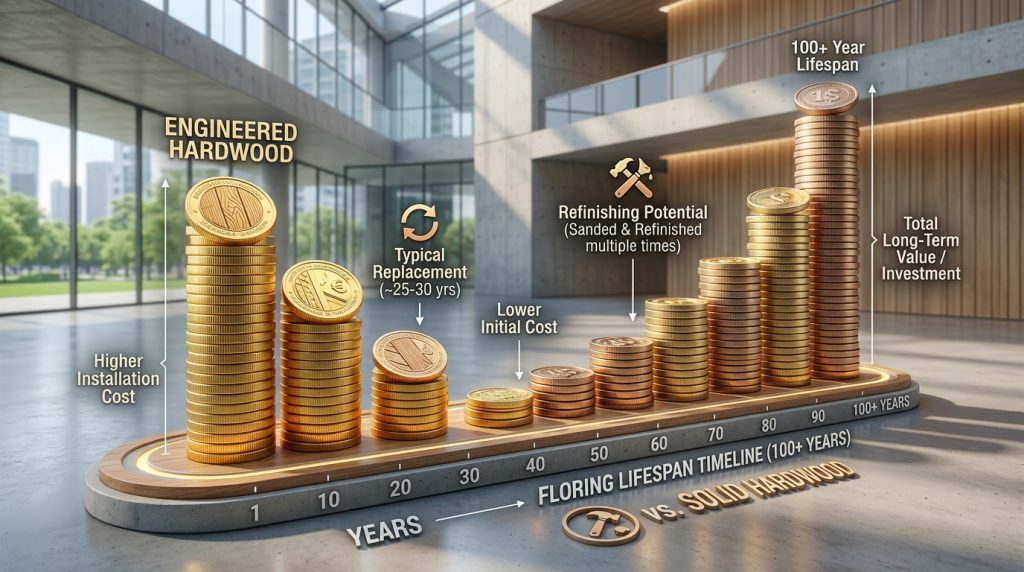
Solid hardwood typically costs more because it uses a full-thickness wood plank and often requires more labor-intensive installation. However, many homeowners view this higher initial expense as a long-term investment because the flooring can be refinished multiple times and may contribute positively to resale value.
Engineered hardwood provides strong value for homeowners seeking the appearance of real wood while controlling renovation costs. Lower installation expenses and improved moisture performance can make it a cost-effective choice in many situations. Products from manufacturers such as Mohawk Industries and Shaw Industries offer a wide range of options across different budgets. Ultimately, the best value depends on whether homeowners prioritize short-term affordability or long-term ownership benefits.
Which Flooring Is Best for Your Home?
Choosing between engineered hardwood vs solid hardwood ultimately depends on your home’s location, lifestyle, and long-term goals. In many residential wood flooring projects across the US, both options can be the right choice when matched correctly to the environment. Solid hardwood is often preferred in dry, stable climates and in homes where long-term ownership and resale value are top priorities. It performs especially well in traditional single-family homes where humidity is controlled and homeowners want maximum refinishing potential.
Engineered hardwood is often the better fit for modern homes, condos, basements, and regions with higher humidity or temperature swings. Its layered construction provides better dimensional stability, making it more reliable in moisture-prone environments while still delivering the look of real wood. Ultimately, the right choice depends on whether you prioritize maximum lifespan and refinishing ability or improved stability and installation flexibility.
Final Verdict
The decision between engineered hardwood vs solid hardwood comes down to balancing durability, moisture performance, cost, and long-term value. Both flooring types deliver the beauty of real wood, but they serve different homeowner needs. Solid hardwood remains the top choice for traditional homes and long-term investments. Its ability to be refinished multiple times gives it a strong advantage in lifespan and resale appeal, especially in markets where classic residential wood flooring is highly valued. It is best suited for stable, climate-controlled environments. Engineered hardwood, on the other hand, excels in versatility. Its layered construction makes it more stable in humid or variable climates, and its easier installation process makes it ideal for renovations, condos, and modern builds. It offers a strong balance of performance and practicality without sacrificing the look of natural wood. In most cases, the best option depends on climate conditions and how long the homeowner plans to stay in the property.
FAQs
What is the main difference between engineered and solid hardwood?
The main difference in engineered hardwood vs solid hardwood is construction. Solid hardwood is a single piece of wood, while engineered hardwood has a real wood layer over a multi-layer core.
Which is better for durability?
Solid hardwood generally offers better long-term durability because it can be refinished multiple times, while engineered hardwood depends on the thickness of its top layer.
Is engineered hardwood more moisture resistant?
Yes, moisture-resistant hardwood flooring is typically engineered hardwood because its layered structure reduces expansion and contraction.
Which flooring lasts longer?
Solid hardwood usually has a longer flooring lifespan comparison because it can be refinished repeatedly over several decades.
Is engineered hardwood cheaper than solid hardwood?
Yes, engineered hardwood is often more affordable upfront due to lower material and installation costs.
Can both types be used in all rooms?
Not always. Engineered hardwood is better for basements and humid areas, while solid hardwood works best in stable, dry environments.
Which flooring is better for resale value?
Solid hardwood is often preferred for resale value because buyers see it as a premium, long-term investment flooring option.