
Types of Epoxy Flooring Explained: Complete Homeowner Guide
Epoxy flooring has become one of the most popular concrete finishing solutions for U.S. homeowners because it combines durability, visual appeal, and long-term protection. From residential garages to finished basements and commercial properties, epoxy systems offer a versatile alternative to traditional concrete surfaces. However, many homeowners are surprised to learn that there are multiple types of epoxy flooring, each designed for different performance requirements and aesthetic goals. Some systems prioritize chemical resistance and durability, while others focus on decorative finishes that enhance the appearance of a space.
Choosing the right option depends on factors such as traffic levels, moisture exposure, maintenance expectations, and budget. Understanding the various epoxy flooring types is essential before investing in a flooring upgrade. This guide explains the most common epoxy systems available in 2026, how they differ, and where each type performs best so homeowners can make a more informed decision.
What Is Epoxy Flooring?
Epoxy flooring is a resin-based surface system created by combining epoxy resin with a hardening agent. Once mixed, these materials undergo a chemical reaction that forms a strong, durable coating bonded directly to the concrete surface. This process creates a seamless finish that resists stains, chemicals, moisture, and everyday wear.
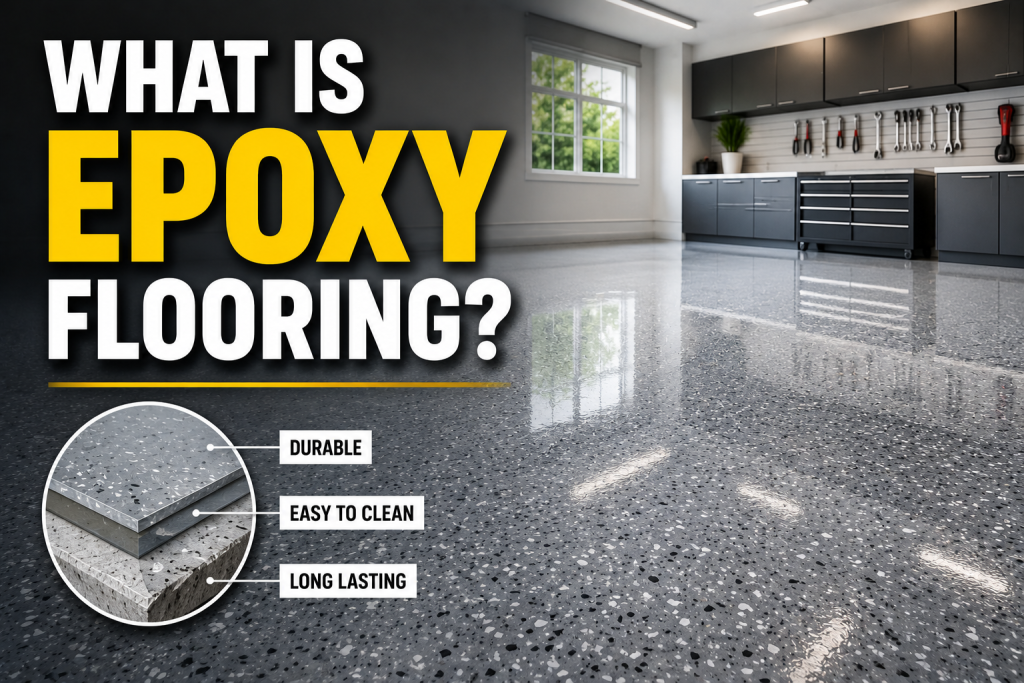
One reason homeowners explore different types of epoxy flooring is that epoxy can be customized for a wide range of applications. Some systems are designed for residential garages, while others are built for warehouses, workshops, healthcare facilities, and retail environments. The final appearance can vary from simple solid-color coatings to highly decorative finishes with textures, flakes, or metallic effects.
Proper surface preparation is critical regardless of the system selected. Concrete grinding, crack repair, and moisture testing help ensure long-term adhesion and performance. Understanding the basics of epoxy flooring provides a strong foundation before comparing the various epoxy flooring types available for residential and commercial projects.
Understanding the Main Types of Epoxy Flooring
Before choosing a specific system, homeowners should understand how the major types of epoxy flooring are categorized. While all epoxy floors share the same basic resin chemistry, they differ significantly in thickness, appearance, durability, and intended use. These differences influence both installation costs and long-term performance. Some epoxy systems are designed primarily for residential environments where aesthetics and ease of maintenance are top priorities. Others are engineered for demanding commercial and industrial settings that require resistance to heavy traffic, impacts, and chemical exposure. The surface finish can also vary widely, ranging from smooth and minimalist designs to highly decorative textures and patterns.
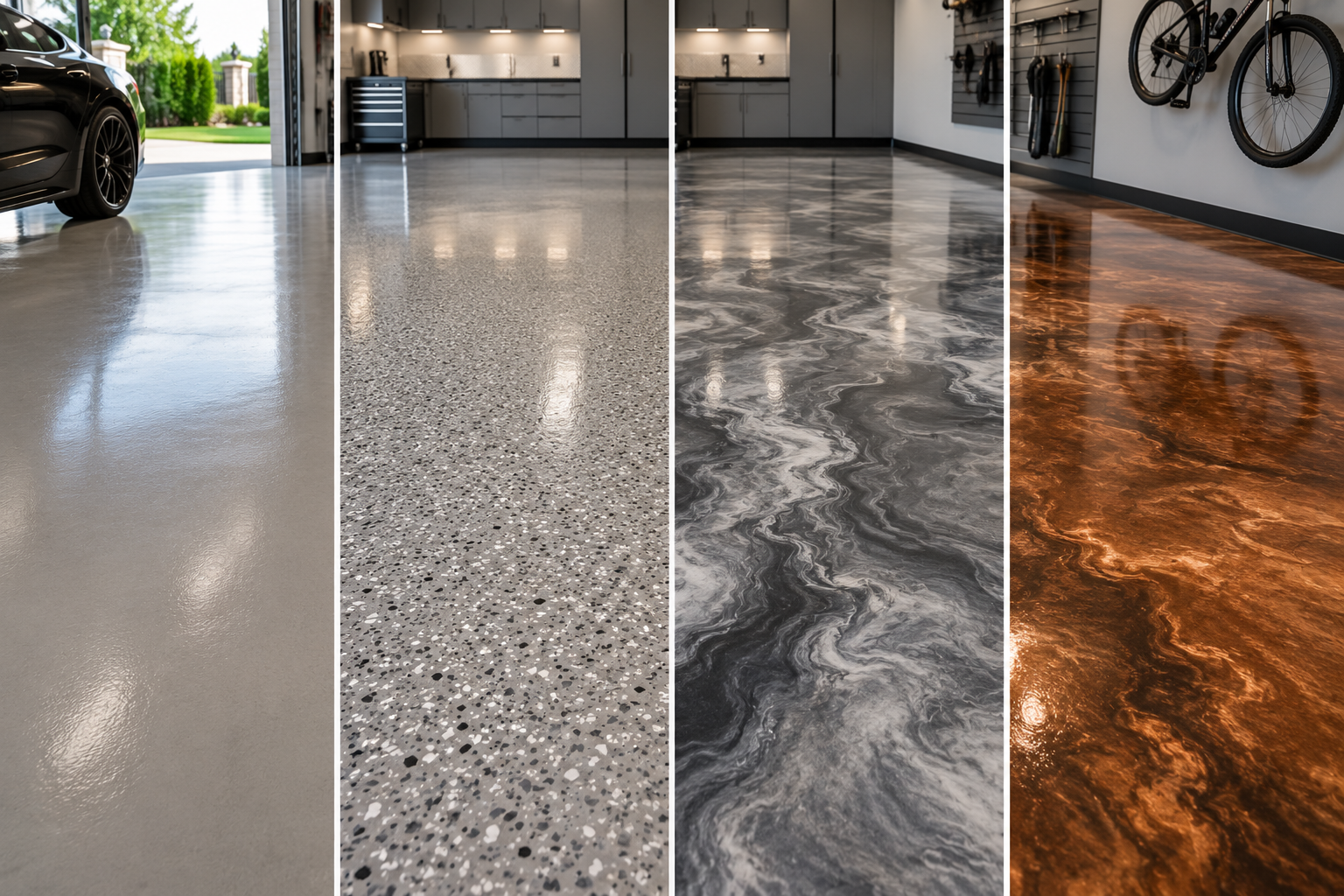
The most common epoxy flooring types include self-leveling systems, metallic finishes, flake coatings, quartz-enhanced surfaces, solid-color coatings, decorative options, and industrial-grade applications. Each serves a specific purpose and performs best under certain conditions. Understanding these categories makes it easier to identify which system aligns with your home’s needs and expected usage patterns.
Self-Leveling Epoxy
Among the most popular epoxy flooring types, self-leveling epoxy is widely used in both residential and commercial settings because it creates a smooth, seamless surface over existing concrete. This system is designed to flow evenly across the floor, helping to minimize minor imperfections, shallow cracks, and uneven areas. Homeowners often choose self-leveling systems for garages, basements, home gyms, and utility rooms where a clean, professional appearance is desired. The finished surface is highly resistant to stains, moisture, and everyday wear, making it suitable for high-traffic areas throughout the home. One of the biggest advantages of self-leveling epoxy is its ability to improve the look of aging concrete without requiring complete replacement. However, proper preparation remains essential to ensure strong adhesion and long-term durability.
When comparing different epoxy flooring types, self-leveling systems are often considered one of the most versatile options because they combine aesthetic appeal, durability, and practical performance in a wide variety of residential applications.
Metallic Epoxy Flooring
For homeowners seeking a more dramatic and customized appearance, metallic epoxy flooring is one of the most visually striking epoxy flooring types available. This system uses metallic pigments suspended within the epoxy coating to create depth, movement, and reflective effects that resemble marble, flowing water, or polished stone. Because every installation produces unique patterns, metallic floors are commonly used in showrooms, modern basements, entertainment spaces, and upscale residential interiors. The glossy finish reflects light effectively, helping rooms appear larger and brighter while creating a premium visual impact.
While metallic epoxy delivers exceptional aesthetics, installation is more complex than standard epoxy systems. Achieving consistent patterns requires experience, careful application techniques, and controlled environmental conditions during curing. Among the various epoxy flooring types, metallic finishes are generally chosen for design appeal rather than industrial durability. Homeowners who prioritize customization and visual sophistication often view metallic epoxy as a statement feature that transforms ordinary concrete into a high-end decorative surface.
Flake Epoxy Floors
Flake epoxy floors are among the most practical types of epoxy flooring for homeowners who want a balance of durability, safety, and visual appeal. This system incorporates decorative vinyl flakes that are broadcast into the epoxy coating before a protective topcoat is applied. The result is a textured, multi-colored surface that helps conceal dirt, minor imperfections, and everyday wear.
These floors are especially popular in residential garages because they provide improved slip resistance compared to smooth epoxy finishes. The textured appearance also helps mask tire marks, dust, and scratches that can become more noticeable on solid-color surfaces.
Beyond aesthetics, flake systems offer strong resistance to moisture, chemicals, and impact, making them well suited for workshops, utility rooms, and high-traffic household areas. Homeowners can choose from a wide variety of color blends to complement the style of their property. When evaluating different epoxy flooring types, flake systems are often considered one of the best all-around options for residential use due to their combination of functionality, durability, and low-maintenance performance.
Quartz Epoxy Flooring
Quartz epoxy flooring is one of the most durable types of epoxy flooring available, combining colored quartz granules with epoxy resin to create an exceptionally strong and slip-resistant surface. This system is commonly used in environments where safety, sanitation, and heavy foot traffic are major concerns. The quartz aggregate adds texture and strength to the floor, making it highly resistant to abrasion, impact, and moisture. Because of these characteristics, quartz systems are frequently installed in healthcare facilities, schools, commercial kitchens, and recreational spaces. Some homeowners also choose them for garages and workshops where extra durability is needed.
In addition to performance benefits, quartz epoxy offers decorative flexibility through various color combinations and aggregate blends. The finished appearance is more textured than standard epoxy, providing a distinctive look while improving traction. Among the many epoxy flooring types, quartz systems are often viewed as a premium option because they combine decorative appeal with industrial-grade durability. Homeowners seeking long-term performance and enhanced safety frequently consider quartz flooring a worthwhile investment.
Solid Epoxy Coating
A solid epoxy coating is one of the simplest and most widely used types of epoxy flooring, offering a clean, uniform appearance with strong protection against everyday wear. Unlike decorative systems that include flakes or metallic pigments, solid-color epoxy creates a consistent finish across the entire floor surface. This flooring option is commonly installed in residential garages, storage areas, workshops, and utility rooms where durability matters more than decorative effects. Homeowners often choose solid epoxy because it provides excellent resistance to chemicals, oil stains, moisture, and abrasion while maintaining a professional appearance.
Solid-color systems are also relatively easy to clean since the seamless surface prevents dirt and liquids from penetrating the concrete below. Available in a wide range of colors, these coatings can complement both modern and traditional home designs. When comparing various epoxy flooring types, solid coatings are often considered the most practical choice for homeowners seeking affordability, durability, and straightforward installation without the added cost of specialty decorative features.
Decorative Epoxy Flooring
Decorative epoxy flooring represents one of the most visually flexible types of epoxy flooring, designed to enhance interior spaces with customized patterns, colors, and artistic effects. Unlike standard coatings that prioritize function alone, decorative systems focus equally on aesthetics and performance. These floors often incorporate design elements such as color blends, metallic pigments, or layered effects that create depth and texture. Because of this versatility, decorative epoxy is commonly used in residential basements, living spaces, retail showrooms, and modern garages where appearance is a key priority.
Beyond its visual appeal, decorative epoxy still maintains the core benefits of epoxy systems, including resistance to moisture, stains, and everyday wear. However, achieving consistent results requires careful installation and attention to surface preparation. Among the different epoxy flooring types, decorative systems are ideal for homeowners who want a balance between durability and design customization. They allow concrete surfaces to be transformed into visually engaging spaces without sacrificing practical performance or long-term usability.
Industrial Epoxy Systems
Industrial epoxy systems are the most heavy-duty types of epoxy flooring, engineered for environments that experience constant traffic, heavy machinery, and exposure to harsh chemicals. These systems are significantly thicker and more complex than residential epoxy coatings, often involving multiple layers designed for maximum strength and performance. They are commonly used in warehouses, manufacturing plants, automotive shops, aircraft hangars, and large commercial facilities where floor failure is not an option. Industrial systems are built to withstand forklifts, pallet jacks, oil spills, and continuous abrasion without breaking down under pressure.
In addition to durability, these systems often include safety enhancements such as slip-resistant additives, color zoning for workflow organization, and high-visibility markings for compliance and operational efficiency. Their seamless finish also helps maintain hygiene standards in regulated environments. Among all epoxy flooring types, industrial systems offer the highest level of performance but require professional installation and precise surface preparation. While not typically chosen for standard homes, they represent the peak of epoxy flooring durability and engineering.
Which Type of Epoxy Flooring Is Best for Your Home?
Choosing the right option from the many types of epoxy flooring depends heavily on how the space will be used, the level of traffic it receives, and the overall design goals of the homeowner. Each system offers distinct advantages, making some better suited for residential use while others are designed for commercial or industrial environments. For most U.S. homes, garages and basements typically benefit from systems that balance durability with ease of maintenance. Decorative and flake-based systems are often preferred in residential settings because they offer both protection and improved aesthetics.
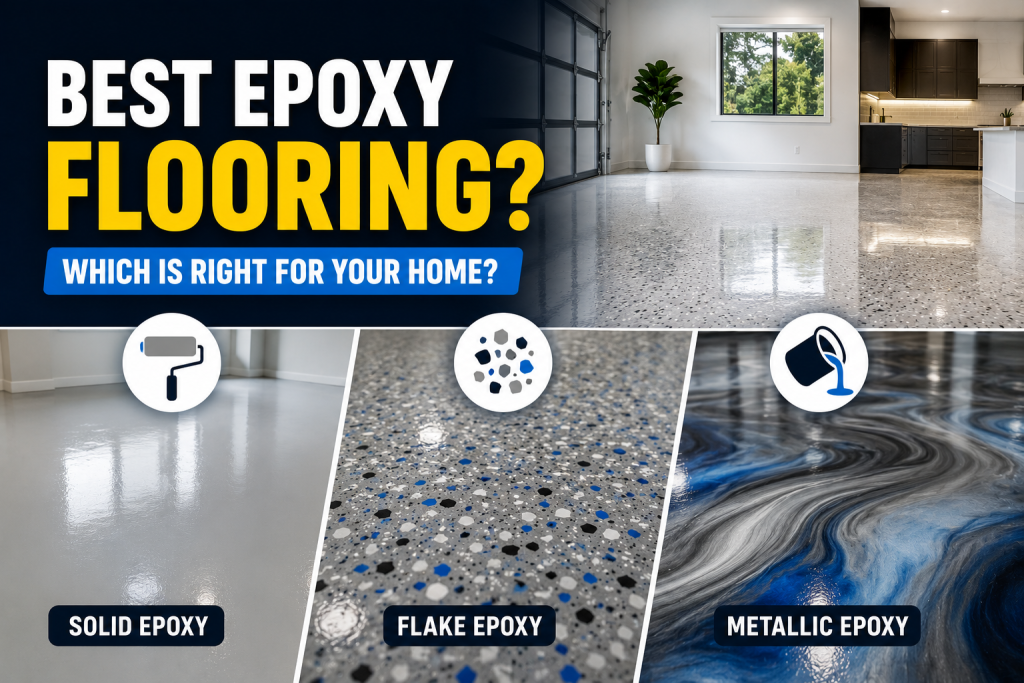
Meanwhile, solid coatings are a practical choice for utility areas where function is more important than design. Homeowners looking for high-end visual impact may lean toward metallic or decorative finishes, while those prioritizing safety and durability in demanding spaces often choose quartz or industrial-grade systems. Among all epoxy flooring types, the best choice ultimately comes down to balancing appearance, performance, and budget. Understanding how each system performs in real-world conditions helps ensure a long-lasting and practical flooring investment.
Cost and Durability Comparison
When evaluating types of epoxy flooring, cost and durability are two of the most important factors homeowners consider before making a decision. While all epoxy systems share a common base material, their pricing and lifespan can vary significantly depending on formulation, installation complexity, and intended use. Entry-level systems such as solid coatings are generally the most affordable and are often used in residential garages or storage areas. Decorative and flake-based systems tend to sit in the mid-range due to additional materials and design elements that enhance both appearance and performance. Premium systems, including quartz and industrial-grade epoxy, are more expensive but offer significantly higher resistance to wear, impact, and chemical exposure.
Durability also varies across the different epoxy flooring types. Lighter residential systems may last several years with proper maintenance, while industrial systems can withstand decades of heavy use in commercial environments. The key factor influencing longevity is not only the product itself but also surface preparation and installation quality. Ultimately, homeowners should balance upfront cost with long-term performance to choose the most cost-effective epoxy system for their specific needs.
Conclusion
Understanding the different types of epoxy flooring is essential for homeowners who want to make a smart, long-lasting investment in their garage, basement, or commercial-style space. Each system offers its own strengths, from smooth self-leveling finishes to highly decorative metallic designs and ultra-durable industrial-grade coatings. The right choice depends on how the space will be used, the level of traffic it experiences, and the balance between aesthetics and performance. Some epoxy flooring types prioritize visual appeal and customization, while others focus on maximum durability, chemical resistance, or slip safety. For most residential projects, homeowners benefit most from systems that combine durability with low maintenance and design flexibility. By comparing the available options carefully, it becomes easier to select a flooring system that delivers both long-term value and practical performance. Ultimately, the best epoxy system is the one that aligns with your home’s needs, environment, and budget while ensuring reliable performance for years to come.
Frequently Asked Questions
What are the main types of epoxy flooring?
The main types of epoxy flooring include self-leveling, metallic, flake, quartz, solid coatings, decorative systems, and industrial epoxy systems, each designed for different performance needs.
Which epoxy flooring type is best for garages?
For most residential garages, flake or solid systems are the most practical types of epoxy flooring because they balance durability, slip resistance, and ease of maintenance.
Is epoxy flooring good for basements?
Yes, certain types of epoxy flooring work well in basements, especially moisture-resistant systems that help protect concrete and improve brightness in below-grade spaces.
How long do epoxy floors last?
Lifespan depends on the system and installation quality. Some types of epoxy flooring last 5–10 years in residential use, while industrial systems can last much longer under heavy-duty conditions.
What is the most durable epoxy flooring type?
Industrial epoxy systems and quartz-based systems are generally the most durable types of epoxy flooring, designed for heavy traffic and high-impact environments.
Can epoxy flooring be decorative?
Yes, several types of epoxy flooring, including metallic and decorative systems, are designed specifically for aesthetic appeal while still offering strong surface protection.
Is epoxy flooring expensive?
Cost varies depending on the system. Some types of epoxy flooring are budget-friendly, while premium or industrial systems require higher investment due to materials and installation complexity.