

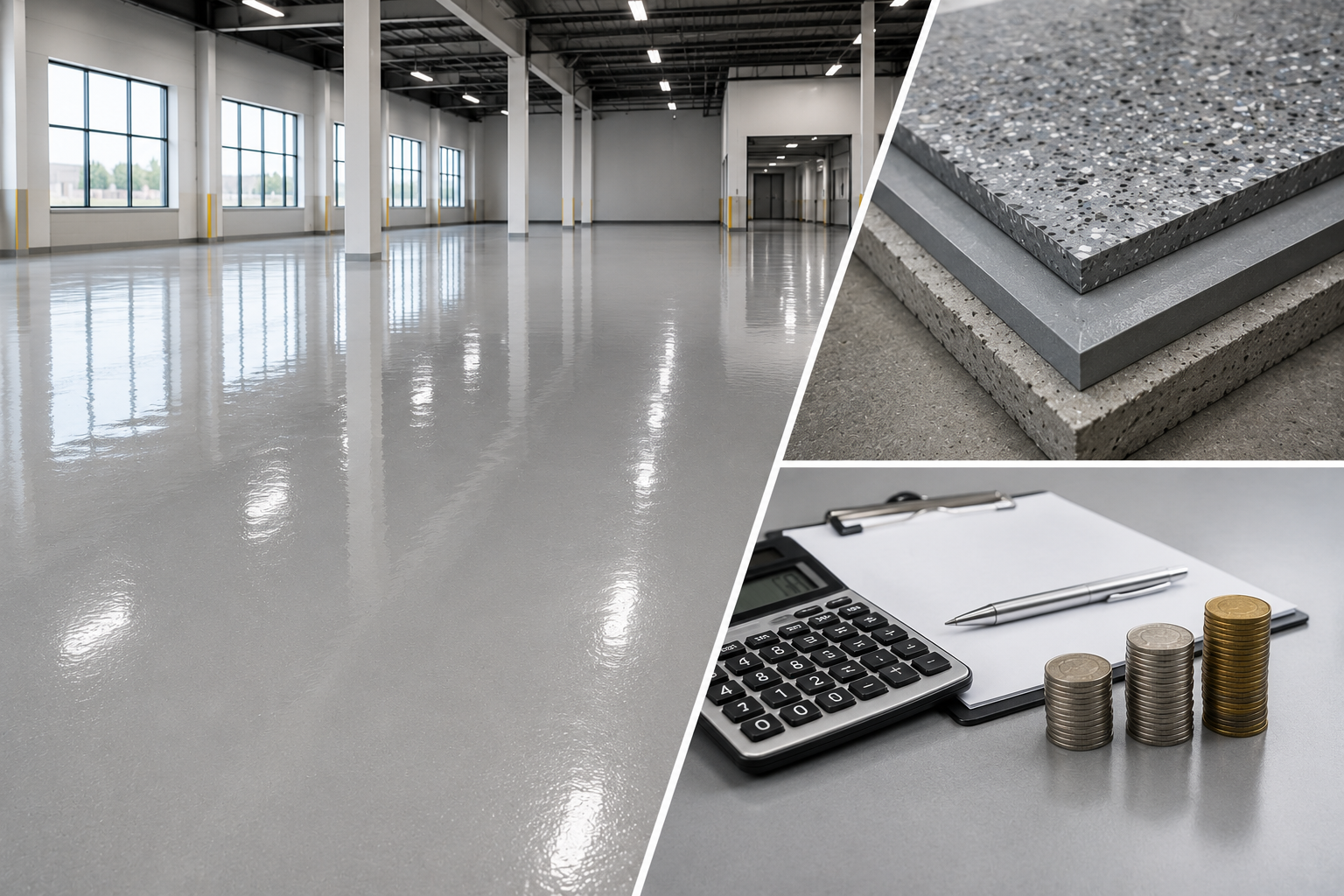
Commercial Epoxy Flooring Cost Breakdown (2026 Guide)
Commercial epoxy flooring has become a standard solution for warehouses, retail spaces, and industrial facilities across the United States due to its durability, safety performance, and long-term cost efficiency. However, understanding the commercial epoxy flooring cost is essential before planning any large-scale installation, as pricing can vary significantly based on system type, surface condition, and project size. Unlike residential flooring, commercial projects involve higher performance requirements, thicker coating systems, and more complex surface preparation.
These factors directly influence the epoxy flooring cost, making it important for business owners and property managers to evaluate both upfront investment and long-term value. In many cases, the epoxy flooring cost is justified by reduced maintenance expenses, improved safety compliance, and extended floor lifespan. This guide breaks down the key pricing factors, system types, and real-world cost expectations so you can better understand what drives epoxy flooring budgets in commercial environments.
What Affects Commercial Epoxy Flooring Cost?
The commercial epoxy flooring cost is influenced by several technical and site-specific factors, which is why pricing can vary widely between projects in warehouses, retail spaces, and industrial facilities. Unlike simple coatings, commercial systems require careful evaluation of the concrete substrate, usage demands, and performance requirements before installation. One of the biggest cost drivers is surface preparation. Floors that require grinding, shot blasting, crack repair, or moisture mitigation will significantly increase the overall epoxy flooring cost. The condition of the existing concrete slab often determines how much prep work is needed before any coating can be applied.
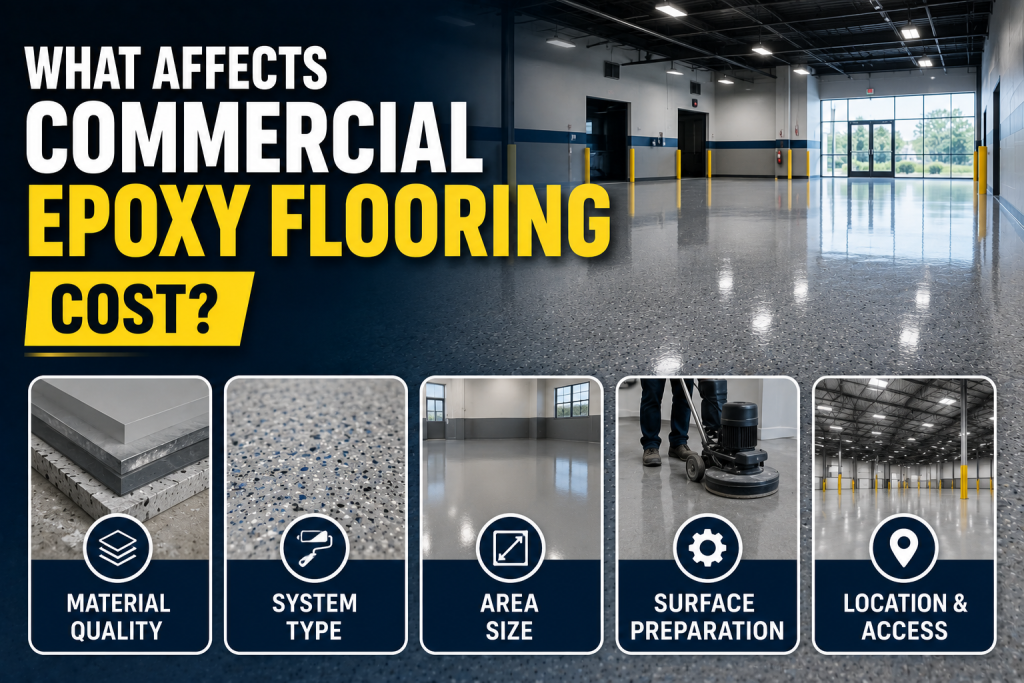
Another important factor is system thickness and performance level. High-build systems designed for heavy traffic or chemical exposure cost more than basic coatings due to increased material usage and labor intensity. As a result, the epoxy flooring cost rises with durability requirements. Finally, labor rates and regional pricing differences across the United States also impact total project budgets, especially for large-scale installations.
Epoxy Flooring Per Square Foot Breakdown
One of the most practical ways to understand commercial epoxy flooring cost is by breaking it down into a per-square-foot estimate. In the United States, pricing is typically calculated based on total surface area, system thickness, and the level of surface preparation required before installation. Basic commercial systems generally fall on the lower end of the pricing spectrum, while high-performance coatings for warehouses or manufacturing facilities increase the overall epoxy flooring cost due to thicker applications and additional protective layers. The more demanding the environment, the higher the material and labor requirements per square foot.
It’s also important to consider that large-scale projects may benefit from economies of scale, where the epoxy flooring cost per square foot decreases as the total installation area increases. However, this is often offset by added preparation work in older or heavily damaged concrete slabs. Understanding pricing on a per-square-foot basis helps facility managers and business owners compare bids more accurately and evaluate contractor proposals with greater confidence.
Industrial Epoxy Flooring Prices Explained
When evaluating commercial epoxy flooring cost, industrial-grade systems represent the highest tier in terms of both performance and pricing. These systems are designed for environments such as manufacturing plants, heavy equipment facilities, and logistics hubs where constant traffic and mechanical stress are expected. The epoxy flooring cost increases significantly in industrial settings because these systems typically require thicker coatings, reinforced layers, and specialized additives for chemical resistance and impact protection. In many cases, additional topcoats or urethane finishes are also applied to extend service life under extreme conditions.
Another key factor influencing epoxy flooring cost in industrial applications is the level of surface preparation. Processes like shot blasting or deep concrete grinding are often required to ensure proper adhesion, especially in older facilities with existing coatings or surface contamination. While industrial epoxy flooring has a higher upfront investment, it is often justified by its long-term durability, reduced maintenance needs, and ability to withstand demanding operational environments without frequent repairs or replacement.
Warehouse Floor Coating Cost Factors
Warehouse environments are one of the most common applications when evaluating commercial epoxy flooring cost, primarily because large surface areas and heavy equipment traffic require durable, long-lasting flooring systems. However, warehouse pricing is not uniform and depends heavily on several operational and structural factors. One of the main contributors to epoxy flooring cost in warehouses is floor condition. Older concrete slabs with cracks, uneven surfaces, or contamination require extensive preparation, which increases both labor time and material usage. Moisture issues in large slab areas can also require additional mitigation systems before coating begins.
Another factor is traffic intensity. Warehouses that support forklifts, pallet jacks, and constant loading operations often require reinforced coatings with higher thickness ratings, which directly increases the epoxy flooring cost per project. Safety requirements, such as slip resistance and marked walkways, may also add to system complexity. Ultimately, warehouse epoxy pricing is determined by balancing durability needs with surface preparation demands, making each project highly customized based on facility usage.
Types of Commercial Flooring Systems
Understanding different system options is essential when evaluating commercial epoxy flooring cost, because not all epoxy floors are built the same. Commercial flooring systems vary in thickness, durability, chemical resistance, and finish, all of which directly impact total project pricing. Standard epoxy coatings are typically used in light commercial spaces such as retail storage areas or low-traffic backrooms. These systems represent the lower end of the epoxy flooring cost range due to simpler installation and thinner application layers.
Mid-range systems often include multi-layer epoxy with decorative or functional additives, offering improved durability for offices, showrooms, and moderate-traffic facilities. As performance requirements increase, so does the epoxy flooring cost, especially when additional topcoats or slip-resistant textures are added. High-performance systems are designed for industrial and heavy-duty environments. These may include reinforced epoxy, urethane topcoats, or hybrid systems that significantly increase both lifespan and upfront investment. Selecting the right system is critical for balancing performance needs with budget expectations.
Role of Epoxy Flooring Contractors
Professional installation plays a major role in determining the final commercial epoxy flooring cost, especially for large-scale commercial and industrial projects. While material selection is important, the expertise of epoxy flooring contractors often has an even greater impact on long-term performance and overall project value. Experienced contractors assess slab conditions, moisture levels, and surface contamination before recommending a system. This evaluation directly influences the epoxy flooring cost, as proper preparation may include grinding, shot blasting, crack repair, or moisture mitigation steps that are essential for proper adhesion.
Contractors also determine application methods, coating thickness, and curing conditions, all of which affect durability and lifespan. In commercial environments, improper installation can lead to early failure, making professional oversight critical despite its effect on increasing the epoxy flooring cost. Ultimately, hiring qualified epoxy flooring contractors helps ensure that the system performs as intended, reducing the risk of future repairs and protecting the long-term investment in commercial flooring infrastructure.
Durable Commercial Flooring ROI
One of the most important considerations when evaluating commercial epoxy flooring cost is long-term return on investment rather than just upfront pricing. In commercial environments, flooring is not only a surface finish but a functional asset that impacts maintenance schedules, safety performance, and operational efficiency. Durable epoxy systems reduce ongoing repair and replacement expenses, which helps offset the initial epoxy flooring cost over time. Facilities such as warehouses, manufacturing plants, and retail spaces benefit from fewer disruptions caused by floor damage, which can otherwise lead to downtime and productivity loss.
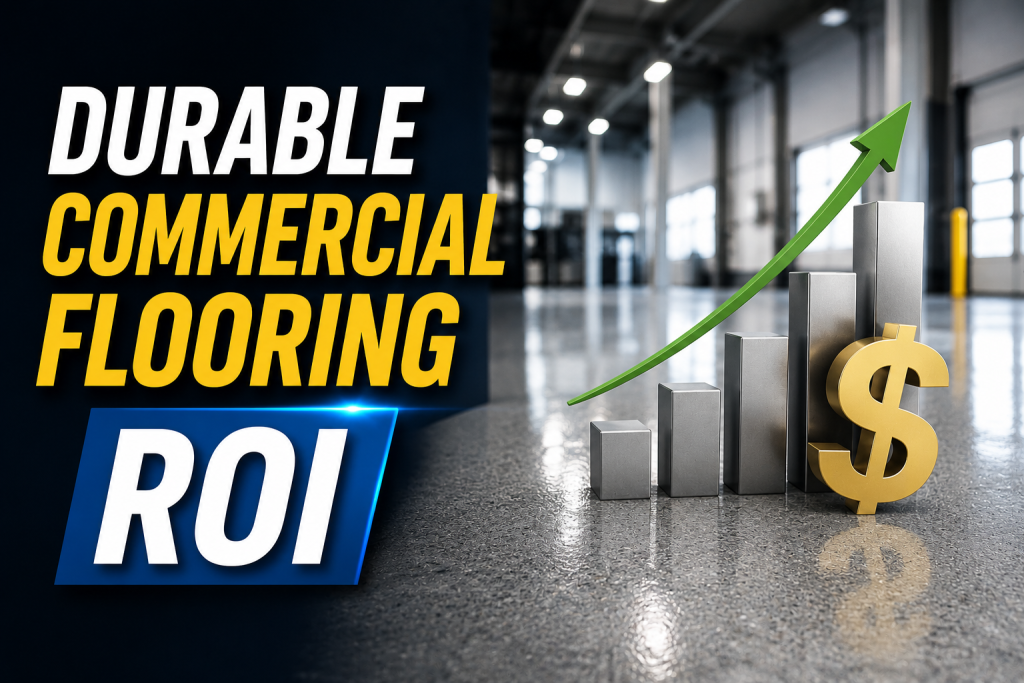
Another factor contributing to ROI is reduced maintenance requirements. Epoxy floors are easier to clean and maintain compared to untreated concrete, lowering labor and cleaning supply costs. This ongoing efficiency helps justify a higher initial epoxy flooring cost in exchange for long-term savings. When properly installed and maintained, durable commercial flooring systems can significantly extend service life, making them a financially strategic investment for business owners focused on long-term asset performance.
Cost Comparison by Commercial Space Type
The commercial epoxy flooring cost can vary significantly depending on the type of commercial space being serviced, since each environment places different demands on durability, safety, and performance. Understanding these differences helps business owners set realistic budgets and choose the right system for their facility. In retail and office environments, the epoxy flooring cost is typically lower because these spaces experience lighter foot traffic and require less aggressive surface preparation. Standard or mid-range systems are often sufficient for these applications.
Warehouses and distribution centers fall into a mid-to-high pricing range due to forklift traffic, heavy loads, and increased wear. These conditions require thicker coatings and more durable systems, which raise the overall epoxy flooring cost. Industrial facilities such as manufacturing plants or automotive shops represent the highest cost category. These environments demand chemical resistance, impact protection, and advanced surface preparation, all of which significantly increase the epoxy flooring cost but ensure long-term durability under extreme conditions.
Conclusion
Understanding commercial epoxy flooring cost is essential for any business planning a durable, long-term flooring investment in warehouses, retail spaces, or industrial facilities. While pricing can vary widely based on surface preparation, system type, and project size, epoxy remains one of the most cost-effective solutions when evaluated over its full lifecycle. The key to accurately estimating epoxy flooring cost is recognizing that upfront pricing is only part of the equation. Long-term durability, reduced maintenance, and fewer repair cycles often make epoxy systems more economical than traditional concrete finishes or alternative coatings. By working with experienced epoxy flooring contractors and selecting the right commercial flooring system, businesses can achieve a balance between performance and budget. Ultimately, a well-installed epoxy floor delivers strong ROI, improved safety, and reliable performance in demanding commercial environments.
Frequently Asked Questions
What is the average commercial epoxy flooring cost?
The epoxy flooring cost typically ranges based on system type, surface condition, and project size, with pricing commonly calculated per square foot in the U.S.
Why does commercial epoxy flooring cost vary so much?
The epoxy flooring cost varies due to differences in surface preparation, coating thickness, labor rates, and the performance requirements of each facility.
How much is industrial epoxy flooring pricing compared to standard systems?
Industrial systems usually increase epoxy flooring cost because they require thicker applications, stronger materials, and more intensive preparation work.
What affects warehouse floor coating cost the most?
Surface condition, moisture levels, and traffic load are the biggest factors influencing warehouse floor coating cost within the overall epoxy flooring cost structure.
Are epoxy flooring contractors necessary for commercial projects?
Yes, hiring epoxy flooring contractors is important because proper installation directly impacts durability and long-term commercial epoxy flooring cost efficiency.
What are commercial flooring systems used for?
Commercial flooring systems are designed for warehouses, retail spaces, and industrial facilities where durability and performance justify the commercial epoxy flooring cost investment.
Is durable commercial flooring worth the investment?
Yes, durable systems reduce long-term repair and maintenance expenses, helping offset the initial epoxy flooring cost over time.
How is epoxy flooring per square foot calculated?
Epoxy flooring per square foot is calculated based on material, labor, preparation work, and system complexity within the overall epoxy flooring cost.