


Acrylic vs Latex Exterior Paint: Key Differences
Choosing the right exterior paint is essential for protecting your home from weather, moisture, and everyday wear. One of the most common questions homeowners ask is whether acrylic vs latex exterior paint is the better option for their project. While both are water-based paints, they differ in durability, flexibility, adhesion, and long-term performance. Understanding these differences can help you select a product that provides lasting protection while enhancing your home’s appearance.
This guide compares acrylic vs latex exterior paint by explaining how each performs on different siding materials and in various climates. You’ll learn the strengths and limitations of each paint type, discover which option offers better durability, and find practical tips for choosing the right coating based on your home’s exterior and maintenance goals. With the right information, you can make a confident decision that protects your investment for years to come.
Acrylic vs Latex Exterior Paint: What’s the Difference?
Understanding the difference between acrylic and latex paint is the first step in choosing the right coating for your home. In an acrylic vs latex exterior paint comparison, both products are water-based, but they use different resin formulations that affect performance. Acrylic paint contains a higher concentration of acrylic resins, providing greater flexibility, stronger adhesion, and better resistance to moisture and UV exposure. Traditional latex paint typically contains more vinyl-based binders, making it a more economical choice for many exterior projects.
Today’s premium products often combine acrylic and latex technologies, but 100% acrylic formulations generally deliver the best long-term results. When comparing exterior paint types, homeowners should consider factors such as climate, siding material, and maintenance expectations. A careful paint adhesion comparison also shows that acrylic paint usually bonds more effectively to wood, fiber cement, stucco, and other exterior surfaces exposed to changing weather conditions.
Benefits of Acrylic Exterior Paint
Acrylic paint is widely regarded as the premium choice for exterior projects because it offers exceptional durability and long-term protection. One of the biggest acrylic paint benefits is its ability to expand and contract with changing temperatures, reducing the likelihood of cracking or peeling over time. It also provides outstanding adhesion to a variety of surfaces, including wood, fiber cement, stucco, brick, and previously painted siding, making it a reliable option for many U.S. homes.
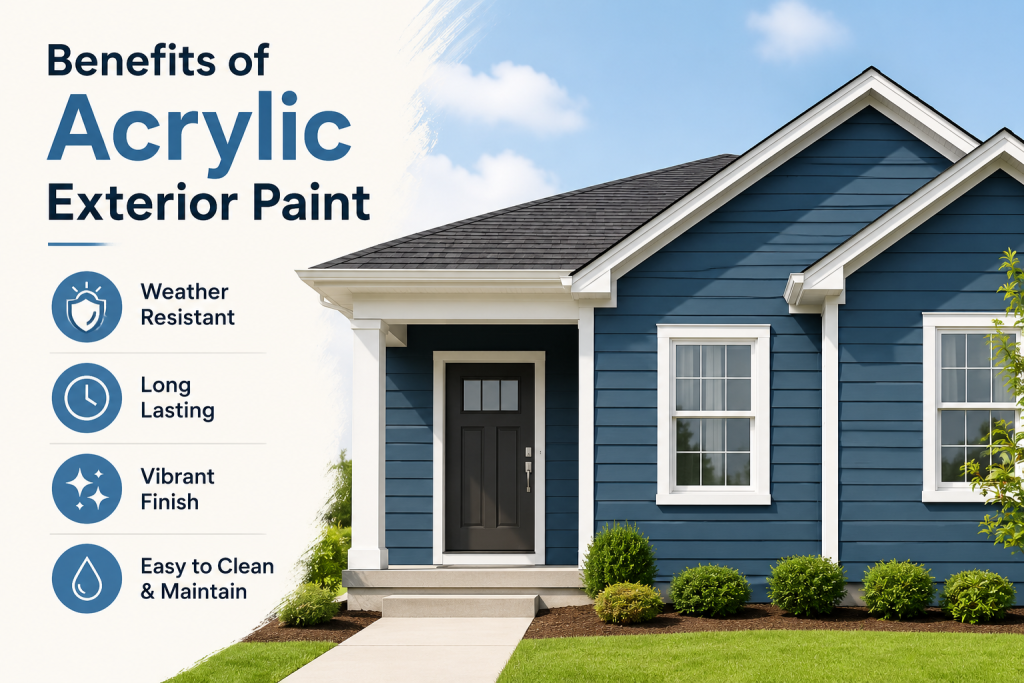
Another advantage of acrylic paint is its superior resistance to moisture, UV rays, and harsh weather conditions. These weather-resistant coatings help maintain color, prevent fading, and protect exterior surfaces from premature wear. Although acrylic paint generally costs more than standard latex products, its longer lifespan and reduced maintenance requirements often make it a better long-term investment for homeowners seeking maximum performance and durability.
Benefits of Latex Exterior Paint
Latex paint remains a popular choice for homeowners because it offers reliable performance at a more affordable price. In an acrylic vs latex exterior paint comparison, latex paint is valued for its easy application, quick drying time, and simple cleanup with soap and water. It works well on many exterior surfaces and is an excellent option for projects where budget is a primary consideration. Modern latex formulas also provide improved flexibility and protection compared to older products.
One of the key advantages of latex paint is its balance between cost and performance. Good latex paint durability makes it suitable for many residential painting projects, especially in regions with moderate weather conditions. Homeowners comparing different outdoor paint options should also consider maintenance expectations, climate, and the condition of the existing surface. While latex paint may not match the long-term performance of premium acrylic coatings, it can still deliver attractive, dependable results when properly applied and maintained.
Acrylic vs Latex Exterior Paint Comparison
Comparing both products side by side helps homeowners understand which option best fits their exterior painting project. In an acrylic vs latex exterior paint comparison, acrylic generally offers superior durability, stronger adhesion, and better resistance to moisture and UV exposure. Latex paint, on the other hand, is often more affordable and provides dependable performance for many homes with moderate exposure to harsh weather.
| Feature | Acrylic Paint | Latex Paint |
| Durability | Excellent | Good |
| Adhesion | Excellent | Good |
| UV Resistance | Excellent | Good |
| Moisture Resistance | Excellent | Good |
| Flexibility | Excellent | Moderate |
| Typical Cost | Higher | Lower |
A detailed paint adhesion comparison shows that acrylic paint performs especially well on challenging exterior surfaces and areas exposed to frequent temperature changes. However, homeowners evaluating house paint selection should balance performance, climate, siding material, and budget before choosing the right product for their home.
Which Paint Works Best for Different Siding Types?
The ideal paint depends on the type of siding on your home and the environmental conditions it faces. In an acrylic vs latex exterior paint comparison, 100% acrylic paint is generally recommended for wood, fiber cement, stucco, and masonry because it offers excellent flexibility, adhesion, and long-term weather protection. These qualities help prevent cracking, peeling, and moisture damage, especially in regions with extreme temperature changes or frequent rainfall.
Latex paint can still be an effective choice for many residential projects, particularly when painting previously coated surfaces in mild climates. When comparing exterior paint types, homeowners should always follow the siding manufacturer’s recommendations and select products designed for the specific material being painted. Evaluating available outdoor paint options based on durability, climate performance, and maintenance needs will help ensure a finish that protects your home’s exterior while maintaining its appearance for years.
How to Choose the Right Exterior Paint
Selecting the right product starts with understanding your home’s siding material, local climate, and long-term maintenance goals. In an acrylic vs latex exterior paint comparison, acrylic is generally the preferred option for homes exposed to heavy rain, intense sunlight, or frequent temperature changes because it offers superior flexibility and weather resistance. Latex paint can be a practical alternative for homeowners seeking dependable performance at a lower cost, especially in regions with milder weather.
When making your house paint selection, also consider the condition of the existing surface, the quality of the paint, and the manufacturer’s warranty. Premium paints may have a higher upfront cost, but they often provide better coverage, longer-lasting protection, and fewer maintenance requirements over time. Choosing high-quality weather-resistant coatings designed for your specific siding material will help maximize durability, preserve curb appeal, and protect your home’s exterior for years to come.
Which Exterior Paint Lasts Longer?
When comparing long-term performance, acrylic paint generally lasts longer than standard latex paint. In an acrylic vs latex exterior paint comparison, high-quality 100% acrylic products can protect a home’s exterior for 10 to 15 years when properly applied and maintained. Traditional latex paint typically provides a lifespan of 5 to 10 years, depending on the quality of the product, local climate, surface preparation, and exposure to sunlight and moisture.
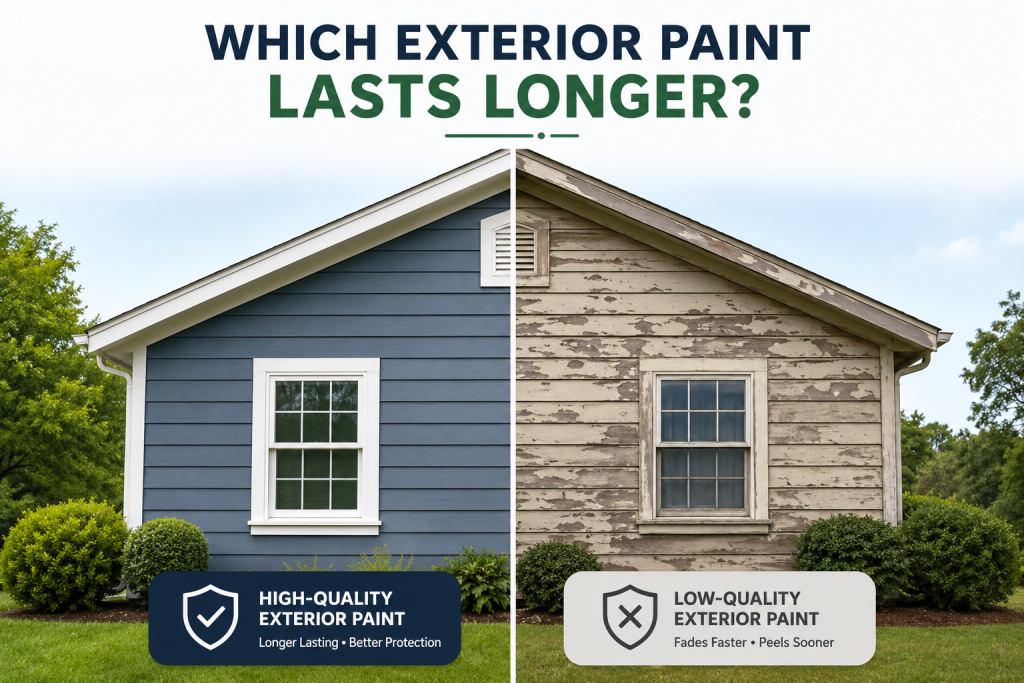
Durability also depends on using the right paint for the specific siding material and following proper application techniques. While latex paint durability has improved significantly with modern formulations, acrylic paint continues to outperform it in demanding weather conditions because of its superior flexibility and adhesion. Homeowners evaluating acrylic paint benefits should also consider the long-term savings associated with fewer repainting cycles, lower maintenance requirements, and better protection against peeling, fading, and moisture damage.
Conclusion
Understanding the differences between acrylic vs latex exterior paint helps homeowners make informed decisions that protect their homes and maximize long-term value. While acrylic paint offers superior durability, adhesion, and weather resistance, latex paint provides dependable performance at a more affordable price. By selecting the right paint for your siding material, climate, and maintenance goals, you can achieve a beautiful exterior finish that delivers lasting protection and curb appeal for years to come.
Frequently Asked Questions
What is the difference between acrylic vs latex exterior paint?
The main difference in an acrylic vs latex exterior paint comparison is the resin used in each product. Acrylic paint contains a higher concentration of acrylic resins, providing better adhesion, flexibility, and weather resistance, while traditional latex paint is generally more affordable and suitable for many standard exterior applications.
Is acrylic exterior paint better than latex?
For most exterior projects, yes. Acrylic paint offers stronger adhesion, superior durability, and better resistance to moisture and UV exposure. Although it costs more upfront, it often provides longer-lasting protection and requires less maintenance over time.
Which exterior paint lasts longer?
In an acrylic vs latex exterior paint comparison, high-quality acrylic paint typically lasts 10 to 15 years, while latex paint generally lasts 5 to 10 years, depending on climate, surface preparation, and product quality.
Can acrylic and latex paint be used on all siding types?
Both can be used on many exterior surfaces, but 100% acrylic paint is generally recommended for wood, fiber cement, stucco, and masonry because of its superior adhesion and flexibility. Always follow the siding manufacturer’s recommendations before painting.
How do I choose the right exterior paint?
Choosing the right paint depends on your siding material, climate, budget, and maintenance expectations. For homeowners seeking maximum durability and long-term performance, acrylic paint is often the preferred option, while latex paint remains a reliable choice for many standard residential projects.
What is the main difference between acrylic and latex exterior paint?
Acrylic paint contains higher-quality acrylic resins, offering better adhesion, flexibility, and durability. Latex paint is more budget-friendly and easier to apply but may not last as long in harsh weather conditions.
Which is better for exterior use: acrylic or latex paint?
Acrylic paint is generally better for exterior surfaces because it provides stronger weather-resistant coatings, improved UV protection, and longer-lasting performance compared to standard latex paint.