


Types of Exterior Paint Explained for Different Climates
Choosing the right paint is essential for protecting your home’s exterior and maximizing the lifespan of your investment. The various types of exterior paint are designed to perform differently depending on the siding material, weather conditions, and environmental exposure. While some paints excel in hot, sunny climates, others provide superior protection against moisture, freezing temperatures, or salty coastal air. Selecting the wrong product can lead to premature fading, peeling, cracking, and costly maintenance.
This guide explains the most common types of exterior paint and how they perform in different U.S. climate zones. You’ll learn which paint formulations work best for humid regions, cold winters, coastal environments, and areas with intense sunlight. By understanding the strengths of each paint type, you can choose a coating that delivers long-lasting durability, protects your siding, and keeps your home’s exterior looking its best for years to come.
Understanding the Main Types of Exterior Paint
Choosing among the different types of exterior paint starts with understanding how each formulation performs. The most common option for modern homes is 100% acrylic paint, which offers outstanding flexibility, adhesion, and long-term resistance to moisture and UV exposure. Acrylic latex paint is another popular choice because it combines durability with easy application and cleanup. Other options, such as elastomeric coatings and specialty masonry paints, are designed for stucco, concrete, and brick surfaces that require additional crack-bridging protection.
When comparing exterior paint finishes, homeowners should also consider how the finish affects durability and appearance. Flat finishes help hide surface imperfections, satin finishes provide a balance of durability and low sheen, and semi-gloss finishes are often used on trim and doors for easier cleaning. Selecting the right combination of paint type and finish is the first step toward achieving a long-lasting, attractive exterior that performs well in your local climate.
Best Exterior Paint for Hot and Sunny Climates
Homes located in regions with intense sunlight and high temperatures require paint that can withstand constant UV exposure without fading or breaking down. Among the various types of exterior paint, 100% acrylic paint is often the best choice because it retains its flexibility, resists cracking, and maintains color even after years of direct sun. Choosing a UV-resistant exterior paint helps protect siding from premature fading while preserving your home’s curb appeal.
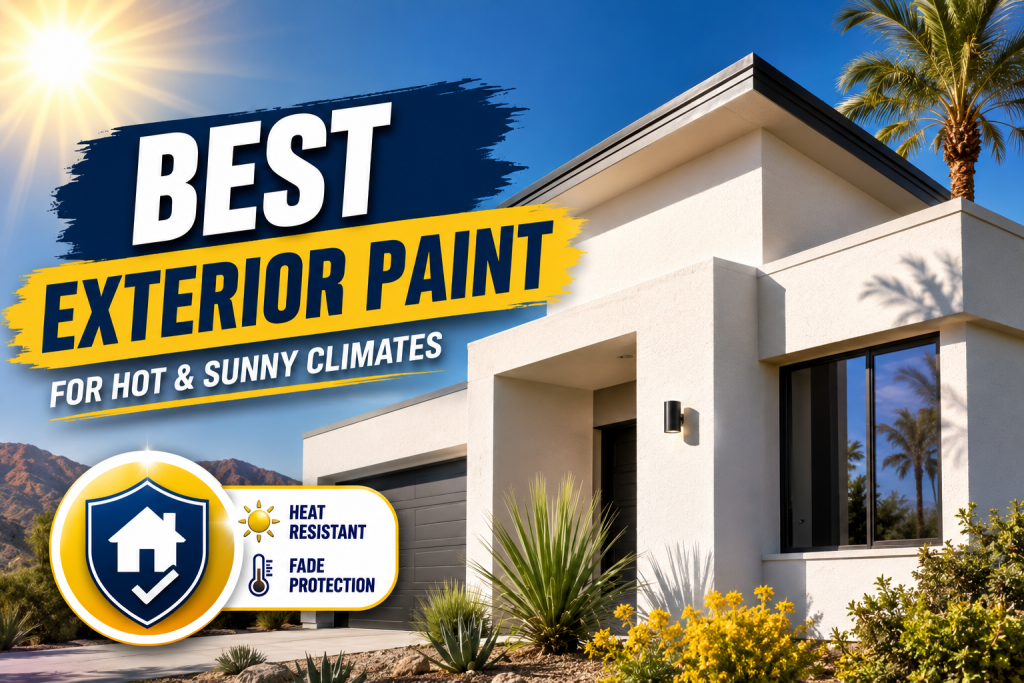
In states such as Arizona, Texas, Nevada, and parts of California, prolonged sun exposure can accelerate paint deterioration if lower-quality products are used. Homeowners should look for climate-resistant paint formulated with advanced UV inhibitors and durable acrylic resins. Lighter paint colors can also reflect more heat than darker shades, helping reduce surface temperatures and extending the life of the finish. Investing in premium exterior paint is especially important in hot climates where weather conditions place constant stress on exterior surfaces.
Best Exterior Paint for Humid and Rainy Climates
Homes in humid regions require paint that can withstand frequent rainfall, high humidity, and prolonged moisture exposure. Among the various types of exterior paint, premium 100% acrylic products are often the best choice because they resist moisture penetration while allowing trapped water vapor to escape. This breathable finish helps reduce blistering, peeling, and mildew growth, making it ideal as paint for humid climates where exterior surfaces remain damp for extended periods.
Homeowners in states such as Florida, Louisiana, Georgia, and other coastal or subtropical regions should prioritize durable siding paint with mildew-resistant additives and strong adhesion. Proper surface preparation, including cleaning, repairing damaged caulk, and priming bare areas, is just as important as selecting the right paint. When applied correctly, high-quality acrylic coatings provide long-lasting protection against rain, humidity, and moisture-related damage while helping maintain the appearance and structural integrity of your home’s exterior.
Best Exterior Paint for Cold and Snowy Climates
Homes in northern regions face unique challenges, including freezing temperatures, snow, ice, and repeated freeze-thaw cycles. Among the different types of exterior paint, premium acrylic paint performs exceptionally well because it remains flexible as temperatures fluctuate, reducing the risk of cracking and peeling. This flexibility allows the coating to expand and contract with the siding, helping maintain a durable protective barrier throughout the year.
When selecting paint for cold climates, homeowners should choose products specifically formulated to resist moisture intrusion and withstand harsh winter conditions. High-quality acrylic paints with strong adhesion help prevent water from penetrating the surface, reducing the potential for freeze-related damage. Proper application is also critical—painting should be completed within the manufacturer’s recommended temperature range to ensure proper curing. Investing in climate-resistant paint designed for cold weather helps extend the lifespan of your exterior finish while protecting your home from seasonal wear and damage.
Best Exterior Paint for Coastal Homes
Coastal homes are exposed to salt air, strong winds, high humidity, and intense sunlight, creating one of the most demanding environments for exterior paint. Among the available types of exterior paint, premium 100% acrylic coatings offer the best protection because they resist salt, moisture, and UV damage while maintaining flexibility. Choosing coastal home exterior paint specifically formulated for marine environments helps reduce fading, blistering, and peeling caused by constant exposure to harsh weather conditions.
Homeowners living near the ocean should also prioritize high-quality primers, corrosion-resistant hardware, and routine maintenance to maximize the lifespan of their paint job. Applying durable siding paint to wood, fiber cement, or masonry surfaces creates an additional barrier against moisture intrusion and salt-related deterioration. Regular inspections and gentle cleaning help remove salt deposits before they can damage the finish, keeping the exterior looking fresh and well protected for many years.
Choosing the Right Exterior Paint Finish
Selecting the right finish is just as important as choosing among the different types of exterior paint. The finish affects your home’s appearance, durability, and maintenance requirements. Flat finishes are excellent for hiding minor surface imperfections but may require more frequent cleaning. Satin finishes are the most popular choice for siding because they offer a balance between durability, moisture resistance, and a subtle sheen. Semi-gloss finishes are commonly used on trim, doors, and shutters because they resist dirt and are easier to clean.
When evaluating exterior paint finishes, consider your home’s siding material, climate, and desired maintenance level. Homes exposed to heavy rain or high humidity often benefit from finishes that shed water more effectively, while sunny regions may require products with enhanced UV protection. Pairing the appropriate finish with high-quality paint helps improve longevity, preserve curb appeal, and ensure your exterior remains attractive despite changing weather conditions.
How to Select the Best Types of Exterior Paint for Your Home
Choosing the best types of exterior paint requires evaluating your home’s siding material, local climate, budget, and long-term maintenance expectations. Wood, fiber cement, vinyl, brick, and stucco each perform best with paints specifically formulated for their surfaces. Homeowners should also consider factors such as sun exposure, humidity, rainfall, and seasonal temperature changes before making a final decision. Matching the paint to your environment helps maximize durability and reduce future maintenance.
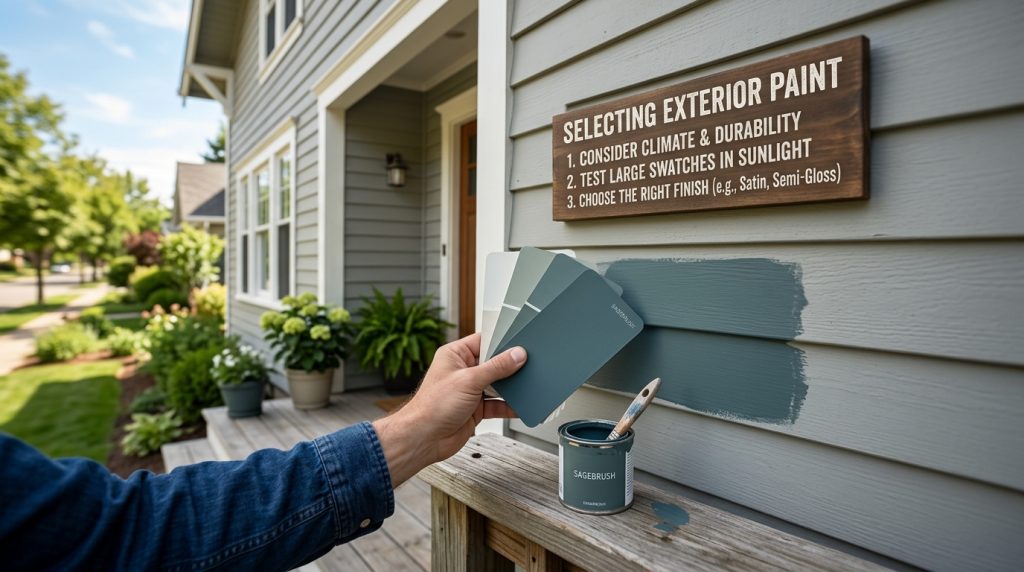
For most homes, investing in premium acrylic products provides the best balance of performance and longevity. When comparing options, prioritize UV-resistant exterior paint for sunny climates, paint for humid climates in areas with frequent rainfall, and flexible acrylic coatings for regions with freezing winters. Reading manufacturer recommendations and selecting products backed by strong warranties can further improve long-term results. By choosing the right paint for your home’s unique conditions, you can protect your siding, enhance curb appeal, and extend the life of your exterior finish.
Conclusion
Understanding the different types of exterior paint helps homeowners choose products that deliver long-lasting protection and improved curb appeal. By selecting paint designed for your local climate, siding material, and maintenance needs, you can reduce future repairs and extend the life of your exterior finish. Whether your home faces intense sun, heavy rain, freezing temperatures, or coastal conditions, investing in the right paint is one of the best ways to protect your property and maintain its value for years to come.
Frequently Asked Questions
What are the main types of exterior paint?
The most common types of exterior paint include 100% acrylic paint, acrylic latex paint, elastomeric paint, masonry paint, and specialty coatings designed for specific siding materials. Each type offers different levels of durability, flexibility, and weather resistance.
Which exterior paint is best for humid climates?
Premium acrylic paint is widely considered the best paint for humid climates because it resists moisture while allowing trapped water vapor to escape. This helps reduce peeling, blistering, and mildew growth in areas with high humidity and frequent rainfall.
What type of paint lasts the longest outdoors?
High-quality 100% acrylic paint generally provides the longest lifespan. It offers excellent adhesion, flexibility, and resistance to UV rays, moisture, and changing temperatures, making it suitable for most exterior surfaces.
What exterior paint finish is best for siding?
Satin is the most popular choice among exterior paint finishes for siding because it combines durability, easy maintenance, and a subtle sheen. Flat finishes work well for hiding imperfections, while semi-gloss is often used for trim and doors.
How do I choose the right exterior paint?
Select paint based on your siding material, local climate, and maintenance preferences. Homes in sunny regions benefit from UV-resistant products, humid areas require moisture-resistant coatings, and colder climates perform best with flexible acrylic paints that resist cracking.
What type of exterior paint is best for hot climates?
For hot and sunny climates, UV-resistant exterior paint made with high-quality acrylic is the best choice. It resists fading, cracking, and heat damage caused by constant sun exposure.
What is the best exterior paint for cold or humid climates?
For cold climates, flexible acrylic paints work best because they resist cracking during freeze-thaw cycles. In humid regions, moisture-resistant paints are recommended to prevent mildew, peeling, and long-term water damage.