


Bedroom Paint vs Living Room Paint: What Changes?
Many homeowners assume one paint color can work throughout an entire house, but room function often determines whether that approach succeeds. Understanding bedroom paint vs living room paint starts with recognizing that different spaces serve different purposes and therefore benefit from different color strategies. Bedrooms are primarily designed for rest, privacy, and relaxation. Living rooms, on the other hand, function as gathering spaces where family members entertain guests, socialize, and spend time together. Because these environments support different activities, they often require different moods and visual effects.
This is where room-specific paint colors become important. Paint influences how a space feels, affecting comfort, energy levels, and overall atmosphere. Modern homeowners increasingly use color intentionally, selecting calming shades for bedrooms and more versatile palettes for shared living areas. A thoughtful room-by-room approach can improve both daily living and overall design flow while helping create a cohesive and functional home interior.
Bedroom Paint Prioritizes Comfort and Relaxation
When comparing bedroom paint vs living room paint, the bedroom is typically designed around comfort, rest, and personal well-being. Because sleep quality and relaxation are important goals, color selection often focuses on creating a calm and peaceful environment. Many popular bedroom paint ideas use soft, muted tones that reduce visual stimulation. Warm white, greige, muted sage green, soft blue-gray, and light earth tones are commonly chosen because they support a relaxing atmosphere without feeling dull. Color psychology also plays a role.
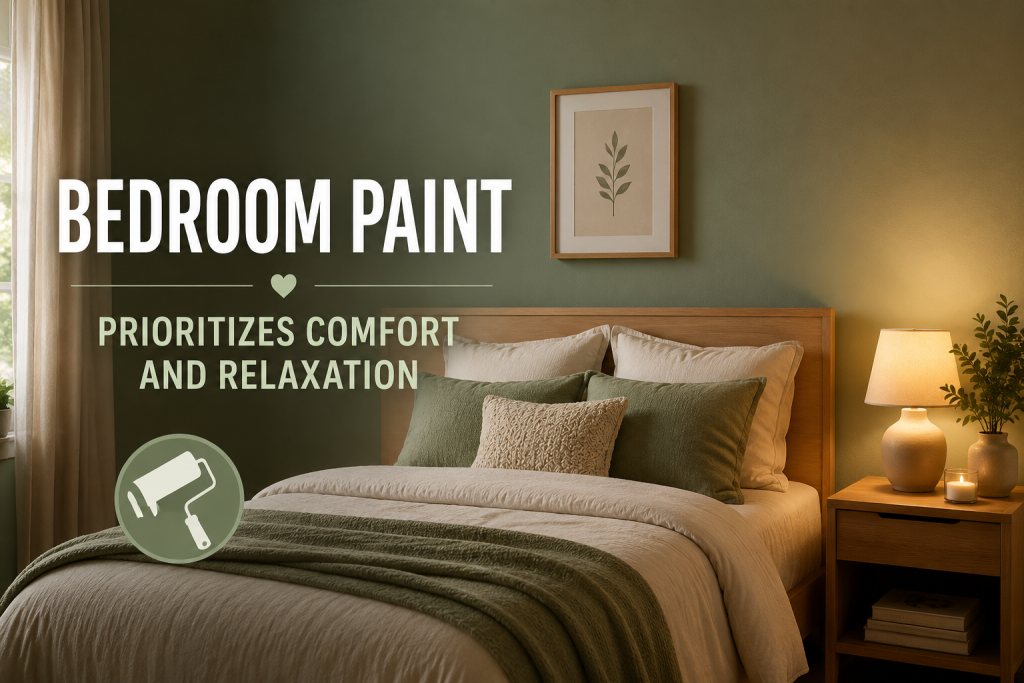
Cooler and softer shades are often associated with tranquility, making them ideal choices for decent bedroom paint schemes. Texture and lighting further influence how bedroom colors perform. Matte and low-sheen finishes are frequently preferred because they create a softer appearance and reduce glare. For homeowners planning a full-home repaint, bedrooms generally benefit from palettes that feel calm and restorative while still connecting with the broader design of the house.
Living Room Paint Supports Social and Shared Spaces
A living room serves a very different purpose than a bedroom, which is why the discussion of bedroom paint vs living room paint often leads to different color recommendations. Living rooms are designed for gathering, conversation, entertainment, and everyday family activities. Because these spaces are more active, homeowners often choose entertaining-place paint colors that feel warm, welcoming, and adaptable. Warm white, greige, soft taupe, muted earth tones, and subtle greens remain popular because they create inviting environments while working with a variety of furniture styles.
Living rooms also tend to receive more guests, making flexibility important. Neutral foundations help support changing décor and seasonal updates without requiring frequent repainting. Natural light plays a major role as well. Open-concept layouts often benefit from colors that enhance brightness and improve flow between connected spaces. Unlike bedrooms, living rooms typically prioritize versatility and social comfort over relaxation, influencing both color selection and overall design strategy.
Specific Paint Colors Influence Mood Differently
One of the biggest differences in bedroom paint vs living room paint is how color affects the mood and function of each space. Paint is not only decorative, but it also influences how people experience a room daily. Bedrooms typically benefit from specific paint colors that encourage relaxation and reduce visual stimulation. Soft greens, muted blues, warm neutrals, and gentle earth tones are often chosen because they help create a calm atmosphere.
Living rooms usually require a different balance. Since these spaces support social interaction and entertainment, homeowners often prefer warmer and more versatile palettes. Greige, warm white, soft beige, and layered neutrals are popular because they feel inviting without becoming overwhelming. Lighting also affects mood. The same color may feel peaceful in a bedroom but more energetic in a bright living room. Understanding how specific paint colors interact with room function helps homeowners create interiors that feel more intentional, comfortable, and aligned with everyday living needs.
Comparison: bedroom paint vs living room paint
Color is important, but finish selection also plays a major role when comparing bedroom paint vs living room paint. A proper paint sheen comparison helps homeowners choose finishes that match the function and wear level of each room. Bedrooms often perform best with matte or low-sheen eggshell finishes. These options create a softer appearance, reduce glare, and help hide minor wall imperfections. Because bedrooms experience less traffic than shared living spaces, maximum durability is usually less important.
Living rooms typically benefit from eggshell or satin paint finishes. These finishes provide greater durability while still maintaining an attractive appearance. They also make occasional cleaning easier, which is helpful in family rooms and entertaining areas. Natural light can influence finish selection as well. High-gloss surfaces may create excessive reflections, while matte finishes can sometimes absorb too much light in darker spaces. Choosing the right sheen ensures that both bedrooms and living rooms remain visually appealing while meeting their specific performance requirements.
Bedroom paint thoughts for Modern Homes
Modern bedrooms increasingly focus on comfort, simplicity, and wellness, which has influenced many of today’s most popular bedroom paint thoughts. Homeowners are moving away from harsh contrasts and embracing softer palettes that create a more relaxing environment. Warm white remains one of the leading choices because it creates a bright and calming foundation that works with nearly any design style. Greige continues to perform well because it combines the warmth of beige with the versatility of gray.
Muted sage green has become a favorite relaxing bedroom paint color due to its connection with nature and its ability to create a spa-like atmosphere. Soft blue-gray tones also remain popular because they encourage tranquility without feeling cold. Earth-inspired shades such as mushroom beige, clay taupe, and sandy neutrals are becoming increasingly common in organic modern interiors. These modern bedroom paint thoughts help create peaceful spaces while supporting broader home design trends and long-term resale appeal.
Living room paint, polishes, and Color Trends
Current living room design trends emphasize warmth, flexibility, and visual flow, which strongly influences both color and finish selection. When comparing bedroom paint and living room paint, living rooms generally require finishes and palettes that support more daily activity. Among popular living room paint polishes, eggshell remains one of the most widely used because it balances durability with a soft appearance. Satin is also becoming more common in family rooms where walls require occasional cleaning.
Color trends are shifting toward layered neutrals and nature-inspired palettes. Warm white, greige, mushroom beige, muted olive, and soft earth tones continue gaining popularity because they create inviting environments without feeling overly trendy. Open-concept layouts have also influenced paint choices. Many homeowners use connected neutral palettes to improve flow between living rooms, kitchens, and dining areas. These evolving entertaining space paint colors help create versatile living areas that feel welcoming, modern, and adaptable to changing décor styles.
Home color scheme ideas
Creating harmony between bedrooms and living rooms does not mean using identical colors throughout the house. The best home color palette ideas allow each room to serve its purpose while maintaining a sense of visual flow. A common approach is to establish a neutral base color that appears throughout the home in different ways. Warm white, greige, soft beige, and muted taupe are popular foundations because they work across multiple rooms and design styles. From there, homeowners can introduce subtle variations.
Bedrooms may incorporate softer greens or blue-gray tones to support relaxation, while living rooms use warmer neutrals and entertaining place paint colors to encourage social interaction. This strategy helps create consistency without making every room feel the same. When evaluating bedroom paint vs living room paint, the goal should be connection rather than duplication. Coordinated palettes often make homes feel larger, more intentional, and easier to decorate while supporting modern interior design principles.
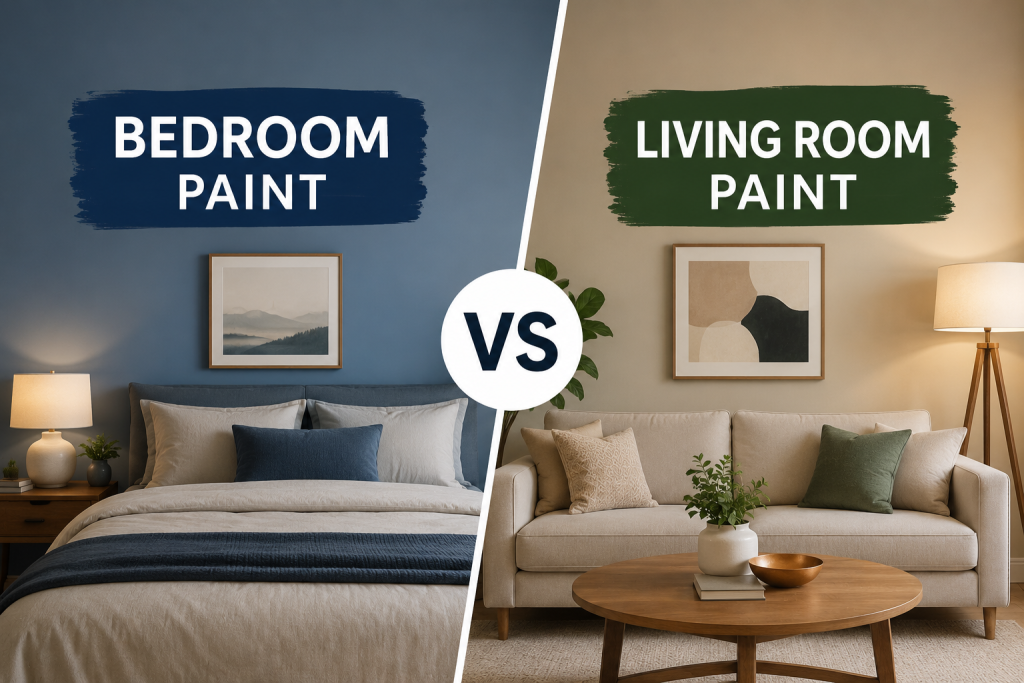
Bedroom Paint vs Living Room Paint
The ideal choice in bedroom paint and living room paint often depends on how homeowners use their spaces. Lifestyle, family size, work habits, and entertaining preferences can all influence the most effective paint strategy.
Bedroom paint vs living room paint: For Families With Children
Families often choose durable neutrals and practical living room paint finishes because living rooms experience higher traffic, spills, and daily activity. Bedrooms may use softer, decent bedroom paint colors to create calmer personal spaces.
For Remote Workers
Homeowners who work from home frequently prefer muted greens, warm neutrals, and soft earth tones in bedrooms that double as workspaces. These specific paint colors help balance productivity and relaxation.
For Frequent Entertainers
People who regularly host guests often prioritize entertaining space and paint colors in living rooms. Warm greige, soft taupe, and layered neutrals create welcoming environments while remaining flexible for different décor styles.
For Resale-Focused Homeowners
Homeowners preparing to sell usually benefit from cohesive home color scheme ideas that connect bedrooms and living areas. Neutral palettes tend to appeal to a broader range of buyers and support home staging efforts.
For Modern Design Enthusiasts
Modern interiors often use subtle color transitions between rooms rather than dramatic contrasts. This approach helps maintain flow while still allowing bedrooms and living rooms to serve different functional purposes.
Common Mistakes
While consistency is important, using the same color and finish throughout a home can create design challenges.
- One of the most common mistakes in the bedroom paint vs living room paint discussion is ignoring the unique function of each room.
- A single color may work beautifully in a bright living room but feel too energetic or overwhelming in a bedroom. Likewise, a shade selected for relaxation may make shared living spaces feel flat or underwhelming.
- Another issue involves sheen selection. Using identical finishes throughout the home often overlooks the performance needs of different rooms. A finish suitable for a bedroom may not provide the durability required for busy living spaces.
- Some homeowners also forget to consider lighting. The same paint color can appear dramatically different depending on natural light exposure and room orientation.
Instead of repeating one color everywhere, using coordinated home color scheme ideas and thoughtful, specific paint colors generally creates a more balanced and functional interior.
Final Thoughts
Understanding the difference between bedroom paint vs living room paint helps homeowners create spaces that look better, function more effectively, and feel more comfortable every day. While color preferences matter, the room’s purpose should play a major role in paint selection. Bedrooms generally benefit from softer palettes and decent bedroom paint colors that support rest and wellness. Living rooms, on the other hand, often perform best with versatile entertaining place paint colors that create warmth and encourage social interaction.
Finish selection is equally important. A thoughtful paint shine comparison ensures that each room receives the right balance of durability, maintenance, and visual appeal. Using coordinated, specific paint colors and carefully planned home color scheme ideas can help create a cohesive home without making every room feel identical. For most homeowners, the best results come from balancing consistency with function, allowing each room to support the way it is actually used.
Frequently Asked Questions
Should bedroom paint vs living room paint be the same color?
Not necessarily. While colors can coordinate, bedroom paint vs living room paint often differs because each room serves a different purpose. Bedrooms typically prioritize relaxation, while living rooms focus on comfort and social interaction.
What are the best bedroom paint colors?
Popular bedroom paint thoughts include warm white, greige, muted sage green, soft blue-gray, and earthy neutrals that create a calm and restful atmosphere.
Which living room paint polishes work best?
The most common living room paint polishes are eggshell and satin because they provide durability while maintaining a soft and attractive appearance.
How important is paint shine comparison?
A proper paint shine comparison helps homeowners choose finishes that match room usage, maintenance needs, and lighting conditions.
What home color scheme ideas create better flow?
The strongest home color scheme ideas use a consistent neutral foundation with subtle variations between rooms, helping maintain visual connection while supporting different room functions.